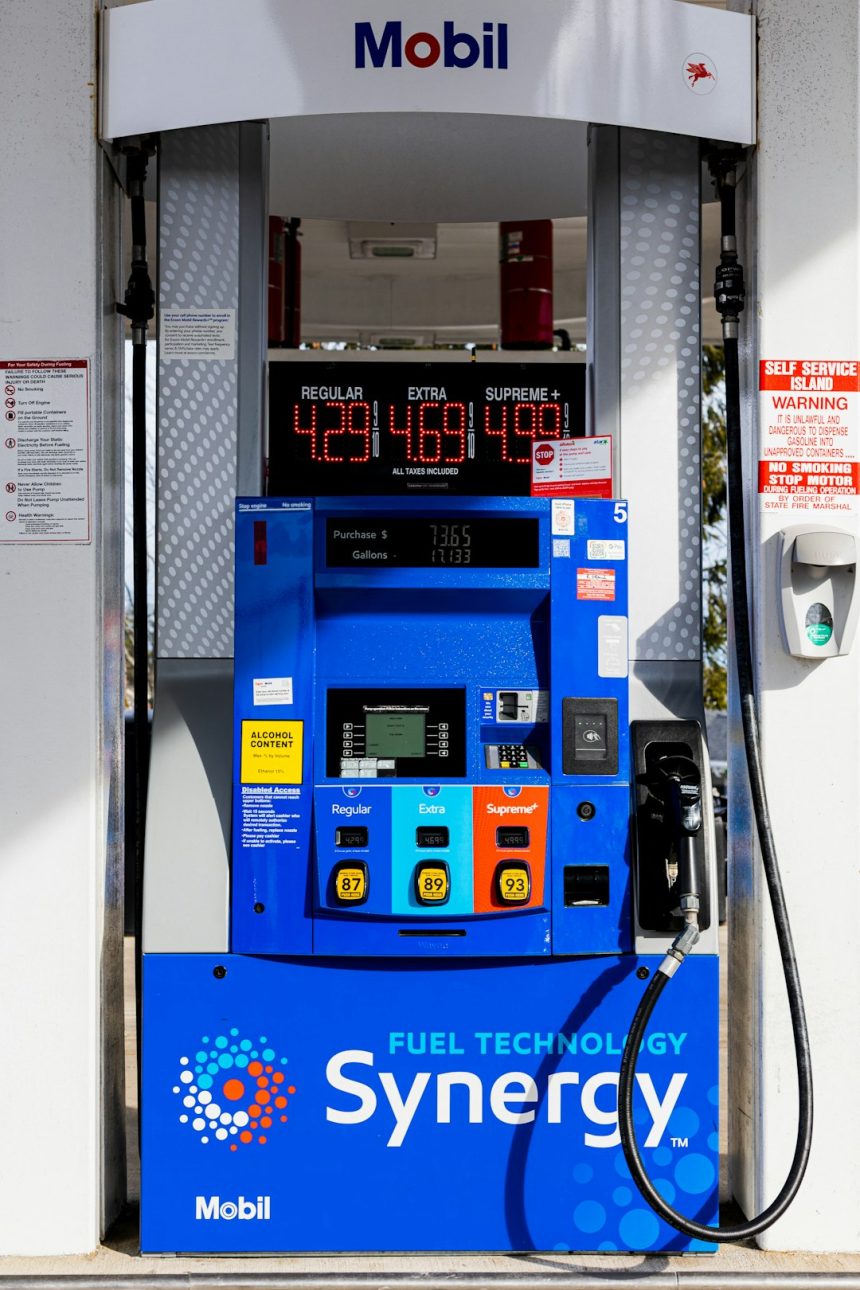

A Swift Surge Reshapes Refueling Habits (Image Credits: Unsplash)
Las Vegas Valley — Gasoline prices across the Las Vegas Valley climbed to an average of $5 per gallon for regular unleaded on Friday, the highest mark in the region since October 2023.[1][2] This milestone comes as national averages exceed $4 for the first time in years, driven by global conflicts and seasonal factors. Local drivers now face steeper costs at the pump, with implications rippling through tourism-dependent businesses.
A Swift Surge Reshapes Refueling Habits
Prices jumped sharply in recent weeks. The Las Vegas Valley average rose more than $1.30 from $3.70 per gallon on March 2, the day after the Middle East conflict intensified.[1] AAA data showed the local metro area at $5.002 on Thursday, up two cents from the prior day and nine cents over the past week.[3]
Nevada’s statewide average stood at $4.96 Friday, ranking fifth highest nationally behind states like California and Hawaii.[1] The national figure hovered around $4.09, a level unseen since 2022. In Clark County, some stations already topped $5 earlier this month, particularly in the Northwest Valley where averages neared $4.98.[4]
Global Conflicts and Seasonal Shifts Drive the Increase
Escalating tensions in the Middle East, including risks to the Strait of Hormuz, pushed crude oil prices higher and added a geopolitical risk premium to fuel costs.[1][5] Patrick De Haan, GasBuddy’s lead petroleum analyst, warned that without resolution, Las Vegas prices could approach the all-time high of $5.61 set in June 2022.[1]
Refinery maintenance in California and the switch to summer-blend gasoline compounded the pressure. De Haan noted earlier this month that these factors could lift local averages by 20 to 60 cents in a single month.[5] Oil benchmarks like Brent crude climbed nearly 7 percent amid the unrest.
Historical Peaks and National Context
The $5 threshold last appeared in the Las Vegas Valley on October 6, 2023. Prices had stabilized lower until the recent conflict reignited upward momentum. Nationally, the average crossed $4 per gallon this week for the first time since 2022, reflecting synchronized pressures.[4]
| Period | Nevada Average | National Average |
|---|---|---|
| Today (April 3) | $4.96 | $4.09 |
| Yesterday | $4.94 | $4.08 |
| Week Ago | $4.87 | $3.98 |
| Month Ago | $3.73 | $3.11 |
Year-over-year, Nevada prices increased from $3.99, underscoring the volatility tied to external events.
Strain on Wallets and Las Vegas Tourism
Local residents expressed frustration with the hike. One Northwest Valley driver remarked, “I’m not liking it — I can tell you that much — but given the course of the past couple years, it’s always been up and down.”[4] Las Vegas Mayor Shelley Berkley highlighted broader concerns: “We rely on low gas prices to get people here. If the airlines are paying more for fuel, then the cost of coming to Las Vegas by air is going to go up, too.”[1]
The tourism hub faces ripple effects. Berkley added, “This is a very serious problem for a community that depends on tourism,” as higher fuel costs prompt travelers to reconsider trips.[1] Stations like Sam’s Club and Costco drew long lines for cheaper options around $4.30 to $4.49 per gallon.
Practical Ways to Ease the Burden
Experts offered strategies to stretch fuel dollars. AAA recommended checking tire pressure and avoiding idling to boost efficiency.
- Use apps like GasBuddy to locate the lowest nearby prices, such as $4.31 at Sam’s Club in Centennial Center.[4]
- Avoid speeding, which can improve fuel economy by up to 14 percent.
- Opt for the cheapest grade suitable for your vehicle.
- Minimize trips, like combining errands to cut unnecessary driving.
- Keep tires properly inflated and vehicles maintained.
Key Takeaways
- Las Vegas Valley hit $5 average Friday, up $1.30 in a month.
- Middle East conflict and seasonal changes fuel the rise.
- Tourism and drivers brace for prolonged high costs.
As pumps signal a return to painful pricing, resolution in the Middle East offers the clearest path to relief, though experts caution it may take time. Vigilance at the pump and smarter driving could soften the immediate blow for Southern Nevada residents. What strategies are you using to manage these costs? Share in the comments.