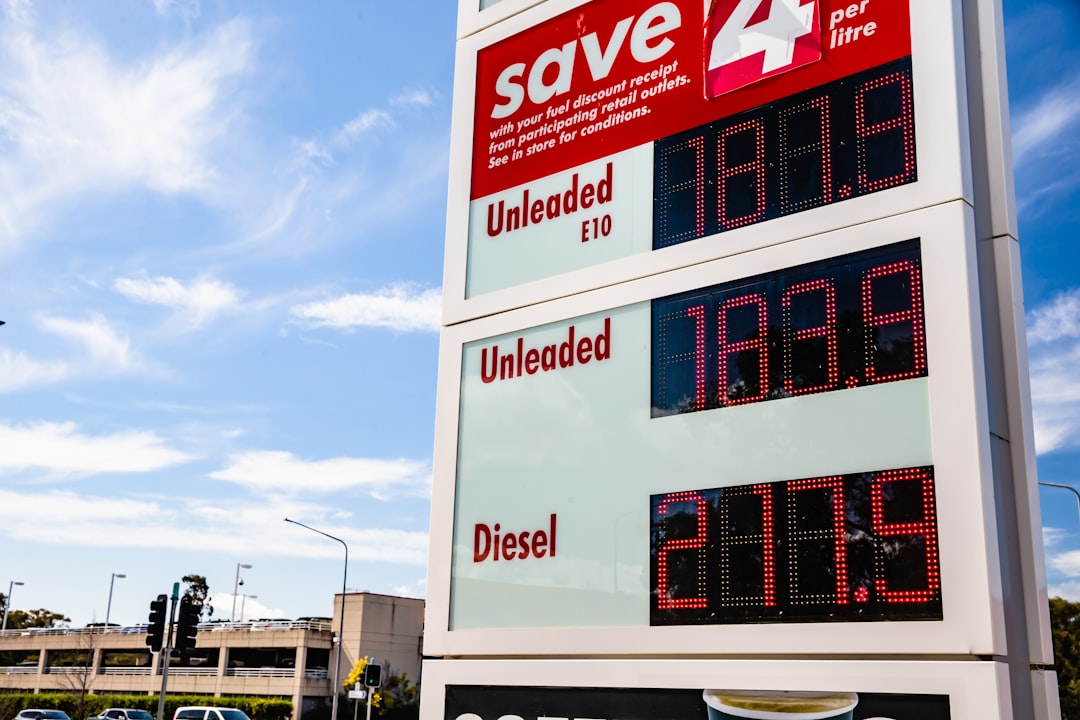

A Stunning Jump Shocks Local Motorists (Image Credits: Unsplash)
Las Vegas Valley – Gasoline prices at several local stations have eclipsed the $5 per gallon mark, marking a stark escalation for drivers already grappling with rising costs. This surge coincides with the Middle East war entering its fourth week, disrupting global oil supplies and rippling through markets nationwide. Residents and visitors now face some of the highest fuel rates in nearly two years, prompting concerns over broader economic fallout in this tourism-dependent region.[1][2]
A Stunning Jump Shocks Local Motorists
The ascent to $5 per gallon caught many off guard. Just twenty days prior, prices hovered lower, but they climbed $1.11 on average to reach $4.81 for regular unleaded by Sunday. Photographers documented one North Las Vegas station posting $5.09, while the highest reported reached $5.19 across the valley.[1]
Stations in nearby Primm already touched $5 earlier, signaling the trend’s momentum. AAA reported the Las Vegas average at $4.813 for regular and $5.106 for premium, surpassing levels from May 2024. This rapid hike outpaced national trends, leaving Nevada among the priciest states.[3][4]
Middle East War Fuels the Global Spike
Tensions in the Middle East, particularly the ongoing Iran conflict, lie at the heart of this volatility. The war bottlenecked the Strait of Hormuz, a vital artery for oil shipments, sending crude prices back to $100 per barrel with threats of further jumps to $150. Supplies tightened worldwide, amplifying pressures on U.S. refineries.[5][6]
Nevada’s reliance on California refineries compounded the issue. Governor Joe Lombardo urged neighboring states to ease restrictions, fearing shortages. Seasonal factors, like spring break travel, added demand strain as tourists flock to the Strip.[7]
Everyday Drivers Bear the Brunt
Rideshare operators expressed frustration over eroded earnings. One driver noted the challenge of sustaining a livelihood amid the pump’s bite, especially with tourism dips. Commuters and families adjusted budgets, opting for fewer trips or carpooling.[5]
Partner offer

Businesses felt ripples too. Delivery services passed costs to customers, while tourism operators worried about visitor turnout. The valley’s car-centric lifestyle amplified the pain, with averages now 73 cents above the national figure.[8]
| Fuel Type | Current Avg. ($) | Week Ago ($) | Month Ago ($) |
|---|---|---|---|
| Regular | 4.813 | 4.659 | 3.668 |
| Premium | 5.106 | 4.981 | 4.006 |
This table illustrates the steep trajectory based on AAA data.[3]
Forecasts Point to Further Increases
Analysts warned of potential climbs to $6 per gallon if hostilities persist. Petroleum experts projected $4.50 to $4.80 ranges short-term, but prolonged disruptions could push higher. Oil market watchers eyed the conflict’s duration as the key variable.[9]
Here are primary drivers behind the surge:
- Closure risks at Strait of Hormuz bottlenecking 20% of global oil.
- U.S. crude rebounding to $100/barrel amid supply fears.[6]
- Refinery constraints from California suppliers.
- Spring break demand boosting local consumption.[10]
- Nationwide averages trailing but rising steadily.
Strategic reserves offered limited relief, as releases proved insufficient against geopolitical shocks.
Navigating the High-Cost Era
Las Vegas residents confront a new reality at the pumps, where geopolitical fires thousands of miles away dictate daily expenses. While averages linger below $5, the breach at key stations underscores vulnerability. Swift de-escalation remains the best hope for relief, though experts urge preparedness for sustained highs.
Key Takeaways:
- Some valley stations now exceed $5/gallon, averages near $4.81.
- Iran conflict disrupts oil flows, risking $6 peaks.
- Drivers adapt via efficiency; tourism watches warily.
What steps will you take to manage fuel costs? Share your thoughts in the comments.
Partner offer
Planning a trip to Vegas?
Compare hotel rates and show tickets on VEGAS.com.