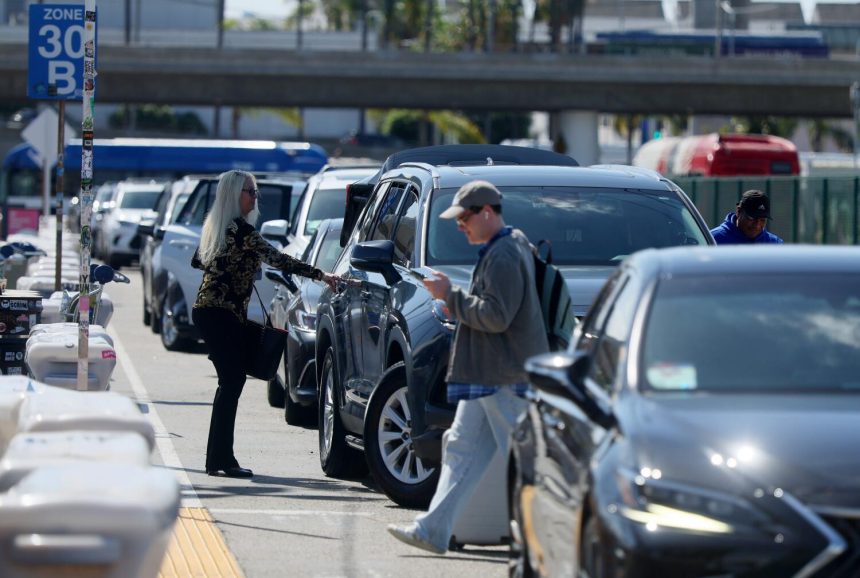

Fees Set to More Than Double for Curbside Access (Image Credits: Ca-times.brightspotcdn.com)
Los Angeles — The Los Angeles Board of Airport Commissioners convened a special meeting on Tuesday to consider substantial increases in access fees for ride-hailing services and other private transportation at LAX, aiming to curb persistent congestion around the terminals.[1][2]
Fees Set to More Than Double for Curbside Access
Ride-hailing firms currently face a $4 charge per trip for pickups and drop-offs at remote lots like LAX-it, a rate unchanged for a decade.[3] Under the proposal, this base fee would rise to $6 each way across all locations, effective roughly 30 days after approval.[1]
Once the long-delayed Automated People Mover, known as SkyLink, opens in early summer, curbside access in the central terminal area would cost companies $12 per direction.[2] The changes would extend to taxis, limousines, and black car services, which often pay less or nothing for drop-offs today.[1]
Companies typically pass these costs to passengers as surcharges, potentially turning a $10 round-trip fee into $24 or more.[2]
| Service Type | Current Fee (per trip) | Proposed Base Fee | Post-SkyLink Curbside |
|---|---|---|---|
| Ride-Hailing (Uber, Lyft) | $4 | $6 each way | $12 each way |
| Taxis/Limos | $0-$4 (pickups) | $6 each way | $12 each way |
Targeting Congestion with SkyLink Incentives
Airport officials pointed to overwhelming traffic volumes of 80,000 to 100,000 vehicles daily as unsustainable for the limited curbside space.[1] David Reich, LAWA deputy executive director for mobility strategy, explained that distributing trips to SkyLink stations would ease gridlock and enhance safety.[1]
“By distributing traffic amongst multiple locations rather than funneling it all into the central terminal area we can reduce gridlock, improve safety, and give passengers better options,” Reich stated.[1] The $3.5 billion SkyLink system, delayed from its 2023 target, promises frequent service connecting to Metro rail lines and handling 85 million passengers annually.[2]
Partner offer
Additional measures include capping pickups at 30% and drop-offs at 70% in the central terminal area for these services, redirecting the rest to SkyLink.[1]
- Align fees with market rates at airports like San Francisco, where ride-hailing access costs $6.
- Generate up to $100 million yearly for terminal improvements post-SkyLink.
- Reflect inflation and investments after a decade without adjustments.
- Promote public transit integration via Metro connections.
Opposition Mounts from Companies and Lawmakers
Uber rallied customers against the plan, warning it would make LAX rides the world’s priciest.[1] Danielle Lam, Uber’s head of local California policy, called a 140% hike “indefensible” without proper public input, arguing it burdens working families and seniors.[2]
Seven state Assembly members and two senators urged a delay, citing California’s affordability crisis and limited review time.[1] Travelers expressed frustration over added costs amid high base fares, with some eyeing alternatives like friends or shuttles.[3]
Implementation Timeline Remains Flexible
The board’s 10 a.m. session at LAX’s administration building marked the decision point, with staff recommending approval.[2] While changes could start in April, officials signaled possible postponement until SkyLink operates.[1]
Riders might still use LAX-it or emerging Metro links in the interim, but the shift underscores LAX’s push toward multimodal access.[3]
Key Takeaways
- Fees jump from $4 to $6 soon, $12 post-SkyLink for curbside.
- Aimed at slashing 80,000+ daily vehicles via SkyLink redirection.
- Uber and lawmakers push back over costs and process.
As LAX balances growth with gridlock, these fees could redefine ground transport. What do you think about the proposal? Tell us in the comments.
Partner offer
Planning a trip to Vegas?
Compare hotel rates and show tickets on VEGAS.com.