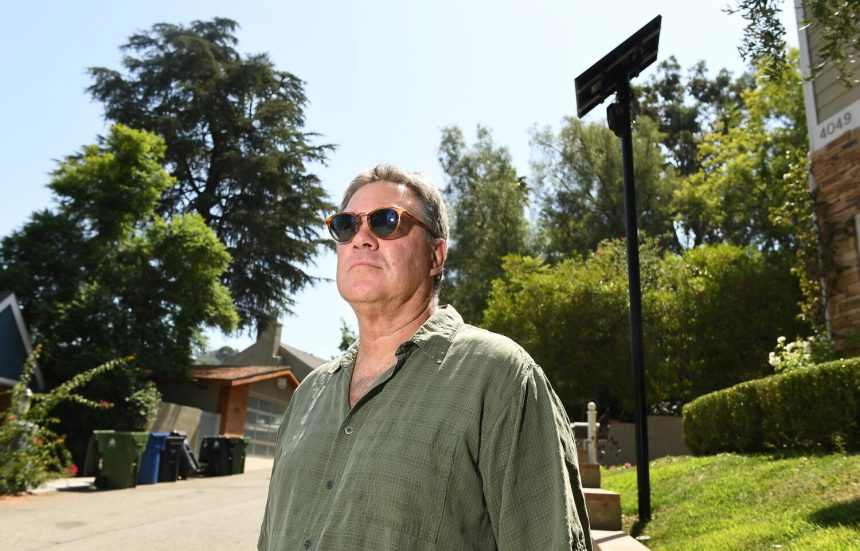


Nationwide Pushback Gains Momentum (Image Credits: Ca-times.brightspotcdn.com)
Los Angeles — Automated license plate readers from Flock Safety have drawn sharp criticism nationwide for privacy risks and unintended data sharing, yet the technology maintains strong support among law enforcement and communities across the Los Angeles region.[1]
Nationwide Pushback Gains Momentum
Mountain View city leaders voted unanimously last week to terminate their contract with Flock Safety after an audit revealed unauthorized access by federal agencies.[2] The decision followed months of resident concerns over surveillance practices that violated state restrictions on data sharing. Santa Cruz became the first California city to end its agreement earlier this year, citing unexpected federal access despite local settings.[1]
Other municipalities joined the exodus. Cambridge, Massachusetts, canceled its deal in December amid fears of immigration enforcement misuse. San Diego officials debated renewal heatedly, with one councilmember warning of tools that enable rights violations under the current administration.[1] Advocates track nearly 50 such cancellations on platforms like DeFlock.me. Recent audits, such as Ventura County’s, exposed over 364,000 unauthorized out-of-state searches, prompting suspensions and vendor switches.[3]
- Mountain View: Federal access breach led to immediate shutdown.
- Santa Cruz: Discovered prohibited data sharing.
- Denver and Lynnwood: Public outcry over warrantless surveillance.
- Ventura County agencies: Audit revealed immigration-related queries.
Flock’s Technology Draws Law Enforcement Praise
Flock Safety markets its solar-powered cameras as essential for rapid crime resolution. Devices capture vehicle details including plates, make, model, color, and location without constant human monitoring. Data feeds into searchable databases accessible by subscribers.
Los Angeles Police Department officials hailed the tools during recent presentations. Capt. Michael Bland described them as “tremendous investigative tools.”[1] LAPD credited Flock readers with tracking suspects in cases ranging from porch thefts and car break-ins to a drive-by shooting and stolen firearms recovery. The department deploys 1,500 mobile scanners on patrol vehicles and taps into 280 fixed units, about 120 from Flock.[1] City efforts added 324 mounted devices over five years.
Diverse Clients Fuel L.A. Expansion
Beyond police, private entities drive adoption. Homeowners associations donated cameras to LAPD through the Police Foundation. Picfair Village showcased successes in neighborhood crime alerts. Encino and Cheviot Hills groups installed units despite some reservations about effectiveness.
Businesses and institutions followed suit. Retailers like Home Depot and Lowe’s equipped parking lots. The University of Southern California uses them for violations, while the Los Angeles Department of Transportation targets bus lane infractions. Lobbying by firms with ex-officials bolstered ties at City Hall.[1]
Privacy Advocates Raise Alarms
Critics highlight risks in mass data collection. Texas A&M law professor Hannah Bloch-Wehba noted, “These can be really powerful tools to find someone, and identify them. But when you don’t have a suspect, everyone can be a suspect.”[1] Stop LAPD Spying Coalition’s Hamid Khan warned of data aiding federal immigration raids. Cybersecurity flaws, including exposed cameras, amplified doubts.[1]
A class-action lawsuit filed this week accuses Flock of violating California privacy laws through out-of-state and federal sharing. Plaintiffs point to millions of unauthorized database queries.[4] LAPD maintains strict limits, sharing only with five local agencies under state oversight. A pending commission study will assess impacts by summer.
Key Takeaways
- Dozens of cities ended Flock contracts over data access fears, but L.A. emphasizes crime-solving benefits.
- LAPD integrates readers with drones and vehicles for targeted investigations.
- Ongoing lawsuits and audits underscore unresolved privacy tensions.
Los Angeles navigates a delicate balance between security gains and civil liberties as surveillance scrutiny intensifies. Will local loyalty withstand mounting legal challenges? Share your views in the comments.