There’s a thought experiment worth sitting with for a moment. You receive a $500 tax refund and a $500 pay raise in the same month. By any rational measure, those two sums are identical. Your bank balance goes up the same way either time. Yet for most people, the refund feels almost like an invitation to splurge, while the raise quietly gets absorbed into rent and groceries. Mental accounting explains how we tend to assign subjective value to our money, usually in ways that violate basic economic principles. The logic is simple on paper: a dollar is a dollar. In practice, the brain disagrees completely.
What Mental Accounting Actually Is

Mental accounting is a concept from behavioral economics that describes how individuals categorize, evaluate, and manage money in different mental “accounts” rather than treating all money as fungible. The key word there is fungible, meaning freely interchangeable regardless of origin.
The concept of mental accounting was introduced by Richard Thaler, a professor of Economics at the University of Chicago’s Booth School of Business, and detailed in a paper titled “Mental Accounting Matters,” where Thaler explained how mental accounting leads people to make irrational spending and investment decisions.
Mental accounting defines a set of cognitive operations by which consumers code, categorize, and evaluate their financial activities, explaining how they treat personal money and make purchase decisions depending on the way they earned the money, how they intended to use it, and their subjective value of it.
The House-Money Effect: Where the Term Comes From

Thaler’s mental accounting theory posits that people tend to favor high-risk investments when they receive unexpected money, such as gambling winnings, a phenomenon known as the “house money effect.” The phrase comes from casino culture, where gamblers often risk their winnings more freely than they would risk money they brought with them.
The house-money effect effectively explains a decision-making bias where people classify and label money based on its source and treat it as having different characteristics. It’s not a niche quirk. The house-money effect is an important everyday phenomenon that has been studied for over 30 years.
The house money effect describes a situation in which prior gains can be used to wager in subsequent gambles, with the main idea being that prior gains serve as a cushion against losses that are felt less severely as long as they do not exceed prior gains.
Happy Money vs. Unhappy Money
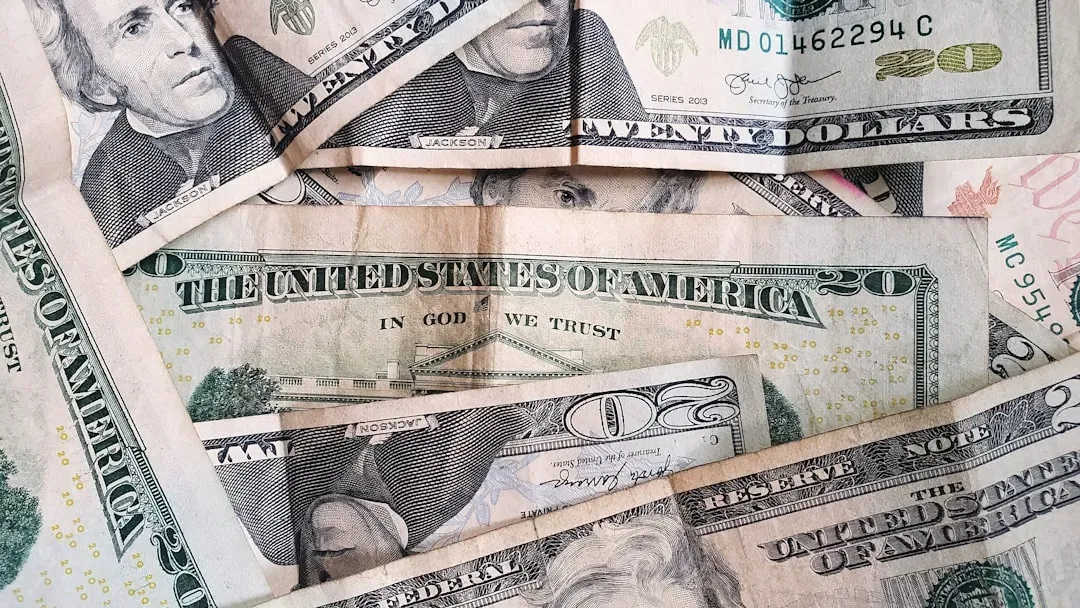
One common distinction is between “happy money,” such as windfalls, birthday money, or bills found on the street, and “unhappy money,” the hard-earned money we use for utilitarian consumption. Mental accounting can lead to irrational financial behaviors, such as overspending, misallocating resources, or making riskier decisions with “found money.”
Consumers tend to label money based on the context in which it was obtained, which creates “income mental accounts” that determine their consumption behaviors in a way that “matches” the budget rules. Your salary comes pre-labeled: bills, food, savings. A windfall arrives label-free, and the brain scrambles to find a home for it.
Research results showed that consumers who received windfall gains tended to use them for hedonic consumption rather than utilitarian consumption. Put simply, unexpected money tends to go toward pleasure, not practicality.
Why the Brain Treats Sources Differently

Mental accounting refers to the way individuals categorize and value financial transactions based on their source or intended use. Rather than viewing all money as fungible, people often divide it into mental “buckets,” such as expenses, savings, entertainment, or travel.
The concept holds that people are more likely to be impulsive with unexpected money because such money was not factored into their financial plan. When money wasn’t expected, no mental budget was created for it, and so it gets treated as a free pass.
In behavioral economics, mental accounting refers to the set of rules describing how individuals value and spend money based on the money’s origin and on how one labels the money. Since people put a mental label to money, the principle of fungibility, which states that any unit of money is substitutable, is violated.
Tax Refunds: A Classic Case Study
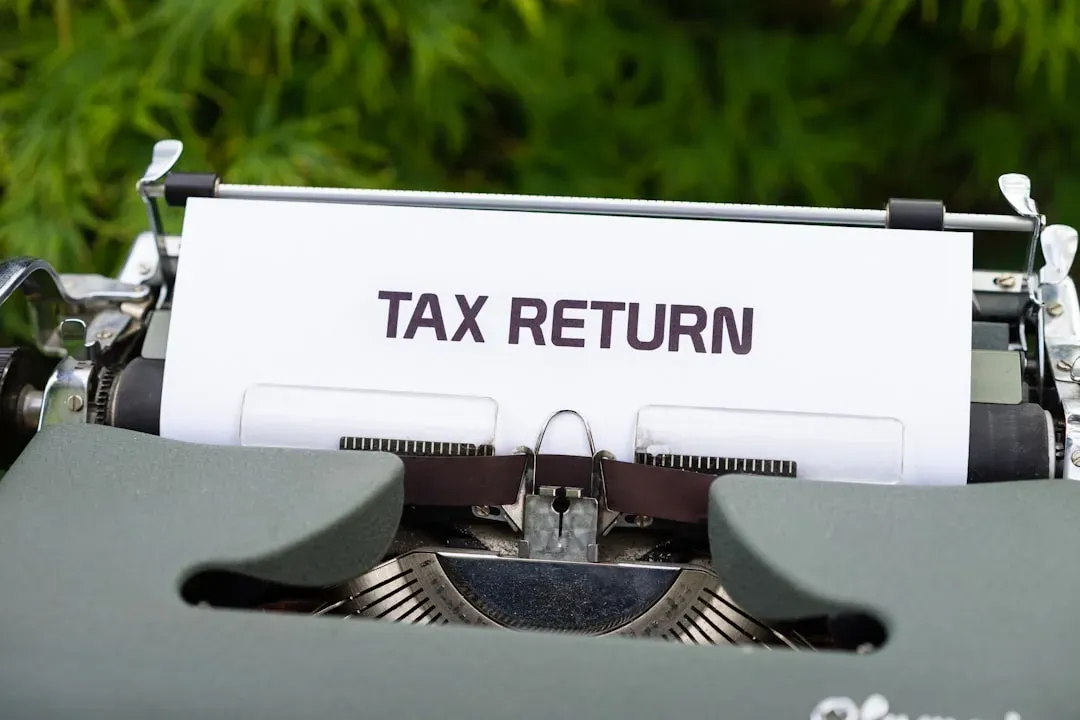
A bias stemming from mental accounting is the windfall effect, the tendency to spend unexpected income more impulsively. Tax returns are a prime example. Individuals often treat tax returns as “found money,” funds that don’t fit into their financial plans, and spend them lavishly.
Most taxpayers look at tax refunds as a bonus or sort of windfall whose spending has no impact on their financial plan for the year. This is erroneous, since tax refunds represent money that rightfully belongs to the taxpayer, with the tax authority only restoring an amount equivalent to the overpaid tax. Instead, tax refunds should be treated the same way as regular income.
A study conducted by the National Bureau of Economic Research revealed that mental accounting significantly influences consumer spending. Their analysis indicated that when individuals view money from a tax refund as “extra income,” they are more prone to splurge rather than save, a distinction that traditional models fail to capture.
Partner offer
Bonuses and the Extravagance Trap

A bonus is a payment above and beyond regular income, usually awarded as a form of incentive to employees or for accomplishment of certain milestones. However, employees see bonuses in a different light from ordinary income. As a result, many employees spend their bonuses on unnecessary expenses such as cars, vacations, and fancy clothing.
The money gets placed into both a “windfall gain” and a “food” or “entertainment” account. The extravagant dinner would not have occurred had each couple received a yearly salary increase of the same amount, even though that would have been worth more in present value terms. Thaler used this exact observation in his foundational research.
Many consumers treat their holiday bonuses or gifts as “fun money,” leading to more lavish spending during festive seasons. It’s a pattern that repeats reliably, year after year, across cultures and income levels.
Cognitive Ability and the Strength of the Effect

When spending income, individuals with low cognitive abilities are likely to be less capable of abstracting from the source of income and less likely to use the source for mental accounting. By contrast, subjects with higher cognitive capacity can be expected to be less reliant on applying heuristic simplification methods. Instead, they are more likely to keep track of the entire available budget when spending income.
Even in the same experiment, subgroups have shown stronger and reverse effects, depending on individual attributes and cognitive tendencies, with the strength of the effect likely depending on factors such as environment, methods, and participant characteristics.
Individuals such as Asians, students, and participants in controlled environments tend to be more sensitive to the psychological categorization of money based on its source, though mental accounting may also have its limitations. No single psychological profile is immune.
The Surprising “Reverse” House-Money Effect

A “reverse house-money effect,” where people actually reduce spending or become risk-averse after receiving a windfall, has been observed in research. This is less intuitive but well-documented, and it complicates the popular narrative that windfall money always gets blown recklessly.
As a possible explanation for the reversed or modest house money effect, loss aversion may play a key role and should be further investigated in future research. Some people, upon receiving unexpected money, feel a heightened sense of responsibility not to lose it.
A low-to-moderate house-money effect was confirmed by recent meta-analysis research. However, high heterogeneity was observed, and the strength of the house-money effect varied widely depending on the situation. The effect is real, but it is not universal or automatic.
How the Sunk Cost Fallacy Connects to Mental Accounting

Mental accounting can explain behaviors such as the sunk cost fallacy, where people continue to invest resources into unproductive endeavors due to prior commitments, rather than making decisions based solely on current value. This is the same core mechanism working in reverse: money already spent gets “booked” into a mental account, and walking away feels like closing that account at a loss.
A person may buy a movie ticket and find the film offensive but stays for the entire show to “get their money’s worth.” Humans tend toward this behavior due to psychological factors such as loss aversion, the disliking of the feeling of losing.
Another important aspect of mental accounting is the pain of paying, which refers to the emotional responses associated with spending money. This pain varies depending on the timing and method of payment. Using cash tends to produce more psychological discomfort than swiping a credit card or using a digital wallet, which feels more abstract and less immediate.
Breaking the Bias: What Research Suggests

Understanding this cognitive bias, and the effect it has on us, can help individuals and organizations make better financial choices by treating money more objectively. That’s easier said than done, of course. The bias is baked into ordinary decision-making in ways that don’t announce themselves.
In addressing mental accounting, Thaler emphasized the concept of fungibility. The concept holds that all money is mutually exchangeable and that individuals should treat all money the same, regardless of the intended use or origin. Practically, this means asking yourself whether you would make the same spending decision if the windfall had come as a salary addition instead.
The findings of recent meta-analysis research offer insights into effective policy design and consumer behavior. On an individual level, the clearest step is awareness. Recognizing that “found money” isn’t structurally different from earned money is a starting point. From there, it’s a matter of building habits that treat every dollar as equally worth protecting, regardless of where it came from.
— The next time you receive a bonus, an inheritance, a tax refund, or even a small bet that paid off, the pull toward spending it loosely is entirely predictable. It’s not a character flaw. It’s how the brain has been categorizing money all along. The more useful question isn’t whether the effect exists, but whether you want it to keep making your financial decisions for you.Partner offer
Planning a trip to Vegas?
Compare hotel rates and show tickets on VEGAS.com.