
No Direct Link to the Crime (Image Credits: Mirrorball.themarshallproject.org)
Missouri – Lance Shockley professed his innocence in the 2005 killing of a state trooper, pushing for DNA analysis on untouched crime scene evidence right up until his execution last October.[1][2]
No Direct Link to the Crime
A highway patrol sergeant investigating a fatal drunk-driving crash met a violent end in 2005. Sgt. Carl Dewayne Graham Jr. suffered fatal wounds from a gunshot during his probe into Lance Shockley’s possible involvement.[1][2]
Prosecutors built their case on circumstantial ties alone. No eyewitness saw Shockley at the scene. Forensic evidence offered no fingerprints, blood, or DNA matching him. The absence of a murder weapon connected to Shockley further fueled doubts among his supporters.[2]
His 2009 trial ended in conviction, but the jury deadlocked on sentencing. A judge imposed the death penalty. Shockley exhausted appeals through state and federal courts, yet he never wavered in claiming innocence.[1]
Plea for Advanced DNA Scrutiny
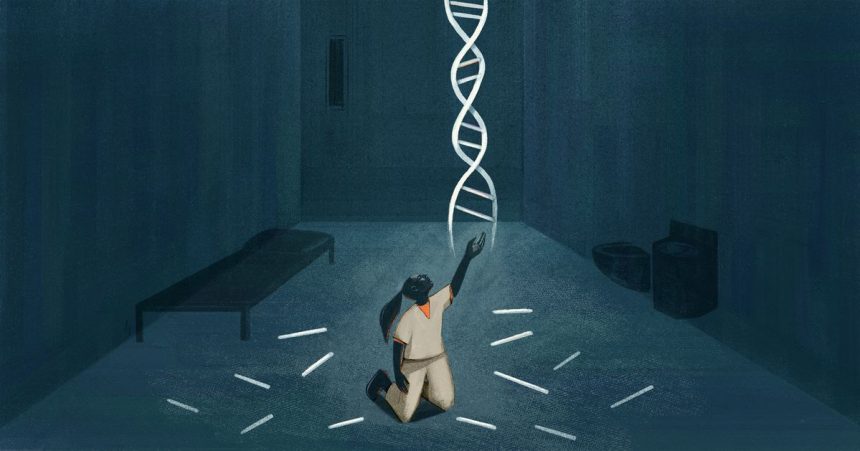
With an execution warrant issued in June 2025, Shockley’s attorneys moved swiftly. They sought post-conviction testing under Missouri’s 2001 law on ten items from the scene, including shotgun shell fragments, a cigarette butt previously yielding inconclusive results, latent fingerprints, and a cell phone.[1][2]
Advocates argued that modern techniques, unavailable or unreliable in 2009, could now detect touch DNA mixtures or matches to others. Tools like Cybergenetics’ TrueAllele software promised clearer interpretations from trace samples.[2]
Forensic DNA expert Meghan Clement, who consulted on the case, questioned the refusal. “What is the harm in doing the testing?” she asked.[1]
The team preserved evidence through court order, but confirmation lagged. They emphasized potential databank hits or multiple contributors excluding Shockley.
Courts Reject and Time Runs Out
Carter County Circuit Judge Kacey Proctor denied the motion in July 2025. The ruling held that touch DNA analysis existed at trial time and no reasonable probability existed that results would alter the verdict.[1][2]
An appeal reached the Southern District of the Missouri Court of Appeals. Deadlines fell after the October 14 execution date. A motion to expedite failed. The attorney general’s office stressed case finality for victims and courts.[1]
Governor Mike Kehoe rejected clemency pleas from groups like the American Bar Association and Amnesty International. On October 14, 2025, officials administered lethal injection at Eastern Reception, Diagnostic and Correctional Center in Bonne Terre. Shockley was pronounced dead at 6:13 p.m.[2]
Missouri’s Stringent Standards Block Relief
Missouri law demands proof that evidence survives and testing technology was not reasonably available during trial. From 2022 to 2025, courts rejected all six filed petitions, sometimes without rulings.[1]
- Patty Prewitt’s 2017 request on pajamas and other items from a 1984 murder denied in 2018; her sentence commuted in 2024, but conviction stands.
- John Caudill’s 2022 motion failed over preservation doubts.
- Lamar McVay and Ronald Greer’s requests linger unresolved.
Even exclusions rarely overturn convictions, as other evidence often suffices. Missouri tallies 14 DNA exonerations total, none since 2020 – contrasting 560 nationwide since 2000.[1]
Critics like Centurion’s Paul Casteleiro call the state “particularly hostile to post-conviction relief.” “They simply do not care that an injustice has been committed,” he said.[1]
Key Takeaways
- Missouri requires stringent proof for DNA retests, prioritizing finality.
- Shockley’s untested items included shells and a cigarette butt ripe for modern analysis.
- National exonerations via DNA outpace Missouri’s lagging record.
Lance Shockley’s death leaves lingering questions about untapped evidence and rigid laws. As debates on innocence claims intensify, reform advocates urge easier access to testing. What do you think about balancing finality and truth? Tell us in the comments.