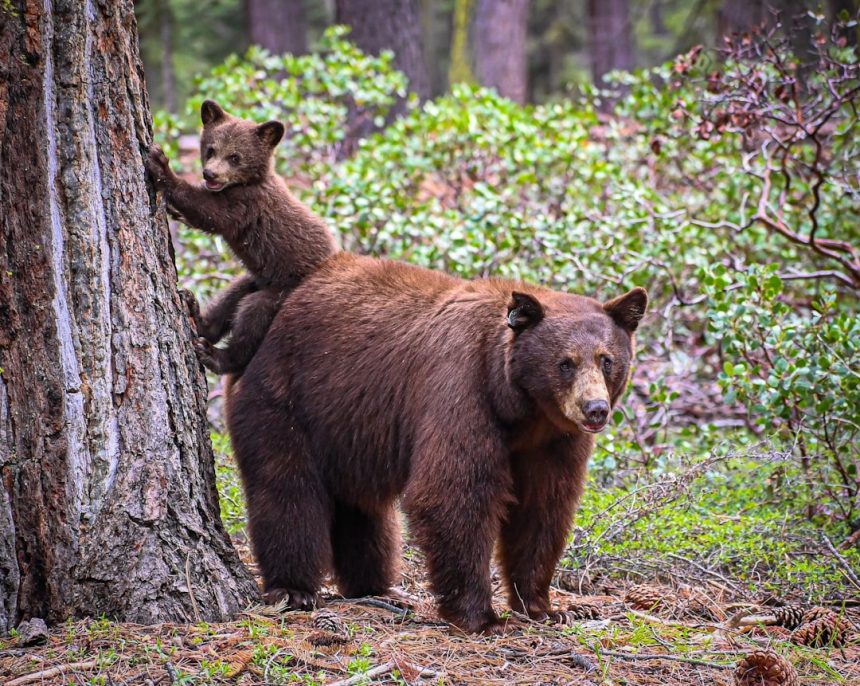


Repeat Offender Emerges in Quiet Neighborhood (Image Credits: Unsplash)
Monrovia – A mother black bear met a tragic end this week after state wildlife officials euthanized her for injuring two people in the city’s foothills. The decision came despite urgent pleas from local leaders to relocate the animal and her cubs to the nearby Angeles National Forest. The incident highlights growing tensions between human expansion and wildlife in Southern California’s urban edges.
Repeat Offender Emerges in Quiet Neighborhood
The saga began last June when the bear approached an elderly man seated on his enclosed porch in the Oakglade Drive area. She swiped at him, causing injuries from which he fully recovered after treatment aided by a caretaker who scared her off.[1][2]
Nearly nine months later, on March 14 around 9:20 a.m., the same bear charged a woman walking her dog along the same street. She clawed the back of the woman’s knee, inflicting minor wounds that required hospital care but posed no long-term threat. A neighbor intervened, yelling to drive the bear away, while residents noted the family had denned under a nearby home for weeks.[3]
Locals knew her as “Blondie,” a familiar sight amid rising bear sightings in the foothills. One resident, Julie Strople, had spotted the bear just minutes earlier while out with her dog. “The bear was like literally two feet from where you’re standing, and I said, ‘Mama bear, go.’ She looked at me, and she walked away,” Strople recounted.[3]
Capture, Testing, and Swift State Action
Hours after the attack, authorities spotted bears under a home, leading to a Sunday operation by the California Department of Fish and Wildlife. Teams tranquilized the mother and safely removed her two cubs from the den.[4]
DNA samples from the woman’s injuries matched those from the June incident, confirming a pattern of aggression. CDFW deemed the bear a public safety risk under state policy, which justifies euthanasia after multiple human injuries. Officials acted Tuesday evening, March 17, before city representatives could fully intervene.[1][2]
CDFW spokesperson Cort Klopping emphasized the gravity: “This is not the first time that this bear has had this kind of an interaction with a human, so that makes it more concerning. It lends itself to more of a pattern of behavior rather than a one-off.”[4]
City Leaders’ Failed Bid for Relocation
Monrovia City Manager Dylan Feik announced the outcome with regret. The City Council had lobbied Sacramento for relocation, arguing the Angeles National Forest offered a suitable habitat. Yet Feik noted, “By the time we were able to speak with state officials involved in the decision-making, the decision to euthanize was already made.”[3]
Partner offer

Community sentiment echoed the frustration. A petition garnered over 3,000 signatures urging mercy, while residents like Richard Franco called for better coordination. “This is a plea to Fish and Wildlife to communicate better, to talk to people in the community who know these bears,” Franco said.[2]
Ashlie Howie-Storms, who tracks local bear activity online, understood the risks but hoped for alternatives. “I totally understand this bear could be deemed as aggressive… But, I do wish a relocation elsewhere… could have been a better option for her.”[4]
Bears on the Move: Broader Context in the Foothills
California boasts about 60,000 black bears, the largest population in the contiguous U.S., concentrated in areas like the San Gabriel Mountains since relocations in the 1930s. Recent wildfires, including the Eaton fire in nearby Altadena, have pushed bruins into neighborhoods seeking food and shelter amid human encroachment.[1]
Monrovia sees frequent visitors, with Sierra Madre logging triple bear home entries last June compared to prior years. Officials urge calm encounters:
- Stay calm and do not run.
- Back away slowly, giving space.
- Make yourself look bigger and noisy if charged.
- Secure trash and remove attractants.
Similar cases persist; last summer, CDFW euthanized another female bear after repeated break-ins nearby.[1]
Orphaned Cubs’ Path Forward
The young cubs emerged healthy from the ordeal. CDFW plans to house them in a permitted rehabilitation facility with minimal human contact before releasing them into wildland areas once mature.[4]
This outcome softens the loss for some, but the mother’s fate underscores policy limits on relocation for problem animals.
Key Takeaways
- DNA confirmed the bear’s involvement in two injury-causing swipes, triggering state euthanasia protocol.
- Monrovia officials pushed relocation too late, highlighting communication gaps.
- Cubs will rehab and return to the wild, while residents adapt to rising bear presence.
As bears and people increasingly overlap in California’s wildland-urban interface, this case prompts reflection on balancing safety and conservation. Will better coordination prevent future heartbreak? What do you think about it? Tell us in the comments.
Partner offer
Planning a trip to Vegas?
Compare hotel rates and show tickets on VEGAS.com.