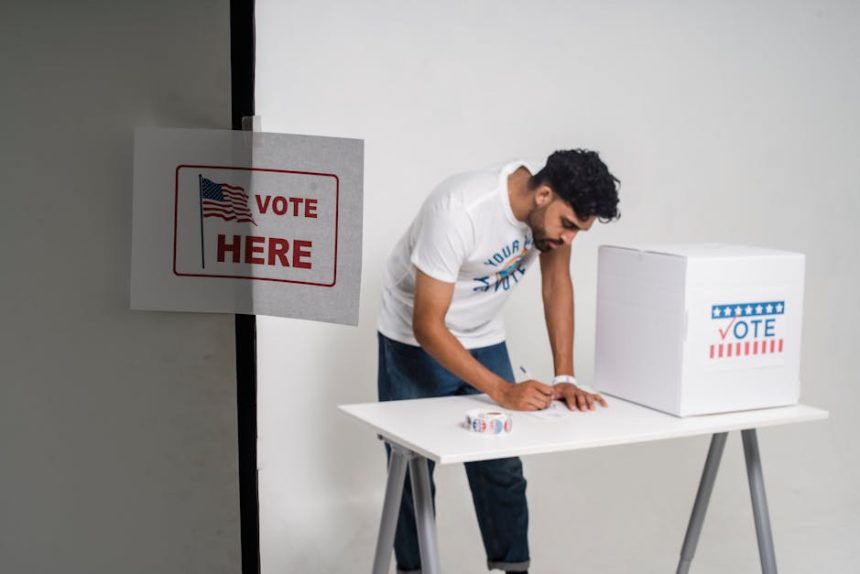

A Bold Move Rooted in Recent History (Image Credits: Pexels)
Nevada – The Silver State positions itself at the forefront of national politics once again as Democrats intensify efforts to secure the first spot on the 2028 presidential primary calendar. State party leaders highlight Nevada’s diverse electorate and battleground status to argue for primacy in a process that shapes the party’s nominee. This push follows a narrow loss to President Donald Trump in 2024 and aims to address lessons from that defeat.[1][2]
A Bold Move Rooted in Recent History
Nevada State Democratic Party Chair Daniele Monroe-Moreno described the bid as a strategic response to the party’s 2024 challenges. Trump defeated Vice President Kamala Harris by just over 46,000 votes, marking the first Republican presidential win in the state in two decades. Monroe-Moreno emphasized rebuilding coalitions with Latino, Black, and working-class voters through an early primary.[1]
The party submitted its formal proposal to the Democratic National Committee’s Rules and Bylaws Committee on January 16, 2026. That document outlined Nevada’s fit for the lead position, drawing on its track record since 2008 when late Sen. Harry Reid elevated it to first in the West. In February 2026, the DNC advanced Nevada alongside 11 other states during a meeting in Puerto Rico, setting the stage for spring presentations.[3][2]
Nevada’s Case Matches DNC Priorities
Democrats point to Nevada’s demographics as a microcosm of America. The state boasts a majority-minority population, high concentrations of non-college-educated voters, and communities spanning urban Las Vegas, suburban areas, and rural regions. Its workforce includes strong union presence, such as Culinary Union 226 and the Nevada AFL-CIO.[2]
The proposal aligns directly with DNC criteria for early states:
- Rigorousness: Most diverse and working-class battleground, representing the coalition needed for 2028 victory.
- Fairness: Small population of 3 million, two media markets allowing retail politics and face-to-face campaigning.
- Efficiency: Progressive voting laws enabling broad access to registration and ballots.
Sen. Jacky Rosen captured the pitch: “If Democrats want to win in 2028, we should start the primary calendar in a state that looks like America and prepares candidates to win the general election.” Nevada’s February 1, 2028, primary date, set by state law, supports timely execution.[1][3]
Partner offer

Endorsements Build Momentum
Support rolled in from key groups and leaders. Latino Victory Project endorsed Nevada, with President Katharine Pichardo stating it would produce a “battle-tested nominee” attuned to growing Latino voters. Somos Votantes and AAPI Victory Fund also backed the effort, stressing early amplification of diverse voices.[4]
Nevada’s congressional delegation rallied behind the cause. Sen. Catherine Cortez Masto advocated actively, noting that success in Nevada signals White House viability. Rep. Steven Horsford tied it to congressional battlegrounds. Potential 2028 contenders like Sen. Ruben Gallego and Rep. Ro Khanna praised the state’s representativeness during recent visits.[3][1]
Facing Rivals in a Crowded Field
Nevada competes fiercely for the top slot. In the West, only New Mexico challenges it, but nationally, New Hampshire pushes its independent voter testing ground, while South Carolina highlights its Black voter base that propelled Biden in 2020. Michigan, North Carolina, and Iowa also vie for early positions under the DNC’s regional framework of four or five pre-Super Tuesday states.[5]
| State | Key Pitch | Region |
|---|---|---|
| Nevada | Diverse battleground, working-class | West |
| New Hampshire | Independents, tradition | East |
| South Carolina | Black voters, Biden boost | South |
| Michigan | Swing state investments | Midwest |
UNLV historian Michael Green noted Nevada’s edge in reflecting national demographics and its history as a presidential bellwether, backing the wrong candidate only twice since 1908. The bid promises economic perks from candidate visits and media attention, much like past cycles.[1]
Monroe-Moreno expressed confidence: “Here in Nevada, we remain the one state that meets all of the criteria.” The DNC plans final decisions later in 2026, potentially at its August meeting.
Key Takeaways
- Nevada leads with diversity, accessibility, and battleground relevance.
- Strong backing from unions, Latino groups, and federal delegation bolsters the case.
- Success elevates state issues and tests nominees for general election wins.
Nevada’s quest underscores the high stakes in crafting a primary calendar that rebuilds Democratic coalitions. As contenders eye the White House, the Silver State stands ready to influence the path forward. What role should battlegrounds like Nevada play in picking the next nominee? Share your thoughts in the comments.
Partner offer
Planning a trip to Vegas?
Compare hotel rates and show tickets on VEGAS.com.