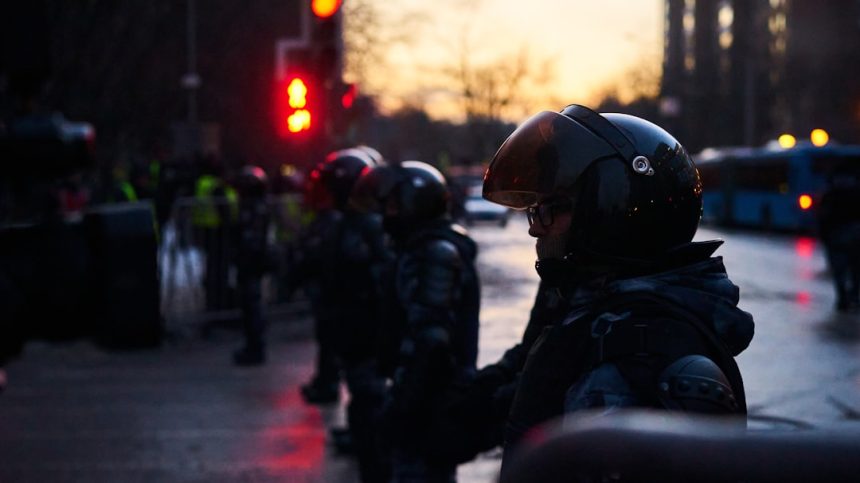

A Shocking Video Ignites Public Fury (Image Credits: Unsplash)
Las Vegas – The Nevada Supreme Court ruled Thursday that an internal investigation file into a Clark County School District police lieutenant’s actions remains shielded from public view. The decision upholds a lower court’s determination that the file qualifies for exemption under Nevada’s public records laws, emphasizing protections for officers under scrutiny.[1][2] This outcome caps years of litigation sparked by a February 2023 incident outside Durango High School, where video footage showed forceful restraint of a Black student.
A Shocking Video Ignites Public Fury
Cellphone footage from February 9, 2023, captured Clark County School District Police Lt. Jason Elfberg grabbing a Black teenager, slamming him to the ground, and pressing a knee into his back near Durango High School.[1] The student had been recording police interactions with a group of teens after school. Officers responded to a prior report of a possible firearm in the area, though body camera video later revealed no questions about weapons and showed the detained youths attempting to de-escalate.
Protests erupted soon after the video spread on social media. Demonstrators gathered outside district headquarters, voicing concerns over police tactics in schools. The clip drew widespread attention, including before Nevada lawmakers, and prompted immediate scrutiny of school police practices.[3]
ACLU Launches Records Battle
The American Civil Liberties Union of Nevada filed suit against the district in April 2023, seeking body camera footage, incident reports, emails, and the full internal probe into Elfberg’s conduct.[4] A Clark County District Court judge ordered release of significant materials, including multiple officers’ body cams and nearly 2,000 pages of documents. However, the court denied access to the investigative file itself, citing confidentiality provisions.
CCSD closed the investigation without disciplining Elfberg, confirming he retained his position.[1] The ACLU appealed, arguing the district misused exemptions to obscure accountability. Separate from the records fight, CCSD settled a lawsuit with two involved students for $1 million in January 2024.[2]
Partner offer
- February 9, 2023: Incident occurs outside Durango High School.
- April 2023: ACLU sues for public records.
- December 2023: Judge orders body cam and report releases.
- May 2024: Thousands of pages disclosed.
- December 2025: Oral arguments before Supreme Court.
- March 27, 2026: High court affirms denial of investigative file.
Supreme Court Weighs Due Process Over Disclosure
A three-justice panel – Linda Bell, Ron Parraguirre, and Lidia Stiglich – issued the ruling, describing it as narrow. The court reasoned that state law limits even the targeted officer’s access to the full file absent disciplinary action, creating an exemption from the Nevada Public Records Act.[1] Justices noted the ACLU’s view could lead to an “illogical result,” where the public accesses materials unavailable to the officer, undermining due process safeguards.
During oral arguments, ACLU Legal Director Chris Peterson urged in-camera review for redactions, highlighting public interest in verifying the probe’s integrity and explaining the lack of punishment. CCSD attorney Jackie Nichols defended confidentiality, warning disclosure could deter officers from reporting issues.[3]
Divided Responses Highlight Transparency Tensions
CCSD welcomed the decision in a statement, calling it “much-needed clarity for school districts and law enforcement agencies throughout Nevada.”[1] District officials had long argued the file’s sensitivity warranted protection.
ACLU Executive Director Athar Haseebullah decried the outcome sharply. “It would allow for law enforcement agencies that are accused of misconduct to simply bury things with an independent investigation file,” he said. Haseebullah labeled the ruling “quite problematic if applied at scale” and pledged to seek en banc review by all seven justices, insisting redactions could balance transparency and privacy.[2]
This ruling reinforces boundaries on public access to personnel probes, potentially influencing future disputes statewide. Yet it leaves lingering questions about oversight in school policing. Key takeaways include the prioritization of officer protections, the limits of public records requests in investigations, and ongoing pushes for accountability.
- Nevada law exempts full investigative files when no discipline occurs, even from the officer involved.
- ACLU secured prior releases but hit a wall on the core probe, fueling transparency debates.
- Plans for full-court review signal the fight may continue.
What do you think about balancing police privacy and public oversight? Tell us in the comments.
Partner offer
Planning a trip to Vegas?
Compare hotel rates and show tickets on VEGAS.com.