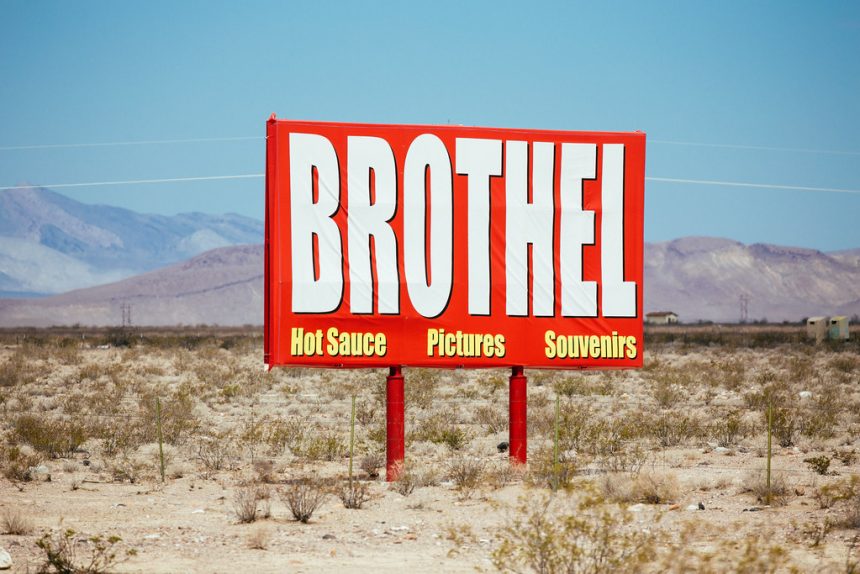


Roots in Frontier Days (Image Credits: Flickr)
Nevada – The Silver State’s rural counties host the nation’s sole regulated prostitution industry, where licensed brothels enforce strict rules amid evolving labor challenges.[1][2]
Roots in Frontier Days
Prostitution arrived in Nevada with 19th-century miners during the Comstock Lode era, when brothels operated openly in towns like Virginia City.[1] Local authorities tolerated the trade until post-Civil War moral campaigns pushed for closures nationwide, but Nevada held out.
By 1937, the state mandated weekly health checks for sex workers. Federal orders in 1942 suppressed red-light districts near military bases in Reno and Las Vegas, leading to their shutdown as public nuisances by 1951.[3] Rural brothels persisted, gaining formal licensing in 1971 when Storey County approved the Mustang Ranch – the first official operation.[1]
Counties and Current Landscape
State law permits brothels only in counties under 700,000 population, leaving out urban centers like Clark and Washoe Counties. Ten counties allow them: Churchill, Elko, Esmeralda, Humboldt, Lander, Lyon, Mineral, Nye, Storey, and White Pine. Active operations exist in six – Elko, Lander, Lyon, Mineral, Nye, and Storey – with about 19 brothels employing roughly 200 women at any time.[2]
- Nye County (Pahrump): Sheri’s Ranch, Chicken Ranch
- Lyon County (Mound House): Four brothels
- Storey County: Sagebrush Ranch (formerly Mustang)
- Elko County: Several in Elko and Carlin
- Mineral County: Wild Horse Brothel
- Lander County: One in Battle Mountain
Owners secure county licenses with fees up to $200,000 annually, while workers register as independent contractors and obtain sheriff cards.[1]
Daily Operations and Customer Experience
Visitors enter a lounge resembling a bar, where women line up in lingerie for selection. No prices are posted or discussed publicly; negotiation occurs privately in a room, with payment upfront before services begin.[1] Sessions, called “parties,” range from quick encounters at $300–$400 to overnight “girlfriend experiences” exceeding $1,000 per hour.
Workers keep about half the fee after house cuts, covering their own expenses like food and transport. Shifts last two weeks on-site, with marketing via online boards – though interstate price talks violate federal law.[2]
Health, Safety, and Regulations
Nevada enforces rigorous standards: weekly tests for gonorrhea and chlamydia, monthly for HIV and syphilis. Condoms are mandatory for all sexual acts, and owners face liability for transmissions.[2] Security includes pat-downs, client refusals by workers, and no alcohol or drugs for staff.
Brothels pay county taxes supporting schools and services – Nye County collected $141,000 last year, Lyon about $384,000 annually – though legal trade generates $75 million yearly versus billions in illegal activity.[1]
Labor Tensions Ignite Union Drive
Sex workers at Pahrump’s Sheri’s Ranch made headlines in early 2026 by unionizing with the Communications Workers of America, forming United Brothel Workers – the first such effort in Nevada history.[4] A new contract granting owners broad rights over workers’ images and intellectual property spurred the rapid organizing via Discord.
Six leaders faced termination shortly after, prompting unfair labor practice charges. “Sex workers are used to moving fast,” organizer Molly Wylder said.[4] The push highlights demands for dignity in a field long treated as independent contracting.
Key Takeaways
- Nevada’s brothels operate solely in six rural counties under tight health and licensing rules.
- Workers undergo frequent testing and negotiate services privately.
- Recent unionization at Sheri’s Ranch signals growing calls for better protections.
Nevada’s brothel system endures as a regulated outlier, balancing safety with ongoing debates over rights and revenue. What do you think about these developments? Tell us in the comments.