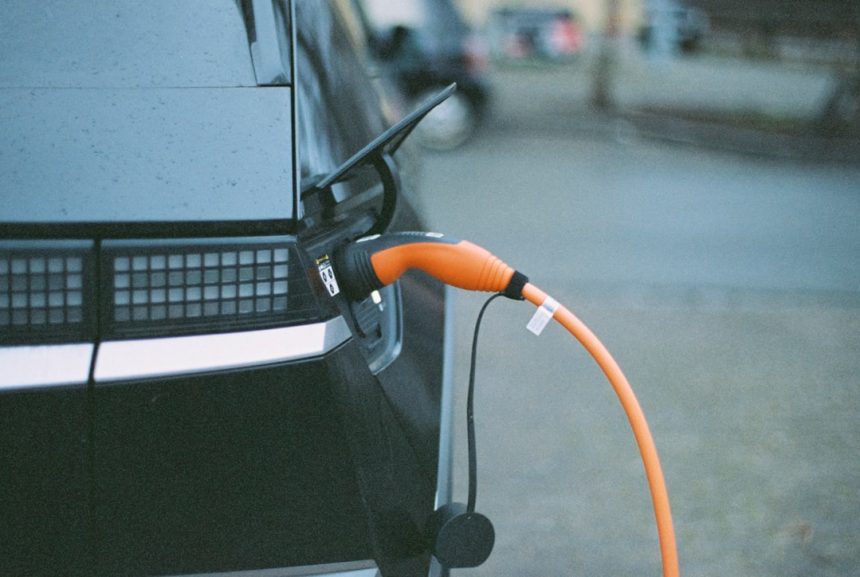


Gas Taxes No Longer Cover the Miles (Image Credits: Unsplash)
Las Vegas – A Las Vegas resident’s recent letter to the editor has spotlighted a growing concern in Nevada: electric vehicle owners avoid traditional gas taxes yet still rely on the state’s roadways. Nanette Shahbaz argued that EV drivers should face a special fee calculated from annual mileage reported at Department of Motor Vehicles plate renewals.[1] This proposal arrives amid declining revenue for the State Highway Fund, strained by rising EV adoption and improved fuel efficiency among gas vehicles. Lawmakers and transportation officials now grapple with how to maintain fairness as vehicle technology shifts.
Gas Taxes No Longer Cover the Miles
The Nevada State Highway Fund depends heavily on motor vehicle fuel taxes, currently set at 23.81 cents per gallon.[2] These funds support the Nevada Department of Transportation, Department of Motor Vehicles, and Highway Patrol. However, the tax’s purchasing power has dropped 39 percent over the past two decades due to inflation and better vehicle efficiency.[3]
NDOT currently collects about 0.9 cents per mile driven through fuel taxes, but projections show this falling to around 0.3 cents as EVs proliferate.[4] Delays plague major projects, such as expansions on Interstate 15 and rural passing lanes. Operating costs at the DMV have tripled in the same period, while revenue grew only 85 percent.
EV Numbers Surge Across Nevada
Electric vehicle registrations in Nevada continue to climb, with forecasts predicting a quadrupling to nearly 200,000 vehicles by 2032, or 7.4 percent of the total fleet.[3] In Washoe County alone, EV numbers rose 407 percent from June 2020 to June 2024.[5] Average fuel economy for new non-EV cars improved 28 percent from model year 2005 to 2025.
Heavy EVs exacerbate road wear. Shahbaz noted that models like the Tesla Cybertruck weigh 6,600 to 6,900 pounds, comparable to the Ford F-150 Lightning at 6,015 to 6,893 pounds.[1] These vehicles demand the same infrastructure upkeep as gas-powered counterparts without contributing through pump taxes.
Practical Proposals Gain Traction
Shahbaz suggested a straightforward fix: DMV-calculated fees based on odometer readings at plate renewal, directing proceeds to road maintenance. An advisory group formed in 2021 echoed similar ideas, recommending a road usage charge for EVs and a full shift to per-mile levies for new vehicles by 2035.[2]
In the interim, options include higher registration fees and expanded fuel tax indexing, like Clark County’s inflation-adjusted model. The Regional Transportation Commission in Washoe County advanced an advisory ballot question on EV fees.[6] Here are key alternatives under discussion:
- Additional annual EV registration fees, as in 39 other states ranging from $50 to $250.[5]
- Mileage-based user fees, potentially capped, requiring vendor support for tracking.
- Surcharges on public EV charging stations, though this misses home charging.
- Increased general vehicle fees or fuel taxes across the board.
Lessons from Other States
Nevada stands among a handful of states without extra EV fees, while 39 impose annual registration surcharges.[5] The Guinn Center’s report deemed such fees the most equitable and feasible for Nevada, leveraging existing DMV processes.[5]
A small comparison of approaches:
| State | EV Annual Fee | Type |
|---|---|---|
| Most States (39) | $50–$250 | Registration |
| Nevada | $0 | None |
| Examples: Nebraska | $150 | Registration |
These measures aim to bridge funding gaps without overly burdening early adopters.
Voices from the Debate
Not all agree on punitive measures. Other letters to the Review-Journal expressed willingness from EV owners to pay fair shares through modern systems, like county-specific allocations.[7][8] Critics worry fees could slow green transitions, but proponents stress equity for all drivers.
Transportation leaders emphasize technology-neutral solutions to sustain infrastructure amid change.
Key Takeaways
- Nevada’s highway fund faces shortfalls as EV adoption erodes gas tax revenue.
- A mileage-based DMV fee offers a simple path to fairness.
- 39 states already charge EV owners extra; Nevada lags behind.
Nevada stands at a crossroads where innovation meets infrastructure needs. A balanced approach could ensure all vehicles contribute proportionally, preserving roads for future growth. What do you think about a special EV tax? Tell us in the comments.