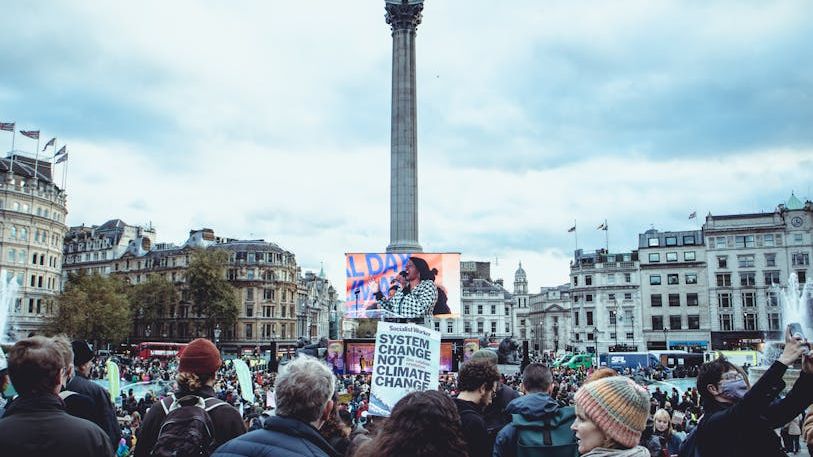
Skeptical Science New Research for Week #21 2026 – Image for illustrative purposes only (Image credits: Pexels)
Recent analyses of long-term temperature records, river systems, and wetland emissions are sharpening the picture of how human activities are reshaping climate patterns at scales from individual nations to entire continents. Researchers are applying advanced statistical methods to separate natural variability from anthropogenic signals, revealing consistent patterns of warming, oxygen loss, and rising methane output. These studies arrive as policymakers weigh pathways to limit warming and as public discourse around climate claims grows more complex.
UK Warming Now Tied Directly to Human Causes
One study examined the United Kingdom’s exceptionally detailed temperature record using optimal fingerprinting techniques on data from 1850 onward. The analysis found a clear anthropogenic influence on recent decades of warming, with greenhouse gases identified as the dominant driver. Earlier in the twentieth century, other human factors produced a detectable cooling effect, most likely from sulphate aerosols released by industrial activity.
The findings update previous regional work and show that human influences remain detectable even when focused on a single country. Natural internal variability and external factors such as volcanic activity were tested but could not explain the observed changes on their own. The results strengthen the case for using national-scale observations to test global climate models.
Rivers Lose Oxygen at Steady Rate Worldwide
Global river systems are experiencing sustained declines in dissolved oxygen, according to an analysis of more than 21,000 river segments from 1985 to 2023. The average rate of loss reached 0.045 milligrams per liter per decade, with nearly 79 percent of segments showing deoxygenation. Rising water temperatures reduce oxygen solubility, while short-term heatwaves and dam construction add further stress.
Projections indicate that dissolved oxygen in rivers could fall another 1.1 percent under a low-emissions pathway or 4.7 percent under a high-emissions scenario by the end of the century. These changes threaten aquatic ecosystems that depend on adequate oxygen levels for survival. The study provides a consistent baseline for tracking future trends across continents.
Wetland Methane Releases Could Grow Sharply
Ensemble simulations from seven terrestrial biosphere models point to substantial increases in methane emissions from natural wetlands as temperatures rise. For every additional degree Celsius of global land warming, emissions are expected to climb by roughly 24 teragrams of methane per year. When constrained by field measurements, the models suggest wetland emissions could rise 50 to 60 percent by the 2090s under a high-warming scenario relative to the 2010s.
The projected increase from the current decade to the 2030s alone could offset 8 to 10 percent of current anthropogenic methane emissions, comparable in scale to reductions pledged under international agreements. Uncertainties remain large, particularly around tropical wetland extent and future inundation patterns. Mid- and high-latitude observations currently dominate the constraint, leaving gaps in tropical coverage.
Fossil Fuel Phase-Out Brings Both Risks and Rewards
Two global energy system models explored what a complete phase-out of fossil fuels by 2050 would require to stay within the 1.5-degree Celsius limit. The transition would demand 1.6- to 1.8-fold increases in power generation compared with conventional pathways, along with accelerated deployment of solar, wind, and electrolysers. Total energy supply investments could rise by as much as 34 percent over the century.
Despite the added costs, such pathways reduce reliance on carbon dioxide removal technologies and raise the chance of returning to the 1.5-degree target after any temporary overshoot. The analysis underscores that strong international commitment will be needed to meet the infrastructure and investment demands of a zero-fossil energy system.
What matters now: These studies collectively show that human influences are measurable at national and ecosystem scales, while also highlighting practical limits and opportunities for mitigation. Continued monitoring and model refinement will be essential to narrow remaining uncertainties around methane feedbacks and energy-system transitions.
Across these findings, the thread is consistent: human activities are leaving measurable marks on temperature, water chemistry, and atmospheric composition. The challenge now lies in translating that clarity into coordinated action that accounts for both the scale of required change and the remaining scientific unknowns.