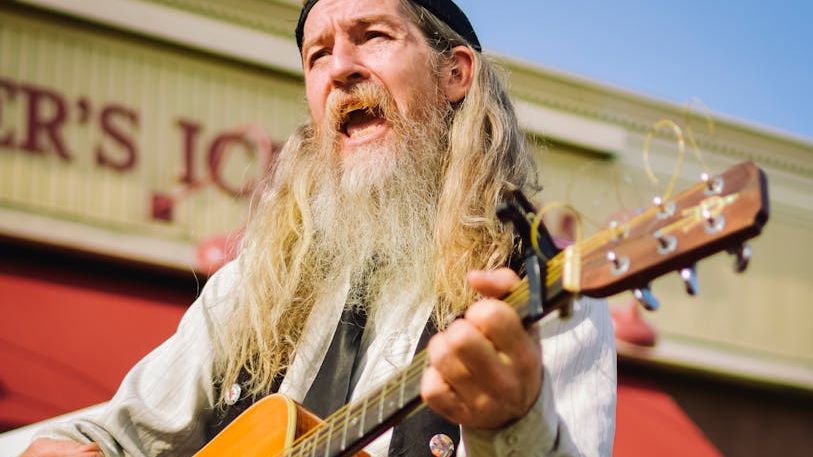
A Childhood Marred by Institutions and Rebellion (Image Credits: Pexels)
David Allan Coe, the gravel-voiced songwriter who embodied the raw spirit of outlaw country, died on April 29, 2026, at the age of 86.[1] His widow, Kimberly Coe, confirmed the news to Rolling Stone, noting he passed away in a hospital intensive care unit around 5 p.m. ET.[2] While no cause of death was immediately disclosed, Coe had faced health challenges in recent years.[3]
A Childhood Marred by Institutions and Rebellion
Born on September 6, 1939, in Akron, Ohio, Coe endured a troubled youth that shaped his later persona.[1] At age nine, authorities sent him to the Starr Commonwealth for Boys reform school, marking the start of nearly two decades in correctional facilities. He spent three years at the Ohio Penitentiary among other stints, emerging in 1967 determined to channel his experiences into music.
Coe often recounted tales of prison life, including a disputed claim of time on death row for killing an inmate in self-defense – an account later clarified as stemming from lesser charges like possession of burglary tools and grand theft auto.[1][3] These stories fueled his blues-infused early work and the “mysterious rhinestone cowboy” image, complete with a Lone Ranger mask and rhinestone suits. Upon release, he parked a hearse outside Nashville’s Ryman Auditorium, busking to survive while honing his craft.
From Penitentiary Blues to Outlaw Stardom
Coe signed his first record deal with Plantation Records in 1970, releasing Penitentiary Blues, an album steeped in themes of incarceration, heroin, and hoodoo.[1] He transitioned to Columbia Records after Tanya Tucker’s chart-topping cover of his “Would You Lay With Me (In a Field of Stone)” in 1973. That year, The Mysterious Rhinestone Cowboy solidified his commitment to country, blending his throaty baritone with boisterous, humorous lyrics about booze and rebellion.
As a key figure in the 1970s outlaw country movement alongside Willie Nelson and Waylon Jennings, Coe rejected Nashville’s polish for authenticity.[3] Albums like Longhaired Redneck (1976) and Rides Again (1977) showcased his self-penned anthems, while he contributed “Cocaine Carolina” to Johnny Cash. His wild stage presence – long hair, earrings, biker boots – built a devoted cult following, even if it sidelined him from mainstream radio.
Timeless Hits and Songwriting Triumphs
Coe penned enduring classics that resonated beyond his own chart success. Johnny Paycheck’s 1977 rendition of “Take This Job and Shove It” soared to No. 1, inspiring a film and becoming a working-class rallying cry.[1] His own “You Never Even Called Me By My Name,” co-written with Steve Goodman and referencing John Prine, peaked at No. 8 on the country charts in 1975 as the self-proclaimed “perfect country and western song.”
- “The Ride” (1983): A ghostly ballad about hitchhiking with Hank Williams’ spirit, reaching No. 4 on Billboard.
- “Mona Lisa Lost Her Smile” (1984): A No. 2 hit evoking lost love.
- “She Used to Love Me a Lot” (1984): Peaked at No. 11, exploring rekindled romance.
These tracks, alongside concept albums like Human Emotions (1978), highlighted his versatility from ballads to rowdy narratives.
Controversies That Defined His Outlaw Edge
Coe’s career bristled with friction. Independent releases like Nothing Sacred (1978) and Underground Album (1982) featured explicit, profane content sold via biker magazines, including tracks targeting Anita Bryant. Lyrics in songs such as “If That Ain’t Country” and “Nigger Fucker” drew racism accusations, which he dismissed as satire drawn from prison experiences and influences like Shel Silverstein.[1]
Financial woes compounded issues: In 2015, he pleaded guilty to tax evasion, owing nearly $1 million to the IRS, resulting in three years’ probation and lost publishing rights to early hits.[1] A retired member of the Outlaws Motorcycle Club, Coe maintained his defiant streak through collaborations like Rebel Meets Rebel with Pantera’s Dimebag Darrell in 2006.
A Lasting Mark on Country Music
Into his later years, Coe toured relentlessly, performing at festivals and contributing to projects like Hardy’s “Live Forever” in 2024 with Hank Williams III.[1] He fathered four children with ex-wife Jody Lynn Coe, including son Tyler Mahan Coe, host of the acclaimed Cocaine & Rhinestones podcast. His representative reflected, “David is a musical treasure,” adding that “David appreciated all of the fans.”[3]
Coe’s death closes a chapter on one of country’s most unfiltered voices, whose blend of blues, rock, and rebellion continues to inspire. From prison yards to honky-tonks, he lived the outlaw life he sang about, leaving a catalog that defies easy categorization.