
There’s a good chance you’ve been humming along to a Beethoven melody without ever realizing it. Pop music, for all its glossy production and modern beats, has been quietly borrowing from the concert hall for centuries. Sometimes the classical DNA is front and center, sitting in the opening bars like a calling card. Other times it’s buried so deep you’d need a musicologist to point it out.
Honestly, the connection between the two worlds is more alive than most people suspect. These aren’t just random coincidences or casual winks at history. They’re deliberate lifts, creative reimaginings, and sometimes outright theft of some of the most powerful melodies ever composed. Prepare to hear your favorite songs very differently after this. Let’s dive in.
Procol Harum – “A Whiter Shade of Pale” and Johann Sebastian Bach
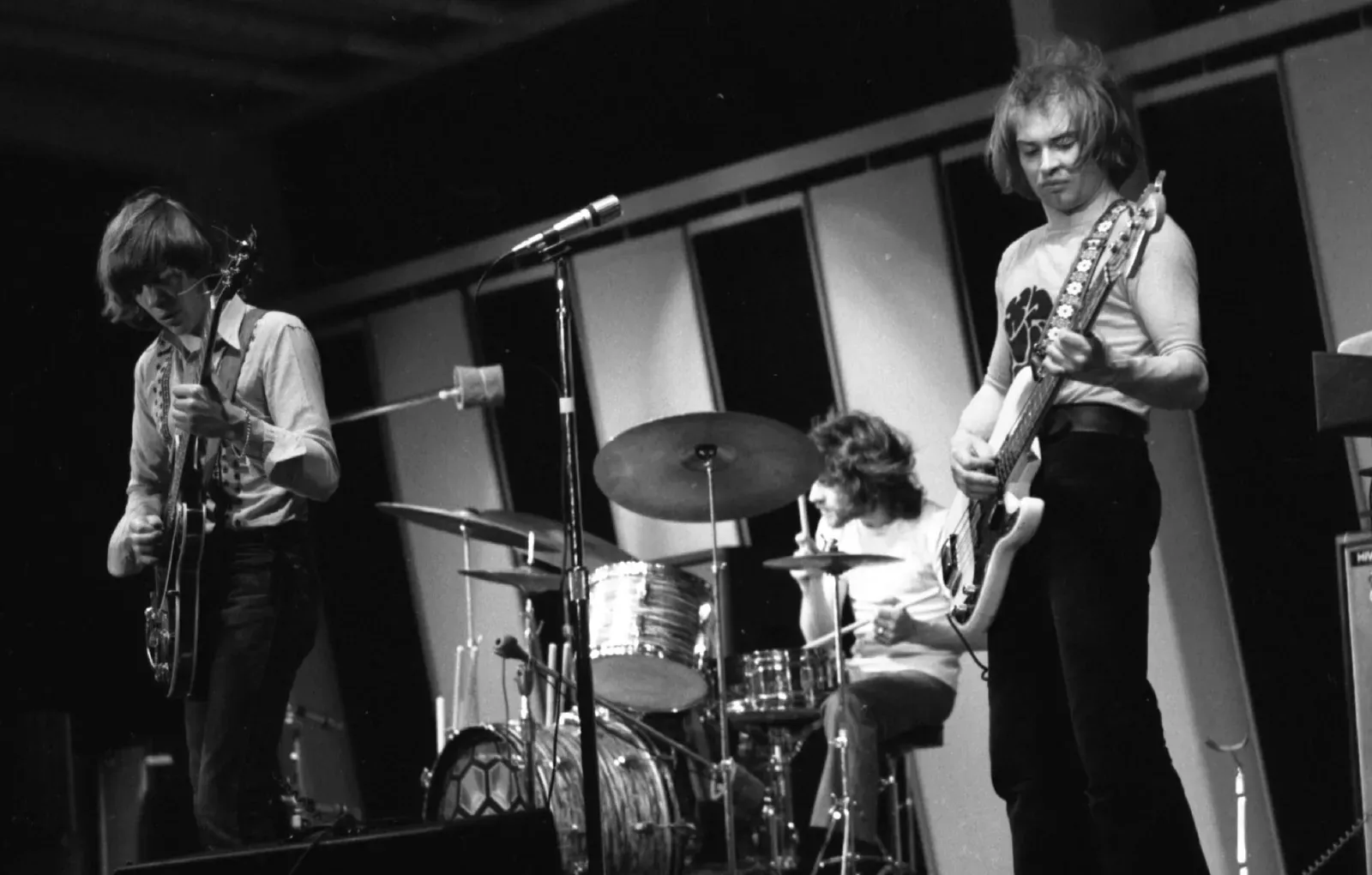
Procol Harum’s 1967 classic is widely considered the most famous pop song to have borrowed from classical music. The song’s unmistakable organ intro has been the subject of debate for decades, but the evidence is compelling.
Exactly which bit of Bach it derives from is not as clear as one might think. There are elements of the Air on a G String in the ground bass, but that famous intro is actually a canny adaptation of Bach’s “Ich steh mit einem Fuß im Grabe,” BWV156. Let’s be real – most people just assumed it was “Air on a G String” and moved on.
Procol Harum used Bach’s “Air on a G String” as the foundation, most notably the descending bassline and chord progression patterns, though compared to other examples, the song is much more inspired than directly copied. The song spent six weeks at the top of the UK Singles Chart and is considered one of the best-selling singles of all time. Its immortality is, at least in part, thanks to Bach.
The Beatles – “Because” and Beethoven’s “Moonlight Sonata”

The Beatles’ “Because” is a hauntingly beautiful track that owes its existence to Beethoven’s “Moonlight Sonata.” John Lennon asked Yoko Ono to play the sonata’s chords backwards, and from this playful experiment, he built the foundation for “Because.” The final result is a dreamy mosaic of intricate vocal harmonies, performed by Lennon, Paul McCartney, and George Harrison, layered three times for a total of nine voices.
This song stands out on the iconic Abbey Road album for its hypnotic, almost otherworldly atmosphere. By borrowing from Beethoven’s romantic sensibilities, The Beatles created a bridge between two musical worlds.
The track’s lush harmonies have been widely praised, often cited as a perfect example of the band’s ability to blend classical influence with modern pop innovation. “Because” remains a favorite among fans and musicians alike, admired for its subtle complexity and emotional power. It’s proof that even backward Beethoven is still Beethoven.
Nas – “I Can” and Beethoven’s “Für Elise”

Not many composers can claim their piece was a smash hit two times almost 135 years apart, but Beethoven can. While the worlds of classical music and hip-hop may not seem likely collaborators, Nas sampled the beginning of Beethoven’s “Für Elise” in his song “I Can.”
Nas’ highly influential anthem “I Can” inspired both children and adults to follow their dreams. Produced by Salaam Remi, the first few bars of “Für Elise” are looped and used as the beat’s foundation. It’s a surprisingly tender touch for a rap track, and it works beautifully.
The world of hip-hop and classical music might not seem like natural bedfellows, but seasoned rapper Nas turned a sample of Beethoven’s “Für Elise” into a smash hit. The genius here is how the familiar melody disarms the listener before the lyrical weight hits them fully. Few songs have used classical music so cleverly to reinforce a message.
Lady Gaga – “Alejandro” and Vittorio Monti’s “Csárdás”

“Alejandro” opens with the main melody from the piece “Csárdás” (1904) by Italian composer Vittorio Monti played on violin, as a distressed Gaga states in a Spanish accent: “I know that we are young, and I know that you may love me…” It’s one of pop music’s more unexpected classical entrances.
The song opens with a weeping violin which incorporates the melody from “Csárdás” by Italian composer Vittorio Monti (1868–1922). “Csárdás” was composed in 1904 and Monti based the violin showpiece on a Hungarian folk dance.
For the intro of her single “Alejandro,” Gaga neatly nabbed Csárdás, the rhapsodic concert piece for violin by Vittorio Monti – which itself was based on a traditional Hungarian folk dance. “Alejandro” became Lady Gaga’s seventh consecutive top 10 pop hit single in the U.S., and it was the third and final top 10 hit released from “The Fame Monster,” peaking at No. 5 on the pop chart.
Billy Joel – “This Night” and Beethoven’s “Pathétique” Sonata

Billy Joel once admitted that he had not forgiven himself for not being Beethoven. In an act of musical homage, Billy Joel incorporated Beethoven’s Piano Sonata No. 8, Pathétique, into his song “This Night.” The slightly swung version of the opening melody from movement two in the sonata takes center stage in the chorus, seamlessly blending classical sophistication with pop sensibility.
Joel wove in a swung version of the opening melody from the second movement of Beethoven’s “Pathétique” Sonata in his chorus for “This Night.” It’s both a confession and a tribute, and Joel wears his admiration openly.
This homage serves as a reminder that musical inspiration has no boundaries and that even the greatest musicians can find inspiration across genres and eras. Here’s the thing – borrowing from Beethoven and being honest about it takes a certain kind of confidence. Joel had that in spades.
Eric Carmen – “All by Myself” and Rachmaninoff’s Piano Concerto No. 2
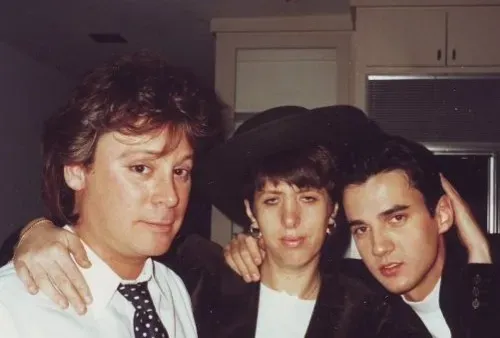
Eric Carmen’s “All by Myself” is best known for its sweeping, dramatic chorus – an emotional high point lifted directly from Rachmaninoff’s Piano Concerto No. 2. Carmen, a classically trained musician, adapted the concerto’s main theme for the ballad’s verses, marrying the grandeur of early 20th-century Russian classical music with the confessional style of 1970s pop.
It’s a great 1970s power ballad, reincarnated by Céline Dion in 1996, that finds the melody for its verses in Russian giant Rachmaninov’s most famous piano concerto – pop-classical sampling doesn’t get much more iconic than this.
I know it sounds crazy, but one of the most emotionally devastating pop songs of the 20th century is essentially Rachmaninoff with different words. The melancholy of Rachmaninoff’s concerto and the loneliness of Carmen’s lyrics are actually a perfect match – almost as if the Russian composer wrote it with a broken-hearted singer in mind, more than half a century early.
BLACKPINK – “Shut Down” and Paganini’s “La Campanella”

It is primarily a hip-hop song driven by trap beats and a looped classical violin sample of Niccolò Paganini’s “La Campanella,” with lyrics dismissing the group’s haters. The pairing of 19th-century virtuoso violin with modern K-pop is, to put it mildly, bold.
The song samples the beginning of the third movement of Italian composer Niccolò Paganini’s second violin concerto, commonly known as “La Campanella.” YG Entertainment described the song’s title as “intuitive but strangely tense.”
The track was a commercial success and became BLACKPINK’s second number-one hit on the Billboard Global 200 as well as the first song by a K-pop act to top Spotify’s weekly chart. In the US, it entered the Billboard Hot 100 at number 25 and the UK Singles Chart at number 24. The sample is transposed down, meaning the notes are shifted to a lower pitch, and it effectively uses the “La Campanella” sample to give the song a dark and mysterious vibe.
Clean Bandit – “Mozart’s House” and Mozart’s String Quartet No. 21

Clean Bandit built their entire identity around blending classical strings with modern electronic production, but “Mozart’s House” takes that concept to its most literal extreme. The classical influence here isn’t subtle at all – it’s written right into the title.
The chorus of “Mozart’s House” is the first phrase of the Classical composer’s String Quartet No. 21. Band member Grace Chatto noted that another part of the quartet returns as a breakdown later in the song, while some of the lyrics touch on “a journey to Mozart’s House” and use various Italian musical terms.
Many contemporary pop artists are classically trained, while countless others look to timeless classics for inspiration. Music that is centuries old and played on instruments that seem out of place in the modern pop world still has the power to resonate with audiences today. These symphonies and operas are filled with emotion and composed with unforgettable musical elements that influence a lifetime of musicians. Clean Bandit is arguably the most obvious proof of that in the modern era.
Maroon 5 – “Memories” and Pachelbel’s Canon in D

Pachelbel’s ubiquitous cello chord progression has inspired plenty of pop songs – from Kylie Minogue’s “I Should Be So Lucky” to Oasis’ “Don’t Look Back in Anger.” We can now add to that list “Memories,” from Californian pop group Maroon 5.
Pop producer Pete Waterman described Johann Pachelbel as “almost the grandfather of pop,” referring to the way that the ground bass of Pachelbel’s Canon has, in one way or another, provided the starting point for a whole legion of songs. Maroon 5’s “Memories” is perhaps the most mainstream recent example, reaching billions of streams worldwide.
The chord progression from Pachelbel’s Canon has appeared in so many pop songs at this point that it functions almost like a universal emotional shortcut. It signals warmth, nostalgia, and longing so effectively that songwriters keep returning to it – whether they realize they’re quoting a baroque composer or not. “Memories” leans into that feeling with an almost alarming sense of ease.
Sting – “Russians” and Prokofiev’s Lieutenant Kijé Suite

Sting’s 1985 satirical song “Russians,” with its sombre melody and tramping bassline, leans heavily on the surprisingly dark “Romance” from Prokofiev’s orchestral suite Lieutenant Kijé. It’s one of the more sophisticated classical lifts in mainstream pop history, and most listeners never caught it.
Sting was not the only pop act to find himself inspired by Prokofiev’s colourful suite, which was drawn from music he wrote for a 1933 film. The Soviet-era atmosphere of Prokofiev’s original score fits the Cold War tension of Sting’s lyrics with an almost eerie precision.
What makes “Russians” remarkable is how completely the classical source material serves the song’s political message. Prokofiev’s slow, almost mournful theme gives the track a sense of weight and consequence that no synthesizer patch could replicate. The connection is well documented – Sting’s “Russians” quotes directly from Prokofiev’s Lieutenant Kijé Suite. It rewards the listener who knows both pieces and practically demands to be heard that way.
Conclusion

What all of these songs share is a kind of musical time travel. A producer in a studio reaches back two hundred years, lifts a melody, a chord sequence, or a solo, and suddenly something ancient feels brand new. Sampling classical music can be an inspiring way to start song ideas. It’s a powerful way to incorporate an epic melody and rework it into a new song, or use it as inspiration to build something entirely new for a modern audience.
You can hear classical music in poignant cinematic moments, in public spaces, and echoed in some of your favorite tunes. While pop music and classical music may sound like they’re on opposite sides of the musical spectrum, some of the most popular songs of this century and the last were inspired by classical music.
The greatest composers in history never imagined their work would end up looped over trap beats or riding a pop chorus into the Billboard charts. Yet here we are – and honestly, the music is better for it. Next time a pop song gives you chills for reasons you can’t quite explain, there’s a decent chance a long-dead genius is somewhere in the mix. What song surprised you the most? Tell us in the comments.