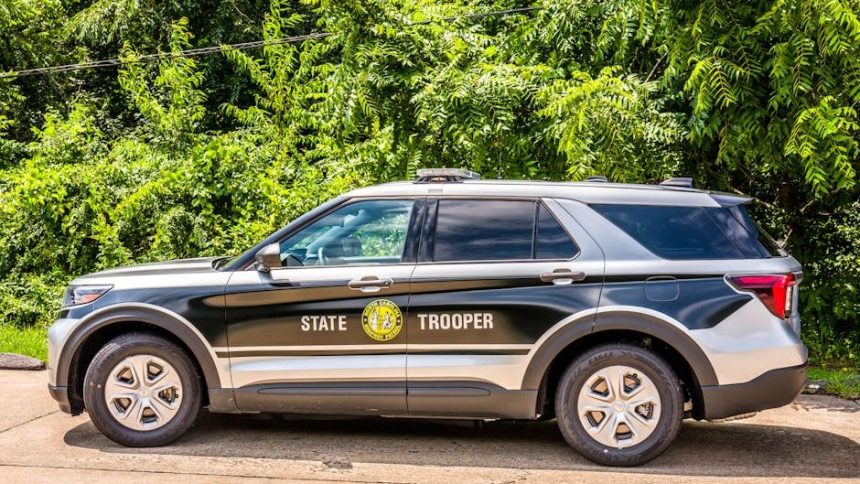


A century of history on display at the Delaware State Police Museum – Image for illustrative purposes only (Image credits: Pexels)
Dover, Delaware — Polished chrome gleams under the lights as visitors approach a 1941 Ford coupe, one of the earliest patrol vehicles that once patrolled Delaware’s highways.[1] The Delaware State Police Museum, tucked at 1425 North DuPont Highway, invites the public into this slice of history. Free admission draws families and history buffs alike to explore artifacts from the agency’s origins in 1923.[2]
Roots in the Roaring Twenties
The story begins amid the dust of early 20th-century roads. Interest in a state police force surfaced after 1900, but momentum built in 1919 when the State Highway Commission authorized a traffic patrol to tackle speeding motorists and bootleggers.[3] Charles J. McGarigle became the first officer on January 1, 1920, riding a Harley-Davidson motorcycle along the Philadelphia Pike.
Legislation solidified the Delaware State Police on April 28, 1923, transforming a handful of “Four Horsemen” into a formal agency.[4] Early troopers worked 12-hour shifts from a shack near Bellevue, enforcing laws across the state. By 1925, stations expanded to five locations, and the first canine unit formed with donated dogs.
Evolution Through Decades of Change
Technological leaps marked the agency’s growth. Two-way radios arrived in the 1940s, followed by radar in the 1950s and helicopters in the 1960s for pursuits and medical evacuations.[4] The force divided into traffic and criminal sections in 1938, ending motorcycle-only patrols as cars took over.
Specialized units emerged over time. A drug unit launched in 1970, SWAT formed in 1975, and modern additions included cybercrime teams and a maritime unit.[5] Women joined as clerical staff during World War II and later as full troopers starting in 1976, while the first African American trooper arrived in 1969. Headquarters moved to Dover in 1959, anchoring operations in the capital.
Community efforts wove through the years. Camp Barnes opened in the 1940s for youth mentorship, and programs like DARE and school resource officers addressed juvenile issues in later decades. The 100th anniversary in 2023 featured tributes, a car show, and a 5K run, highlighting enduring service.[5]
Partner offer

Artifacts That Tell the Tale
The museum’s collection brings the past to life. Patrol cars like the 1946 Ford coupe sit beside its 1941 predecessor, evoking eras when troopers chased speeders on open roads.[2] A full-scale Delaware State Police helicopter looms overhead, a testament to aerial innovations in policing and paramedic work.
Other displays cover uniforms from puttees and leather coats to modern gear, alongside weapons, a 911 command console, and criminal investigation tools. Interactive elements engage visitors, while exhibits detail cases like the 1979 Lambertson murders, from the crime scene to the perpetrator’s execution in 1996.[1]
- 1941 Ford 2-Door Coupe: Early highway patrol icon.
- 1946 Ford 2-Door Coupe: Post-war upgrade on display.
- State Police Helicopter: Used for rescues and pursuits.
- Memorial Wall Artifacts: Personal stories of sacrifice.
Honoring Those Who Served
A solemn memorial wall stands as the emotional core. It lists troopers killed in the line of duty, from Francis Ryan’s 1922 motorcycle crash to later vehicle accidents and shootouts.[1] Names like Ronald L. Carey and David C. Yarrington, who fell in a 1972 shootout, anchor the tribute.
Family words add depth. Ronald Carey’s mother reflected on his choice to serve, while a pastor urged others to emulate the fallen. These accounts remind visitors of the human cost behind the badge.
Education and Open Doors
The museum doubles as an education center. Trooper Dan leads youth outreach on safety and substance abuse prevention, while trained volunteers cover highway safety and law enforcement basics.[2] Open Tuesday through Saturday from 10 a.m. to 4 p.m., it welcomes all at no charge.
As Delaware’s first state police force enters its second century, the museum bridges eras. It not only preserves artifacts but fosters appreciation for the troopers who shaped public safety, ensuring their legacy endures for future generations.
Partner offer
Planning a trip to Vegas?
Compare hotel rates and show tickets on VEGAS.com.