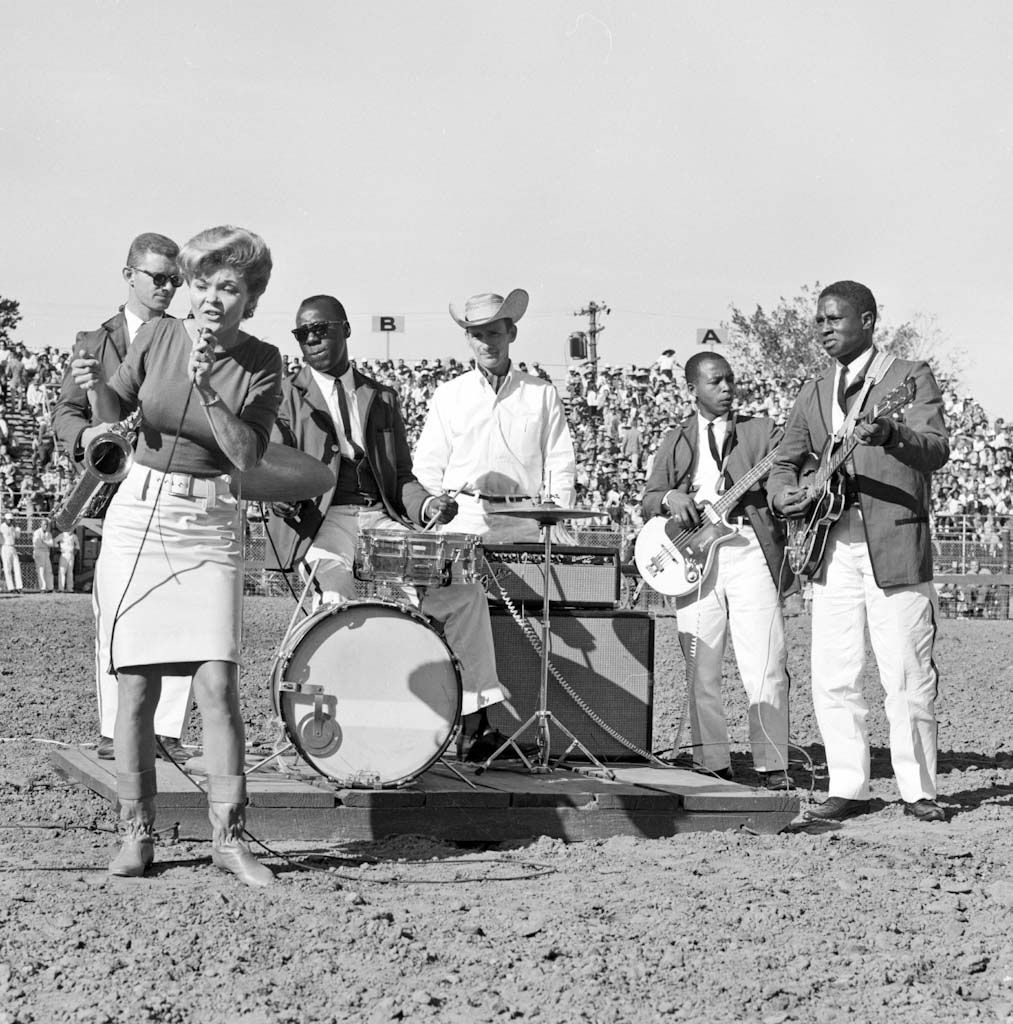

A Rodeo Like No Other (Image Credits: Mirrorball.themarshallproject.org)
Huntsville, Texas – Massive crowds once packed an arena at the Walls Unit to cheer convict cowboys and sway to tunes from inmate musicians during the annual Texas Prison Rodeo.
A Rodeo Like No Other
The event kicked off in 1931 under general prison manager Marshall Lee Simmons as recreation for inmates and entertainment for staff families. Crowds swelled quickly, reaching 15,000 within two years and peaking at around 100,000 in the 1950s and 1960s.[1][2] Inmates competed in calf roping, bronc riding, bull riding, and unique spectacles like the “Mad Scramble,” where they raced to grab cash from between a bull’s horns.
Guest stars such as Johnny Cash, Willie Nelson, Dolly Parton, and Loretta Lynn performed at halftime, sharing the stage with early inmate string bands and gospel choirs. The rodeo generated significant revenue, claimed at $250,000 annually in later years, which supported prison programs. It wrapped up in 1986 amid stadium safety concerns and rising liability risks.[1]
Prison Bands Take Center Stage
By the 1970s, music became a rodeo staple beyond halftime shows. The Texas Department of Corrections produced eight full-length albums between 1972 and 1982, recorded at the Wynne Unit studio and sold as souvenirs to attendees. A 1965 album featured bands that toured state fairs and events.[2] Proceeds funded rehabilitative efforts inside the prisons.
Music professor Harley Rex directed classes, songwriting contests, and recordings. Inmates earned $10 per song and $5 per rodeo performance. Groups like the Wynne Unit Band and Eastham Band delivered country-dominant tracks laced with soul, funk, and rockabilly. One standout: the Wynne Unit Band’s 1980 LP The Texas Prison Rodeo Presents Behind The Walls, with tunes like “The Huntsville Rodeo” and soul cuts by keyboardist Morgan White.[3]
Partner offer

Earlier acts included the Stringsters from the 1930s and the Goree All-Girl String Band, though women faded from recordings by the 1970s.[4]
Genres and Glimpses of Life Inside
The albums captured diverse sounds from behind bars:
- Country and western, the rodeo’s backbone.
- Soul and funk covers of James Brown and Louis Armstrong.
- Rockabilly, surf rock, and Latin jazz experiments.
- Playful odes to stars like Dolly Parton.
Lyrics often skirted controversy. Morgan White, a Black musician who played on four records, recalled restrictions: “It was understood that certain topics were off limits… Rock the boat, and you’re out.”[2] Subtle critiques emerged, like J.D. Thomas lamenting hard labor on a 1974 track: “They are working the devil out of me!” A 1974 album liner note captured the spirit: “Some are sad songs, but some have the flicker of hope that reflects the inner thoughts of incarcerates who someday will again be free to use their God-given musical talents.”[2]
| Band/Album Example | Year | Highlights |
|---|---|---|
| Wynne Unit Band – Behind The Walls | 1980 | “The Huntsville Rodeo,” soul by Morgan White |
| Eastham Band – Behind The Walls | 1977 | Country with jazz elements |
A Digital Resurrection
The Texas Prison Museum in Huntsville safeguards about five hours of audio from roughly 100 songs across the albums. Executive director David Stacks shared the collection with a reporter, who digitized it using a portable setup. For the first time, much of this music appears online via a YouTube playlist.[2]
Alumni like drummer Benny Medina, who gigged with jazz greats post-release, hailed the Wynne Unit as a “Mecca for the cream-of-the-crop musicians.” The program offered rare perks amid harsh conditions, with racially integrated bands fostering brief unity.[2]
- Prison music funded rehab and showcased talent during a pre-mass-incarceration era.
- Albums blend joy and subtle defiance, humanizing inmates.
- Digitization preserves a unique chapter of Texas cultural history.
These recordings endure as testaments to resilience, bridging a time when 40,000 Texans were incarcerated to today’s 140,000. As formerly incarcerated composer Kenyatta Emmanuel Hughes noted, experiencing such art prompts reflection: “These are human beings, and we need to rethink whether we should be throwing them away.” What stories do these songs tell you? Share in the comments.
Partner offer
Planning a trip to Vegas?
Compare hotel rates and show tickets on VEGAS.com.