
Walk into any busy casino and you’ll overhear it eventually. Someone points to a machine and says it’s “hot.” Someone else abandons a seat because the game has gone “cold.” These labels travel around casino floors with remarkable confidence, passed between strangers like insider tips. The only problem is that they describe something the machines themselves don’t actually do.
The gap between what players believe about slot machines and how they genuinely work is wider than most people expect. Understanding that gap isn’t just an academic exercise. It has real consequences for how long someone plays, how much they spend, and whether they walk away with a clear head.
The Myth of the “Hot” and “Cold” Machine

The idea that a machine runs “hot” or “cold” is probably the most persistent myth in all of gambling. A “hot” machine is believed to be paying out often and might seem like a good chance to win big. A “cold” slot, on the other hand, is thought to be in a losing phase. These ideas describe how the player feels, not how the machine is performing in any real sense.
Many players believe that slot machines go through “hot” and “cold” streaks, but this is a myth. Slot machines operate on Random Number Generators (RNGs), ensuring that each spin is completely independent. There is no cycle. There is no phase. The machine has no awareness of its recent history, and it doesn’t build toward anything.
Even with all the evidence, the “hot” and “cold” idea remains popular. This happens because our brains look for patterns, and the influence of others keeps the myth alive. People often try to control luck with rituals or believe that wins and losses must balance out, which leads to the gambler’s fallacy.
How the Random Number Generator Actually Works

At the core of every modern slot machine is a Random Number Generator. The RNG can be software or hardware, depending on the age and make of the machine, and generates thousands of random numbers every second, even when the machine isn’t being played. When you press the spin button, the RNG picks a completely random number at that exact moment, and that number determines the outcome of your spin.
The result is decided the instant you hit the button; the mesmerizing flash of lights and swirling screens is there only for your entertainment. The visual spin is theater. The decision has already been made.
Each spin is a separate event – the game doesn’t “know” or “care” what just happened with earlier spins. Slots are not moody or unpredictable by design. They are carefully calibrated machines built for fairness over time.
Does Machine Temperature, Time of Day, or Player Behavior Change Anything?

There’s a widespread belief that the time of day can influence slot outcomes. Some think that playing early in the morning or late at night improves their odds. In reality, slots are designed to be random, and the time you play does not affect your chances of winning. Whether it’s dawn or dusk, the odds remain the same.
Physical temperature, coin temperature, the speed at which you press the button – none of it registers in the software. A bizarre myth holds that the temperature of coins used can affect the machine’s outcome. Some players think warm coins are luckier. However, this has no basis in reality. The slot’s RNG doesn’t take coin temperature into account, and it has no effect on the game’s results.
Another misconception is that the timing of pressing the “spin” button influences the outcome of a game. However, the outcome is determined the moment the player initiates the spin, as the RNG algorithm generates the outcome instantaneously. Hesitating for a moment or pressing quickly makes no difference whatsoever.
What Return to Player Actually Means

RTP stands for Return to Player, representing the percentage of all wagered money a slot machine is programmed to pay back to players over time. For example, a slot with a 96 percent RTP will theoretically return $96 for every $100 wagered, though this doesn’t mean you’ll get exactly that on any given session. RTP is calculated over millions of spins and is best viewed as a long-term average, not a short-term guarantee.
Most online slots range between 95 percent and 98 percent, while physical slot machines often fall between 88 percent and 94 percent, especially on busy casino floors where foot traffic compensates for tighter margins. The difference between playing online and at a land-based casino can be meaningful over many sessions.
It’s important to note that the RTP is an overall average, and it does not apply uniformly to every player. Each player’s individual RTP can vary greatly in the short term, which is why some people walk away with massive payouts while others might lose their stake. Short-term results tell you almost nothing about a machine’s true behavior.
Can Casinos Adjust Payouts Remotely or in Real Time?
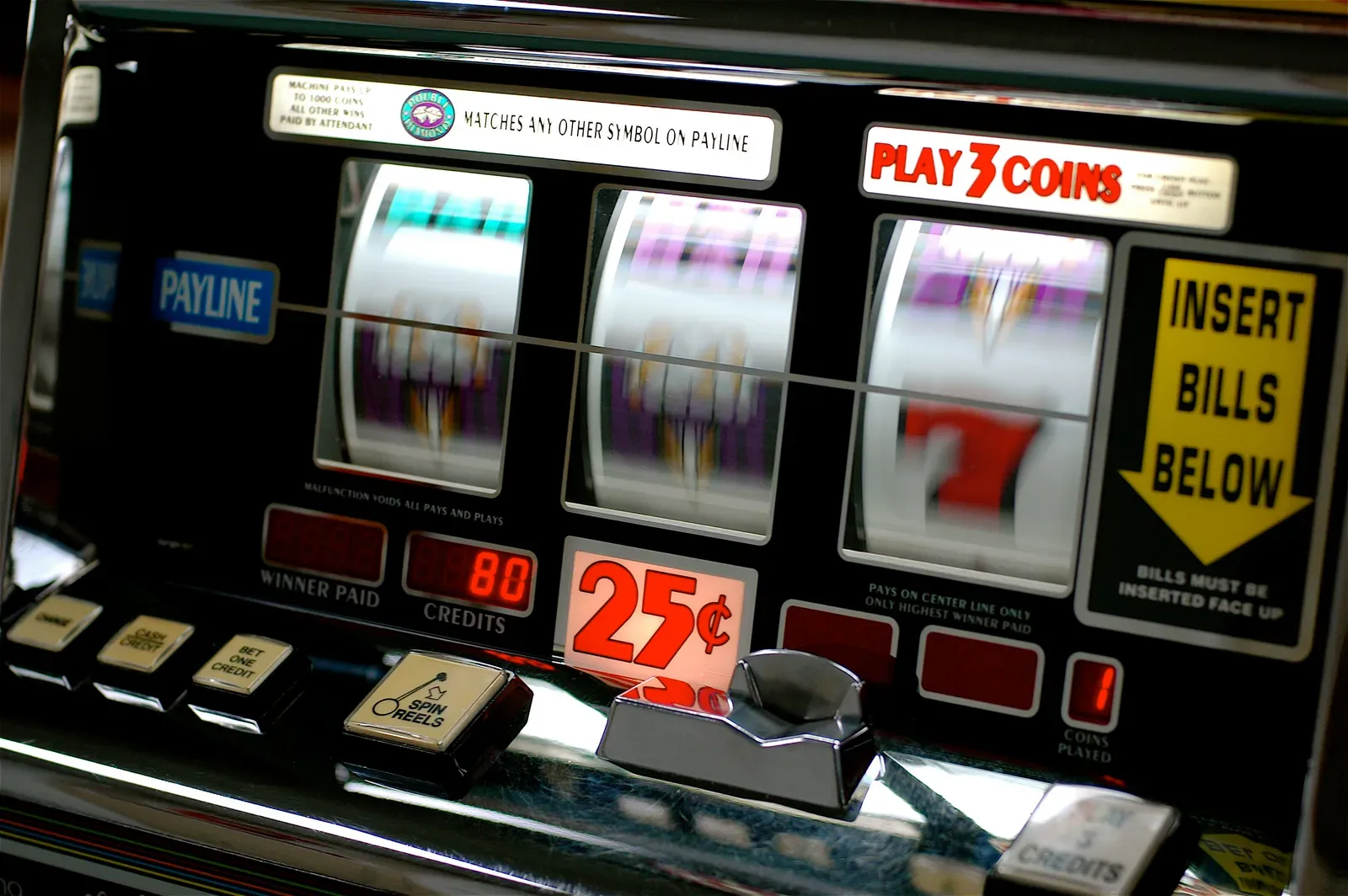
Some players think casinos can instantly make machines looser or stingier from a back office. This isn’t true. Machines have special chips for calculating payouts, and changing the payout takes work and approval from gaming regulators. It’s not as easy as pressing a button.
Partner offer
Slot machines are pre-programmed with a set Return to Player percentage and cannot be adjusted instantly by the casino. In regulated markets, any change to a machine’s configuration requires proper authorization and documentation. It isn’t something that happens quietly between Friday and Saturday night.
Some people believe that casinos manipulate the payout percentages of slot machines to control the outcomes. In regulated and licensed casinos, slot machines are strictly monitored to ensure fair play, so payout percentages are predetermined by gaming authorities, not casino operators.
How Independent Testing Keeps Machines Accountable

All casino slots must undergo comprehensive and rigorous testing before they’re certified and approved for play. This process is designed to uphold integrity in the gaming industry and protect players. From development to certification and approval, independent certification laboratories take each step seriously to ensure slots are secure and fair.
Gaming Laboratories International (GLI) operates as the world’s largest independent testing facility for gaming devices and systems, with locations across six continents serving both land-based and online gaming sectors. Founded in 1989, GLI has developed comprehensive testing standards that many regulatory jurisdictions have adopted as their official compliance benchmarks.
Labs carry out simulations of millions of rounds to ensure that theoretical RTP works as time progresses. They also check the profile of variance in the game to confirm that the distribution of payouts and their sizes matches the design. If a slot promises a specific RTP, the lab can confirm that the underlying math provides that value within a statistically significant sample. The size of exact simulation can differ across laboratories, however, testing can have tens of millions to hundreds of millions of rounds.
The Gambler’s Fallacy: Why Our Brains Invent Patterns
The gambler’s fallacy is a prevalent cognitive bias in betting behaviors, characterized by the mistaken belief that an independent and identically distributed random process exhibits negative serial correlation. In plain terms, it’s the feeling that something “is due” after a long absence. It’s one of the most human instincts in the world – and one of the least applicable to slot machines.
Research found that certain cognitive biases characteristic of gambling disorder were present in healthy samples as well. The identified cognitive biases appeared quickly and in relatively large numbers. This indicates that healthy members of the general population show automatic thoughts similar to cognitions of persons with a behavioral addiction to gambling. It was the cognitive distortion of the Gambler’s fallacy that emerged most commonly in the verbalizations of subjects.
The gambler’s fallacy is a deep-seated cognitive bias and can be very hard to overcome. Educating individuals about the nature of randomness has not always proven effective in reducing or eliminating any manifestation of the fallacy. Knowing something intellectually doesn’t always override the gut feeling that a “streak” must end.
What Players Can Actually Control

There’s very little about individual spin outcomes that players can influence, and that’s by design. What players do have some control over is which games they choose. With millions of plays, a machine pays out a fixed portion of bets based on its RTP, such as 95 percent. This is a long-term average, not a guarantee for your session. Some machines pay small wins often (low volatility); others pay bigger, but less often (high volatility).
Choosing games with higher RTPs offers real advantages, especially for players who enjoy extended play sessions or are mindful of bankroll management. A higher RTP doesn’t guarantee wins but improves your expected returns over time. If you’re playing for several hours or across multiple sessions, a game with a 97 percent RTP will statistically return more than one with 91 percent.
The gambler’s fallacy – believing a machine is “due” for a win, despite RNGs making each spin independent – and confirmation bias, where players remember wins while ignoring losses, are two of the main psychological forces that reinforce beliefs in “lucky” machines or times. Recognizing these tendencies is genuinely useful, even if it doesn’t change the math.
Conclusion

Slot machines are built on one foundational principle: every outcome is statistically independent of every other outcome. The “temperature” of a machine is a story players tell themselves, not a property of the technology. No casino floor wisdom, lucky routine, or carefully chosen moment changes what the RNG has already decided in the millisecond before the reels start to spin.
The myths persist not because players are uninformed but because the human mind is genuinely wired to find meaning in random patterns. It’s the same impulse that makes us good at detecting danger and terrible at evaluating true randomness. The casino environment, with its sounds and near-misses and jackpot celebrations, feeds that impulse deliberately.
The most useful thing a player can do is separate the experience of playing from the expectation of finding an edge that doesn’t exist. Choosing higher-RTP games, setting a clear budget, and understanding that short-term results carry essentially no predictive value – those are the only levers that are actually real. Everything else is just noise.
Partner offer
Planning a trip to Vegas?
Compare hotel rates and show tickets on VEGAS.com.