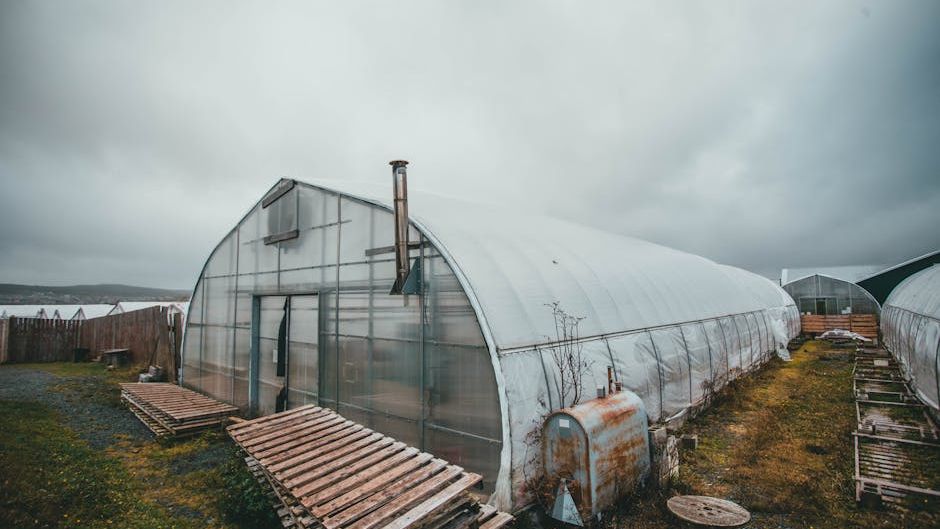

Pennsylvania greenhouse stays warm by storing heat underground – Image for illustrative purposes only (Image credits: Pexels)
Tim Clymer wanted to grow subtropical fruit in south-central Pennsylvania without relying on propane heaters that burn through hundreds of gallons each winter. At Threefold Farm, he turned the ground beneath a high tunnel into a storage system that captures daytime warmth and releases it at night. The result lets citrus and figs survive the cold months on electricity alone.
How the underground system captures and releases heat
On sunny days the greenhouse air warms naturally. Fans push that moist, heated air through a network of perforated pipes buried two to eight feet deep. The air transfers its heat to the surrounding soil and condenses, leaving cooler, drier air to return to the structure. At night or on cloudy days the fans reverse direction, pulling stored warmth back into the growing space. Three separate battery zones sit under the 30-by-96-foot tunnel. Each zone uses long runs of four-inch tubing connected to larger manifolds. The design keeps the top two feet of soil free for planting while still tapping deeper earth heat when temperatures drop. Total tubing length exceeds four thousand feet, yet the entire fan array draws only about eleven hundred watts.
Plants that now thrive year-round
The setup protects in-ground fig trees and allows overwintering of Meyer lemons and satsuma mandarins. These subtropical crops would normally require heated structures or indoor relocation in zone 6b/7a. Instead they remain productive through the coldest months with no supplemental fuel. Farmers who visit the site often notice the absence of exhaust stacks or fuel deliveries common at neighboring commercial operations. Clymer has watched those propane systems run and calculated the difference in both cost and emissions. His approach replaces that fuel use with a modest electric bill estimated at roughly five hundred dollars for the heating season.
Practical advantages for small-scale growers
– Low operating cost compared with propane
– No combustion emissions inside or outside the structure
– Ability to extend the growing season without custom insulated buildings
– Reversible airflow that also cools the space on hot summer days The system still depends on a well-sealed high tunnel and basic perimeter insulation. An optional internal curtain can further reduce heat loss on the coldest nights, though it is not always needed.
What remains to be refined
Performance varies with soil type, moisture levels, and how fully the batteries charge each day. Clymer continues to test fan run times and thermostat settings to balance energy use against plant needs. Other growers adapting the design report similar results but note that site-specific adjustments matter. The approach shows one way farms can reduce fossil-fuel dependence while maintaining winter production. For Clymer and similar operators, the soil itself has become the reliable partner that keeps fruit trees alive until spring returns.