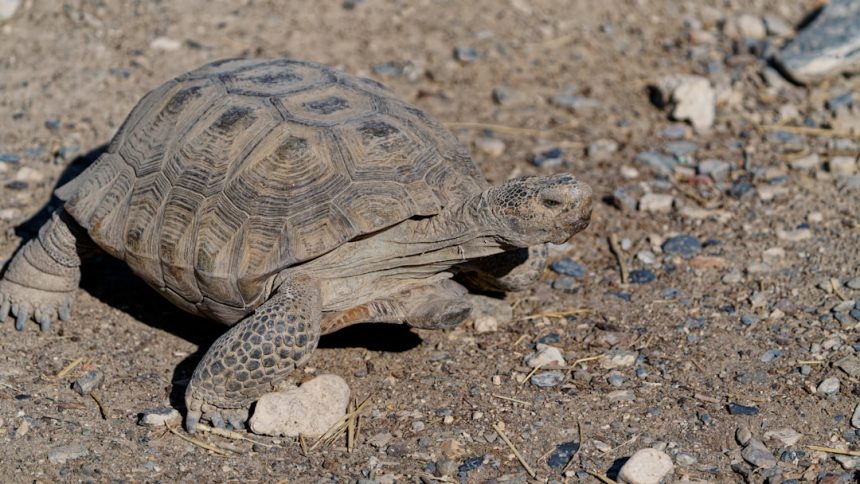
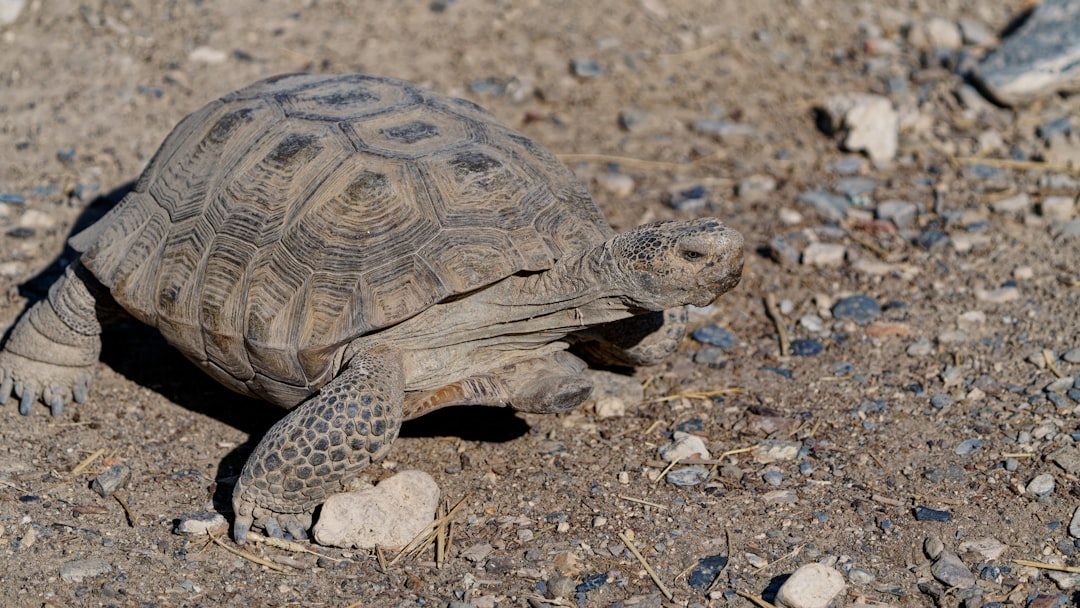

A Startling 36 Percent Population Drop Signals Urgent Need (Image Credits: Unsplash)
Nevada’s official state reptile, the Mojave desert tortoise, marked 36 years as a threatened species under the federal Endangered Species Act in 2026. These resilient creatures, which spend 95 percent of their lives in underground burrows, face relentless threats from urban expansion and disease in the Las Vegas Valley. Conservationists in Southern Nevada now intensify efforts to halt a steep population decline while managing a surge in captive pets.
A Startling 36 Percent Population Drop Signals Urgent Need
Researchers documented a 36 percent decline in adult Mojave desert tortoises between 2001 and 2020, equating to roughly 129,000 fewer individuals.[1] A 2024 U.S. Fish and Wildlife Service survey pinpointed densities at just 1.1 adults per square kilometer in Amargosa Valley and 1.9 in the Pahrump area – far below the agency’s minimum viable threshold of 3.9 per square kilometer.[1]
Habitat loss tops the list of dangers. Booming development fragments landscapes, while major highways like Interstate 15 isolate groups and hinder mating, eroding genetic diversity within generations, according to a 2023 University of Nevada, Reno study.[1] Solar farms and roads also promote invasive plants, block water sources, and destabilize burrowing soils.
| Region | Adult Density (per sq km, 2024) | Viable Threshold |
|---|---|---|
| Amargosa Valley | 1.1 | 3.9 |
| Pahrump Area | 1.9 | 3.9 |
Predators compound the crisis. Common raven numbers have quintupled since 1966, targeting vulnerable hatchlings, while coyotes prey on adults.[1] Disease transmission persists as another silent killer.
Captive Overpopulation Strains Resources
Southern Nevada grapples with an estimated 150,000 captive desert tortoises in the Las Vegas Valley alone, per a 2018 UNLV and Tortoise Group study.[1] Backyard breeding fuels this issue, displacing about 1,000 tortoises yearly – many unfit for wild release due to health or behavioral problems.
The Tortoise Group, Nevada’s sole authorized adoption entity, manages 50 to 100 rehoming cases annually but holds capacity for only 40 to 45 animals.[1] “Things happen, people’s housing situations change, and that’s where we step in to offer resources to help people rehome them,” said Aerial West, the group’s executive director.[1] The nonprofit provides care guides, hosts clinics for microchipping and neutering, and urges “legacy planning” given tortoises’ 80-to-100-year lifespans.
State law deems keepers “custodians,” not owners, prohibiting interstate transport without permits. Wild collection remains illegal under Nevada Administrative Code and federal protections.[2]
Infrastructure Innovations Bridge Habitats
The Nevada Department of Transportation completed 57 tortoise crossings – tunnels and turnarounds – across Southern Nevada by late 2025, including 15 near Searchlight.[3] These structures curb vehicle strikes, a major mortality factor during the tortoises’ active March-to-June season.
“Coyote Springs section of the 93, we have significant numbers of tortoise kills by vehicles,” noted NDOT tortoise biologist Glen Church.[3] Additional proposals target 120 more crossings north of Las Vegas, around Henderson, and southward. However, a federal funding freeze stalled a $16.8 million Coyote Springs project along U.S. Highway 93, which planned 61 crossings and 68 miles of fencing.[4]
Tortoise Group volunteers inspect roadside fencing, though experts advocate more culverts to counter isolation effects.[1]
Education Fuels Long-Term Hope
Clark County’s Desert Conservation Program emphasizes the tortoise’s role as a keystone species. Its burrows shelter Gila monsters, snakes, burrowing owls, kit foxes, and more, supporting Mojave biodiversity.[1] Public outreach coordinator Audrie Locke oversees the Mojave Max initiative, featuring a live tortoise and mascot at Springs Preserve to teach thousands of students annually.
“For the sake of so many other species, it’s critical that it continues to thrive,” Locke stated.[1] The Nevada Department of Wildlife lists the tortoise as a state threatened priority species, urging observers to avoid handling wild individuals to prevent stress-induced bladder evacuation – a vital water reserve.[5]
- Secure at least 600 square feet of outdoor space with burrows, shade, water, and forage plants.
- Opt for opaque fencing to deter escape attempts.
- Microchip, neuter, and plan for multigenerational care.
- Contact Tortoise Group for vetted vets and resources.
Key Takeaways
- Federally threatened since 1990; Nevada state reptile and priority species.
- Primary threats: habitat fragmentation, roads, predators, captive overpopulation.
- Successes include 57 NDOT crossings and adoption programs, but funding gaps loom.
Southern Nevada stands at a crossroads where unchecked growth risks the Mojave desert tortoise’s future, yet targeted actions like wildlife tunnels and education offer real promise. Sustained community commitment will determine if this ancient survivor endures. What do you think about these conservation challenges? Tell us in the comments.