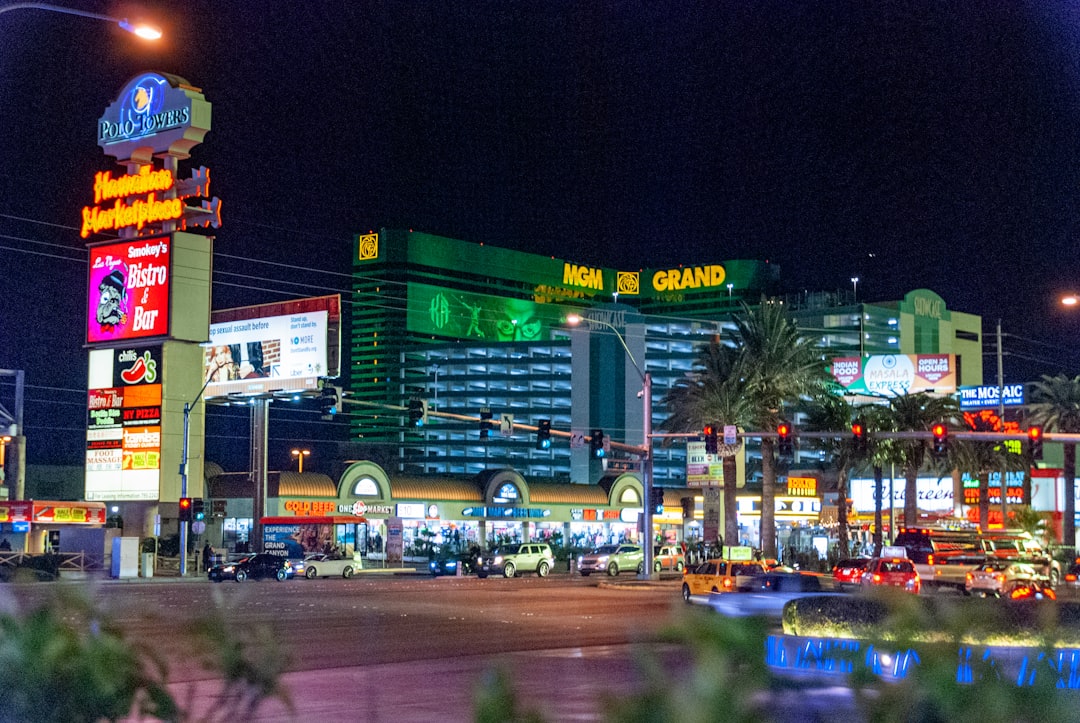
A Desperate Drive Ends in Chaos (Image Credits: Unsplash)
Southern Nevada – A law student’s deadly crash into a power substation gate near Boulder City last month has intensified discussions among terrorism specialists about the region’s persistent security challenges.
A Desperate Drive Ends in Chaos
On February 19, 2026, Dawson Maloney, a 23-year-old student at Albany Law School, accelerated a rented silver Nissan Sentra toward a Los Angeles Department of Water and Power facility just outside Boulder City. The vehicle smashed through a secured perimeter fence but halted when it struck industrial wire wheels.[1][2]
Officers discovered Maloney dead from a self-inflicted gunshot wound inside the car. Authorities recovered an arsenal including two shotguns, an AR-style pistol, loaded magazines, shotgun shells, flamethrowers with thermite, a crowbar, hatchet, and explosive components. His motel room yielded books tied to extremist views spanning white supremacy, anti-government sentiments, and accelerationist ideologies.[2]
No significant damage occurred to the substation, which supports power distribution linked to Hoover Dam and serves Las Vegas casinos. Maloney had driven cross-country from New York after messaging family about self-harm and a desire for national attention, calling himself a “dead terrorist son.”[2]
Recurring Shadows Over the Valley
Las Vegas has endured a series of terrorism-related episodes that underscore its appeal to extremists. The 2017 Route 91 Harvest festival massacre marked a grim milestone, followed by other disturbances.
- New Year’s Day 2025: Army veteran Matthew Livelsberger detonated a Cybertruck outside Trump International Hotel, framing it as a “wake-up call.”[1]
- 2023: Authorities arrested a 16-year-old ISIS sympathizer after finding explosives in his home, averting a potential lone-wolf plot.[1]
- January 2023: Mohammed Mesmarian torched a vehicle at the MGM Mega Solar Array, citing “clean energy” motives; he received a 2-to-10-year sentence before parole.[3]
These events reveal a pattern of individuals targeting high-profile or infrastructural sites with minimal resources.[1]
The Magnetic Pull of Sin City’s Spotlight
Terrorism investigator Ashton Packe, a retired Metropolitan Police Department sergeant with Joint Terrorism Task Force experience, attributes Las Vegas’ draw to its global fame. “People come from all over the world to see this amazing place, Las Vegas,” Packe said. “Bad guys see that, too, and I think that’s attractive to them.”[1]
Critical infrastructure like substations amplifies the concern, as a successful strike could cascade into widespread blackouts. Packe noted the Boulder City case could have escalated dramatically given the armaments involved. Power providers such as NV Energy collaborate with law enforcement to harden sites amid rising U.S. attacks on grids.[4][1]
Meridian Project Signals Proactive Shift
Clark County Sheriff Kevin McMahill addressed the urgency days after the incident during Metro’s State of the Department speech. “Our counterterrorism teams are working harder than ever before, they’re overwhelmed,” he stated. “The threat they see gets worse day by day.”[1]
McMahill unveiled The Meridian Project, reallocating resources to a 24/7 team of seven analysts in the Fusion Watch center. Enhancements incorporate AI, drones, facial recognition, and license plate readers. The initiative extends to international “liaison posts” for rapid threat assessment, funded privately to counter global risks.[1]
Assistant Sheriff Dori Koren emphasized evolving threats: “There’s a lot of concern with the tempo that we’re dealing with and the gravity of these types of events.” Metro’s elite unit requires sustained investment to maintain its edge.[1]
Key Takeaways
- Power substations remain soft targets due to perimeter vulnerabilities, as shown in Boulder City and prior attacks.
- Mixed ideologies fuel lone actors, blending far-left, far-right, and accelerationist views.
- Technology and global partnerships form the core of Las Vegas’ defensive upgrades.
While prevention demands vigilance short of a police state, recent initiatives offer hope against an intensifying landscape. Las Vegas stands resilient, but the imperative for layered security grows clearer. What steps do you believe could best safeguard the city? Share your thoughts in the comments.