
When Giants Rise: Exploring the Radiative Effect of Super-Coarse Dust – Image for illustrative purposes only (Image credits: Unsplash)
Saharan dust plumes frequently reach southeastern Spain, turning daytime skies into an eerie orange haze. These events sparked the interest of Ginés Garnés Morales, a doctoral researcher focused on the dust direct radiative effect.[1][2] Now part of the Dust-DN project at The Cyprus Institute, Morales examines how oversized dust particles play a key role in atmospheric radiation dynamics.
The Phenomenon of Saharan Dust Intrusions
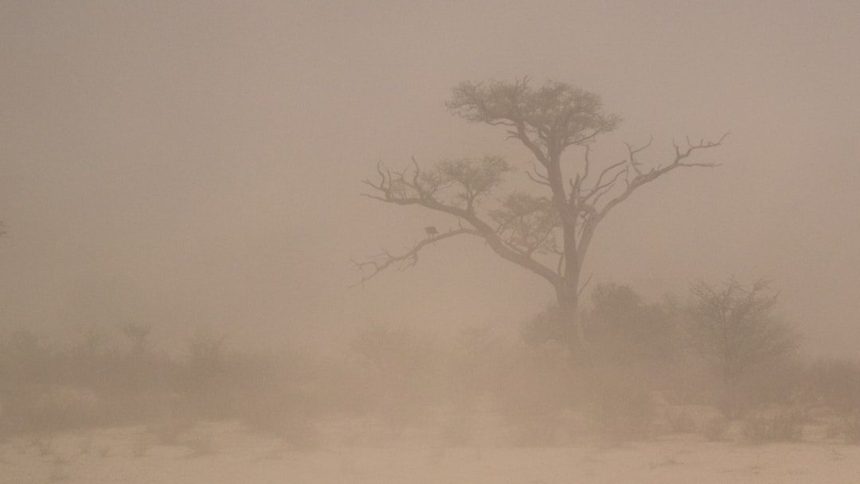
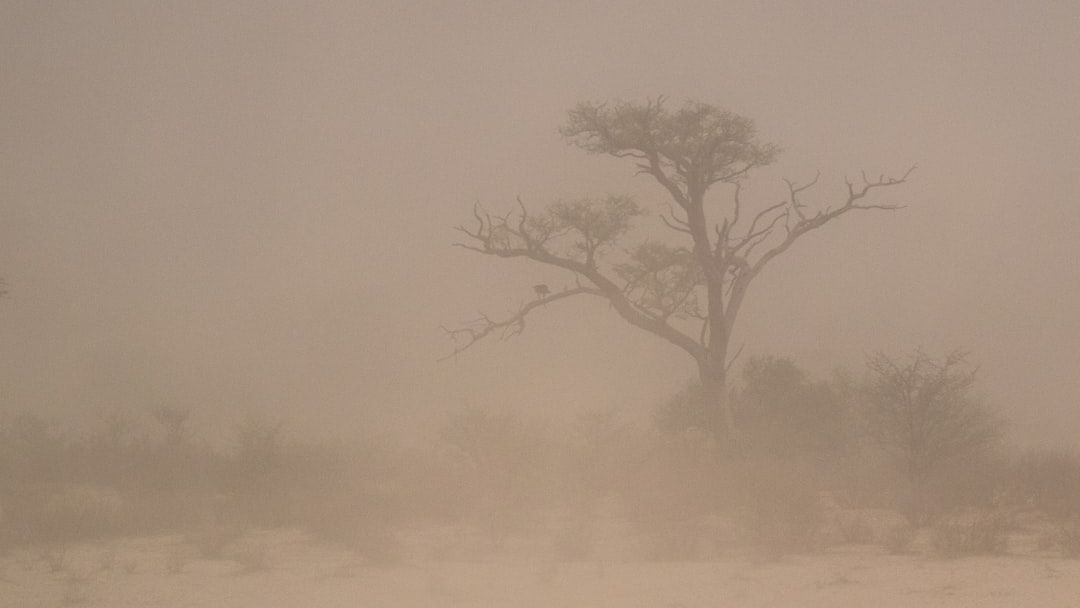
Residents in regions like southeastern Spain often witness dramatic Saharan dust outbreaks. Strong winds lift vast quantities of mineral dust from the desert floor, propelling it across the Mediterranean and beyond. These intrusions not only affect air quality but also alter local weather patterns through their interaction with sunlight.
Morales, originally from that area, draws on personal observations to frame his research. The Dust-DN Fellows Corner recently featured his insights into these events.[1] Such plumes carry particles of varying sizes, each contributing differently to the atmosphere’s energy balance.
Spotlight on Super-Coarse Dust Particles
Dust particles span a wide size range, from fine aerosols under 2.5 microns to much larger grains. Super-coarse dust refers to particles exceeding 10 microns in diameter – true giants compared to their finer counterparts.[2] These larger particles dominate the total dust mass lifted during intense storms yet receive less attention in standard models.
Recent analyses indicate that super-coarse dust travels farther than previously assumed. Factors like non-spherical shapes and atmospheric conditions allow them to persist over long distances.[3] This extended journey amplifies their potential influence on distant regions.
Partner offer

Key Evidence from FENNEC 2012 Observations
The FENNEC 2012 aircraft campaign over the Sahara provided rare in-situ data on dust properties. Instruments measured particle size distributions alongside radiometric observations during dust events.[2] Researchers noted a clear response in radiation levels linked to the presence of super-coarse particles.
These findings highlight super-coarse dust’s role in attenuating incoming solar radiation. Visual checks of the data revealed patterns where larger particles correlated with reduced light transmission.[2] Morales presented related work at recent workshops, emphasizing evidence from this campaign.[4]
Dust Size Categories:
- Fine dust (<2.5 μm): High scattering, short-lived.
- Coarse dust (2.5-10 μm): Balanced optical effects.
- Super-coarse dust (>10 μm): Mass-dominant, long-range transport.
Challenges and Paths Forward in Modeling
Current climate models often underestimate coarse and super-coarse dust contributions. This omission leads to biases in radiative forcing estimates, potentially skewing predictions of warming or cooling.[5] Morales’s DC7 project at Dust-DN aims to refine representations using field data and sensitivity tests.
Future efforts include radiative transfer simulations to quantify super-coarse dust’s net warming effect.[1] Hosted between the University of Évora and other partners, the work promises better integration of these giants into global simulations.[6]
Improved understanding could enhance forecasts for dust-impacted areas and refine climate projections overall.
As research progresses, super-coarse dust emerges as a critical factor in Earth’s radiative budget. Dust-DN’s collaborative approach positions scientists to bridge remaining gaps effectively.
Partner offer
Planning a trip to Vegas?
Compare hotel rates and show tickets on VEGAS.com.