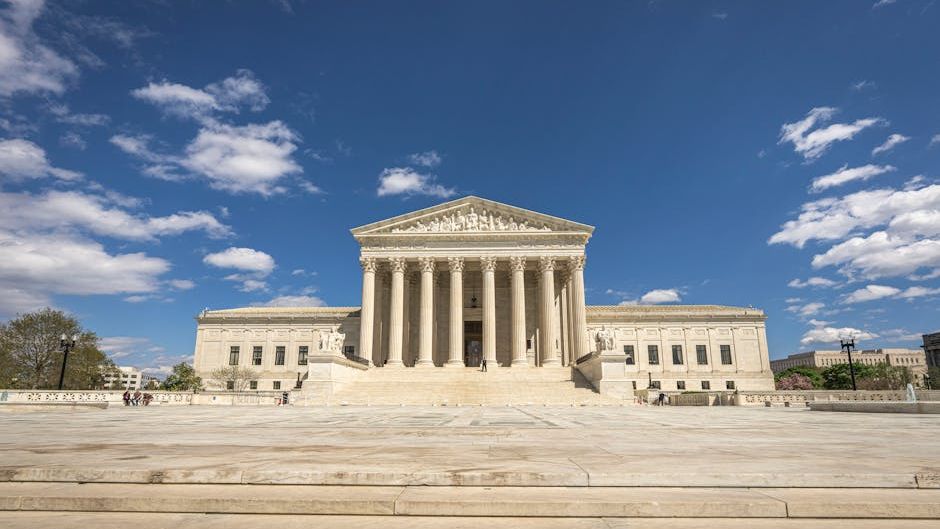

The Core of the Louisiana Ruling (Image Credits: Pexels)
Florida Governor Ron DeSantis’s office cited a fresh U.S. Supreme Court ruling to defend a proposed congressional map that would deliver four extra House seats to Republicans. The decision, handed down on Wednesday, markedly restricted the use of race in drawing district lines, challenging long-standing interpretations of the Voting Rights Act. State leaders across the South now eye opportunities to reshape maps amid tightening election timelines.
The Core of the Louisiana Ruling
In Louisiana v. Callais, white voters contested the state’s 2024 congressional map, which included a second majority-Black district. The Supreme Court’s conservative majority ruled 6-3 that the configuration amounted to an unconstitutional racial gerrymander, as the state lacked sufficient justification for prioritizing race. Justice Samuel Alito, in the majority opinion, emphasized that historical evidence failed to demonstrate intentional racial discrimination behind the map.
Justice Elena Kagan dissented sharply, arguing the court had long targeted the Voting Rights Act. She warned that the new standard would allow states to dilute minority voting power without repercussions. The ruling directly undermined Section 2 of the 1965 law, which previously barred maps that weakened minority voting strength.
State Responses Ignite Redistricting Rush
Republican officials moved swiftly. Florida’s general counsel, David Axelman, declared in a memo that race should play no role in redistricting, aligning the governor’s plan with the court’s stance. U.S. Senator Marsha Blackburn urged Tennessee lawmakers to redraw districts for a new Republican seat in Memphis, while Mississippi Governor Tate Reeves called a special session to adjust state Supreme Court maps.
These actions unfolded as legislative sessions neared their end and midterm primaries loomed. Louisiana faced the tightest deadline, with primaries set for May 16, leaving little room for changes before November. Still, states like Texas, North Carolina, and others had already pursued mid-decade redraws at President Donald Trump’s urging, setting the stage for further shifts post-election.
Projected Shifts in Power Balances
Analyses highlighted stark potential consequences. Fair Fight Action and the Black Voters Matter Fund projected Republicans could claim up to 19 additional U.S. House seats nationwide, alongside 200 state legislative seats in the South. As of 2024, majority-minority districts numbered about 148 in the House, with Democrats holding most; Texas and California dominated these.
Partner offer

Experts framed the decision’s breadth. UCLA law professor Rick Hasen described it as an earthquake for American politics. Issue One policy director Michael McNulty expressed fears it would enable racial gerrymandering. U.S. Representative Troy Carter, a Louisiana Democrat from a majority-minority district, called the outcome a devastating blow to equal representation.
Seven states – Texas, California, Missouri, North Carolina, Ohio, Utah, and Virginia – had redrawn maps earlier this year. Florida’s proposal could tip a small net gain to Republicans if approved. Primaries in Mississippi, North Carolina, and Texas had passed, and ballots were out in Alabama, Georgia, and South Carolina, but the post-November window offered time for 2028 preparations.
Eroding Protections Under the Voting Rights Act
The Supreme Court has progressively limited the act over years. A 2013 decision ended preclearance requirements for states with discrimination histories. In 2019, it barred federal courts from addressing partisan gerrymanders, spurring post-2020 census manipulations.
Section 2 once curbed vote dilution for minorities. The Callais opinion further narrowed it, prompting Republican praise. North Carolina Representative Richard Hudson, chair of the National Republican Congressional Committee, said elections should reflect voters, not mandates.
Democratic Strategies and Long-Term Outlook
Democrats decried the ruling and pushed countermeasures. The Democratic Legislative Campaign Committee’s Heather Williams labeled it a wake-up call for democracy. Representative Terri Sewell advocated reviving the John R. Lewis Voting Rights Advancement Act, passed by the House in 2021 but stalled in the Senate.
State-level efforts gained traction. Illinois’s House approved a constitutional amendment mandating districts that prevent racial denial of political participation, including coalition districts where feasible. Speaker Emanuel Welch stressed inclusivity, though Republicans like Minority Leader Tony McCombie decried it as a power grab. Legal Defense Fund’s Todd Cox urged local protections amid federal setbacks.
The decision’s shadow extends to 2028 and beyond, reshaping how voters choose representatives – or vice versa. With midterms approaching, stakeholders brace for maps drawn with fewer racial constraints.
Partner offer
Planning a trip to Vegas?
Compare hotel rates and show tickets on VEGAS.com.