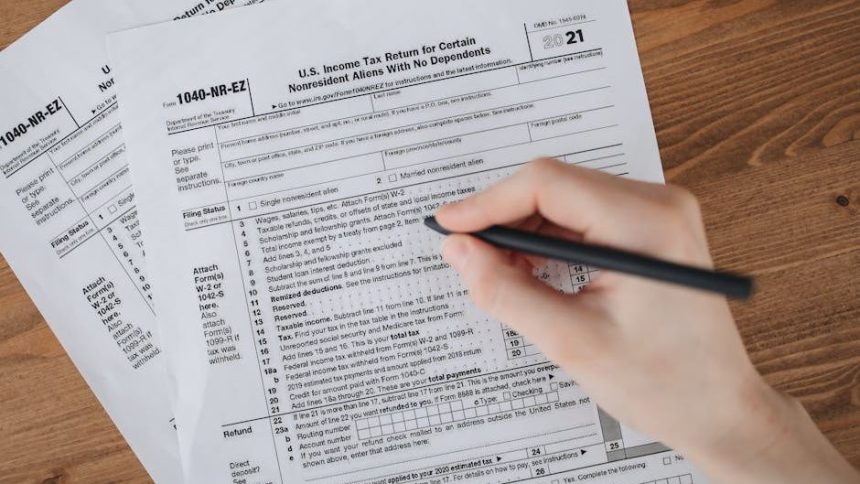
Most people think of tax havens as exclusive tools for billionaires parking money in the Cayman Islands. The reality is more accessible, and more nuanced, than that. For everyday earners with income flowing across state lines, freelancers working remotely, and investors with diversified portfolios, understanding how income is taxed at the state level can mean the difference between keeping thousands of dollars or sending them to a tax authority that may not even have a clear legal right to them. The rules governing out-of-state income are a patchwork of state laws, federal mandates, and court decisions that shift regularly. Getting this right requires more than intuition. It requires knowing where the landmines are.
Understanding the Landscape: Nine States With No Income Tax


Nine U.S. states do not charge personal income tax: Alaska, Florida, Nevada, New Hampshire, South Dakota, Tennessee, Texas, Washington, and Wyoming. For anyone earning income across state lines or planning a relocation, these states represent a meaningful baseline advantage. Choosing to make one of them your legal home is a legitimate and widely used tax strategy.
New Hampshire completed its full repeal of interest and dividend taxes in 2025, making it entirely income tax-free. Washington does not tax wages, but it does impose a tiered capital gains tax on high earners, levying 7% on the first million dollars of long-term capital gains after a sizeable standard deduction and 9.9% on gains exceeding that threshold. So while the headline “no income tax” is accurate for most of these states, the fine print matters depending on what type of income you’re trying to protect.
Domicile vs. Residency: The Distinction That Can Cost You

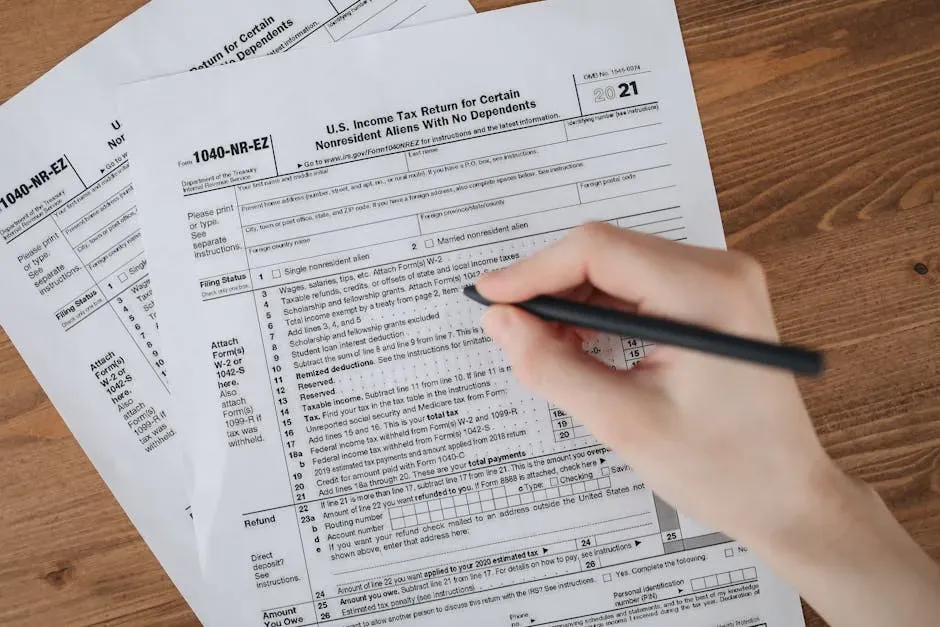
For high-income Americans seeking to reduce their tax burden, understanding state domicile is perhaps the most powerful and most misunderstood tool available. Unlike federal taxes that follow you everywhere, state income taxes depend entirely on where you establish your legal home. Many taxpayers conflate domicile with residency, and that confusion is expensive.
Before legally establishing tax residency in a no-income-tax state, it’s crucial to understand that residency and domicile are not the same thing. Residency is where you physically live – you can have multiple residences, including an apartment in New York, a vacation home in Colorado, and a family house in California. Your domicile, on the other hand, is the one state you consider your permanent, true home – where you intend to return whenever you are away. You can only hold one domicile at a time, and it does not change automatically when you travel. Changing your domicile requires a deliberate act: physically moving to the new state and demonstrating a clear intent to make it your permanent home.
The 183-Day Rule: How States Count Your Time

The 183-day rule is a statutory residency test used by roughly 25 states. If you spend 183 or more days in one of these states during a tax year and maintain a permanent place of abode there, the state can claim you as a tax resident – even if you are domiciled elsewhere. Some states count any part of a day as a full day, while others require an overnight stay. The practical implication: a layover or a lunch meeting can count.
Any part of a day counts as a full day under this rule. If you travel into the state just to meet a friend for lunch or attend a doctor’s appointment, that time counts as a full day for residency purposes. Any day or time of day can count, not just time spent during business hours or the work week. You can be a statutory resident of one state while domiciled in another, which can lead to double taxation. Tracking your days meticulously is not optional – it’s a baseline protection strategy.
California and New York: The Aggressive Auditors


The six most aggressive audit states – New York, California, New Jersey, Connecticut, Maryland, and Minnesota – use cell phone records, EZ-Pass data, and financial transactions to verify residency claims. These states have dedicated audit teams and sophisticated data-matching programs with a clear financial incentive to pursue high-income taxpayers who claim to have moved to zero-tax states. Their reach is long, and their memory is longer.
New York counts any part of a day as a full day and requires an abode maintained for 10 or more months for statutory resident status. Auditors use cell phone records, EZ-Pass transponder data, credit card transactions, social media check-ins, and even veterinary records to place you in the state. All domicile-related records should be kept for at least 7 to 10 years after a move, as states can audit back 3 to 6 years or longer in fraud cases, and contemporaneous documentation is essential to defend any challenge.
New York’s “Convenience of the Employer” Rule


New York’s Convenience Rule has been on the books for decades, but the debate over its legality is more intense than ever as remote work became commonplace. The rule provides that any allowance claimed for days worked outside New York must be based on performance of services which, out of necessity, obligate the employee to out-of-state duties. In other words, New York considers any work performed out of the state that could have been performed at a New York employer’s office to be a New York workday.
In May 2025, the New York Tax Appeals Tribunal upheld the application of the convenience rule against a law school professor who worked from his Connecticut residence before and during the COVID pandemic. Eight states currently enforce some version of the rule: Alabama, Connecticut, Delaware, Nebraska, New Jersey, New York, Oregon, and Pennsylvania. The convenience of the employer rule can lead to double taxation if the employee’s home state does not provide a credit for taxes paid to the employer’s state. Remote workers employed by companies based in these states need to be especially careful about how their work arrangement is structured and documented.
Partner offer

Puerto Rico’s Act 60: A Powerful Option for U.S. Citizens


Act 60, enacted in 2019, combined two earlier laws – the Export Services Act and the Individual Investors Act – into one comprehensive system of tax incentives designed to stimulate economic development in Puerto Rico. These measures encourage businesses to relocate operations and attract individual investors looking for lower income tax rates and tax exemptions on investment income. The arrangement is unique because it operates within the U.S. legal system, not outside it.
The incentives are particularly attractive to U.S. citizens who move to Puerto Rico because they do not need a residency permit, their Puerto Rico-sourced income is exempt from U.S. federal and state income taxes, and they get to keep benefits such as Medicare and Social Security. The Puerto Rico tax code mirrors the U.S. Internal Revenue Code, making the transition considerably easier for those who become bona fide residents. For qualifying businesses, Act 60 offers a corporate tax rate of just 4%, compared to the 21% federal corporate rate. For individuals, the incentives are equally compelling: zero percent tax on capital gains accrued after establishing residency and a complete tax exemption on interest and dividends. That said, these major tax advantages are only available for taxpayers who meet strict residency and sourcing requirements – and the IRS is actively enforcing these rules.
Offshore Havens: Legal, but Not Exempt From Reporting


Offshore tax havens are completely legal if you use them for legal tax optimization and asset protection. Offshore tax havens like the Cayman Islands offer a full suite of tax benefits for both corporations and individuals, capitalizing on lighter regulations and strong privacy laws. However, U.S. citizens face a fundamental constraint that residents of most other countries do not: the IRS taxes worldwide income regardless of where it is earned or where the taxpayer lives.
Owning a company based in a corporate tax haven will not guarantee complete mitigation of taxes, as you may still be liable to pay taxes on income earned in your own jurisdiction. It will, however, provide an opportunity to greatly reduce taxes when structured correctly and used in conjunction with other tools. Transparency requirements are increasing, and clients must weigh the advantages of confidentiality against the need for regulatory compliance. Effective asset management in a tax haven in 2026 means balancing privacy with adherence to international reporting standards. The era of simply moving money offshore and expecting silence is over.
Proving Domicile: What Actually Holds Up in an Audit

To claim a state as your tax haven, you must establish it as your legal domicile – your permanent home. Auditors will check your vehicle registration, voting records, and the location of your primary doctors. Residents must prove domicile through concrete actions including obtaining a local license, filing a Declaration of Domicile, and registering vehicles – while severing former-state ties to avoid audits. None of these steps are optional if you want the domicile claim to hold up under scrutiny.
One of the most common misconceptions is that simply spending 183 days outside your old state is enough. The 183-day rule is a residency test, not a domicile test. You can spend 200 days in Florida and still be domiciled in California if your actions suggest California is your permanent home. You will most likely not be forced to pay income taxes to two states simultaneously, because most states maintain reciprocal agreements with neighboring states to ensure taxpayers’ earnings are only taxed once. Still, those agreements don’t cover every scenario, especially for high earners in aggressive audit states.
Conclusion


Legally protecting out-of-state income is not about loopholes or evasion. It’s about understanding the rules well enough to follow them in your favor. The tax code, both at the federal and state level, genuinely permits a wide range of strategies: relocating your domicile, structuring remote work correctly, leveraging territorial incentives like Puerto Rico’s Act 60, or choosing the right base for a business that operates across borders.
What separates people who benefit from these strategies from those who face audits and back-tax bills is documentation, consistency, and professional guidance. The states watching most closely – New York and California especially – are sophisticated, well-funded, and patient. The taxpayer who wins is usually the one who built a paper trail years before anyone came asking.
Tax planning rarely rewards improvisation. The people who keep the most of what they earn aren’t necessarily the wealthiest – they’re often just the most prepared.
Partner offer
Planning a trip to Vegas?
Compare hotel rates and show tickets on VEGAS.com.