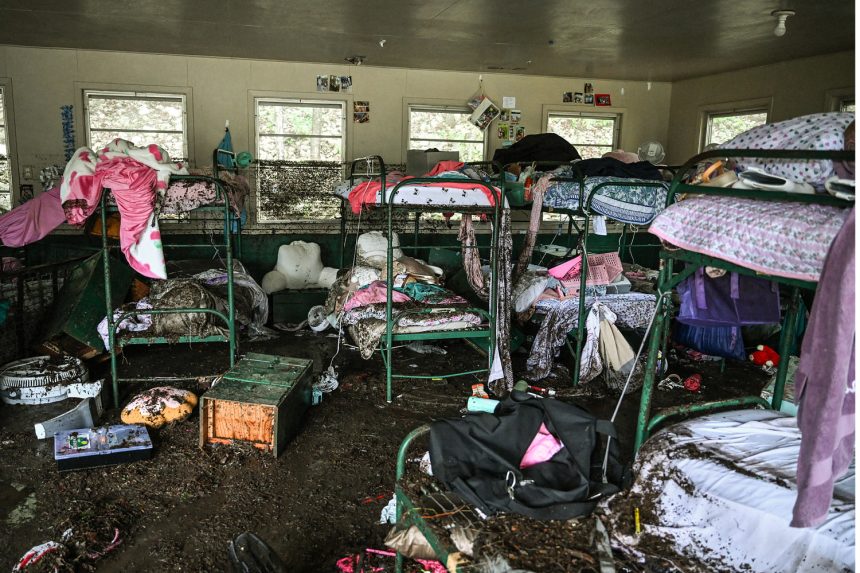

27 Lives Lost in Minutes (Image Credits: Media-cldnry.s-nbcnews.com)
Hunt, Texas — District Judge Maya Guerra Gamble delivered a measured ruling Wednesday on the future of Camp Mystic, the all-girls summer camp scarred by last year’s deadly Guadalupe River floods.
27 Lives Lost in Minutes
Flash floodwaters surged through the camp’s low-lying Guadalupe River campus before dawn on July 4, 2025, claiming 25 girls and two counselors.[1][2] The Guadalupe River rose from 14 feet to nearly 30 feet in under an hour, overwhelming cabins where young campers slept. Camp owner Dick Eastland perished while attempting rescues. The tragedy formed the heart of a broader disaster that killed more than 130 people across the Texas Hill Country.[3]
Questions immediately arose about preparedness. Security cameras captured the rising waters, but staff did not monitor them overnight. Evacuation proved impossible amid the speed of the deluge, as camp representatives later argued in court.
Families Demand Evidence Preservation
Parents of 8-year-old Cile Steward, one victim whose body remains unrecovered, filed a wrongful death lawsuit against the camp owners. They alleged negligence and sought a temporary injunction to halt operations and construction. Altering the site risked destroying crucial evidence, such as water marks on cabins and internal records, their attorneys contended.[4]
Multiple families pursued similar claims, criticizing the camp’s failure to protect children despite warnings. Lt. Gov. Dan Patrick urged regulators to withhold the camp’s license renewal pending investigations. The courtroom in Austin divided sharply, with relatives wearing memorial buttons and camp supporters in green shirts.
A Ruling That Balances Grief and Operations
Judge Gamble denied the full closure of Camp Mystic. She allowed the unaffected Cypress Lake campus to proceed with summer programming, where over 800 girls had enrolled and nearly $3 million in tuition hung in the balance.[1] However, she granted a key injunction on the Guadalupe campus.
The order prohibits demolition, repairs, or reconstruction of flood-damaged structures, including sleeping cabins, the office building, recreation hall, commissary, and surrounding grounds. This temporary measure endures through the lawsuit, ensuring evidence integrity. “When you’re talking about children, nothing could be more important than figuring out what happened,” plaintiff attorney Bradley Beckworth stated.[1]
Camp Mystic’s Dual Campuses and Safety Shifts
Established in 1926 as a Christian camp, Camp Mystic spans multiple sites. The Cypress Lake area escaped major damage and now complies with new state safety rules, including flood monitors. Operators plan eventual rebuilding in safer hill locations beyond a 1,000-year flood plain.
- Cypress Lake: Higher ground, set for summer use.
- Guadalupe River: Preservation required; no alterations permitted.
- Memorial trees: Already planted, sparking family outrage for lacking consultation.
- Future builds: Focused outside flood zones.
Camp attorney Mikal Watts welcomed the preservation aspect. “She agreed that the evidence at the Guadalupe River should be preserved,” he said.[1] CiCi Steward, Cile’s mother, called the outcome vindicating for safeguarding answers about her daughter’s fate.
Key Takeaways
- Guadalupe campus frozen to protect flood evidence amid ongoing suit.
- Cypress Lake operations greenlit, safeguarding summer programs.
- Ruling underscores tension between accountability and camp continuity.
As legislative probes loom this spring, the decision highlights enduring questions on camp safety in flood-prone areas. Families continue their quest for truth, while Camp Mystic eyes a cautious revival. What steps should ensure such tragedies never repeat? Tell us in the comments.