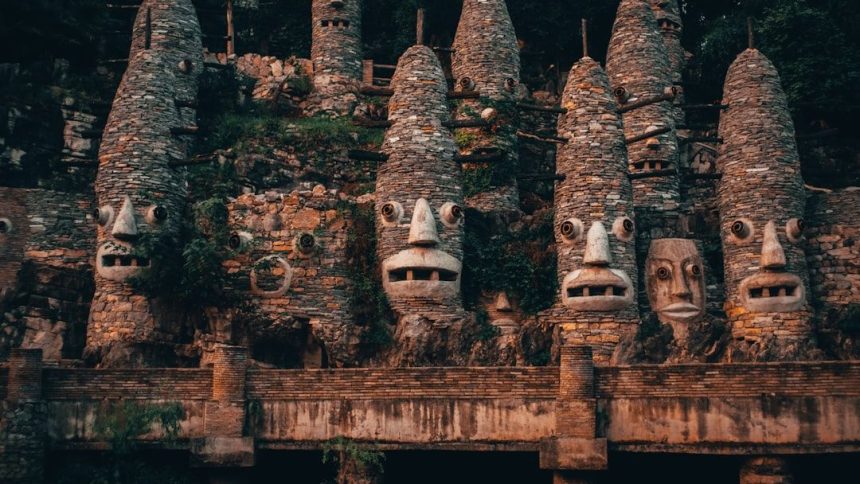
Millions of people visit the world’s most iconic landmarks every single year. They take photos, stand in awe, and leave feeling like they’ve seen it all. Honestly, most of them haven’t. Tucked inside granite cliffs, carved into ancient stone, painted across towering iron, and lurking in the shadows of temple walls, there are faces, figures, and hidden details that the vast majority of visitors walk right past without a second glance.
People often see hidden faces in things. Depending on the circumstances, this is referred to as pareidolia, the perception or recognition of a specific pattern or form in something essentially different. It’s a deeply human instinct. Some hidden faces at famous landmarks are natural formations shaped by millennia of wind and water. Others were deliberately carved by ancient civilizations or quietly included by their architects. All of them are fascinating. Let’s dive in.
1. The Secret Face Behind Lincoln at Mount Rushmore, South Dakota, USA
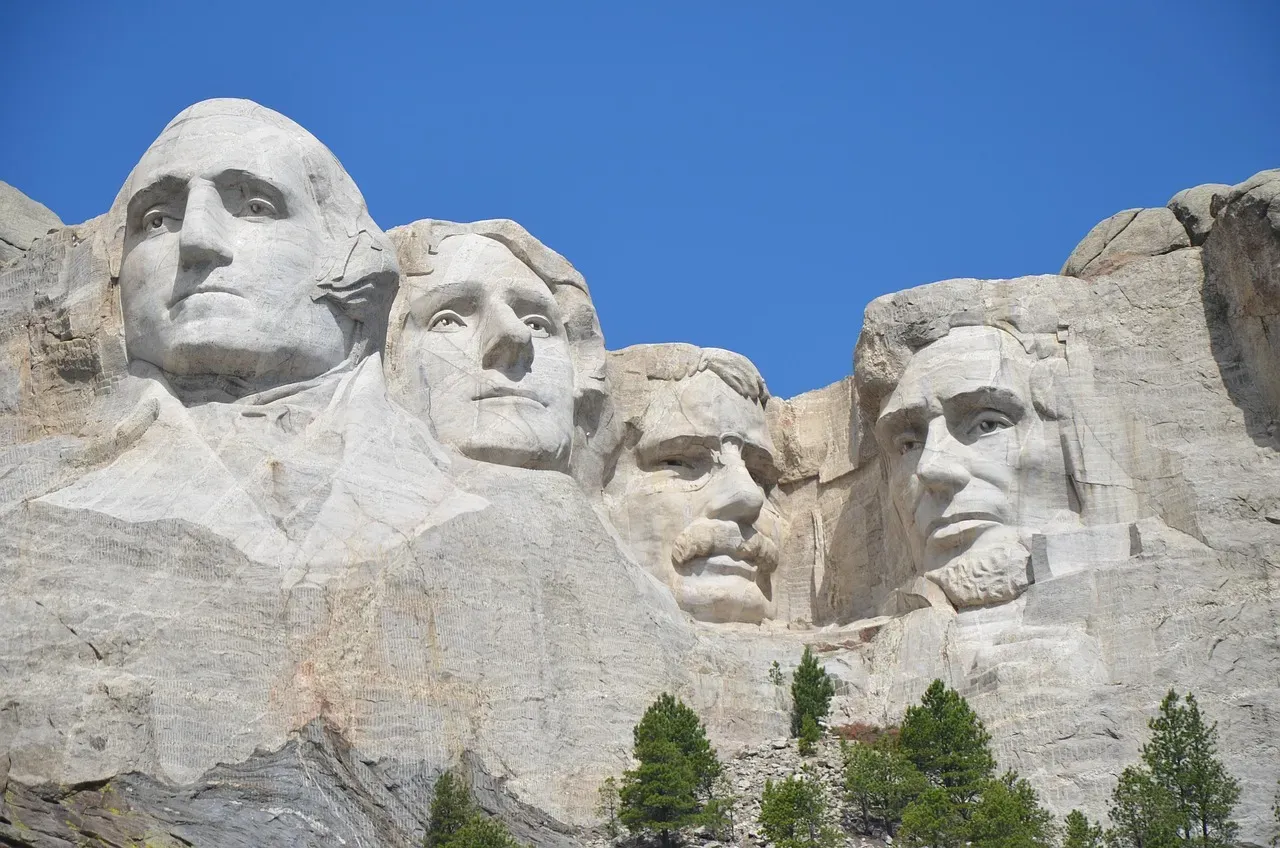
You know the four presidential faces blasted into South Dakota’s granite. You’ve seen the postcards. But here’s the thing most tourists never find out: one of those faces conceals an entirely separate hidden space behind it.
One of the famous faces conceals a secret. Lincoln’s visage is right in front of a hidden corridor. Behind Abraham Lincoln’s carved head lies an unfinished chamber that many visitors to Mount Rushmore don’t even know exists. Gutzon Borglum, the sculptor behind the colossal presidential faces, originally wanted to carve written descriptions of important U.S. historical events into the rockface, but the plan was scrapped because the letters would have to be impossibly large to be read from the ground.
The hall of records was built between 1938 and 1939 to be a storage space for important documents related to national American history. These documents include the United States Declaration of Independence, the US Constitution, and the Bill of Rights. In 1998, the documents were moved into a locked titanium vault which was kept behind a 1200-pound-wall of granite inside the hidden hall.
Mount Rushmore is famous for its enormous sculptures of four American presidents, but there’s a lesser-known secret lurking in the rocks. At certain times of day, when the sun hits just right, shadows dance across the granite, creating the illusion of extra faces in the cliffs nearby. These fleeting visions are a result of the jagged landscape and shifting light, surprising those who take the time to look beyond the main attraction. It’s like the mountain is showing off a little. And honestly, it earns it.
2. The Hidden Face in the Mountains of Machu Picchu, Peru
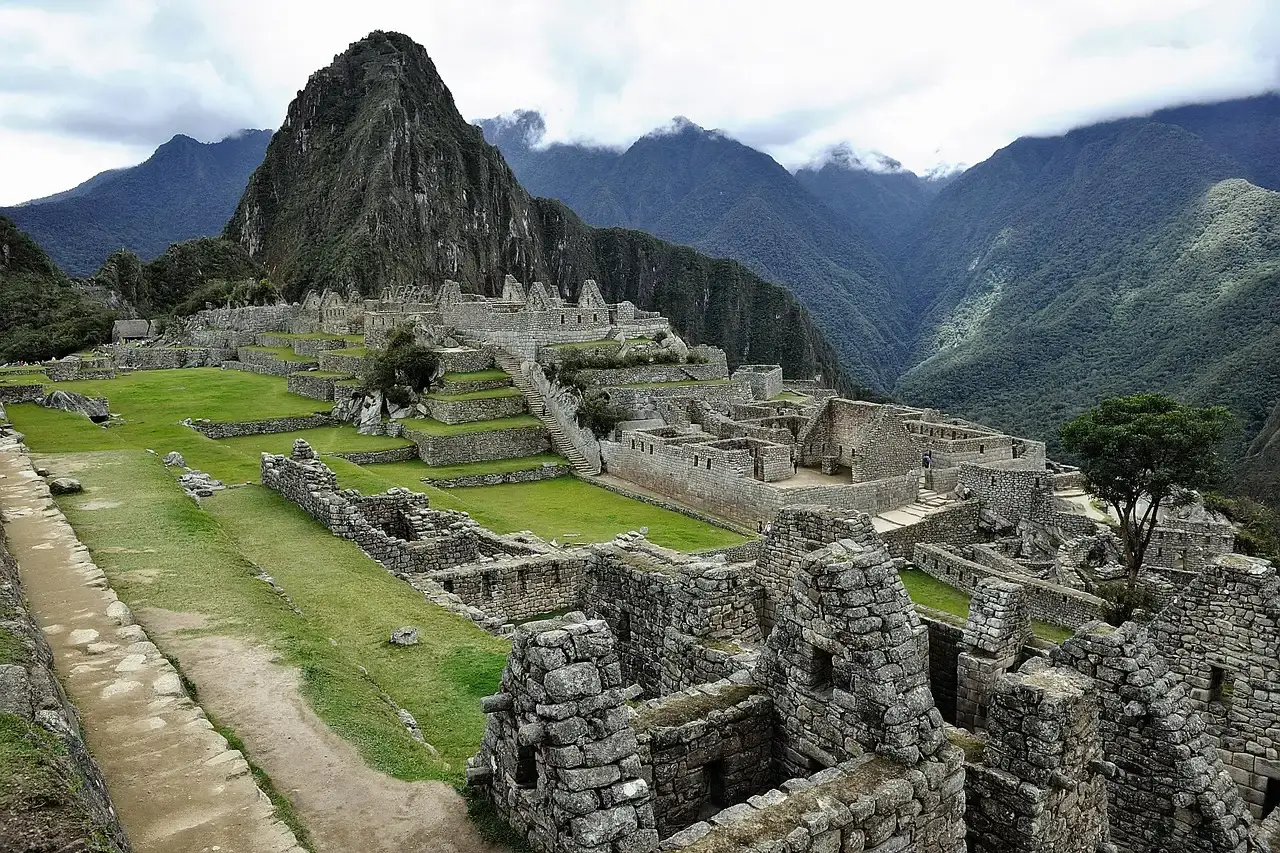
Machu Picchu sits nearly 8,000 feet above sea level in the Peruvian Andes. Breathtaking ruins, sure. But most visitors leave without ever noticing the face that has been staring back at them the whole time.
Unlike many of the Machu Picchu symbols, the resemblance of a male face can be seen in the mountains of Machu Picchu. The completely natural formation seems to show the nose, mouth, and forehead of a man looking to the skies. The mysterious faces and symbols found at the ancient Inca citadel of Machu Picchu in Peru are extremely intriguing. Not only do they shed a unique light on the Inca civilization and culture but they are also not very obvious if you do not know what you are looking for. Every day thousands of travelers visit the world wonder of Machu Picchu and leave without even noticing these hidden faces and symbols.
A rock, roughly carved out to look like the side profile of a sleeping woman, can be found at Machu Picchu too. Samples taken from the surface of the rock have shown traces of gold etched on it with some archaeologists believing that this stone may have been completely covered in gold at one point. If it was totally covered with gold, the sacred and precious metal of the Inca, it would glitter in the sunlight, perhaps providing an aerial signal to the deities above. Think about that next time someone tells you a wall is just a wall.
3. Gustave Eiffel’s Hidden “Face” of the Tower’s Secret Apartment, Paris, France
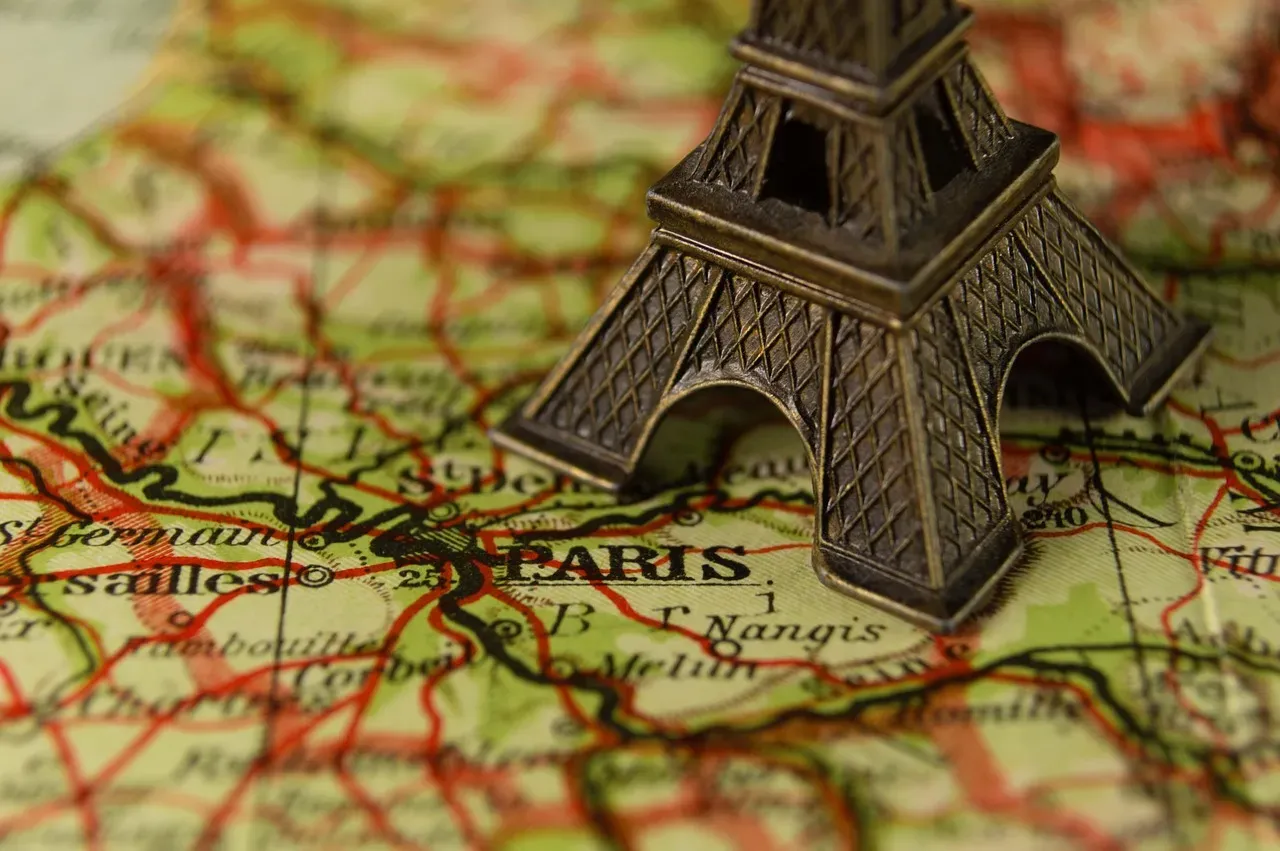
The Eiffel Tower is arguably the most photographed structure on Earth. Seven million people climb it every year, according to the official Eiffel Tower site. Yet practically nobody notices the tiny, inhabited face peering out from the very top of the iron giant.
When the Eiffel Tower opened in 1889 to much wonder and acclaim, designer Gustave Eiffel soaked up the praise, but as if that wasn’t enough, it was soon revealed that he had built himself a small apartment near the top of the world wonder. Located on the third level of the tower, Eiffel’s private apartment was not large, but it was cozy. He built an apartment covering 100 square meters (1,076 square feet) on the upper platform of the tower, just above the third floor and just below the campanile which crowned the tower.
The apartment was reported to be “furnished in the simple style dear to scientists.” The walls were covered in warm wallpaper and the furniture included soft chintzes, wooden cabinets, and even a grand piano, creating a comfortable atmosphere, perched nearly 1,000 feet in the air. He included a private apartment at the very summit of the Eiffel Tower that made him the envy of the Parisian elite. Wealthy locals offered him small fortunes to rent the space for a single night, but he refused them all.
Edison wasn’t the only A-lister to visit Eiffel up in his private office. In the lounge, Eiffel kept a ‘Golden Book’ for his guests to sign, which included notes from several European royal families, the actress Sarah Bernhardt, artist Paul Gauguin, and Buffalo Bill. Today, visitors can glimpse this remarkable hidden space through a window during their ascent to the summit.
4. The Hidden Faces and Condor at Ta Prohm Temple, Cambodia
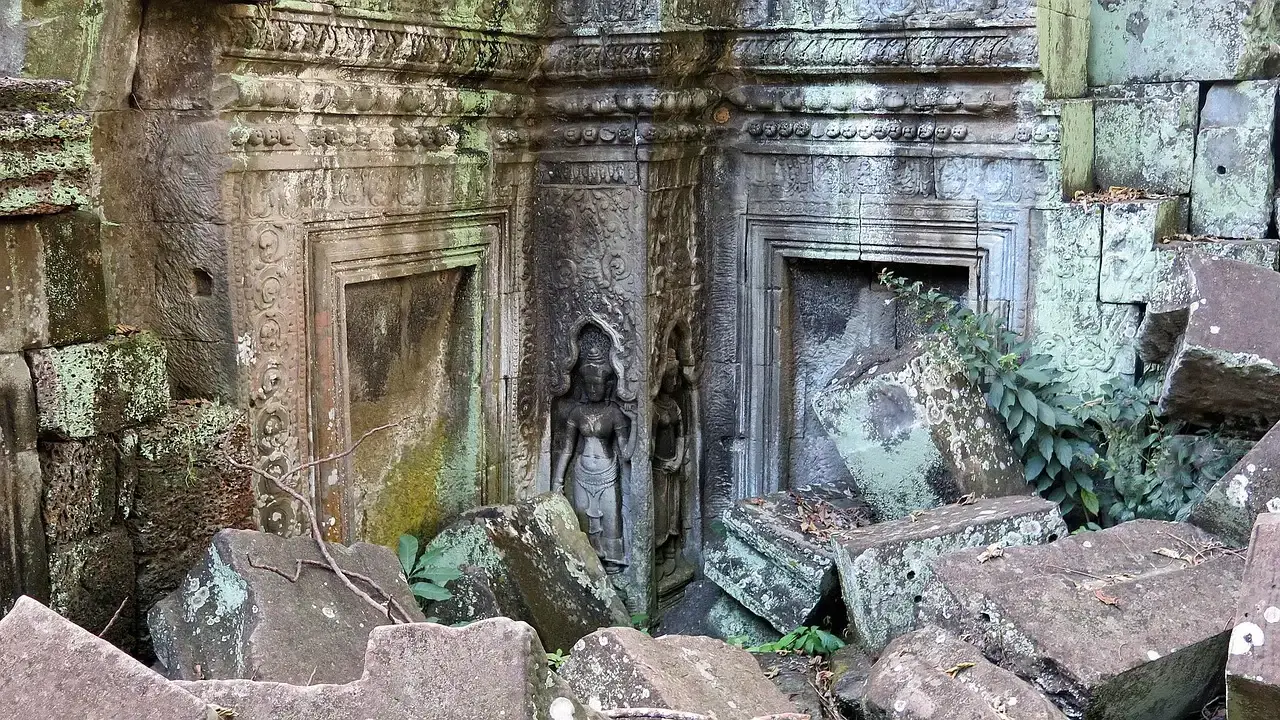
Deep in the Cambodian jungle, Ta Prohm temple is slowly being consumed by the forest. The trees are winning. The roots curl around carved stone faces like giant fingers, and the result is one of the most haunting visual experiences in all of ancient architecture.
At Ta Prohm Temple, deep in the Cambodian jungle, a serene Buddha’s face peeks out from tangled roots and ancient stone. Over the centuries, the jungle has slowly reclaimed the temple, with massive trees enveloping statues and walls. The sight of the Buddha, half-hidden by twisting roots, is both haunting and beautiful, a powerful symbol of nature’s ability to reclaim even the grandest human creations.
What makes this more astonishing is that the faces were not accidentally buried. They were designed into the temple’s architecture with extraordinary precision, meant to be found only by those who looked carefully. Pareidolia is the tendency for perception to impose a meaningful interpretation on a nebulous stimulus, usually visual, so that one detects an object, pattern, or meaning where there is none. At Ta Prohm, the faces were never “none.” They were always intentional, always waiting.
5. The Sleeping Giant Mountain Face, Kauai, Hawaii
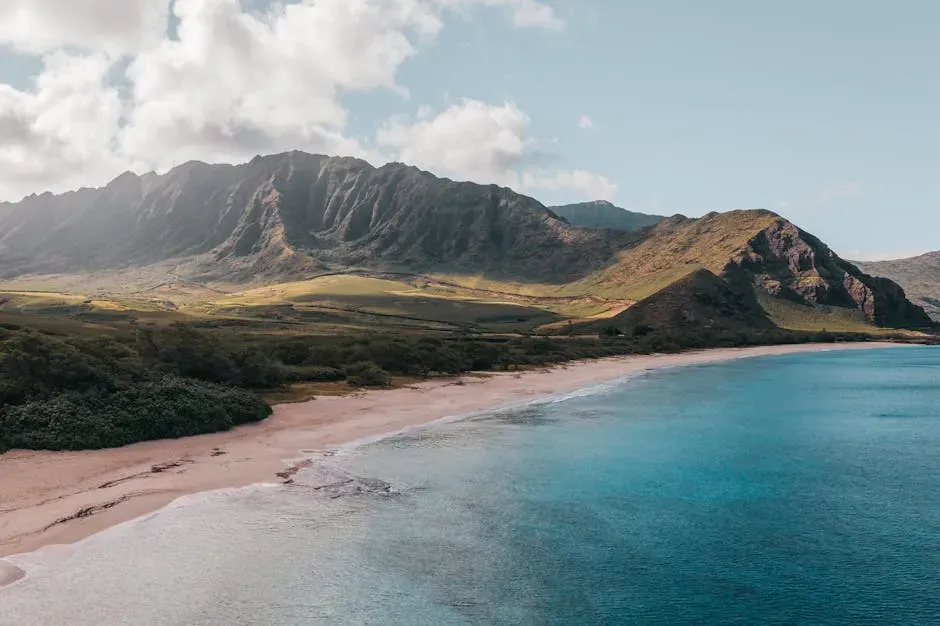
I know it sounds crazy, but an entire mountain range in Hawaii has the face and body of a sleeping giant, and local legend has kept the story alive for centuries.
On the lush island of Kauai, Nounou Mountain stretches across the sky, its slopes forming the unmistakable outline of a giant lying on his back. Local legend tells of a mighty warrior who fell into a deep sleep after helping his people and never woke again. From certain vantage points, the mountain’s ridges shape a face, chest, and even folded arms, giving rise to the name “Sleeping Giant.”
Hikers who brave the trails to its summit are rewarded with sweeping views and a sense of walking in the footsteps of legends. The Sleeping Giant stands as proof that nature can sculpt forms as meaningful and expressive as any artist, connecting people to their land and heritage in ways that stir the heart. It’s geography and mythology fused into one unforgettable shape.
6. The Hidden Sculptor’s Signature at the Lincoln Memorial, Washington D.C., USA
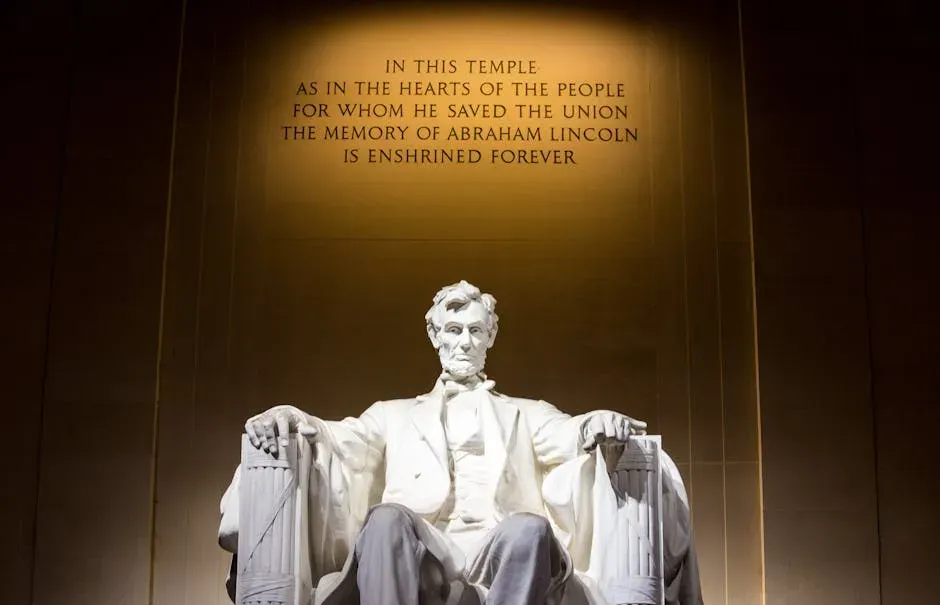
The Lincoln Memorial is visited by millions. Most people notice the giant seated Abraham Lincoln. Fewer notice the famous typo carved into the wall. Almost nobody notices the tiny hidden signature tucked discreetly into the stone.
Carved into the north wall of the Lincoln Memorial are the initials “EBL.” They belong to Evelyn Beatrice Longman, the sculptor who designed the memorial’s ornamental border. Longman was the first woman sculptor elected as a full member of the National Academy of Design. Her initials are easy to miss but mark a rare recognition of a woman’s contribution to one of the nation’s most iconic landmarks.
The great monument hides an equally great secret below it. Beneath it lies a 43,800-square-foot underground chamber known as the undercroft, which contains graffiti from the 1910s. The cavern was built at the same time as the memorial to support the structures above, though was largely forgotten about until the 1970s. Work is now underway to transform the space into an immersive museum dedicated to the history of the popular monument with an opening date scheduled for 2026.
7. The Elephant Rock Face, Heimaey Island, Iceland
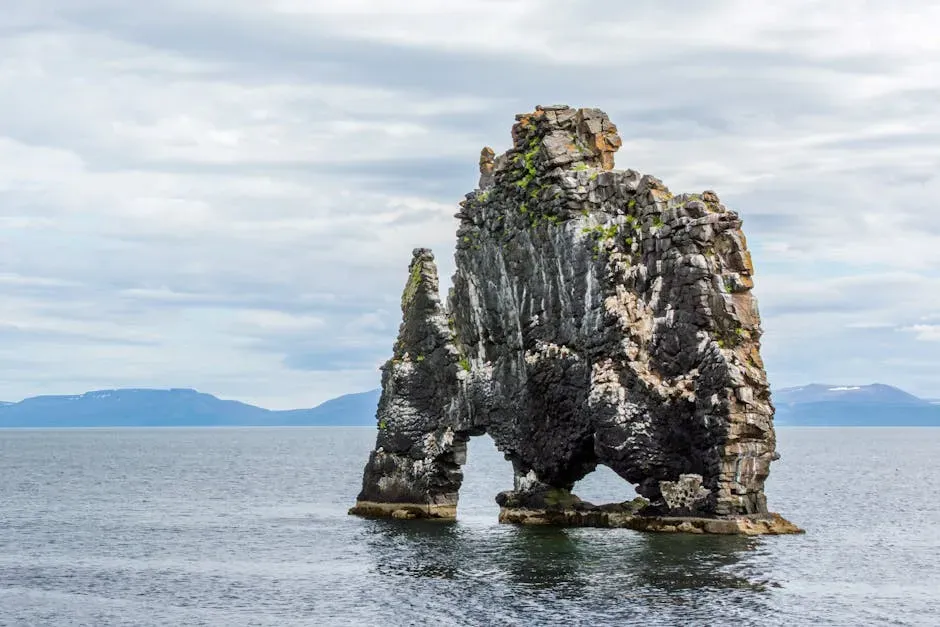
Nature’s ability to sculpt convincing faces out of raw volcanic rock is nowhere more dramatically obvious than on Heimaey Island in Iceland, where the ocean and lava have created something almost unbelievable.
On the dramatic shores of Heimaey Island in Iceland, a colossal rock formation juts out into the sea, unmistakably shaped like an elephant’s head. With its wrinkled “skin” and a trunk dipping into the surf, Elephant Rock looks so lifelike it seems ready to trumpet. This natural wonder is the product of volcanic eruptions and relentless ocean waves, slowly sculpting the basalt into its animal form.
Tourists flock to see it, snapping photos from boats or the coastline. Local guides love to point out how the rock’s features match those of a real elephant, including a visible “eye.” It’s a reminder that the most astonishing art galleries in the world sometimes have no roof, no entrance fee, and no curator. They’re just sitting on the coastline, waiting for you to look.
8. The Hidden Face at the Prague Astronomical Clock, Czech Republic
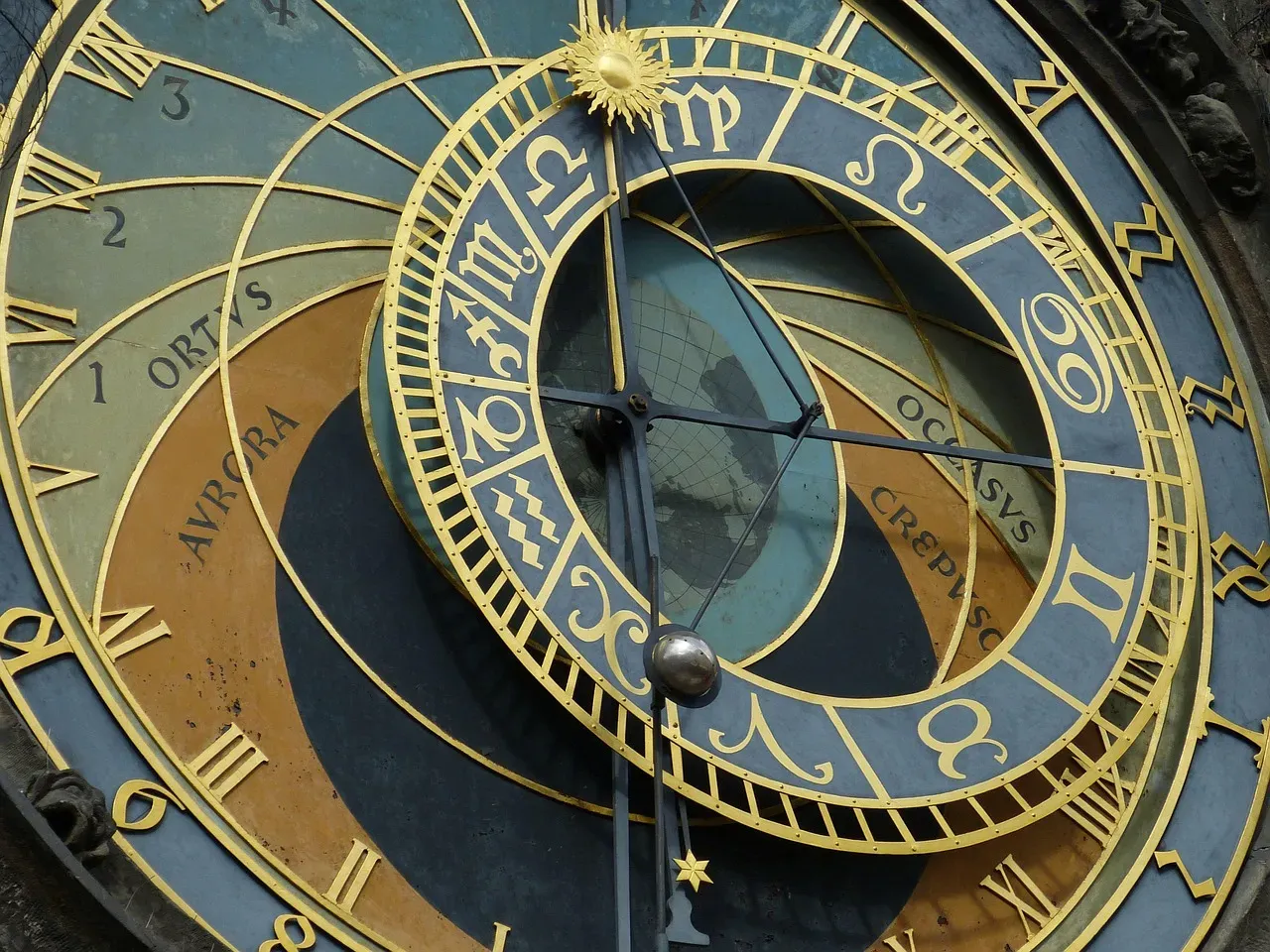
The Prague Orloj is one of the most visited medieval timepieces on Earth. Tourists gather every hour to watch its famous parade of moving figures. Still, the clock holds a detail that most onlookers miss completely.
Crafted in 1410, this clock is not just a timepiece but a work of art, science, and mystery all at once. The hidden moon face is a playful detail, inviting viewers to search for meaning in the mechanics of the universe. Each year, millions marvel at the clock’s hourly show, few realizing the secrets tucked in its centuries-old design.
The hidden moon face is a playful detail, inviting viewers to search for meaning in the mechanics of the universe. Each year, millions marvel at the clock’s hourly show, few realizing the secrets tucked in its centuries-old design. It’s a magical reminder that even the most familiar landmarks can offer new surprises if you look at them from a different angle. That, honestly, sums up this entire list.
9. The Taj Mahal’s Hidden Optical Face Illusions, Agra, India
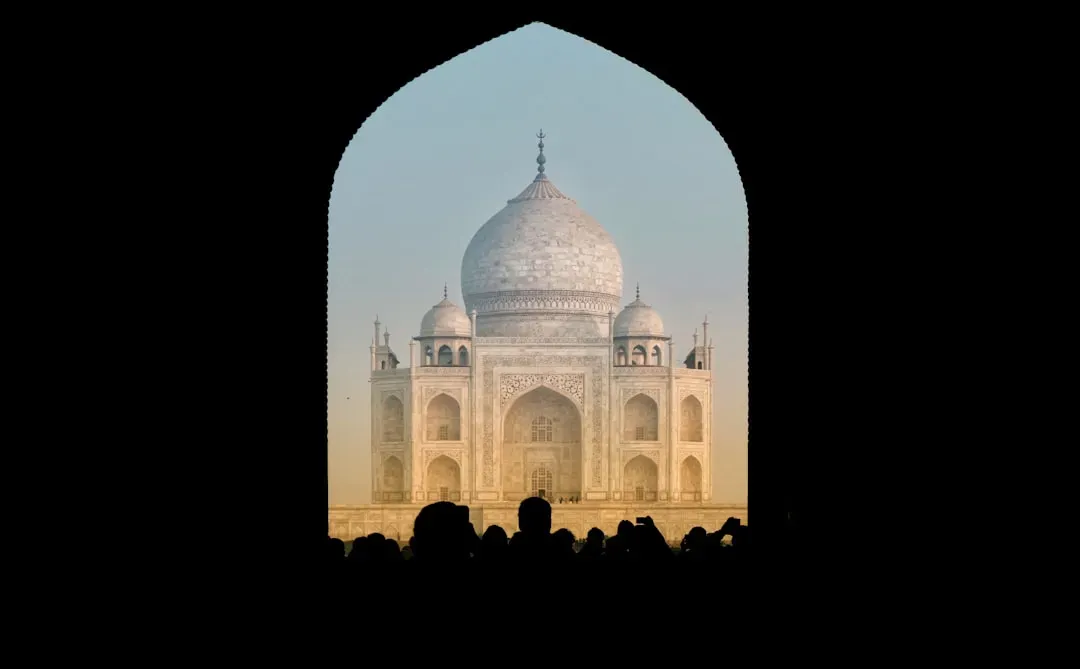
The Taj Mahal is without question one of the most architecturally precise buildings ever constructed. What very few visitors realise, though, is that its design includes deliberate visual tricks that manipulate the way the human eye perceives the entire structure.
The architects who designed the Taj Mahal built several optical illusions into the structure to create a sense of mystery befitting such a magnificent building. One such illusion is the fact that, paradoxically, the structure actually appears closer and larger from farther away at the main entrance, then seems to recede and grow smaller as you approach.
The pillars which flank the mausoleum appear upright, while actually leaning outward so as to fall away from the palace in the event of an earthquake. Inside the impressive building lie the cenotaphs of Mumtaz Mahal and Shah Jahan. However, what many visitors don’t know is that these beautiful monuments, housed in an ornate chamber, are empty. The real tombs are hidden beneath, at garden level, and are off-limits to the public. The whole structure is, in a sense, one giant visual deception. Brilliant and beautiful ones, at that.
10. The Hidden Face Carved in the Wall at Machu Picchu: The Condor and the Llama, Peru
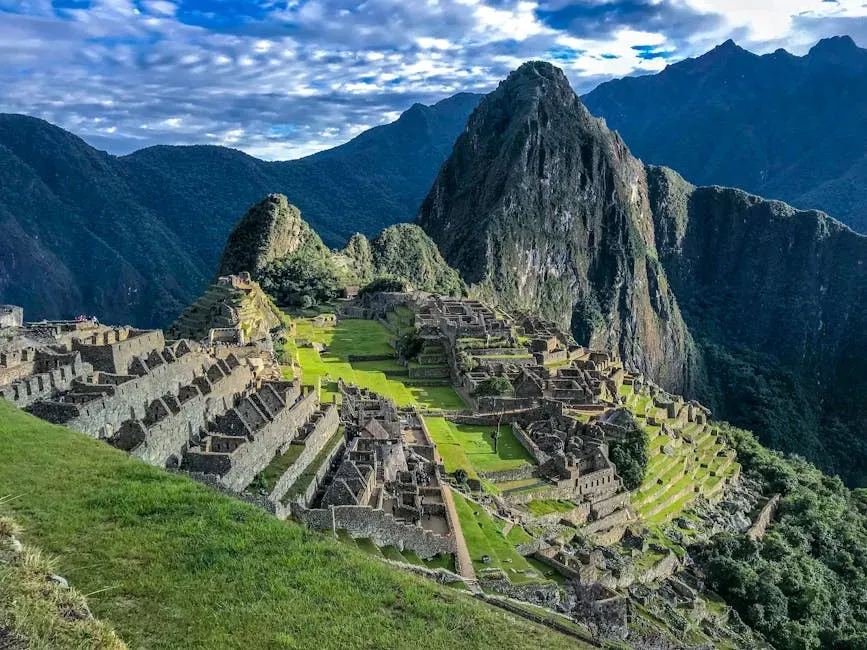
Let’s come back to Machu Picchu one more time, because this ancient Incan citadel is so densely packed with hidden faces and forms that a single entry truly does not do it justice. Look carefully at the stone walls and floors, and the Incas speak directly to you across the centuries.
The Condor is a bird that can be found across Peru, Chile, and Argentina. One of the most fantastic symbols within Machu Picchu is actually that of a Condor in flight. At first glimpse, you can see the outline and beak of a Condor on the floor. It appears as if the bird has no wings. However, if you tilt your head 90 degrees and look up from the floor you may be surprised. The wings have been carved from two immense rocks and clearly show the bird in full flight.
The Llama in the Wall is the most famous hidden animal symbol and is another must-see when visiting this iconic location. As with many of the other symbols within the Machu Picchu walls, at first glance it may look like a simple wall section. However, if you study the outline, you can clearly see the body, long neck, head and ears of a llama. The shape is unmistakable.
The Inca civilization placed a strong emphasis on the concept of dualities as these reflected the harmony of the universe. These can be seen in the mysterious faces and symbols of Machu Picchu. Every stone, every angle, every shadow was placed with a purpose. The question is whether you slow down long enough to look.
Conclusion: What You See Depends on How You Look
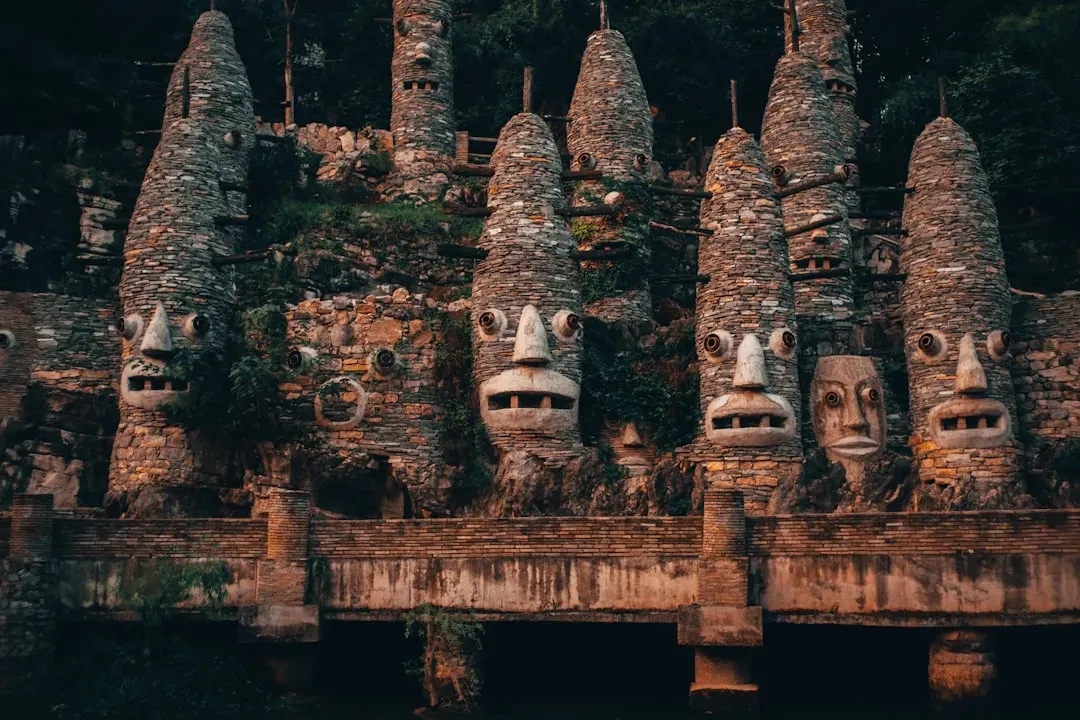
The world’s greatest landmarks were built by human hands, but they are also shaped by time, nature, light, and imagination. A face lurks behind a president’s granite profile in South Dakota. A sleeping warrior stretches across an entire Hawaiian ridgeline. A medieval clock in Prague hides a golden moon. These are not myths. They are real, verifiable, documented details hiding in plain sight.
Pareidolia can cause people to interpret random images, or patterns of light and shadow, as faces. Sometimes that instinct is pure imagination. Other times, like at Machu Picchu or the Taj Mahal, the original builders put the face exactly where your eyes were always supposed to find it.
The real question isn’t whether these hidden faces exist. It’s how many more are still out there, waiting for someone to stop rushing past. Next time you visit a famous landmark, take one extra minute to look just a little deeper. You might be surprised by what looks back. What landmark are you planning to visit next, and what hidden detail will you now look for? Tell us in the comments.