


There is something quietly intimidating about standing in front of a bookshelf and reaching for a novel that could double as a doorstop. Some books don’t just ask for your time. They demand it, hour after hour, week after week. Yet the readers who finish them often say the same thing: they wish it hadn’t ended.
Length alone doesn’t make a book great. Plenty of short novels are masterpieces. Still, there is a particular magic in a story that gives itself room to breathe, to build worlds, to let you forget your own life entirely. If you’ve ever wondered which enormous books are actually worth the commitment, you’re in the right place. Let’s dive in.
1. In Search of Lost Time by Marcel Proust (~1.3 Million Words)

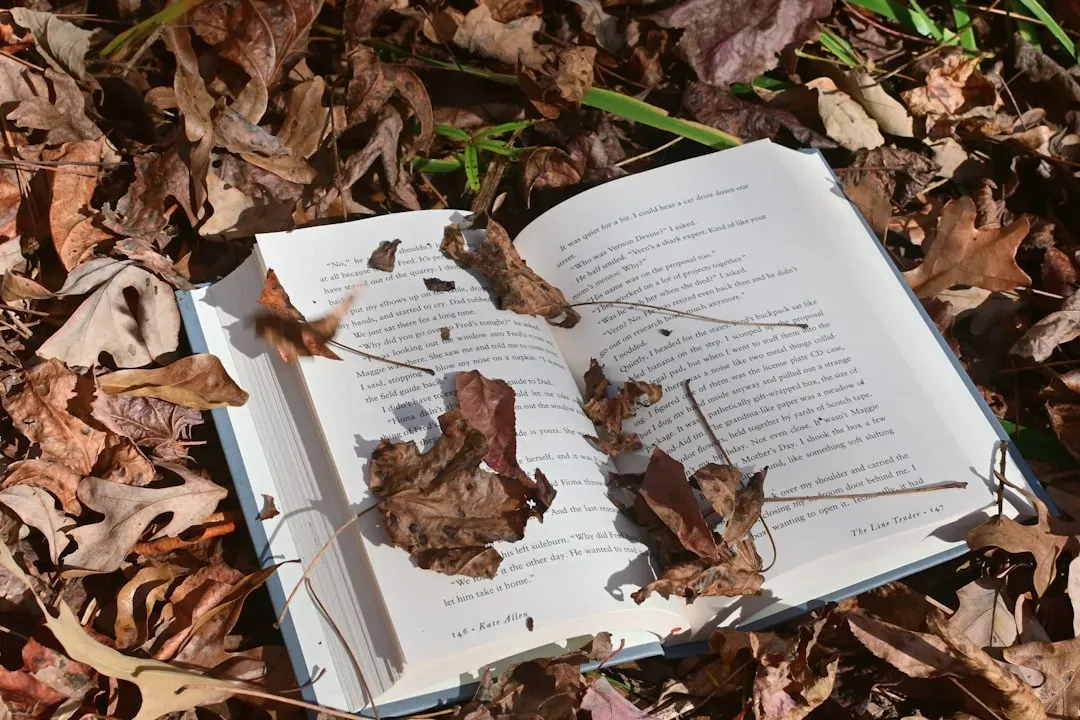
If there is an upper limit to how long novels can be, Marcel Proust reached it at the turn of the 20th century. His epic story, known in French as “À la recherche du temps perdu,” boasts nearly 1.3 million words, making it the world’s longest book. That figure is staggering when you consider that a typical novel runs to roughly 80,000 words.
According to the Guinness Book of World Records, this seven-part work by French author Marcel Proust is the longest novel, totaling 9,609,000 characters including spaces. Published between 1913 and 1927 as “À la recherche du temps perdu,” the novel is the story of Proust’s own life, told as an allegorical search for truth. I think what makes it genuinely worth the effort is that it doesn’t just tell a story. It rebuilds the texture of memory itself.
The novel is the story of Proust’s own life, told as an allegorical search for truth. The novel’s major themes of love, art, time, and memory are carefully and brilliantly orchestrated throughout the book. It is the major work of French fiction of the early 20th century. Commit to it, and Proust will change the way you notice the world.
2. War and Peace by Leo Tolstoy (~580,000 Words)

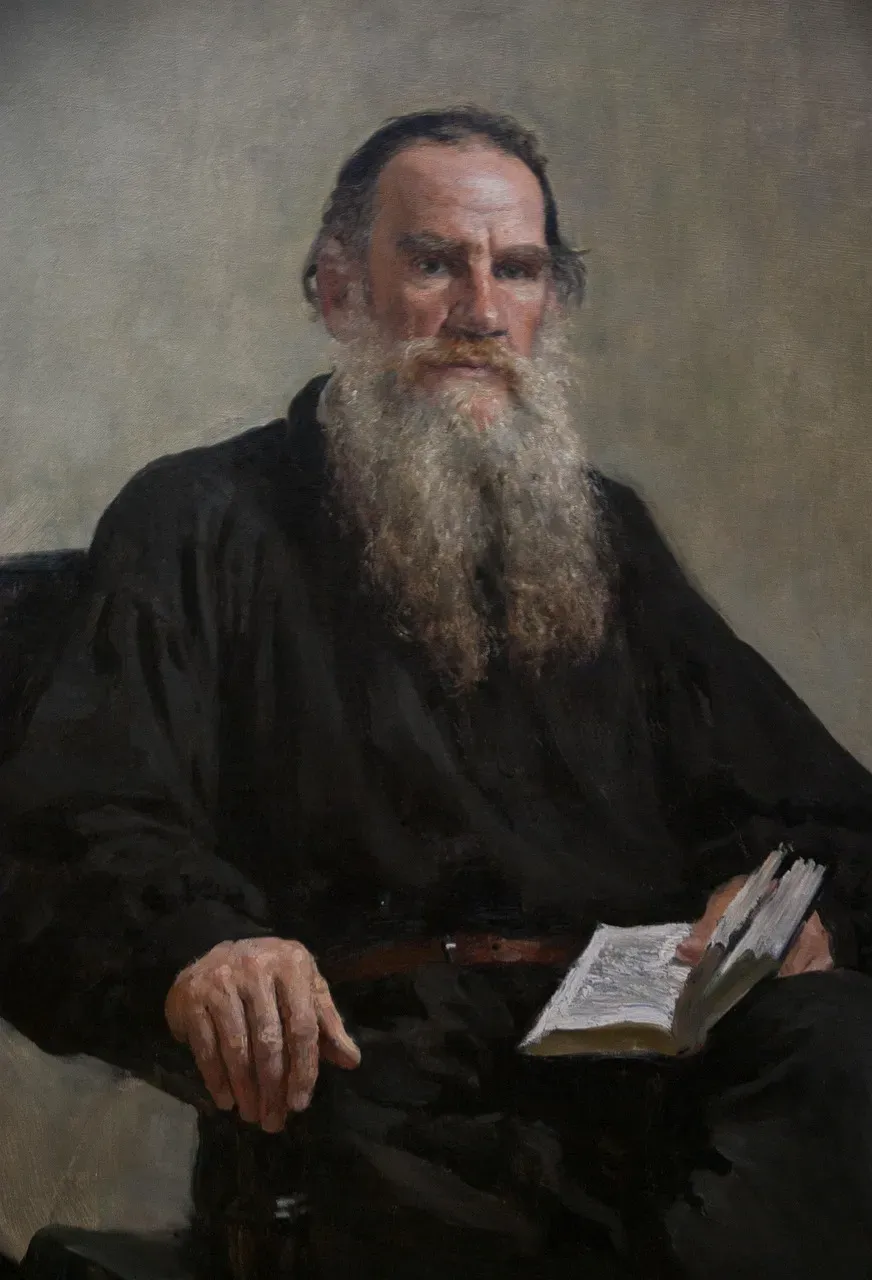
Russian novelist Leo Tolstoy’s War and Peace, published between 1865 and 1869, is an engrossing 19th-century read with a sweeping story that dives deep into the society it depicts. The book begins in St. Petersburg in 1805 and contains three kinds of material: a historical account of the Napoleonic Wars, the biographies of the novel’s fictional characters, and a set of essays about the philosophy of history. It is, honestly, three books sewn into one.
The roughly 587,287 words in War and Peace end up being approximately 1,215 pages. Tolstoy carefully researched real-life events by interviewing people and reading first-hand accounts of the French invasion of Russia. Only the first half deals with fictional characters, while the rest consists mostly of essays on war, power, and history.
War and Peace is generally regarded as a masterwork of Russian literature and one of the world’s greatest novels. It is certainly one of the longest, with a word count totaling over half a million. The scale is vast, yet Tolstoy somehow makes every single character feel like someone you once knew.
3. Les Misérables by Victor Hugo (~655,000 Words)


The novel as a whole is one of the longest ever written, with 655,478 words in the original French. Les Misérables is a French epic historical novel by Victor Hugo, first published on 31 March 1862, and is considered one of the greatest novels of the 19th century. Many readers know the musical, but the book is a completely different beast.
Beginning in 1815 and culminating in the 1832 June Rebellion in Paris, the novel follows the lives and interactions of several characters, particularly the struggles of ex-convict Jean Valjean and his experience of redemption. More than a quarter of the novel, by one count 955 of 2,783 pages, is devoted to essays that argue a moral point or display Hugo’s encyclopedic knowledge.
Here’s the thing though: those digressions are part of the charm. Les Misérables has been popularized through numerous adaptations for film, television, and the stage, including a musical. But none of those adaptations come close to capturing the moral weight of Hugo’s original pages. There’s a reason this book has never gone out of print.
4. Atlas Shrugged by Ayn Rand (~562,000 Words)

Atlas Shrugged is a 1957 novel by Ayn Rand. It is her longest novel, the fourth and final one published during her lifetime, and the one she considered her magnum opus in the realm of fiction writing. She described the theme as “the role of man’s mind in existence,” and it includes elements of science fiction, mystery, and romance.
The book explores a number of philosophical themes from which Rand would subsequently develop Objectivism, including reason, property rights, individualism, rational egoism, and laissez-faire capitalism. The page count of Atlas Shrugged varies by edition and format. The hardcover first edition from Random House runs to approximately 1,168 pages.
It is a polarizing book. Some people swear by it, others roll their eyes at the ideology. But few deny that Rand commits to her vision with astonishing totality. Atlas Shrugged clocks in at approximately 561,996 words, placing it squarely among the heaviest hitters in literary history. Agree with Rand or not, you will definitely finish it with opinions.
5. A Suitable Boy by Vikram Seth (~593,000 Words)

Published in 1993, Indian writer Vikram Seth’s epic novel A Suitable Boy immediately drew comparisons to lengthy works including Proust and Leo Tolstoy. Already a highly regarded poet, Seth turned to prose to depict the relations between four families in post-partition India after 1947, all crafted into a compelling narrative. Spanning more than 1,300 pages and nearly 600,000 words, it is touted as one of the longest English-language novels published as a single-volume work.
A Suitable Boy takes place in post-partition India and follows four families. Over 18 months, the reader learns about an arranged marriage between Lata and a “suitable boy,” with the novel’s central focus on Lata’s choice between three potential suitors. It sounds domestic, and in many ways it is. That’s also its greatest strength.
In 2019, BBC News included A Suitable Boy on its list of the 100 most inspiring novels. The book is warm and political and deeply human all at once. It reads less like a chore and more like spending a year abroad with a very large and entertaining family.
6. Poor Fellow My Country by Xavier Herbert (~852,000 Words)

At a staggering 1.2 million words, Poor Fellow My Country by Australian author Xavier Herbert holds the distinction of being the longest Australian novel and possibly the longest single-volume novel ever written. Published in 1975, this epic work spans over 1,463 pages and offers a sweeping portrayal of Australian society and culture in the early 20th century. Through vivid characters and intricate storytelling, Herbert explores themes of identity, race, and nationhood against the backdrop of the Australian landscape.
This is the second largest novel by word count in literary history, at 852,000 words. It is also the longest ever published Australian novel. This 1975 Miles Franklin Award-winning novel, set in Australia, explores the complexities of Australian society and indigenous issues over several decades. It is the longest Australian work of fiction ever written and was Herbert’s final novel.
This is a book that remains criminally unknown outside Australia. It has all the sweep and fury of a continent working through its own identity crisis. If you want a long book that is also genuinely challenging and politically alive, this one deserves far more attention than it gets.
7. Infinite Jest by David Foster Wallace (~543,000 Words)


Infinite Jest is a 1996 novel by American writer David Foster Wallace. Categorized as an encyclopedic novel, it is featured in Time magazine’s list of the 100 best English-language novels published between 1923 and 2005. The novel has an unconventional narrative structure and includes hundreds of extensive endnotes, some with footnotes of their own. Yes, even the footnotes have footnotes.
Infinite Jest is a postmodern encyclopedic novel, famous for its length, detail, and digressions involving 388 endnotes, some of which themselves have footnotes. A literary fiction bestseller, the novel sold 44,000 hardcover copies in its first year of publication and has since sold more than a million copies worldwide. Those numbers don’t lie. People are finishing it. Many more are starting it and staring at the cover wondering what they’ve gotten themselves into.
Wallace’s encyclopedic display of knowledge incorporates media theory, linguistics, film studies, sport, addiction, science, and issues of national identity. The book is often humorous yet explores melancholy deeply. It is one of those rare novels that feels like it was written specifically for the chaos of modern life. Let’s be real: nobody needed this book in 1996 more than we need it now.
8. Sironia, Texas by Madison Cooper (~840,000 Words)

Released in 1952, this novel offers a detailed depiction of life in a fictional Texas town from the late 19th to the early 20th century. The book won the Houghton Mifflin Literary Award and sold 25,000 copies in its initial printing but quickly faded from public view. That fading from view is genuinely surprising given its size and initial success.
With 1,731 pages, Sironia, Texas is one of the longest novels to be written in the English language. It took Cooper more than a decade to write this novel. The book describes life in the fictional town of Sironia in Texas and slightly satirizes upper-class southerners. The story is widely believed to be loosely based on Cooper’s home town of Waco, Texas.
Sironia, Texas was on the New York Times bestseller list for 11 weeks, and the net Cooper grossed in sales went to a charitable foundation he set up that helped various nonprofits in the area. It’s a book you won’t see in airport bookshops or on bestseller lists today. However, for readers with a taste for American social history told through fiction, it remains a fascinating and oddly overlooked treasure.
9. Don Quixote by Miguel de Cervantes (~430,000 Words, ~976 Pages)

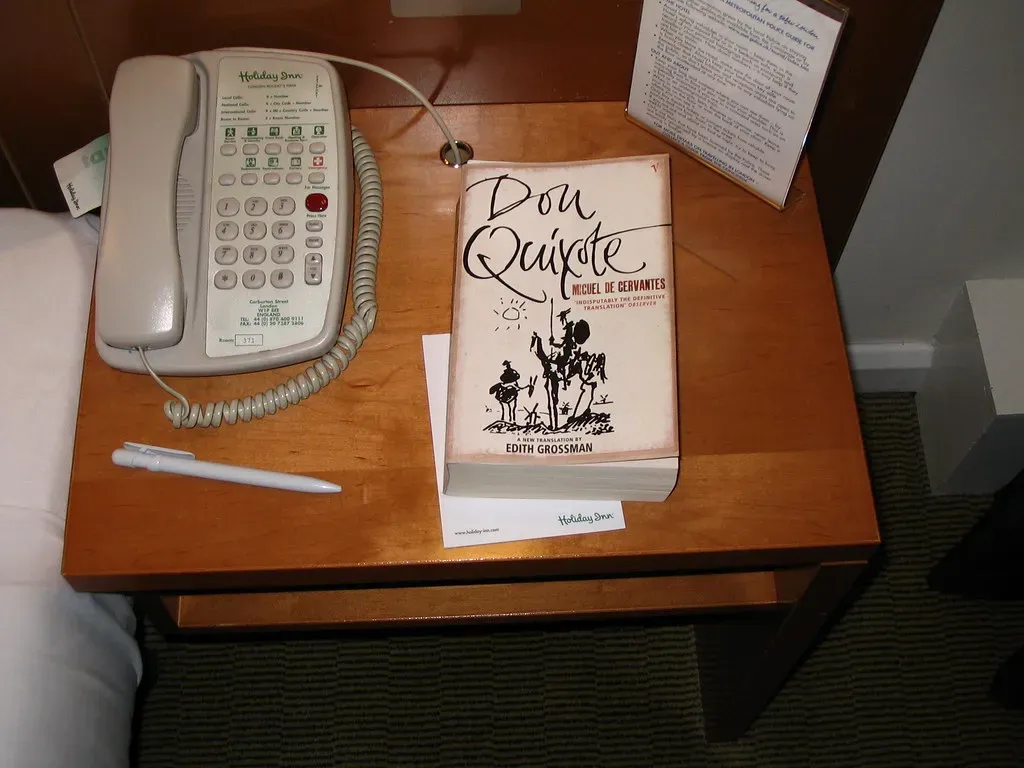
Cervantes’s satirical observation of the human condition is classed as Europe’s first modern novel and has sold over 500 million copies since it was first published in the early seventeenth century. It follows Don Quixote and Sancho Panza as they journey through Spain in search of adventure. Half a billion copies. That number alone should tell you something remarkable is happening inside these pages.
Labeled as the “first modern novel ever,” Don Quixote is considered one of the best literary works ever written. Set in Spain, the story follows the adventures of an elderly Spanish noble, Alonso Quixano, who reads so many romances he becomes deluded and decides to become a knight errant to prove chivalry isn’t dead yet.
Don Quixote and Sancho Panza face spirits, evil enchanters, and giants in a quest to perform acts of valour. At over 1,000 pages, a list of the best long books is not complete without it. Cervantes wrote a book about a man who reads too many books and loses his grip on reality. The irony is delicious, and the story remains surprisingly funny across four centuries of human experience.
10. A Dance to the Music of Time by Anthony Powell (~1 Million Words)

Anthony Powell received tons of critical acclaim upon his release of A Dance to the Music of Time. He released it in 12 separate volumes between 1951 and 1975. At its core, the book examines the movements and manners of English political life. Nicholas Jenkins serves as the story’s narrator over its entirety.
Time magazine included the novel in a list of the 100 best English-language novels from 1923 to 2005. Likewise, the BBC’s rankings placed it as the 36th greatest British novel ever. A Dance to the Music of Time runs to approximately 1,000,000 words in total across its twelve volumes.
It’s hard to say for sure whether Powell gets enough credit in 2026, but he probably doesn’t. This sequence is a slow burn rather than a sprint. You follow the same narrator across decades of English society, and there is something deeply satisfying about watching an entire world age alongside you. It’s not just a long read. It’s a life’s worth of reading compressed into one glorious sequence.
Final Thoughts

Length in a novel is only frightening until you fall in love with the world inside it. Every single book on this list has something that shorter novels simply cannot offer: room. Room for side characters to breathe, for ideas to develop slowly, for moments of beauty to land without rushing off to the next scene.
The next time you stand in front of a thick book and hesitate, remember this: the longest novels are often the most remembered. Readers who tackle Proust or Tolstoy rarely say they regret it. They say they wish they could read it again for the first time.
Which of these would you pick up first? Drop your answer in the comments.


