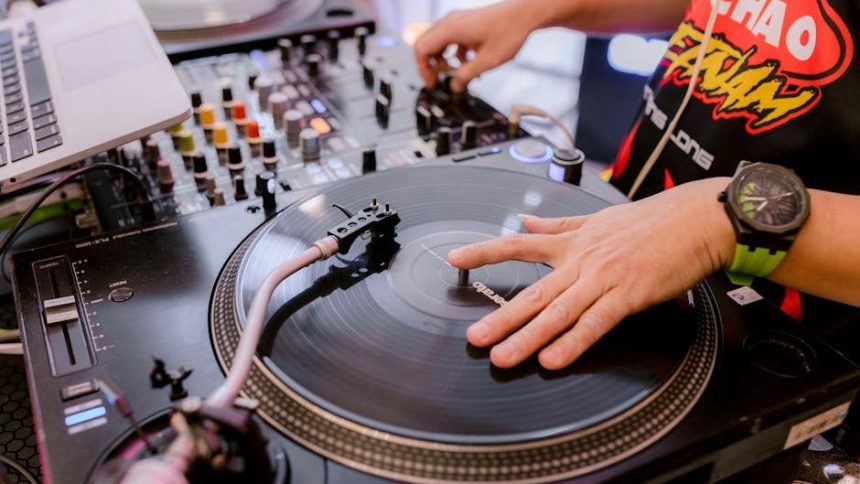
Some songs just refuse to die. They get flipped, chopped, looped, and reborn across decades, genres, and generations – showing up in everything from underground hip-hop to Super Bowl halftime shows. Sampling, popularized in early hip-hop and now used across all genres, is the art of taking and reworking a recording into a new context, breathing fresh life and a different approach into an older piece of music.
The songs on this list are not just old records collecting dust. They are the invisible skeleton inside countless chart hits you know by heart. Some of them were barely even noticed when they first came out. Let’s dive in.
1. “Amen, Brother” – The Winstons (1969): The Most Sampled Song Ever Recorded

Here’s a fact that will genuinely blow your mind: a six-second drum solo recorded in 1969 as a B-side has become the most sampled piece of music in human history. “Amen, Brother” by The Winstons holds the crown. This 1969 track features the “Amen Break,” a six-second drum solo by Gregory Coleman that became the backbone of hip-hop, jungle, drum and bass, and beyond.
According to WhoSampled, “Amen, Brother” by The Winstons has been sampled a staggering 7,470 times – a number that still grows. That makes it not just the most sampled song, but one of the most influential recordings of the entire twentieth century.
Having been featured on a 1986 edition of “Ultimate Breaks and Beats,” a compilation made for DJs and producers, the break started to get used on an ever-increasing number of tracks. The beat was sampled perhaps most famously throughout N.W.A’s 1988 “Straight Outta Compton,” as well as by a diverse range of other well-known artists such as Jay-Z, Oasis, The Prodigy, Primal Scream, Slipknot, and even the theme tune of Futurama.
The break’s syncopation, texture and short, loopable length made it perfect for early hip-hop DJs and later the foundation for jungle and drum-and-bass. Its use proliferated in the 1980s and 1990s until the Amen Break became a rhythmic language of its own. Honestly, it’s almost surreal that one drum pattern from a forgotten B-side became the rhythmic DNA of entire musical subcultures.
2. “Think (About It)” – Lyn Collins (1972): The “Yeah! Woo!” That Conquered Pop

Lyn Collins’ “Think (About It)” is cherished for its catchy rhythm and the unmistakable “Yeah!” vocal loop. This track’s energy and pulse have made it a go-to sample for artists looking to infuse their music with a dose of funk. Few sounds in music history carry as much instant energy as that single vocal shout.
According to WhoSampled, “Think (About It)” by Lyn Collins has been sampled 4,234 times, placing it firmly in second place on the all-time list. Lyn Collins’ track’s popularity extends beyond the catchy hook, and several useful drum passages including a breakdown with a clean bar of tambourines punctuate the track and have provided the backbone to many an uptempo Hip Hop track, not to mention countless Dance and Drum and Bass records.
The passage in which these vocals appear, although sampled prior, was largely popularized by Rob Base and DJ E-Z Rock’s 1988 club smash “It Takes Two.” Lyn Collins’ “Think (About It)” has become a favourite amongst producers, used by the likes of Madlib, Kanye West, Snoop Dogg, and even Beyoncé. That is quite a guest list for a track that most people couldn’t name if you played them the original.
3. “Change the Beat (Female Version)” – Beside (1982): The Scratch That Defined a Generation

This one surprises nearly everyone. The original version is by Fab 5 Freddy, but the B-side features vocals from French artist Beside. The closing of the track features a voice spoken through a vocoder saying “Ahhhh, this stuff is really fresh.” This line has become one of the most widely used samples, largely for how it sounds when it is scratched, producing that really nice iconic record scratching sound.
According to WhoSampled, “Change the Beat (Female Version)” by Beside has been sampled 3,079 times. Producer Bill Laswell and manager Roger Trilling claim they recorded the sample to mock a record executive who would respond with “this stuff is really fresh!” when he heard a new song that he liked. So the most recognized DJ scratch tool in history was made as an inside joke. You honestly can’t make that up.
Fab 5 Freddy’s “Change the Beat” has been sampled around 2,629 times in hip-hop alone. From pop-rap like Macklemore’s “Thrift Shop,” to golden-age classics like Eric B. and Rakim’s “Paid in Full,” the composition has a wide usage across hip-hop’s many subgenres. It was even used in perhaps the earliest hip-hop jazz fusion with Herbie Hancock’s 1983 release “Rockit.”
4. “Funky Drummer” – James Brown (1970): The Groove That Built Hip-Hop

Clyde Stubblefield’s drum break in this 1970 track might be the most looped groove in history. James Brown is, without question, the single most sampled artist of all time. According to WhoSampled, James Brown has been sampled over 10,285 times across his entire catalog. “Funky Drummer” is the crown jewel of that legacy.
According to WhoSampled, “Funky Drummer” by James Brown has been sampled 2,149 times. One of the Godfather’s more restrained grooves, “Funky Drummer” owes its legend to a single two-bar pattern tapped out by Clyde Stubblefield. About five and a half minutes into the track the rest of the band drops out, and Brown turns his spotlight on Stubblefield’s complex but surprisingly gentle riff fueled by tightly wound snare hits.
The groove is uniquely syncopated and sits perfectly under rap cadences. It’s one of the most famous drum samples in hip-hop and pop; countless producers looped or chopped it to create new rhythms. The drummer himself received little pay originally, which later became an emblematic injustice discussed in the music press. It’s in Public Enemy’s “Fight the Power,” Prince’s “Gett Off,” and Dr. Dre’s “Let Me Ride.”
5. “La Di Da Di” – Doug E. Fresh and Slick Rick (1985): The Most Borrowed Rap Record Ever
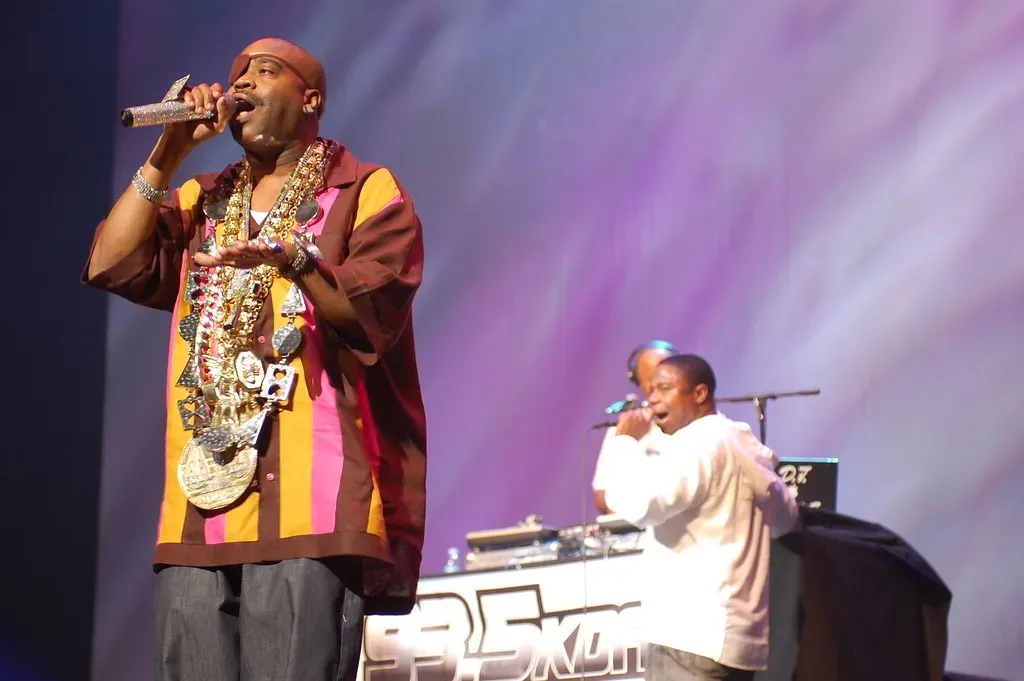
If you’ve ever heard a rapper lift a punchline, a flow cadence, or a clever hook from a 1985 beatbox track, there’s a real chance it came from here. This 1985 beatbox-and-rap classic is one of the most vocally sampled tracks ever. From Biggie’s “Hypnotize” to Miley Cyrus’ “We Can’t Stop,” artists have borrowed its lyrics, flow, and flavor.
According to WhoSampled, “La Di Da Di” by Doug E. Fresh and Slick Rick has been sampled 1,291 times. The track’s melodic lines and Slick Rick’s phrasing are endlessly quotable; later artists have sampled or interpolated words, melody, and cadence rather than just drums. Because it’s a vocal and lyrical touchstone of early hip-hop, it’s reused both as homage and as a compositional shortcut.
Although credited to Doug E. Fresh and Slick Rick, Rick is effectively the lead artist, delivering one of his trademark story raps over Doug E. Fresh’s beatbox. The song is literally packed with sample-friendly lines, imitated by The Notorious B.I.G. to great effect in his 1998 hit “Hypnotize.” It’s a track that feels like the entire spirit of 1980s hip-hop bottled up in four minutes.
6. “Bring the Noise” – Public Enemy (1987): Hip-Hop’s Most Used Acapella

Public Enemy was already a force of nature when they dropped “Bring the Noise.” What nobody predicted was how deeply producers would mine it for decades afterward. Possibly hip-hop’s most well-used acapella, Public Enemy’s “Bring the Noise” was heavily sampled from the moment of release, with snippets appearing on both hip-hop and dance tracks in its year of release 1987 and throughout 1988. The track has remained an underground staple through to 2013.
According to WhoSampled, “Bring the Noise” by Public Enemy has been sampled 1,153 times. More than 800 samples of that track have helped make Public Enemy the most sampled hip-hop group of all time, with more than 3,000 samples and counting. Those are staggering numbers for a group that was essentially making protest music.
According to WhoSampled, Public Enemy as an artist has been sampled 4,097 times in total. I think that says everything about how central their sound is to the architecture of modern rap and electronic music. Their aggressive, layered production style didn’t just make noise. It built a library.
7. “Funky President (People It’s Bad)” – James Brown (1974): The Politics of the Groove
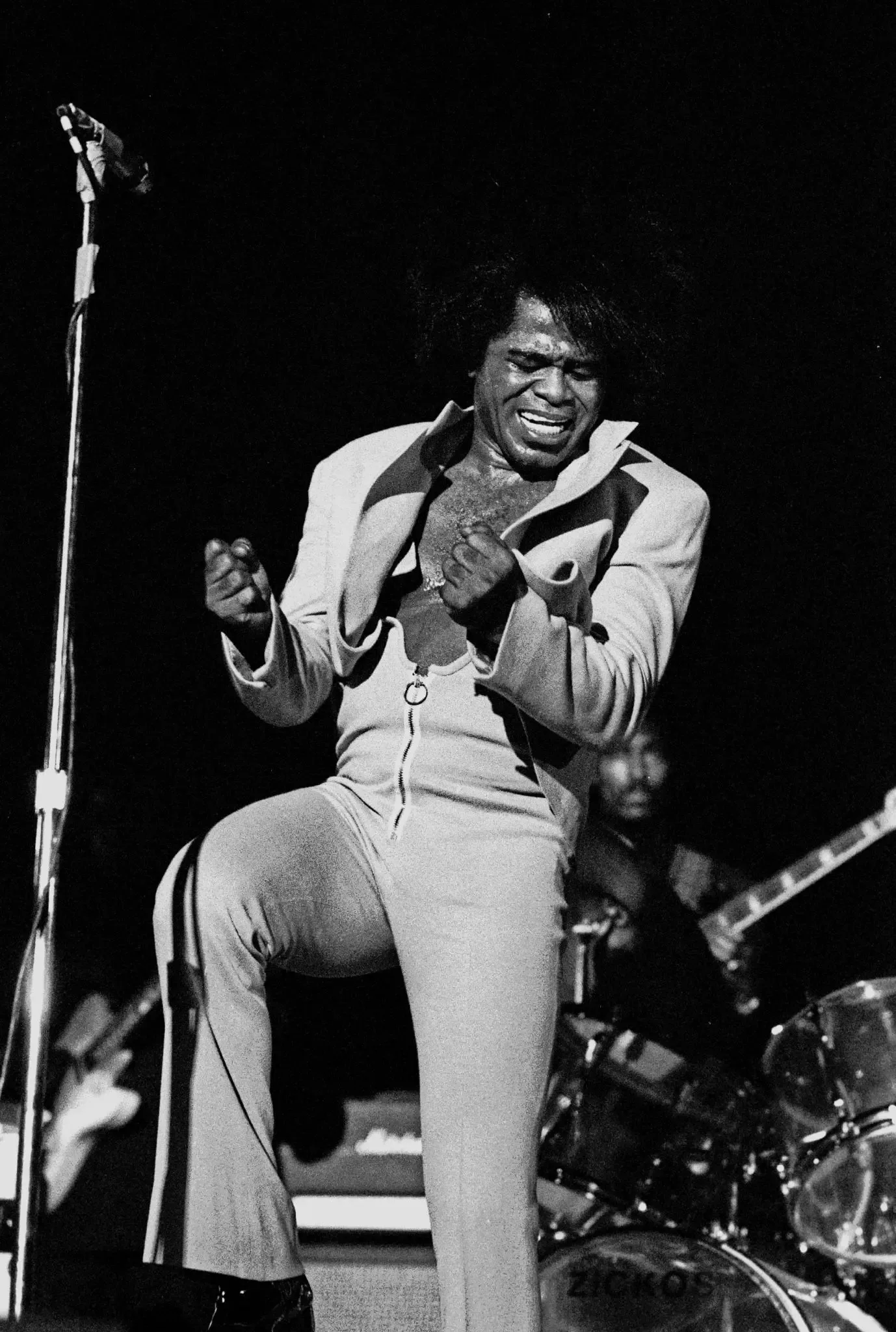
James Brown makes his second appearance on this list, which is hardly surprising. According to WhoSampled, “Funky President (People It’s Bad)” by James Brown has been sampled 1,113 times. What producers primarily lift is the drum groove and snare hits. The drum pattern is dry, roomy, and easy to loop under rap vocals. Its political title also made it attractive for socially conscious producers, but practically it’s the drum sound that’s been recycled widely.
Recorded in 1974, this protest anthem became a rhythmic go-to for hip-hop. Jay-Z, Nas, Biggie, and J. Cole have all built tracks around its crisp snare pattern. The beat is clean and sparse, offering plenty of room for creative layering. That sparseness is exactly the point. Sometimes it’s the space in a groove that makes it so endlessly reusable.
Let’s be real – it takes something special for a song to remain useful to producers across five decades. The fact that “Funky President” sounds just as powerful chopped into a 2024 beat as it did when Nixon was in the White House is a testament to just how timeless real funk production can be.
8. “Here We Go (Live at the Funhouse)” – Run-DMC (1985): When Hip-Hop Started Sampling Itself

Here’s the thing about this entry: it marks a fascinating turning point. According to WhoSampled, “Here We Go (Live at the Funhouse)” by Run-DMC has been sampled 1,067 times. Run-DMC stand as the 6th most sampled artists of all time, and “Here We Go (Live at the Funhouse)” accounts for close to 800 of their 2,000-plus sample listings.
What makes this entry uniquely significant is what it represents: the moment hip-hop began sampling itself. This wasn’t just a funk record being recycled. This was a new generation of rap producers reaching back into the very roots of their own genre and recontextualizing it. That is a cultural feedback loop almost unlike anything else in music history.
What producers most often lift from the track includes vocal lines, beatbox phrases, and melodic hooks. The track’s melodic lines and Slick Rick’s phrasing are endlessly quotable; later artists have sampled or interpolated words, melody, and cadence rather than just drums. Because it’s a vocal and lyrical touchstone of early hip-hop, it’s reused both as homage and as a compositional shortcut. A genre paying tribute to its own origins – that’s genuinely moving when you think about it.
9. “The Champ” – The Mohawks (1968): The Forgotten Record That Everyone Has Heard

Nobody outside of serious crate-digger culture knows “The Champ” by the Mohawks. Yet virtually everyone has heard it, whether they realize it or not. According to WhoSampled, “The Champ” by The Mohawks has been sampled 1,022 times. Producers prize the clean, isolated drum break and percussion hits. The appeal is clear: a break that is musically useful and sonically clean checks both boxes, and it has shown up in many classic hip-hop tracks.
The beauty of “The Champ” is how invisible it is. Unlike the Amen Break, which has a distinctive sound anyone can learn to recognize, this one hides in plain sight. It’s a workhorse sample – the kind that producers stack under vocals and nobody questions where it came from. It just sounds right.
There are a handful of recordings, often little more than a few seconds of drums, a snatch of vocal, or a percussion figure that have been repurposed in thousands of later songs. These “most sampled” tunes are not just curiosities: they’re fundamental building blocks of entire genres. “The Champ” is a perfect example of exactly that quiet, invisible power.
10. “Good Times” – Chic (1979): The Bassline That Accidentally Invented Rap Records
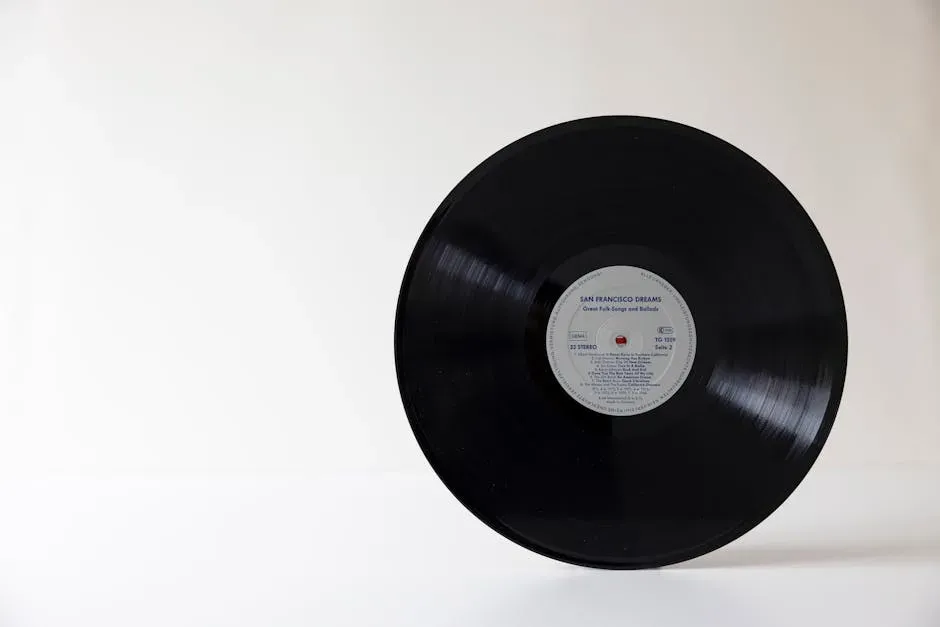
If you had to pick one single moment where sampling changed popular music forever, this might be it. Chic’s “Good Times” is a disco soul song released in June 1979 by Atlantic Records. It was both written and produced by Bernard Edwards and Nile Rodgers, and peaked at number one on the US Billboard Hot 100 on August 18, 1979.
The bass line of “Good Times” was recreated in the Sugarhill Gang’s 1979 single “Rapper’s Delight,” a key track in the development of hip-hop. Nile Rodgers and Bernard Edwards threatened legal action over copyright, which resulted in a settlement and them being credited as co-writers. That lawsuit helped establish foundational principles around sampling rights that still echo through the music industry today.
Rolling Stone ranked “Good Times” 68th on its list of the “500 Greatest Songs of All Time,” and it has become one of the most sampled songs in music history, most notably in hip-hop music. Its bassline has become one of the most sampled in history, appearing in tracks like Sugarhill Gang’s “Rapper’s Delight” and Daft Punk’s “Around the World.” A disco record giving birth to hip-hop, which then shaped the entire sonic landscape of the following forty years. That is the kind of butterfly effect you simply could not script.
Conclusion: Six Seconds, a Bassline, and the Entire History of Modern Music

What unites all ten of these songs is something both simple and profound. The reasons these songs rise to the top include rhythm first: they all have memorable breaks that are easy to chop, flip, or loop, like a blank canvas. Beyond rhythm, emotional weight plays a role – whether it’s protest, celebration, or nostalgia, the original context brings extra meaning.
These songs helped build entire genres. Sampling them is both a tribute and a continuation. That’s the real story here. Sampling is not theft. It’s a conversation across time, a way for one generation to speak directly to another through the shared language of rhythm and groove.
From a six-second drum solo on a 1969 B-side to a disco bassline that accidentally sparked a revolution, these songs prove that the most powerful music is never really finished. It just keeps getting reborn. Which of these surprises you the most? Tell us in the comments – the answer might say more about your music taste than you’d expect.