There’s something almost poignant about the language diplomats use when drafting treaties. Words like “perpetual,” “inviolable,” and “forever” appear again and again in documents that would later be torn apart by war, greed, or simple political convenience. History is, among other things, a long record of solemn promises that didn’t hold.
Some of these collapsed agreements reshaped continents. Others condemned millions of people to displacement, violence, or dispossession. Looking at the most consequential ones reveals a pattern that transcends any single era or nation: the fragility of written commitments when power shifts, interests change, or the signatories simply stop caring.
1. The Treaty of Tordesillas (1494) – Dividing a World That Wasn’t Theirs to Give

To prevent serious conflict between their expansionist nations, the wary monarchs of Spain and Portugal divided the non-Christian world outside Europe in the Treaty of Tordesillas in 1494. It was one of history’s most audacious diplomatic moves: two kingdoms carving up lands they’d barely seen. The treaty shifted the papal line to a meridian 370 leagues west of the Cape Verde Islands, with everything east going to Portugal and everything west to Spain.
In all of these diplomatic developments, other European nations were expressly denied access to new overseas territories, with the result that England, France, and the Netherlands ultimately rejected the pope’s legal authority to divide undiscovered regions. The treaty collapsed not through any single dramatic betrayal, but through steady, relentless erosion as other colonial powers simply ignored it. The treaty did not specify the length of the league or which of the Cape Verde islands was intended. Instead, it provided that these matters were to be settled by a joint voyage, a voyage that never occurred.
2. The Treaty of Versailles (1919) – The Peace That Guaranteed Another War
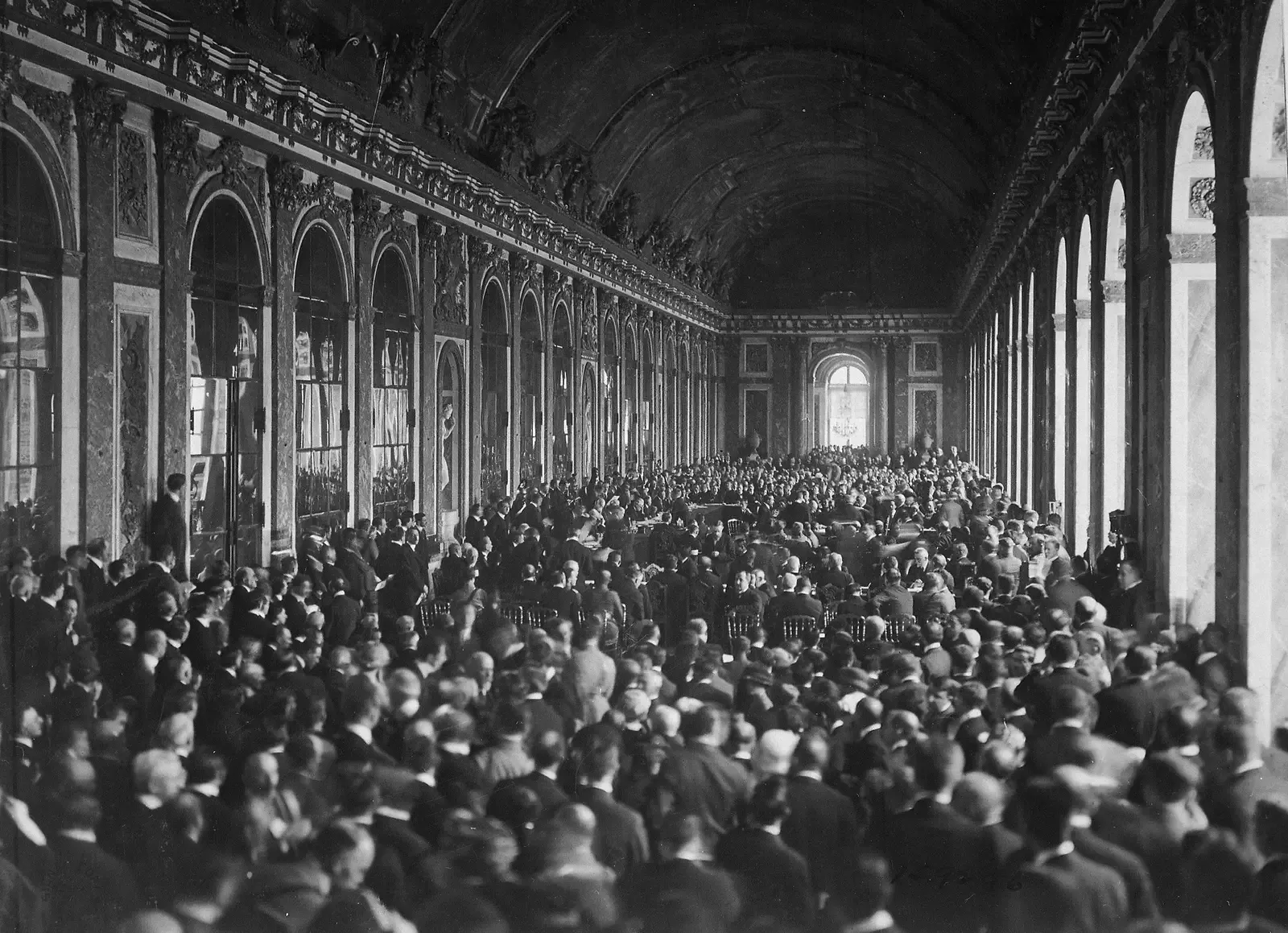
The Treaty of Versailles was signed between the Western allies and Germany at the end of World War I. The manner in which it was handled stood in stark contrast with the inclusive way in which post-Napoleonic Europe was organized, as terms were dictated, not negotiated. The punitive tone was baked in from the start. After World War I, the Treaty of Versailles was signed with the intention of preventing another global conflict. However, the U.S. played a key role in drafting a punitive peace that placed the entire blame on Germany, imposing crippling reparations and severe restrictions on its military.
It appeared that Hitler was determined to undo the international order set up by the Treaty of Versailles, the 1919 peace settlement that ended World War I. The treaty, which required Germany to make numerous concessions and reparations, was highly unpopular with Hitler and his Nazi Party. In March 1935, Hitler reintroduced conscription, growing Germany’s army from the Treaty of Versailles-mandated maximum of 100,000 to 550,000. In March 1936, he re-militarised the Rhineland, again in violation of the Treaty of Versailles. The agreement that was meant to make Europe safe had, within two decades, done precisely the opposite.
3. The Molotov-Ribbentrop Pact (1939) – A Non-Aggression Agreement That Lasted Less Than Two Years

The Molotov-Ribbentrop Pact, officially the Treaty of Non-Aggression between Germany and the Union of Soviet Socialist Republics, was a non-aggression pact between Nazi Germany and the Soviet Union, with a secret protocol establishing Soviet and German spheres of influence across Eastern Europe. In the pact, the two former enemies agreed to take no military action against each other for the next 10 years. In practice, it lasted less than two.
Soviet leader Joseph Stalin viewed the pact as a way to keep his nation on peaceful terms with Germany, while giving him time to build up the Soviet military. German chancellor Adolf Hitler used the pact to make sure Germany was able to invade Poland unopposed. The pact was terminated on 22 June 1941, when Germany launched Operation Barbarossa and invaded the Soviet Union, in pursuit of the ideological goal of Lebensraum. In the end, the Molotov-Ribbentrop Pact made the USSR vulnerable, which resulted in great human and industrial loss to the Soviet Union over the period 1941 to 1945.
4. The Sykes-Picot Agreement (1916) – Secret Lines That Still Haunt the Middle East

The Sykes-Picot Agreement was a 1916 secret treaty between the United Kingdom and France, with assent from Russia and Italy, to define their mutually agreed spheres of influence and control in an eventual partition of the Ottoman Empire. The agreement was based on the premise that the Triple Entente would achieve success in defeating the Ottoman Empire during World War I. The agreement led to the division of Turkish-held Syria, Iraq, Lebanon, and Palestine into various French- and British-administered areas.
This secret arrangement conflicted with pledges already given by the British to the Hashemite dynast Hussein ibn Ali regarding a national Arab homeland. Based on the understanding that the Arabs would eventually receive independence, Hussein had brought the Arabs of the Hejaz into revolt against the Turks in June 1916. The borders split up other contiguous populations, like the Kurds and the Druze, and left them as minority populations in several countries, depriving their communities of self-determination altogether. Moments of political turmoil were often met with declarations of “the end of Sykes-Picot,” such as the establishment of the Kurdistan Regional Government in Iraq in 1992 or the rise of ISIS in 2014.
5. The Fort Laramie Treaty (1868) – A Sacred Promise Broken by Gold
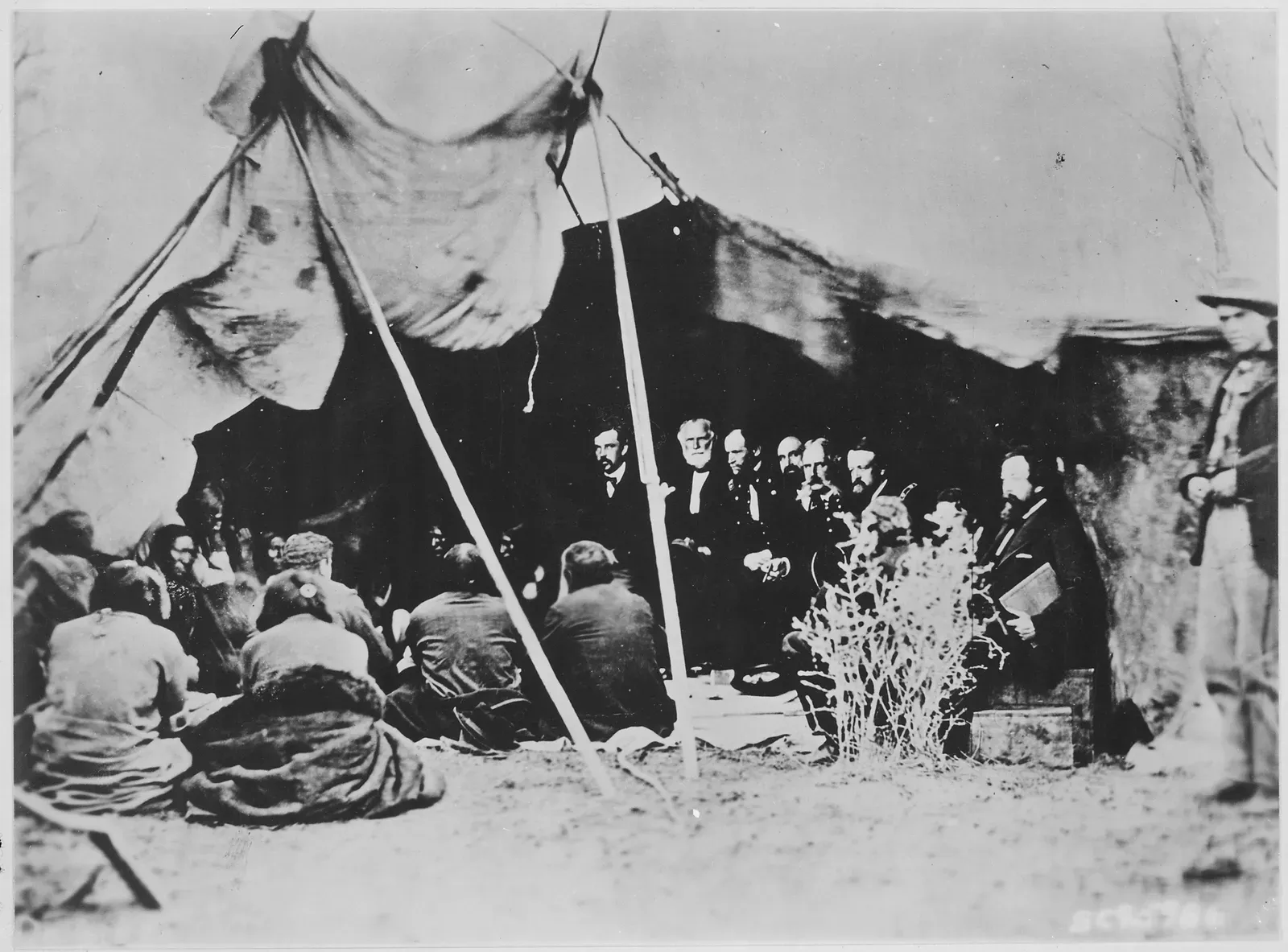
In 1868, the United States entered into the treaty with a collective of Native American bands historically known as the Sioux and Arapaho. The treaty established the Great Sioux Reservation, a large swath of lands west of the Missouri River. It also designated the Black Hills as “unceded Indian Territory” for the exclusive use of native peoples. The language was unambiguous. The intent, it turned out, was not.
When gold was found in the Black Hills, the United States reneged on the agreement, redrawing the boundaries of the treaty, and confining the Sioux people, traditionally nomadic hunters, to a farming lifestyle on the reservation. In 1980, the Supreme Court ruled that the Black Hills were illegally confiscated, and awarded the Sioux more than $100 million in reparations. Sioux leaders rejected the payment, saying the land had never been for sale. That rejection speaks volumes about what a treaty truly means to those who trusted it.
6. The Treaty of New Echota (1835) – A Document Signed by the Wrong People
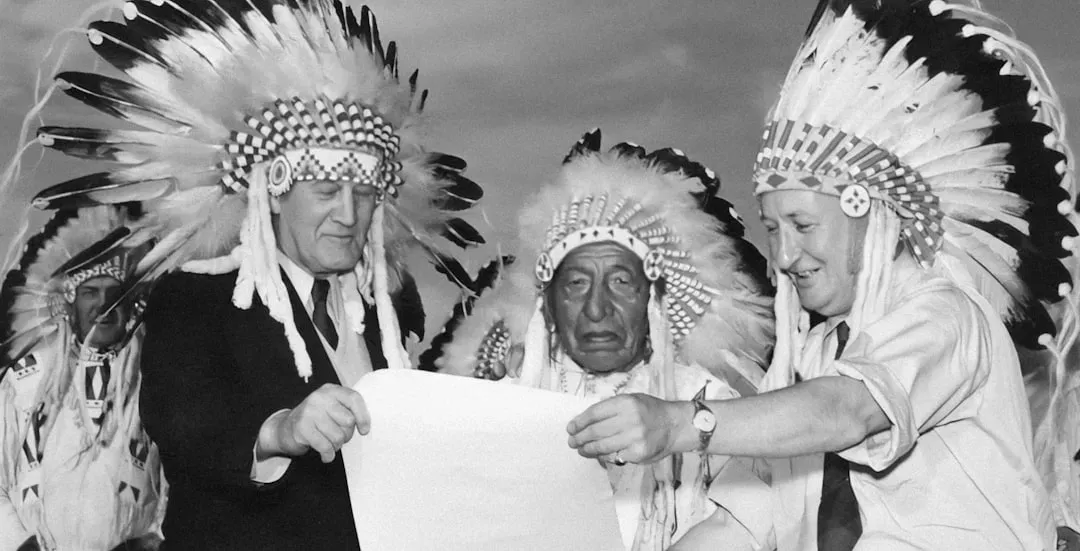
Following the passage of the Indian Removal Act, a small group of Cherokees not authorized to act on behalf of the Cherokee people negotiated the Treaty of New Echota. The treaty gave up all Cherokee lands east of the Mississippi River in exchange for $5 million and new territory in Oklahoma. Even though most Cherokee people considered the agreement fraudulent, and the Cherokee National Council formally rejected it in 1836, Congress ratified the treaty.
Many Cherokee resisted removal from their ancestral lands in the Southeast, bringing their struggle all the way to the U.S. Supreme Court. Despite the Court’s ruling in Worcester v. Georgia (1832) that the Cherokee and other tribes were “sovereign nations,” the removal continued. Over 4,000 Cherokee died during the forced relocation westward, a tragic journey that remains one of the most egregious examples of treaty violations in U.S. history. The treaty became the legal justification for one of the most devastating forced marches in American history.
7. The Treaty of Canandaigua (1794) – A Gift of Land That Kept Shrinking
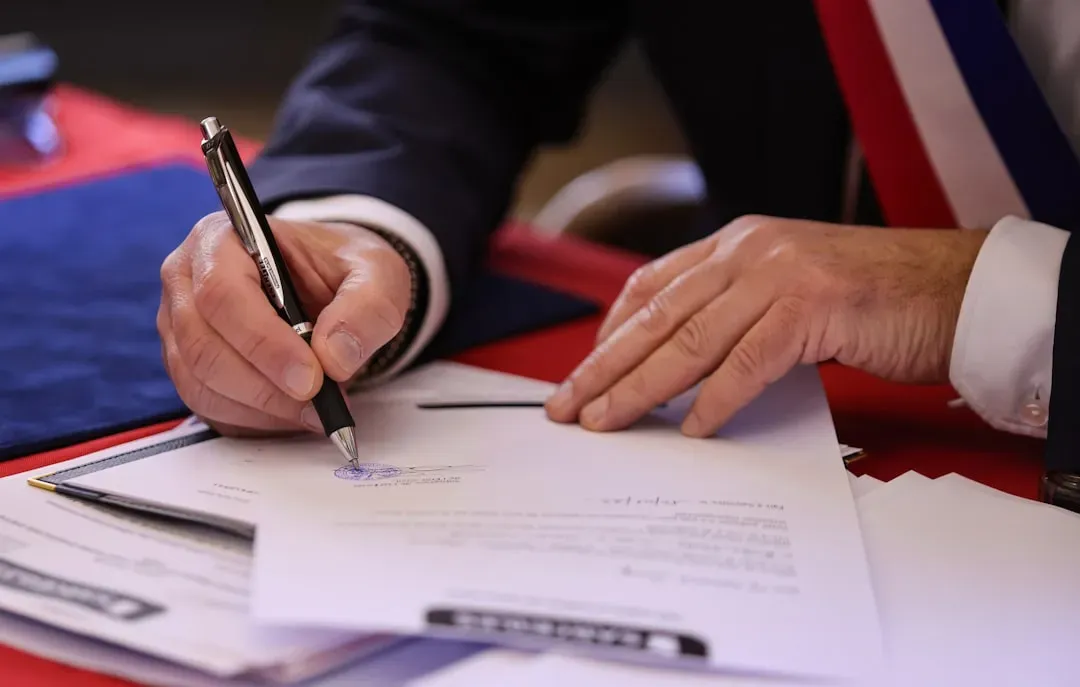
In 1794, the U.S. government and the Haudenosaunee Confederacy, or Six Nations, signed the Treaty of Canandaigua. In exchange for the Confederacy’s allyship after the Revolutionary War, the U.S. returned over a million acres of Iroquois land that had been previously ceded. The Canandaigua Treaty also recognized the sovereignty of the Six Nations to govern themselves and set their own laws.
Despite this apparent act of friendship, the land returned to the Six Nations was lost to U.S. expansion, and the tribes were forced to relocate. The treaty had been framed as a gesture of respect and reconciliation. Its protections proved hollow against the relentless pressure of westward expansion. Treaties are, in fact, living documents, which even today legally bind the United States to the promises it made to Native American peoples centuries ago.
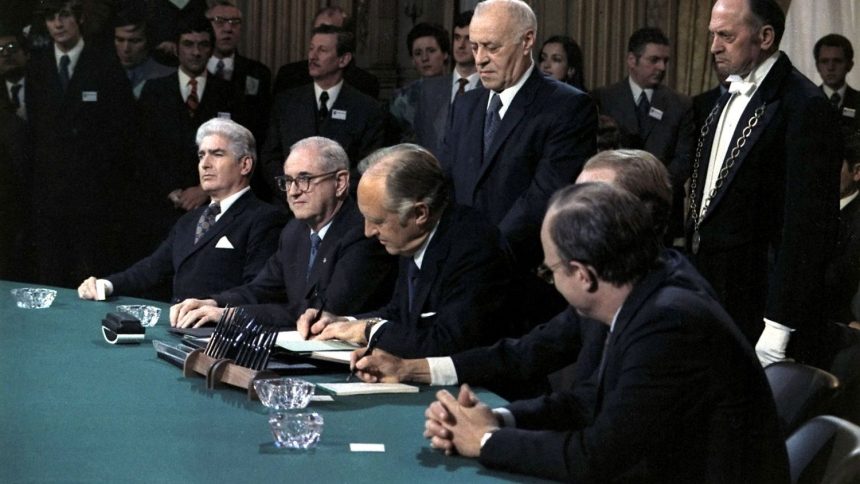
8. The Paris Peace Accords (1973) – A Vietnam Ceasefire That Never Really Held
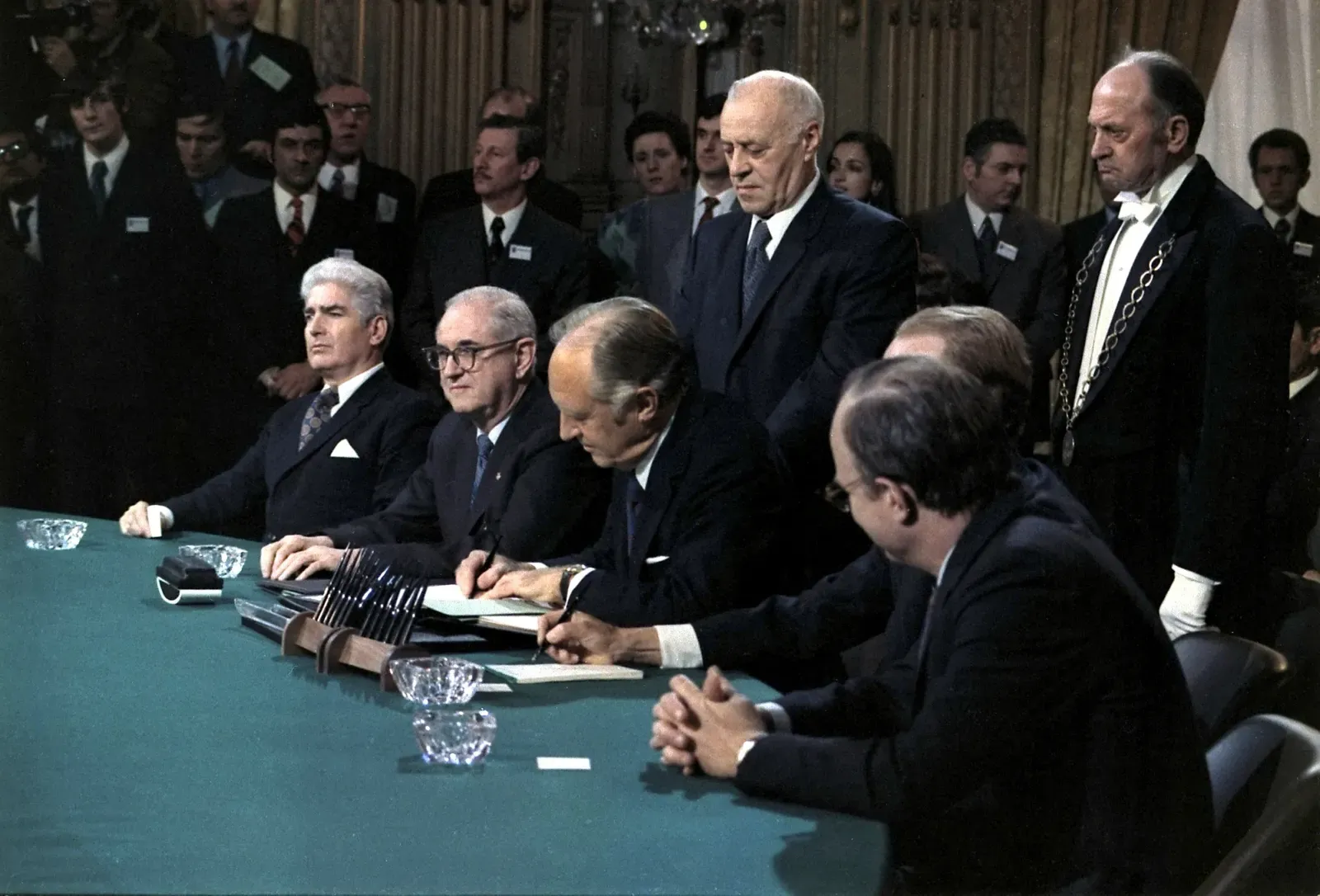
The Paris Peace Accords, signed in 1973, aimed to establish a ceasefire and ensure the withdrawal of American troops while maintaining South Vietnam’s independence. However, Washington’s primary goal was to secure a quick exit rather than a stable peace. The agreement was presented to the public as an honorable conclusion to one of the longest and most divisive wars in American history. The reality on the ground told a different story almost immediately.
North Vietnamese forces resumed military operations within months of the accords being signed. By April 1975, Saigon had fallen and South Vietnam ceased to exist as an independent state, rendering the central promise of the treaty meaningless. Washington had often negotiated agreements without fully incorporating its allies’ perspectives, weakening long-term stability. The U.S. frequently disengaged once its immediate interests were met, leaving fragile peace deals to collapse.
9. The Treaty of Versailles and the League of Nations Covenant – Abandoned Before It Could Work
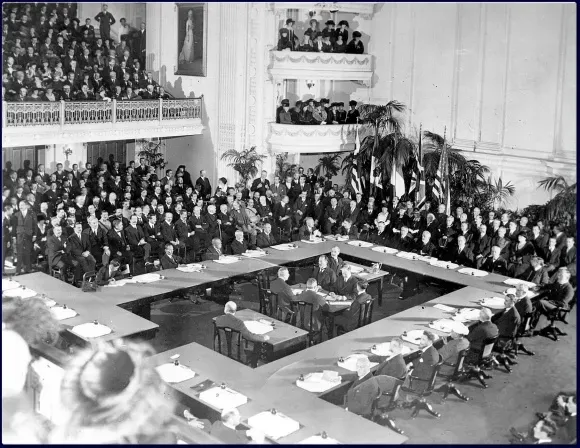
While President Woodrow Wilson championed the League of Nations as a safeguard for future stability, the U.S. Senate refused to ratify it, signaling Washington’s reluctance to uphold its own commitments. Wilson had been the driving force behind the entire structure, yet his own country walked away from the table. The president encountered strong and growing opposition to the treaty in Congress, and the U.S. never ratified the Treaty of Versailles. In fact, the U.S. didn’t formally end its war against Germany and the former Austro-Hungarian empire until 1921.
The economic and political instability that followed directly contributed to the rise of Adolf Hitler and World War II. The U.S. sidelined its European allies by refusing to enforce the treaty’s terms or participate in the League, effectively abandoning the agreement before it had a chance to work. It’s one of history’s great ironies: the nation that pushed hardest for a new international order was the first to opt out of it.
10. The Comprehensive Nuclear-Test-Ban Treaty (1996) – Signed, Never Ratified, Still Waiting

Although the treaty banning nuclear testing was adopted by the UN General Assembly in 1996, and has been ratified by 166 countries, the agreement is not yet in effect due to eight key countries who have not yet ratified it. The U.S., which signed in 1996, is one of them, along with China, Egypt, India, Iran, Israel, North Korea, and Pakistan. The treaty has existed in a kind of suspended limbo for nearly three decades, signed but not binding, endorsed in principle but ignored in practice.
History is dotted with treaties that the U.S. has signed but not ratified, signed and then unsigned, and even refused to sign after pushing everyone else to sign. The Nuclear-Test-Ban Treaty illustrates a pattern that appears across eras and continents: treaties are often most enthusiastically championed by the nations that benefit least from breaking them. When the strategic calculus shifts, the signature on the page becomes a historical footnote rather than a binding commitment. The document endures; the promise, less so.