Museums are supposed to be among the safest places on earth for the world’s most treasured objects. Locked vaults, laser sensors, armed guards, bulletproof glass. Yet, somehow, thieves keep walking in and walking out with priceless masterpieces tucked under their coats, loaded into cars, or smashed out of display cases in the middle of the night. It sounds like something out of a Hollywood thriller.
The truth is, art theft is a booming, global enterprise. According to an Interpol report released in 2022, around 23,000 pieces were reported stolen across 74 surveyed countries in a single year. The audacity of some of these crimes is breathtaking. Here are twelve of the most stunning thefts ever committed against famous museums, and what drove the thieves to do it.
1. The Mona Lisa – Louvre Museum, Paris (1911)
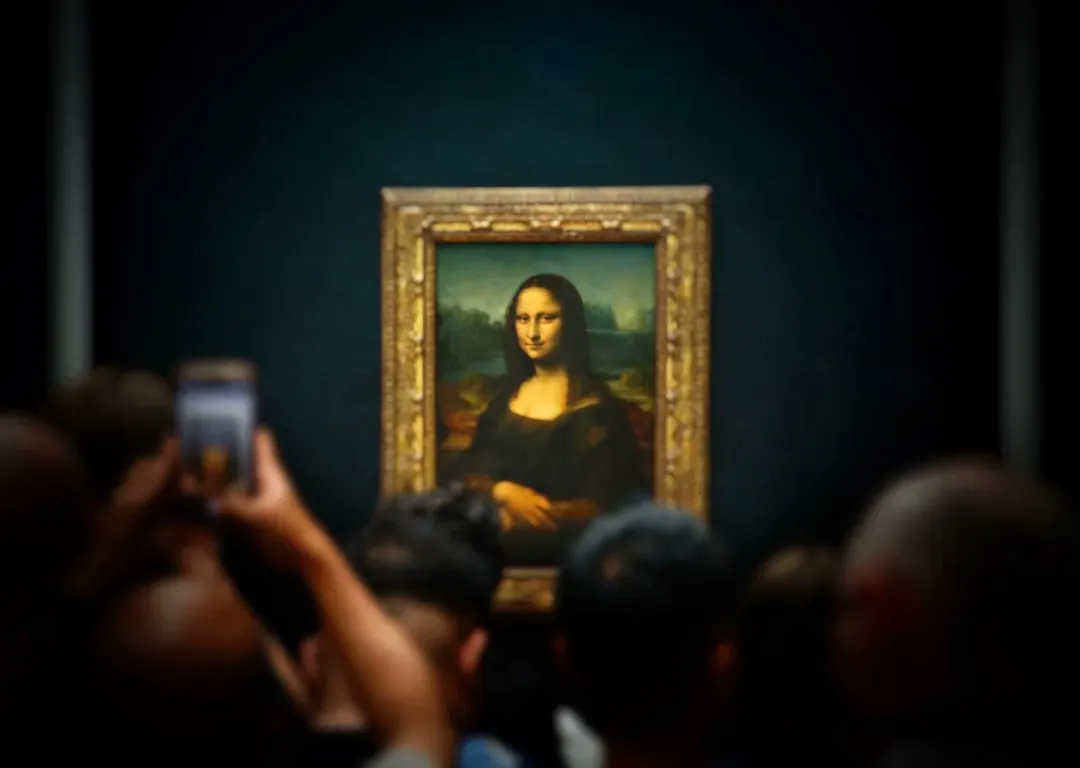
On August 21, 1911, Vincenzo Peruggia, an Italian handyman working at the Louvre, managed to steal Leonardo da Vinci’s masterpiece. He hid inside the museum overnight and, the next morning, walked out with the painting concealed under his coat. The theft went completely unnoticed for an entire day. Twenty-eight hours passed before anyone even noticed it was missing.
What followed was something nobody expected. Over a century ago, the Mona Lisa was well known only within art circles, but almost overnight the Leonardo da Vinci masterpiece became the most coveted piece of art for any collector and a global icon because of the publicity it received from the newspaper headlines and the large-scale police investigation. Peruggia believed the painting should be returned to Italy and kept it hidden in his apartment for two years. He was eventually caught when he attempted to sell it to an art dealer in Florence.
2. The Gardner Museum Haul – Isabella Stewart Gardner Museum, Boston (1990)
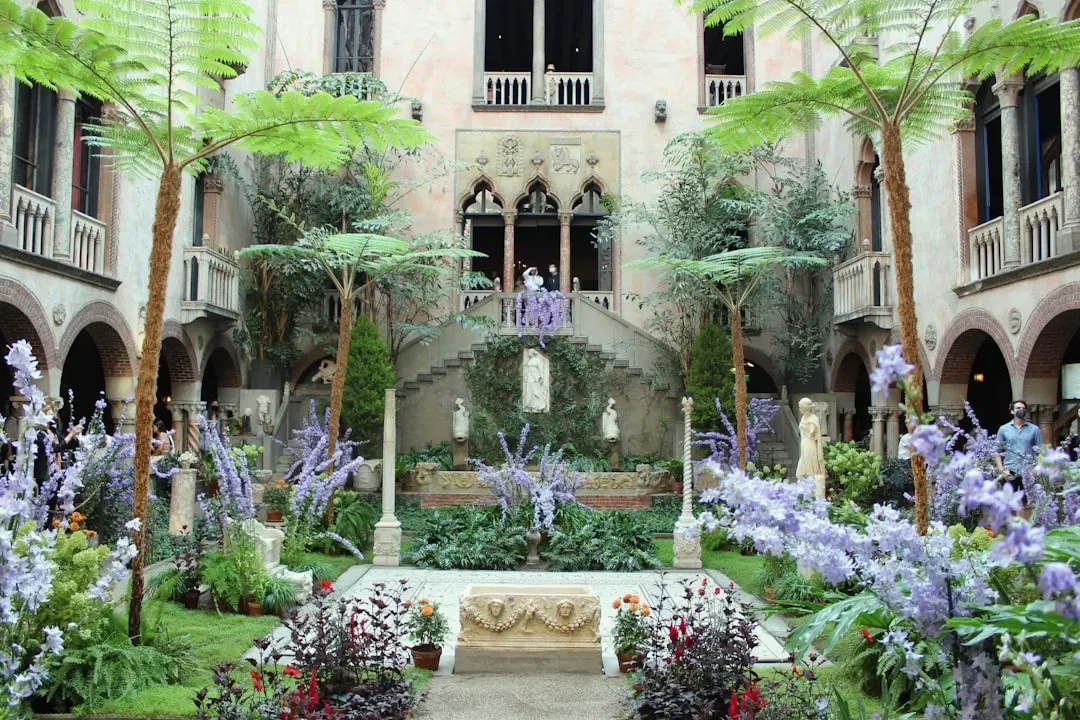
Known widely as the single-largest art heist in modern history, the March 1990 Isabella Stewart Gardner heist rocked the art world. According to the FBI, the thieves arrived at the museum on March 18, 1990, dressed as police officers and pretending to attend to a disturbance call at the site. Once inside, they tied up the guards in the basement and 81 minutes after arriving, made off with 13 works of art, including paintings by Rembrandt van Rijn, Johannes Vermeer, Edgar Degas, and Édouard Manet.
The largest-value art theft occurred at the Isabella Stewart Gardner Museum in Boston, when 13 works worth a combined $500 million were stolen in 1990. The case remains unsolved. Honestly, this one still feels surreal. Isabella Stewart Gardner’s unique will prohibits rearranging the museum’s artworks. As a result, museum visitors can see the empty spots where the stolen works were once displayed.
3. The Scream – National Gallery Oslo, and Munch Museum (1994 and 2004)

If the Mona Lisa is the most iconic stolen artwork, then Edvard Munch’s The Scream is a close second. In February 1994, burglars scaled a ladder and broke a window of the National Museum in Oslo, stealing its version of the iconic painting. They left behind a note that read “Thanks for the poor security” and later demanded $1 million in ransom. It was recovered three months later through a sting operation.
That was not even the end of it. Another version of The Scream was stolen from the Munch Museum in 2004 and recovered in 2006. What makes this theft so unforgettable is the sheer boldness of the thieves. Using a ladder to gain entry in the dead of night, the robbers made a beeline for the piece and used wire cutters to access the work in “50 seconds to be precise.” Allegedly, the assailants left the guards a note saying “Thanks for the poor security,” and the whole escapade was caught on camera.
4. The Ghent Altarpiece’s “Just Judges” Panel – Saint Bavo Cathedral, Ghent (1934)
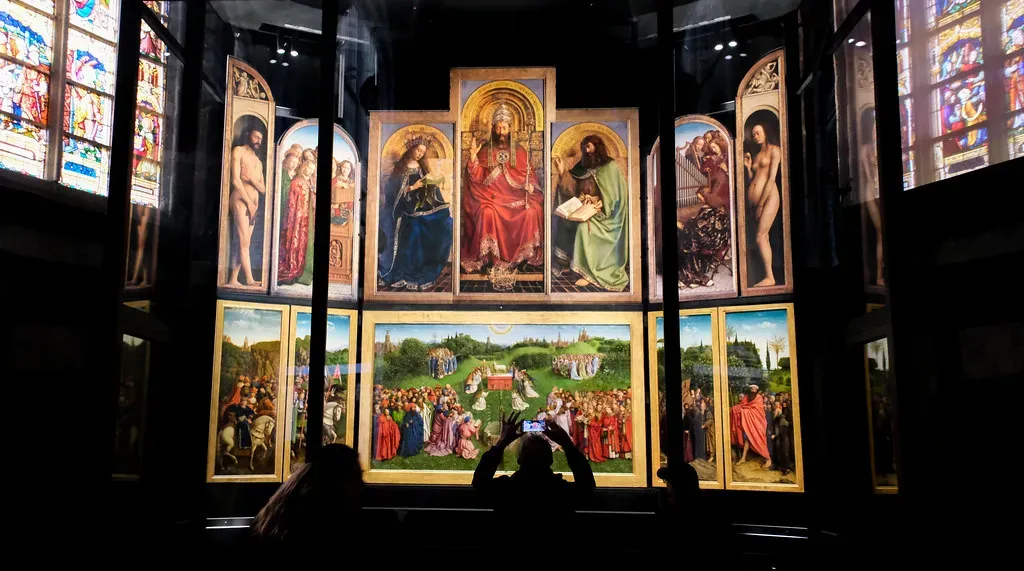
Painted by the Flemish artists Hubert and Jan van Eyck, the multi-paneled Ghent Altarpiece was created in the 15th century for the Cathedral of Saint Bavo in Ghent, Belgium. Hailed as one of the most important artworks in history, the enormous work also has the dubious distinction of being the most stolen artwork, at least seven times. The most enduring wound came in 1934. The Just Judges panel was stolen in 1934 and has never been found. The panel was displayed at the Saint Bavo Cathedral in Ghent, Belgium, together with the rest of the Ghent Altarpiece, until it was stolen during the night of April 10, 1934.
Soon after, a ransom note demanding one million Belgian francs appeared in the Bishop’s mail. As a sign of good faith, the thief left the separated backside of the panel, a grisaille painting of Saint John the Baptist, at the checked-luggage department of the Ghent train station. The Belgian government refused to pay. One heist remains unsolved today, with an on-duty detective at Ghent’s police station assigned specifically to the case. Ninety years and still nothing.
5. Van Gogh Paintings – Van Gogh Museum, Amsterdam (2002)

In December 2002, two agile thieves robbed Amsterdam’s Vincent Van Gogh Museum by scaling a ladder to the roof of the building and breaking into the venue. The thieves targeted two Van Gogh works: “View of the Sea at Scheveningen” and “Congregation Leaving the Reformed Church in Nuenen.” The whole operation was over in minutes. The thieves were convicted of the crime by Dutch authorities in 2003, but authorities came up empty-handed while trying to recover the stolen works.
The story took a dramatic turn over a decade later. After an extensive investigation, the stolen artworks were recovered in 2016 in Italy, hidden in a house linked to a drug cartel. Both paintings were subsequently returned to the Van Gogh Museum and are now proudly displayed once again. It is one of the few happy endings in this strange world of stolen masterpieces.
6. The Dresden Green Vault Jewels – Grünes Gewölbe, Germany (2019)

On November 25, 2019, at 4 a.m., a small fire was started on the nearby Augustus Bridge, which destroyed a power box. The resulting power outage disabled streetlights and security alarms, though CCTV continued to function. The German nationals, aged 22 to 28, who belong to the Remmo Clan, were accused of breaking into the eastern city’s Green Vault museum and stealing 21 pieces of jewellery containing more than 4,300 diamonds with a total insured value of at least €113.8 million.
The thieves made off with dozens of invaluable artifacts adorned with thousands of diamonds, including the 49-carat Dresden White Diamond, a sword encrusted with 800 diamonds, and a 1780s diamond hat clasp. The Grünes Gewölbe in Dresden announced that the exhibition of historical gems is reopening to the public in “almost all its glory” following the bold robbery. The whereabouts of other treasures, such as a large breast bow of Queen Amalie Auguste made of 611 small diamonds, silver and gold, and an epaulet that includes the so-called Saxon White diamond, remain unknown.
7. The Portrait of Jacob de Gheyn III – Dulwich Picture Gallery, London (Multiple Times)

Let’s be real, most stolen artworks are taken once. This particular Rembrandt has been stolen four times from the same institution. The Guinness Book of World Records once labeled Rembrandt’s 1632 painting Jacob de Gheyn III the “Takeaway Rembrandt” because it had been stolen so many times. In 2006, Guinness World Records awarded Rembrandt’s Portrait of Jacob de Gheyn III the title of “Most Stolen Painting,” after being stolen four times.
What makes this so bewildering is that it kept getting returned, or recovered, only to be taken again. The painting became less of a gallery fixture and more of a recurring crime scene. It is a perfect example of how a single artwork can become so notorious that it attracts thieves almost like a magnet, as if the theft itself is the real prize.
8. The Louvre Crown Jewels – Louvre Museum, Paris (2025)

This one is fresh. In October 2025, the Louvre became the site of one of the most daring heists in living memory. Minutes after opening to visitors, four suspects parked a vehicle mounted with a mechanical ladder outside the Louvre and used it to access the Gallery of Apollo. After cutting through a window with power tools, suspects threatened guards, broke into two display cases, and stole some of France’s crown jewels. They stole eight items, all from the 19th century, including a dazzling array of tiaras, necklaces, and earrings once worn by French royalty.
The theft was over in less than eight minutes, with the jewels carrying an estimated value of €88 million ($102 million). While the Louvre heist captured global attention, 2025 was seemingly a record year for art theft. Close to a dozen museums and institutions, from Brazil to France, were targeted, with hundreds of millions of dollars’ worth of artworks and artifacts stolen. Security experts pointed directly at outdated protection systems as the main culprit.
9. The Star of India Sapphire – American Museum of Natural History, New York (1964)

In a crime that would make national headlines, three surfer dudes turned jewel thieves managed to sneak into a fourth-floor window of the New York Museum of Natural History, making off with priceless gems, including the 563-carat Star of India sapphire, the 100-carat DeLong Star Ruby, and the 116-carat Midnight Star black sapphire. The thieves were not exactly master criminals. The craziest part of the robbery was how easy it was. The museum had basically no security, a window in the jewel room was usually propped open for ventilation, and none of the burglar alarms functioned.
Using a glass cutter and duct tape to break into display cases which had a non-working alarm system, the thieves executed their plan without a hitch until they were arrested two days later. Each served about two years in prison for the crime and most of the gems were eventually recovered. The enormous Star of India was later recovered from a locker in a Miami bus station, though others have never been found.
10. The Aztec Artifacts – National Museum of Anthropology, Mexico City (1985)

On Christmas Day 1985, two university students carried out what became known in Mexico as one of the most audacious museum heists of the century. Among the priceless sacred artifacts they stole, the value of just the Aztec obsidian vessel, shaped like a monkey, was 10 billion pesos at the time. The National Museum of Anthropology initially reported the theft of 140 pieces but later revised it to 124 stolen objects. The stolen artifacts included sacred objects made of gold, jade, turquoise, green stone, shell, and obsidian.
While the Christmas heist was dubbed “the robbery of the century” in Mexico and named one of the “five best museum heists in history” by Time magazine, it ultimately ended in a surprising recovery. Carlos Perches Treviño, one of the students, was arrested in 1989, and police recovered 111 pieces from the parents’ closet, where they had remained untouched since the robbery. The rest of the objects, though, were never found.
11. The Musée d’Art Moderne Five – Paris (2010)
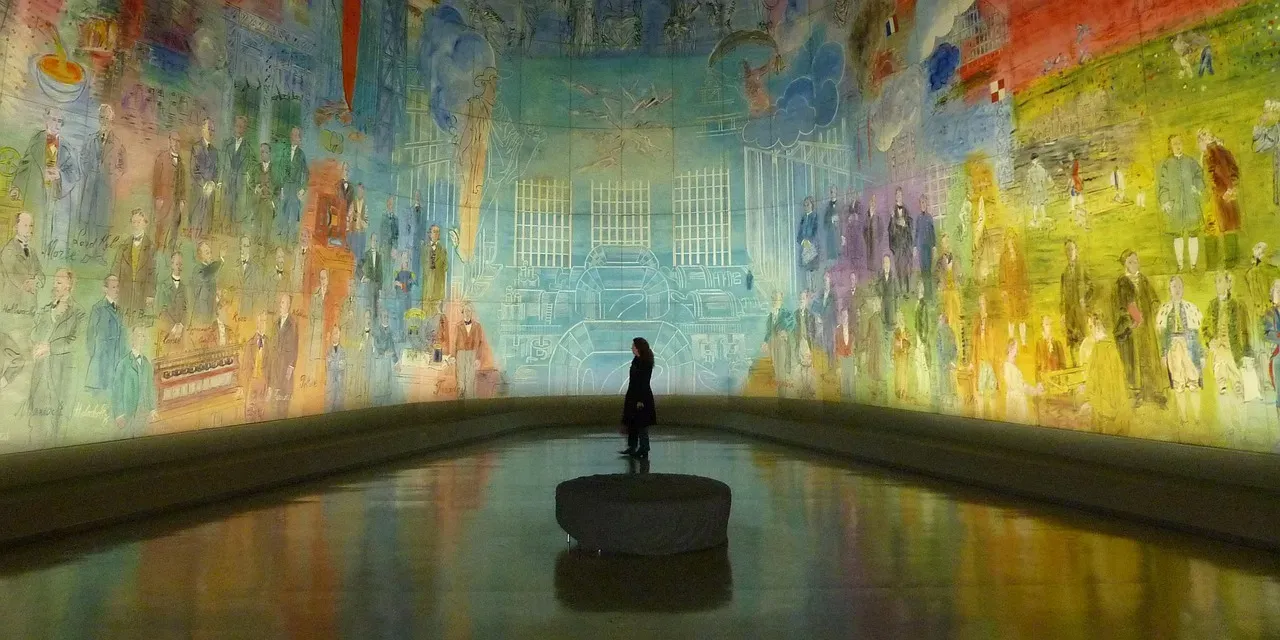
Here is a case where the motive was pure, almost reckless desire. Art thief Vjeran Tomic earned the nickname “Spider-Man” by climbing into Parisian apartments and museums to steal valuable jewelry and artworks. Tomic and two accomplices were arrested for stealing a Matisse, a Picasso, a Braque, a Léger, and a Modigliani from the Musée d’Art Moderne in 2010. Five iconic works, gone in a single night from one of Paris’s most beloved institutions.
What makes this case particularly haunting is what likely happened next. It is extremely difficult to sell the most famous and valuable works without getting caught, because any interested buyer will almost certainly know the work is stolen and advertising it risks someone contacting the authorities. It is also difficult for the buyer to display the work to visitors without it being recognized as stolen. Many famous works have instead been held for ransom from the legitimate owner or even returned without ransom, due to the lack of black-market customers. The five paintings from the Musée d’Art Moderne have never been fully recovered, and are widely believed to have been destroyed.
12. Gold Specimens – National Museum of Natural History, Paris (2025)

One month before the Louvre heist, the National Museum of Natural History in Paris was broken into, with several specimens worth an estimated €600,000 stolen. Intruders reportedly breached the museum early in the morning on September 16 using an angle grinder and a blowtorch, then made off with several valuable items. The haul included nuggets from Russia’s Ural region gifted by Tsar Nicholas I in 1833, as well as pieces discovered in California during the Gold Rush. In total, some 13 pounds of native gold were stolen.
The stolen items included 18th-century nuggets from Bolivia, a nugget donated by Tsar Nicholas I in the 1830s, a nugget from California’s gold rush, and a giant nugget unearthed in Australia in the 1990s. The overall haul was estimated at €1.5 million and was considered a previously unprecedented raid on a high-security French institution. On September 30, a 24-year-old Chinese woman was arrested in Barcelona while trying to sell around two pounds of melted gold pieces. She has subsequently been handed over to French authorities and charged with theft and criminal conspiracy.
Why Do Thieves Keep Targeting Museums?

The answer is more complicated than simple greed. Many thieves are motivated by the fact that valuable art pieces are worth millions of dollars and weigh only a few kilograms at most. There is also the paradox of fame. The most recognizable objects in the world are simultaneously the hardest to sell and the most irresistible to steal. When a museum is the target of art theft, the motive is not always financial. It can also serve as a demonstration of power, a statement, or a misguided desire to possess the unattainable.
Several experts have pointed to inadequate or outdated security measures at affected institutions. There may also be an element of copycat novelty at play, as these brazen crimes inspire as much awe as outrage. Most thefts were recorded in Europe, home to famous art and history museums like the British Museum, Tate Modern, and the Musée du Louvre. Ultimately, as long as museums house objects of extraordinary beauty and historical value, the temptation will never fully disappear. The empty frames left behind tell their own story.
What do you think – can museums ever truly be made thief-proof, or is that just an illusion we choose to believe?