Some photographs don’t just capture a moment. They rewrite it. They get printed on stamps, plastered across textbooks, and etched into the collective memory of entire generations – all while carrying secrets, contradictions, and deeply human backstories that almost nobody ever tells you. Many of history’s most famous photos are burned into our brains whether we realize it or not, even if we don’t know the stories behind them.
What we think we know about iconic images is often only a thin surface. Pull it back and there’s something far more complicated underneath. Something messier. Something more real. Let’s dive in.
1. “Migrant Mother” by Dorothea Lange (1936): The Woman Who Never Agreed to Be Famous
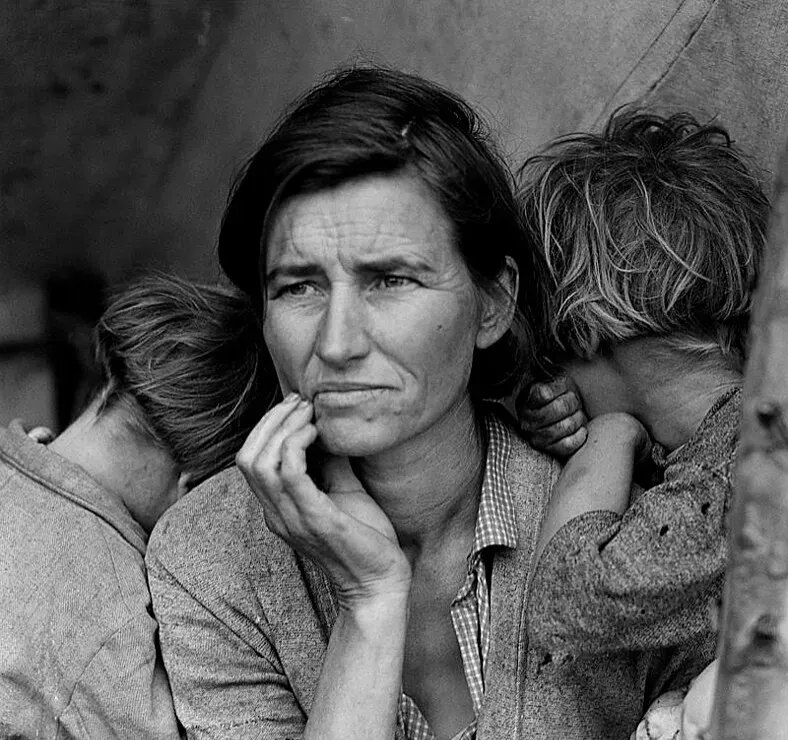
From the moment it first appeared in the pages of a San Francisco newspaper in March 1936, the image known as “Migrant Mother” came to symbolize the hunger, poverty, and hopelessness endured by so many Americans during the Great Depression. The photo has since been reproduced on postage stamps, magazine covers, and textbooks around the world. But here’s the part that barely ever gets told.
The photograph that has become known as “Migrant Mother” is one of a series of photographs that Dorothea Lange made of Florence Owens Thompson and her children in March of 1936 in Nipomo, California, as she was concluding a month’s trip photographing migratory farm labor for the Resettlement Administration. Lange later recalled approaching Thompson almost magnetically, overwhelmed by her desperation.
Thompson claimed that Lange promised the photo would never be published. According to a 2008 article in the Modesto Bee, she felt betrayed when it appeared in newspapers a day or so after the encounter. Thompson’s daughter confirmed that Lange “told mother the negatives would never be published – that she was only going to use the photos to help out the people in the camp.”
Thompson was also Cherokee, meaning her family had most likely been forced to relocate to Oklahoma under the Indian Removal Act of 1830, connecting her to a larger history of American migration and displacement. This layer of her identity was completely invisible in the photograph, and Lange, who never asked for Thompson’s name, was reportedly unaware of it entirely.
Initially anonymous, the woman in the photo was identified as Florence Owens Thompson only in 1978, following the work of a journalist for the California-based newspaper The Modesto Bee. By that point, her face had been famous for over four decades while she herself remained largely unknown.
Despite the notoriety and impact of her portrait, Thompson had not profited from the image at all. When she was unable to pay her medical bills following a stroke in 1983, her ten children sought public help on the basis of her being the famous Migrant Mother. They received around $35,000 in donations. Thompson died that same year, but lives on in the photograph.
Adding to what seems a misleading backstory is the telling detail that, in the editing process, Lange actually altered “Migrant Mother” for aesthetic reasons. In the original shot, Thompson’s thumb and forefinger are visible in the lower right-hand corner, partially obscuring the baby. The thumb was removed from the “official” photograph, a decision that belies the notion of a purely documentary slice of reality.
2. “Raising the Flag on Iwo Jima” by Joe Rosenthal (1945): The Second Raising Nobody Mentions
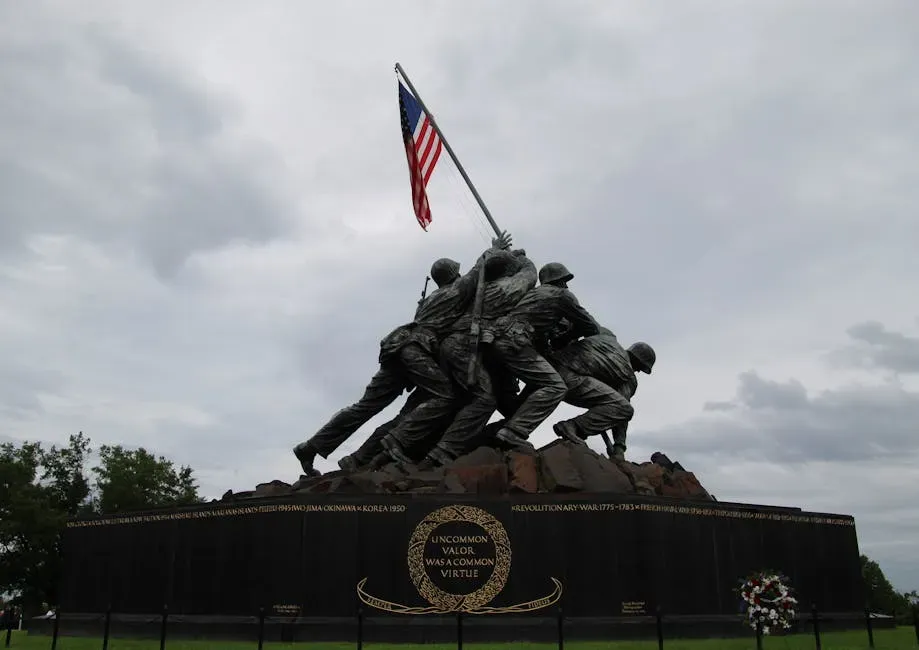
Raising the Flag on Iwo Jima is an iconic photograph of six United States Marines raising the U.S. flag atop Mount Suribachi during the Battle of Iwo Jima. Taken by Joe Rosenthal of the Associated Press on February 23, 1945, the photograph was published in Sunday newspapers two days later and reprinted in thousands of publications. It won the 1945 Pulitzer Prize for Photography and is regarded as one of the most recognizable images of World War II.
But here is the twist that most people gloss over. The photograph actually depicts the second flag-raising on the hill, an event that took place when Marines replaced a small American flag with a larger one. There was already a flag up there before Rosenthal even arrived.
Marine Staff Sgt. Louis Lowery of Leatherneck Magazine was there to capture the first raising, but had to dive for cover when the enemy started shooting. His camera was broken in the fall, and he had to go back down the mountain to get new gear. On his way down, he passed Rosenthal and his Graflex 4×5 camera – an AP representative who was about to get something few war photographers ever did: a second chance at capturing the moment.
A few days after the photograph was taken, Rosenthal, back on Guam, was asked if he had posed the photograph. Thinking the questioner was referring to a separate group “gung-ho” shot he had taken afterward, he replied “Sure.” After that, a Time-Life correspondent told his editors in New York that Rosenthal had staged the flag-raising photograph. The misunderstanding would follow him for the rest of his life.
Rosenthal swung his bulky Graflex 4×5 camera in the right direction at the right split-second and snapped the shot without even looking through his viewfinder. The resulting photo was so perfect, in capturing an essential moment and meeting virtually every time-honored standard of artistic composition, that for the rest of his life Rosenthal had to rebut charges that he set up the whole thing.
Officials quickly capitalized on the photo, using an illustration based on Rosenthal’s portrait to raise $26 billion in war bonds. Honestly, few wartime photographs have been weaponized so effectively for public purposes.
In 2016 and 2019, the U.S. Marine Corps corrected the identities of two of the men in the photo, further fueling confusion. The men portrayed were Michael Strank, Harlon Block, Franklin Sousley, Ira Hayes, Harold Schultz, and Harold Keller. Three of them, Strank, Block, and Sousley, went on to die in later phases of the battle.
Three of the six Marines in the photograph were killed in action during the battle itself. The image that came to symbolize American triumph was also, quietly, a portrait of men who would not survive the war.
3. “Tank Man” by Jeff Widener (1989): The Photographer Who Almost Wasn’t There
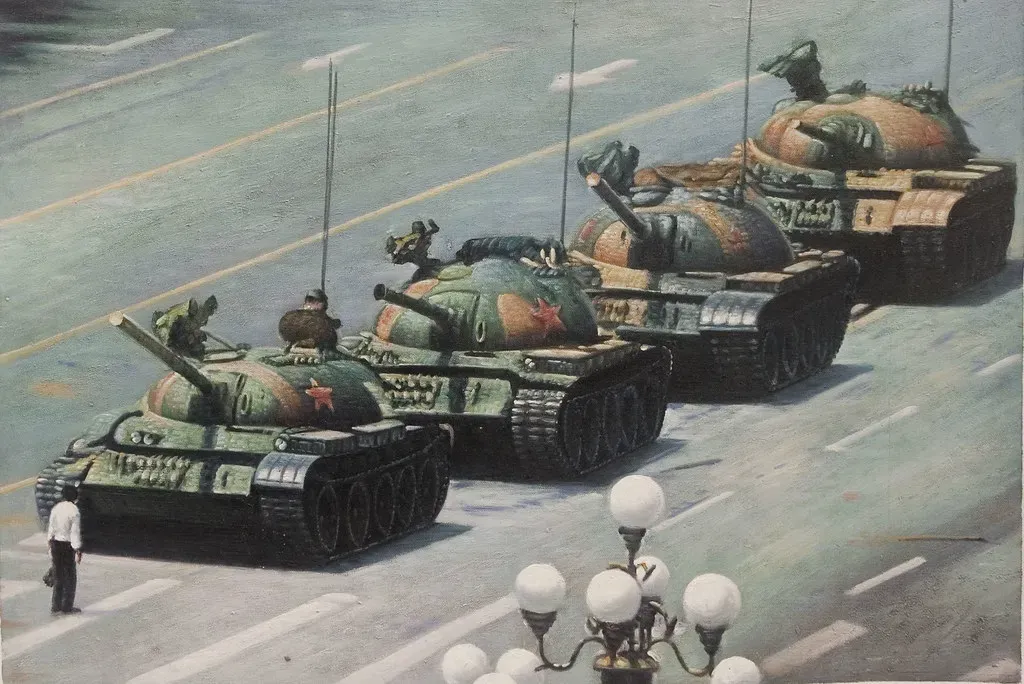
At the northeast edge of Tiananmen Square, along Chang’an Avenue, shortly after noon on June 5, 1989, “Tank Man” stood in the middle of the wide avenue, directly in the path of a column of approaching Type 59 tanks. Tank Man is the nickname given to an unidentified individual, presumed to be a Chinese man, who stood in front of that column of tanks near Tiananmen Square in Beijing.
The confrontation occurred one day after the government of China forcibly cleared the square following six weeks of pro-democracy demonstrations, resulting in the deaths of hundreds of people, primarily in areas surrounding the square. The world knows the image. Few know how close it came to never being captured.
On the morning of June 5, 1989, photographer Jeff Widener was perched on a sixth-floor balcony of the Beijing Hotel. It was a day after the Tiananmen Square massacre, when Chinese troops had attacked pro-democracy demonstrators, and the Associated Press had sent Widener to document the aftermath. As he photographed bloody victims and the occasional scorched bus, a column of tanks began rolling out of the plaza. Widener lined up his lens just as a man carrying shopping bags stepped in front of the war machines, waving his arms and refusing to move.
Widener had been injured the night before when a stray rock hit him in the head during a mob scene on Chang’an Avenue. His Nikon F3 titanium camera absorbed the blow, saving his life. He was also dealing with a bad flu. I think it’s remarkable that some of history’s most defining images were captured by people barely holding themselves together.
A student named Martsen, who had helped Widener get into the Beijing Hotel, put the “Tank Man” film in his underwear and smuggled it out of the hotel. The pictures were soon transmitted over telephone lines to the rest of the world.
Despite the image’s global status as a symbol of individual courage, the Chinese government continues to restrict the distribution and discussion of the photographs and the broader protests. Little reliable information exists regarding the identity or fate of either the protester or the crew of the lead tank.
The “Tank Picture” circulated around the globe, except in China where it is banned, and is now widely held to be one of the most recognized photos ever taken. Because of that photo, Widener was nominated as a finalist for the Pulitzer Prize in 1990. In November 2016, Time included the photograph in “Time 100: The Most Influential Images of All Time.”
In China, a television program branded Tank Man a “lone scoundrel” and used images of his protest to demonstrate that soldiers of the People’s Liberation Army had “exercised the highest degree of restraint” when confronting unarmed civilians. The contrast between that narrative and the one the rest of the world holds is, to put it gently, staggering.
4. “V-J Day in Times Square” by Alfred Eisenstaedt (1945): The Kiss Nobody Asked For
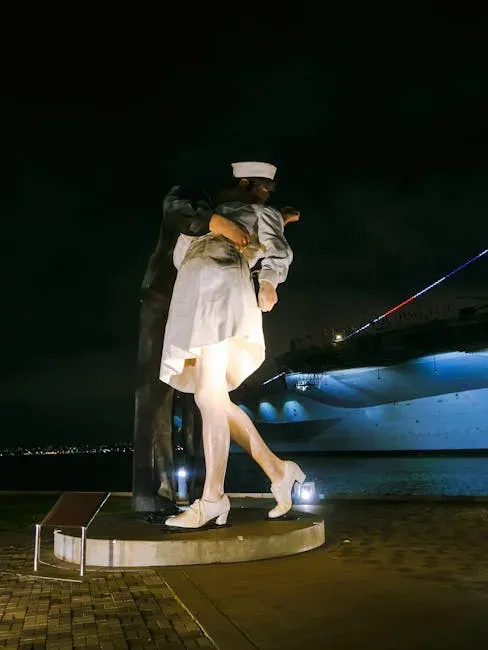
Famed photographer Alfred Eisenstaedt snapped this image of a sailor planting a celebratory kiss on a white-clad woman in the middle of New York City’s Times Square on August 14, 1945, when it was announced Japan had surrendered to the Allies, effectively ending World War II, and his photo was published in Life magazine on August 27. For decades, this image was sold as pure, jubilant romance.
While the photo is often seen as a representation of joy and relief, the woman, Greta Zimmer Friedman, later revealed a different perspective. She didn’t know the sailor, and the kiss was not a romantic gesture but rather a spontaneous act of exuberance. This insight challenges the romantic narrative often associated with the photo, adding depth to its historical significance.
Neither photographer got a chance to ask the smooching pair their names, and in the years that followed, a number of men and several women came forward to claim they were the ones in the photos, which had become symbolic of the excitement felt at the end of the war. The ambiguity about their identities turned out to be part of the photograph’s strange power.
A 2012 book, The Kissing Sailor, identified the couple as sailor George Mendonsa and Greta Zimmer, a dental assistant who didn’t know Mendonsa at the time. It took nearly seven decades for those two names to be attached to one of the most reproduced photographs in American history.
Navy lens man Victor Jorgensen also happened to get a shot of the impromptu kiss, from a different and less famous angle. Two photographers, same moment, very different outcomes in terms of historical legacy. That says everything about how iconic images are made.
The world’s most beloved photographs carry layers that most people never see. The pact allegedly broken between a photographer and a desperate mother. The second flag on a mountain, not the first. The sick, injured journalist on a hotel balcony in Beijing. The spontaneous kiss that turned into an emblem of romance without anyone’s real consent. These images endure not because they are simple, but because they are, underneath it all, wonderfully and uncomfortably human.
What would you have guessed if someone told you the stories first, before showing you the photographs?