There is something deeply unsettling about reading words that were never meant for your eyes. Private diaries, hidden in coat pockets, crammed behind bookshelves, or sealed inside lead-lined boxes, have a way of rewriting everything we thought we understood about the past. Though many people with diaries pray they never meet the light of day, some go on to become indispensable historic time capsules, and their private musings helped shape the very way we look at history. These are not just stories of famous people writing in journals. These are entries that broke open closed narratives, gave voice to the silenced, and in some cases, forced an entirely new understanding of some of history’s most defining moments.
1. Anne Frank’s Secret Annex Diary – Humanizing the Holocaust
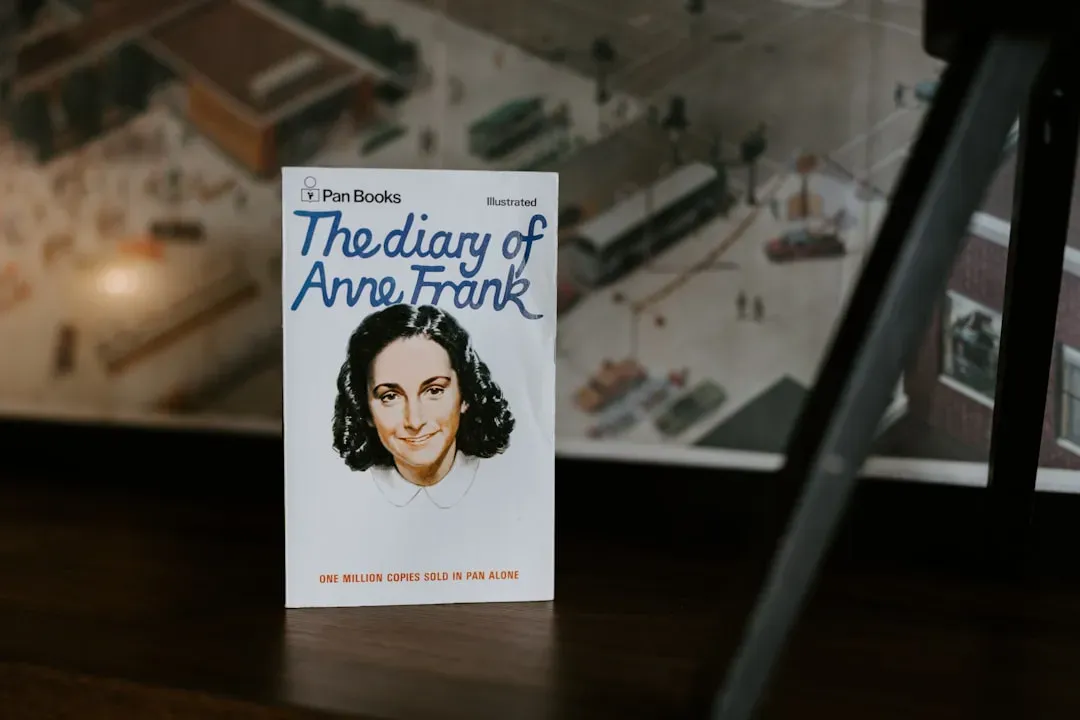
Anne Frank’s diary, written while hiding in a secret annex in Amsterdam during World War II, remains one of the most haunting and influential documents of the twentieth century. Her words provided an intimate, day-to-day account of a Jewish family’s struggle to survive amidst the terror of Nazi occupation. The diary’s emotional intensity is heightened by Anne’s reflections on adolescence, hopes, and fears, turning a historical catastrophe into a deeply personal narrative. Before this diary reached the public, the Holocaust was, for many, an unimaginable abstraction – a mass tragedy too vast and terrible to fully comprehend. Anne’s entries changed that.
Anne would write in her diary to “Kitty,” an imaginary friend she addressed her entries to, chronicling the family’s cloistered existence hidden in the annex attached to her father’s business in Amsterdam. Though the family had managed to avoid detection by the Nazis for more than two years, their time in hiding came to a close on August 4, 1944, after Nazi forces received a tip about the Franks’ hidden annex and had them arrested. Remarkably, “The Diary of a Young Girl” has been translated into over 70 languages and sold more than 30 million copies worldwide, touching generations across continents. It did not simply document suffering – it assigned a name, a face, and a heartbeat to it.
2. Samuel Pepys’ Coded Diary – Rewriting the Story of London’s Greatest Disasters
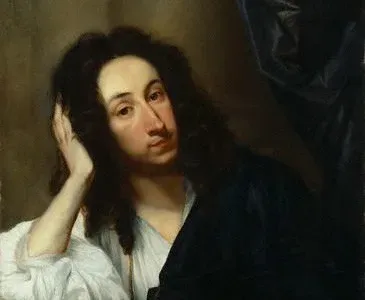
Samuel Pepys, a British naval administrator, documented daily life in London during the 1660s, capturing two of the city’s most devastating events: the Great Plague of 1665 and the Great Fire of London in 1666. His diary is filled with gripping eyewitness accounts – Pepys describes the streets filled with the sick, the panic of families fleeing the flames, and the resilience of Londoners in the aftermath. In vivid detail, he recounts how the fire destroyed over 13,000 houses and fundamentally altered the city’s landscape and psyche. What makes this even more remarkable is how Pepys kept his private thoughts hidden from the world while he lived.
Pepys wrote his diary using a form of shorthand invented by the stenographer Thomas Shelton. To most observers, the contents of the diary would have seemed a mysterious cipher or code, which helped keep the contents of his private life a secret. The contents of his diary were transcribed from code into English in the early 19th century and were published for the first time in 1825. Historians rely on his diary as a key primary source for understanding Restoration England, showing not only what happened but how ordinary people felt about unfolding disasters. Without those coded pages, our understanding of 17th-century London would be far thinner.
3. Captain Robert Falcon Scott’s Antarctic Diary – Reframing a Story of Failure and Heroism
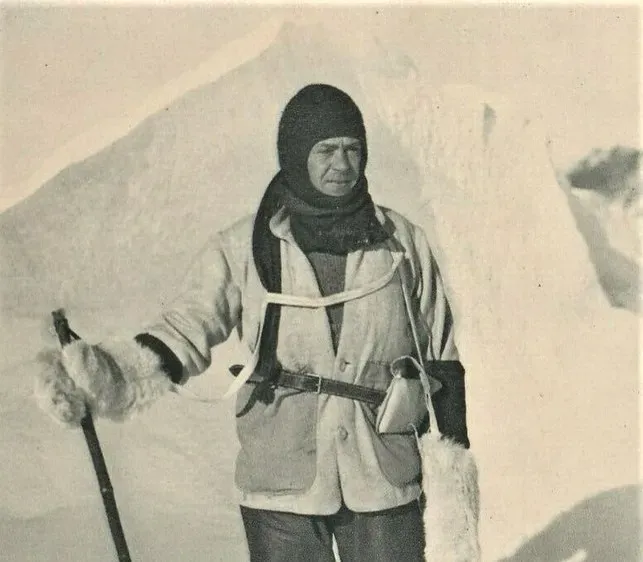
Scott wrote “Great God! This is an awful place,” in his diary on January 17, 1912. Just hours before, Scott and his four companions had reached the South Pole, only to discover that Roald Amundsen’s team had beaten them there by a month. Nine weeks later, doomed by a combination of starvation, scurvy, and hypothermia, Scott and his last two surviving teammates lay marooned in a tent. A nine-day storm prevented their sledging the last eleven miles to a food depot that might have saved their lives. The story could have been buried in obscurity, but Scott kept writing.
Scott knew he was going to die, and he kept writing in his diary until the very end. On November 12, 1912, searchers found the tent with the frozen bodies, geological specimens from Beardmore, and Scott’s records and diaries, which gave a full account of the tragedy. When Scott and his party’s bodies were discovered, they had in their possession the first Antarctic fossils discovered. The fossils were determined to be from the Glossopteris tree and proved that Antarctica was once forested and joined to other continents. A diary discovered with a man’s frozen body, carrying inside it a scientific revelation about the ancient shape of the world – that is an almost impossible collision of tragedy and discovery.
4. Marie Curie’s Radioactive Lab Notebooks – Redefining the Cost of Scientific Discovery
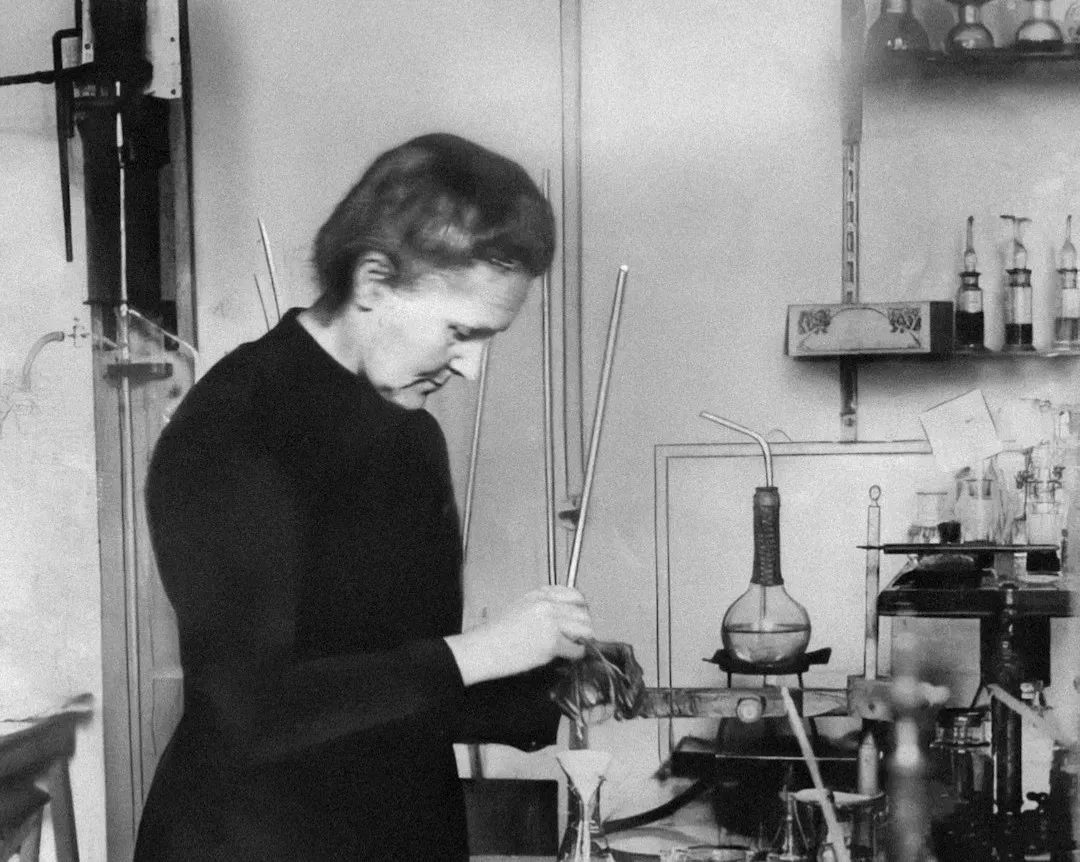
Preserved within the Bibliothèque Nationale in Paris is an extensive collection of Curie’s research notes, a tangible link to her historic exploration into radioactivity. Yet these are no ordinary relics of scientific discovery. They embody a startling characteristic: over a century after their inception, they continue to emit a radioactive glow. If you want to look at her manuscripts, you have to sign a liability waiver at France’s Bibliothèque Nationale, and then you can access the notes sealed in a lead-lined box. The physical danger of reading her own personal scientific diary speaks volumes about the price she paid for knowledge.
In her fervor to unravel the mysteries of radioactivity, Curie worked intimately with radioactive isotopes, most notably radium and polonium. These isotopes emit ionizing radiation as a part of their natural decay process. Curie’s intense and frequent interaction with such materials resulted in her notebooks absorbing considerable amounts of this radiation, to such an extent that they remain radioactive to this day. Marie Curie was the first woman to win a Nobel Prize (1903), the only woman to win it again (1911), the first woman to become a professor at the University of Paris, and the first woman to be entombed on her own merits at the Panthéon in Paris. Her notebooks did not just document experiments – they permanently altered how science views the relationship between human bodies and the invisible forces they study.
5. Emilie Davis’s Civil War Pocket Diaries – Giving the Voiceless a Historical Stage
Three pocket diaries kept by Emilie Davis – an African-American woman who lived in Philadelphia at the time of the Civil War – during the years 1863 to 1865, offer a remarkable day-to-day record of life for a free Black woman. In her diaries, Emilie – a young free Black woman living in Philadelphia during the Civil War – remarks on the progress of her education and reflects on the challenges of living as a half-citizen of a slave nation. These were not the diaries of a general, a president, or a politician. They were written in pocket-sized volumes small enough to slip inside a coat, and they changed the historical record fundamentally.
In them, she recounts Black Philadelphians’ celebration of the Emancipation Proclamation, nervous excitement during the Battle of Gettysburg, and their collective mourning of President Lincoln. The diary allows readers to experience the war in real time, as events unfolded for Civil War Americans. Emilie’s diaries offer fresh perspective on the arrival in Philadelphia of Black refugees from south-central Pennsylvania during the Gettysburg campaign, jubilant celebrations in Black churches accompanying the news of Lincoln’s Emancipation Proclamation, and the deep anxieties that free Blacks like Emilie felt when Union advances nearly became reverses. Historians had long told the Civil War primarily through the lens of white soldiers and commanders. Davis’s diaries quietly, persistently demanded a different point of view.
6. Vasily Grossman’s Eastern Front Diaries – Exposing the War That Official Histories Tried to Erase
Vasily Grossman, a Soviet journalist and novelist, secretly recorded his experiences as a war correspondent on the Eastern Front during World War II. Later published as “A Writer at War,” these notes expose the raw brutality of one of history’s bloodiest battlefields. Grossman’s writing reveals not just the horrors inflicted by Nazi forces, but also the repression and censorship imposed by Stalin’s regime on its own people. He describes the terror of combat, the suffering of civilians, and the moral ambiguities faced by soldiers. These were entries written at enormous personal risk, on a front where the truth itself was considered a threat to the state.
Recent research highlights that Grossman’s reports were often altered or suppressed by Soviet authorities, underscoring the courage it took to document the truth. His diaries challenge sanitized, heroic narratives of war, insisting on the dignity and suffering of individuals caught in the machinery of violence. For both the dedicated historian and wider reader alike, diaries offer an unrivalled glimpse into past lives. Not only do they record the mundane, they can often serve as unique, eyewitness accounts of major historical events. Grossman’s notebooks, written in the shadow of Soviet censorship, stand as one of the most vital and dangerous acts of historical witnessing the twentieth century produced.