



Crime fiction is one of the oldest, most obsessive, and most deliciously unsettling literary traditions humanity has ever produced. There is something about a locked room, a missing body, or an unreliable narrator that just pulls the brain into overdrive. You think you know who did it. You don’t. You never do.
The numbers back this up powerfully. The most popular genre of books Americans read in 2025 was mystery and crime, with roughly a third of all book readers picking up at least one crime or mystery novel. According to Nielsen BookScan, fiction was the strongest performing category in print publishing, with crime among the genres driving double-digit increases. So what makes a crime novel truly timeless? Let’s find out.
1. And Then There Were None by Agatha Christie (1939)


Here is a genuinely shocking number to start with: Agatha Christie’s “And Then There Were None” is the highest-selling crime novel of all time, with over 100 million copies sold since its publication in 1939, making it one of the ten highest-selling novels ever written. That is not a misprint. One hundred million copies. Think about that for a moment.
Ten strangers, each indirectly implicated in someone else’s death, are gathered on an island by an unknown host. These characters represent a spectrum of moral ambiguity. The book breaks more rules of the mystery genre than any before it: no detective solves the case, the murderer escapes the law’s grasp, and the plot construction makes guessing the killer’s identity nearly impossible.
Christie has been called the “Queen of Crime,” a nickname now trademarked by her estate. In 2013, she was voted the best crime writer and “The Murder of Roger Ackroyd” the best crime novel ever by 600 professional novelists of the Crime Writers’ Association. Honestly, if you haven’t read this book, stop what you’re doing right now.
2. The Girl with the Dragon Tattoo by Stieg Larsson (2005)


The Girl with the Dragon Tattoo took the literary world by storm upon its posthumous publication in 2005, introducing readers to journalist Mikael Blomkvist and the enigmatic hacker Lisbeth Salander as they investigate a decades-old disappearance, tackling themes of corruption and violence against women. What makes this especially remarkable is the story behind the story.
Larsson died suddenly of a heart attack in 2004 at age 50, shortly after delivering the manuscripts for the trilogy to his publisher. The novels were published posthumously starting in 2005 and became international sensations, with over 80 million copies sold worldwide. He never saw a single copy of his own books on a shelf. That fact still haunts me.
He was the second-best-selling fiction author in the world for 2008, owing to the success of the English translation of The Girl with the Dragon Tattoo, behind Afghan-American novelist Khaled Hosseini. The original Swedish title, “Män som hatar kvinnor,” literally translates to “Men Who Hate Women,” which captures the book’s real core message far more honestly than the English version.
3. In Cold Blood by Truman Capote (1966)


Long before true crime podcasts dominated the internet, Truman Capote was already doing something nobody had ever attempted. On November 15, 1959, in the small town of Holcomb, Kansas, four members of the Clutter family were savagely murdered by blasts from a shotgun held a few inches from their faces. There was no apparent motive for the crime, and there were almost no clues.
One of the reasons “In Cold Blood” stands apart is that it reads like a novelization of actual events, while also offering an excellent, almost biographical insight into the two young killers’ minds. It has been called one of the finest books ever written. Capote took six years to finish it because he had to wait for the court case and the final verdict. Six years. That is dedication, and it shows on every page.
The book essentially invented an entirely new literary category. It is part journalism, part crime novel, and part psychological portrait. I think it’s fair to call it one of the most important books of the twentieth century, full stop.
4. The Hound of the Baskervilles by Arthur Conan Doyle (1902)

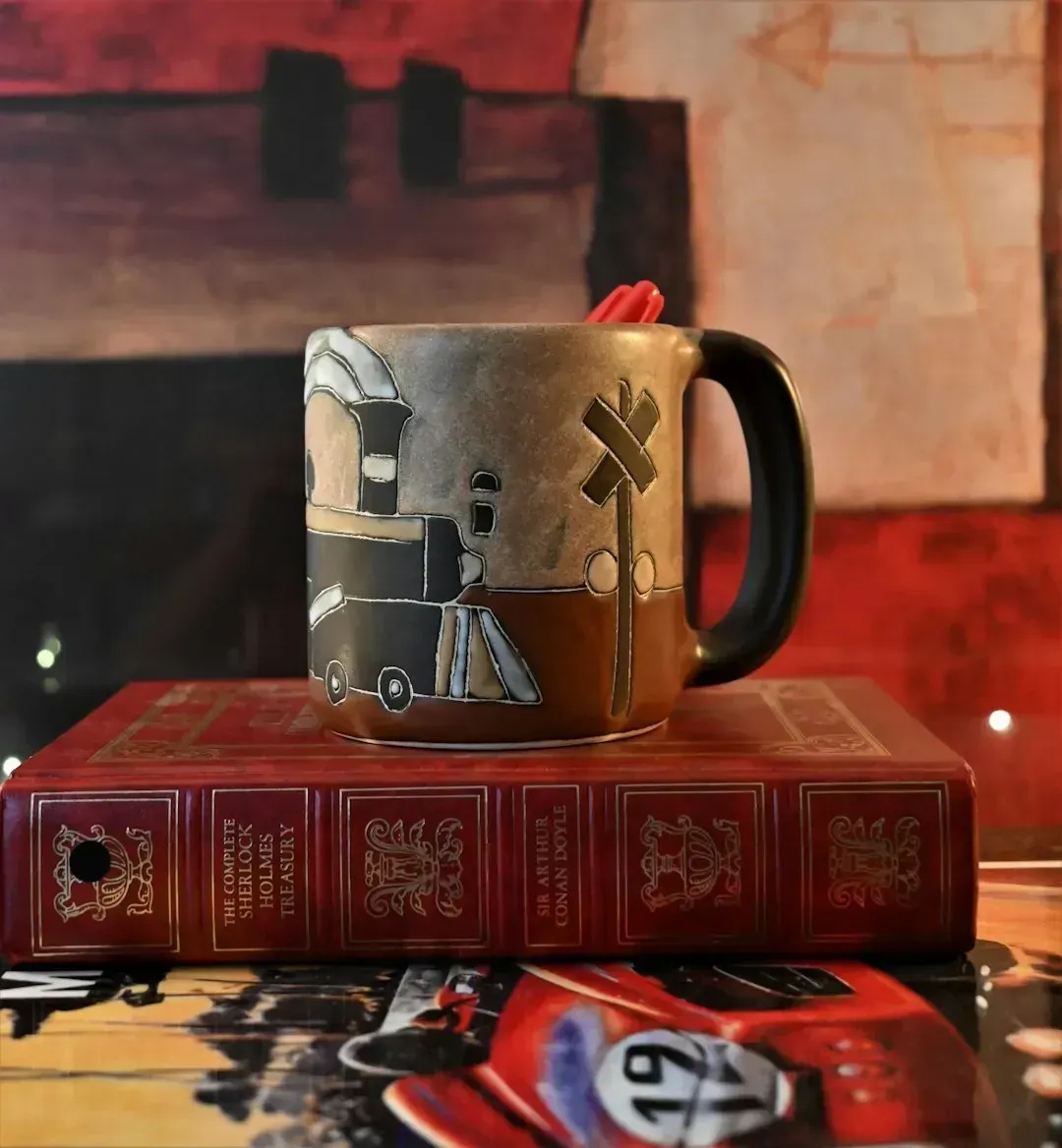
No list of the greatest crime novels of all time would be complete without Sherlock Holmes. The great detective, first introduced in 1887, essentially defined the modern template for every crime story that followed. Edgar Allan Poe pioneered the mystery genre, and writers like Sir Arthur Conan Doyle carried on the tradition, with stories told from the perspective of a detective-protagonist as he or she examines clues and pursues a killer.
Many Holmes fans prefer Doyle’s complete short stories, but “The Hound of the Baskervilles” is considered his most ambitious novel, filled with ancient woe, gothic atmosphere, and a Grimpen Mire that pulls you deep into suspense. The story involves the mysterious death of Sir Charles Baskerville and a supernatural hound supposedly stalking his family across the eerie English moors. It’s creepy and clever in equal measure.
The Adventures of Sherlock Holmes has sold over 50 million copies, placing it among the best-selling crime and mystery titles of all time. That is a staggering number for stories first published in the Victorian era. Some things simply do not age.
5. The Murder of Roger Ackroyd by Agatha Christie (1926)

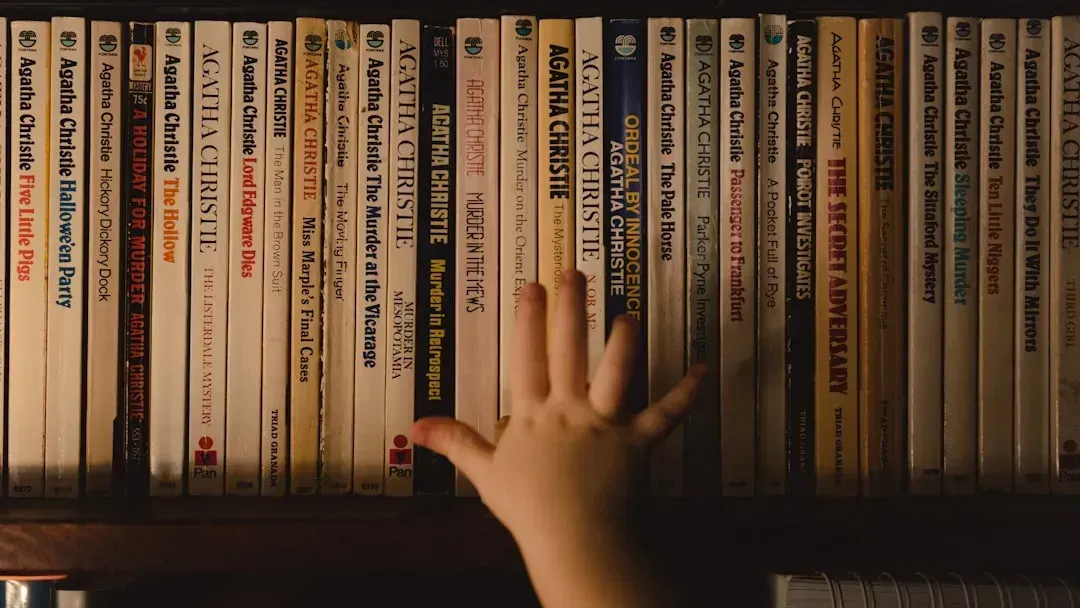
Christie appears twice on this list, and she has absolutely earned it. “The Murder of Roger Ackroyd” is, in many ways, her most controversial and most brilliant work. Fairly early in her career, Christie came under fire for writing an “unfair” mystery novel. In the book, the killer turns out to be the narrator, and many readers and critics felt this was too deceptive a plot twist. Christie was unapologetic, and today the novel is considered a masterpiece of the detective genre.
Let’s be real: this novel changed the rules of crime fiction permanently. It proved that the genre could be genuinely subversive, that the author could play a direct game of manipulation with the reader. In 2013, the 600 members of the Crime Writers’ Association chose “The Murder of Roger Ackroyd” as the best whodunit ever written. That verdict, handed down by professional crime writers themselves, speaks volumes.
There is a reason this book still makes readers furious when they reach the final pages. Furious, then amazed. Then they tell all their friends to read it.
6. The Girl with the Dragon Tattoo’s Inspiration: Why Crime Fiction Keeps Dominating


Here’s the thing about crime fiction as a genre: it has never slipped quietly out of fashion. Mystery, thriller, and crime genres command roughly seventeen to twenty percent of adult fiction sales in the U.S. market, according to Publishers Weekly and NPD. Mystery and crime novels are the most popular genres overall, appealing to readers of all ages except those aged 18 to 24, who favor romance.
While romance and fantasy grab headlines, thrillers and crime novels remain the reliable backbone of the publishing industry. They may not always go viral on social media, but they never leave the charts. Readers crave tension, mystery, and the adrenaline rush of a good twist.
According to NielsenIQ’s international market data, crime fiction performed particularly well across global markets in 2025, while the international book industry was described as navigating a transitional period with strong performances in crime and thriller genres. The grip of a great crime novel is, it seems, universal.
7. Gone Girl by Gillian Flynn (2012)


If you want a modern novel that absolutely shattered reader expectations, this is it. Gillian Flynn’s “Gone Girl” introduced the concept of the deeply unreliable narrator not just as a plot device, but as the entire engine of the story. In “The Girl with the Dragon Tattoo,” Larsson introduced the avenging hacker Lisbeth Salander, while Gillian Flynn’s best-selling thriller “Gone Girl” offered a woman who fakes her own kidnapping as the central twist. Both novels rewired what readers expected from female protagonists in crime fiction.
“Gone Girl” is the kind of novel you consume in two sittings, maybe three. It is genuinely impossible to stop. Flynn writes with a razor-sharp, almost unsettling precision about marriage, media, and manipulation, and the result is one of the most talked-about crime novels of the past two decades. The 2014 film adaptation directed by David Fincher only expanded its already enormous audience further.
It’s hard to say for sure, but I think this book changed what mainstream readers expected from psychological crime fiction permanently. It opened the door wide for the wave of domestic suspense that followed, and that wave, as the data confirms, has seen fresh growth borrowing energy from the true-crime boom.
The Rise of Audiobooks and What It Means for Crime Fiction


There is a fascinating modern dimension to all of this. Crime novels are not just being read anymore. They are being listened to. Audiobooks were the fastest-growing format in the UK, with crime among the top genres driving that surge. Audiobooks were the fastest-growing format overall, and males aged 25 to 34 were identified as the largest demographic in the audio market.
Mystery, thriller, and suspense titles are ranked as the second best-selling genre of audiobooks overall. Think about that. You can now listen to someone being murdered on your commute, while making dinner, or while jogging through the park. Crime fiction has essentially colonized every spare moment of modern life.
Crime fiction, including psychological thrillers, can see large surges during times of high-profile movie or TV releases, with some major thriller authors consistently hitting six-figure weekly sales during new book launches. The relationship between crime fiction on the page and crime fiction on screen has never been more powerful or mutually reinforcing.
The Psychology Behind Why We Can’t Stop Reading Crime Novels

Have you ever asked yourself why crime fiction is so impossibly addictive? There is actually a thoughtful explanation rooted in literary history. One explanation for the success of crime fiction is that the genre principally seeks to instill sanctity to life through an exploration of the horrors of death, and to create a moral order within a fictionalized world. Christie’s audience in the years following the World Wars craved a world of moral order and justice, and Christie’s fiction offered that moral vision.
That logic still applies today, perhaps more than ever. We live in a world that often feels random and deeply unjust. Crime fiction restores order. The crime gets solved. The truth comes out. Justice, however imperfect, tends to prevail. It’s enormously satisfying on a psychological level.
Agatha Christie is the best-selling thriller and mystery author of all time, having sold between 2 billion and 4 billion copies of her books. Within the genre, she has sold at least four times as many copies as the second best-selling author, Georges Simenon. Those numbers are almost incomprehensible. They suggest something profound about the human need for storytelling that resolves chaos into clarity.
The Best Contemporary Crime Novels Carrying the Torch

The tradition of great crime fiction is alive and thriving right now. Across 108 best mystery, crime fiction, and thriller lists compiled from 2024, Liz Moore’s “The God of the Woods” emerged as the most widely praised mystery of the year. “All the Colors of the Dark” by Chris Whitaker came in a close second.
Crime authors including Freida McFadden played a key role in driving global fiction sales in 2025, with novels in her “The Housemaid” series topping overall year-to-date charts in France, Spain, Belgium, and appearing among the top five bestselling novels in Australia, Brazil, Ireland, Portugal, and the UK. That is genuinely staggering global reach for a contemporary crime writer.
Crime fiction journalists confirmed that 2025 was a great year for the genre overall. The crime fiction genre in 2025 exhibits a dynamic landscape characterized by shifting reader interests, technological integration, and the influence of social media, with search trends revealing cyclical spikes in demand for crime thrillers and mysteries alongside the genre’s resilience and adaptability. The best crime writing has always reflected its era, and today is no different.
What Makes a Crime Novel Truly Timeless?
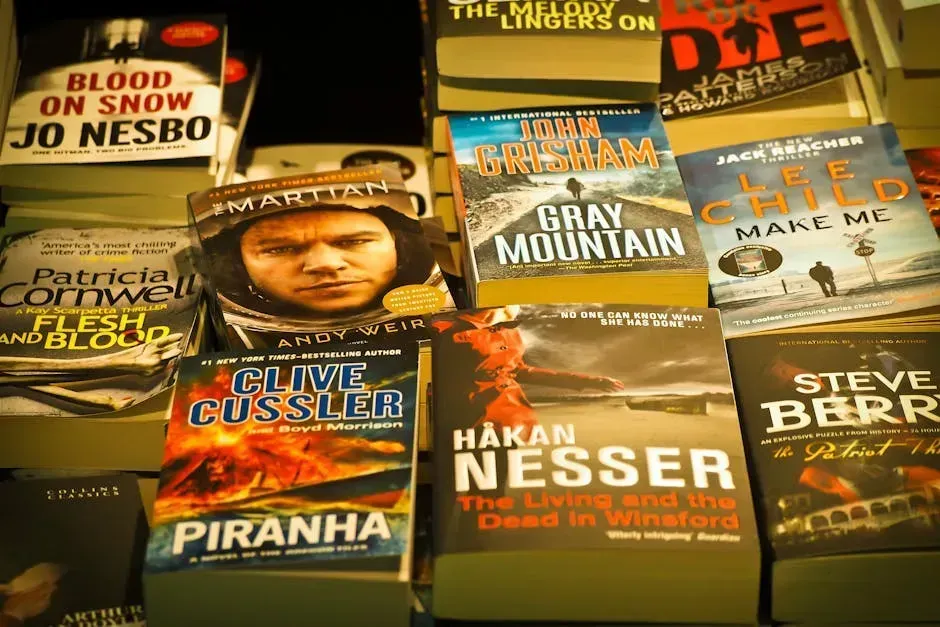
After exploring all seven of these landmark works, a clear pattern emerges. The greatest crime novels are never simply about the crime. They are about people, about the terrifying things human beings are capable of, and about the desperate need to understand why. Christie’s darkest novel is less about the killer’s identity or motive and more focused on the victims’ mental and emotional breakdowns, employing a narrative voice to offer glimpses into each character’s paranoia and guilt-ridden thoughts.
The best crime stories are also deeply moral, even when they are deeply dark. Larsson’s gripping thriller tackles themes of corruption, violence against women, and familial secrets, and yet it still fundamentally believes in the possibility of justice, even outside the law. That tension is what keeps readers turning pages long past midnight.
The strength of the thriller and crime genre lies in its dependability. Readers know they will get a fast pace, a puzzle to solve, and a resolution that leaves them satisfied. For authors, that translates into a stable, evergreen market. For readers, it translates into one of the most reliably satisfying experiences literature has to offer.
Conclusion: The Puzzle That Never Gets Old

Seven novels. Dozens of dead bodies. Billions of readers across more than a century. Crime fiction has outlasted empires, technological revolutions, and countless literary trends. There is something almost primal about the appeal of a puzzle wrapped in darkness, of a mystery that demands to be solved.
The books on this list range from Victorian England to modern Sweden, from a sunbaked Kansas farmhouse to an isolated island off the English coast. What connects them is not just brilliant plotting. It is the ability to make you feel something urgent, something close to fear, while sitting safely in your armchair.
Crime fiction continues to dominate reading charts globally, with roughly six in ten Americans saying they read at least one book in 2025, and mystery and crime being the genre most of them chose. The human obsession with crime, justice, and the darkest corners of human nature shows absolutely no sign of fading. What is your favorite crime novel from this list, and did you actually solve it before the final page? Tell us in the comments.


