There are books you read once and forget. Then there are books that quietly rearrange the way you see the world, the way you talk, the way you think about power, justice, and what it means to be human. Honestly, it is a short list. These are the novels that didn’t just sell well. They rewrote history, sparked legal revolutions, coined entire vocabularies, and kept selling copies decades, sometimes centuries, after publication. You might already own one or two. You might think you know what they are about. You probably don’t know the full story.
Let’s dive in.
1. To Kill a Mockingbird – Harper Lee (1960)

Few novels carry the moral weight of this one. Harper Lee’s “To Kill a Mockingbird” is one of the best-known and most widely read books in the United States. Since its publication, the novel has been translated into some 40 languages and has sold more than 40 million copies worldwide. That’s not a short story anymore. That’s a cultural institution.
Even more than 50 years after it was first published, the novel still sells roughly 750,000 copies a year. Think about that. Every single year, like clockwork, hundreds of thousands of new readers pick it up. A 2008 survey of secondary books read by students between grades 9 to 12 in the U.S. indicates the novel is the most widely read book in those grades.
After remaining at number one throughout the entire five-month-long voting period in 2018, the American public, via PBS’s The Great American Read, chose “To Kill a Mockingbird” as America’s Favorite Book. Its influence didn’t stop at the bookshelf. One of the most significant impacts the novel has had is Atticus Finch’s model of integrity for the legal profession. Scholar Alice Petry explains that “Atticus has become something of a folk hero in legal circles and is treated almost as if he were an actual person.” Morris Dees of the Southern Poverty Law Center cites Atticus Finch as the reason he became a lawyer.
The novel was also adapted into a Broadway play in 2018 by Aaron Sorkin. The play became the highest-grossing American play ever, grossing over two million dollars in just week four alone. In total, the play grossed over 58 million dollars, including 22 million in advance sales. Remarkable, for a story set in the American South during the Great Depression.
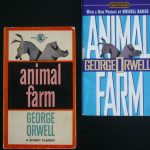
2. 1984 – George Orwell (1949)

Here’s the thing. A novel published in 1949 should not be topping bestseller lists in 2025. Yet that is exactly what this book keeps doing. Recent figures suggest that Orwell’s most successful novel, 1984, has sold over 30 million copies worldwide. The numbers alone don’t tell you why, though. The reason is scarier.
The sales of this dystopian classic have seen significant spikes in response to major political and social events. The renewed interest in Orwell’s work often occurs during periods of political upheaval or when current events draw parallels to the themes he explored, such as authoritarianism, surveillance, and the manipulation of truth. It is essentially a real-time alarm system for democracy.
Sales were notably seen spiking after the 2013 revelations of NSA surveillance, the 2017 inauguration of Donald Trump, and again after the 2025 presidential inauguration. A spokesman for Signet Classics, which currently publishes 1984, confirmed that sales increased almost 10,000 percent following one inauguration event. That is not a misprint. Ten thousand percent.
The themes in this novel have become a major part of modern culture, creating terms and concepts that have been incorporated into our own society. Surveillance, truth, and censorship take center stage, and no other book has contributed to our understanding of these themes quite like 1984. The word “Orwellian” is now in the dictionary. That alone tells you everything.
3. Don Quixote – Miguel de Cervantes (1605)
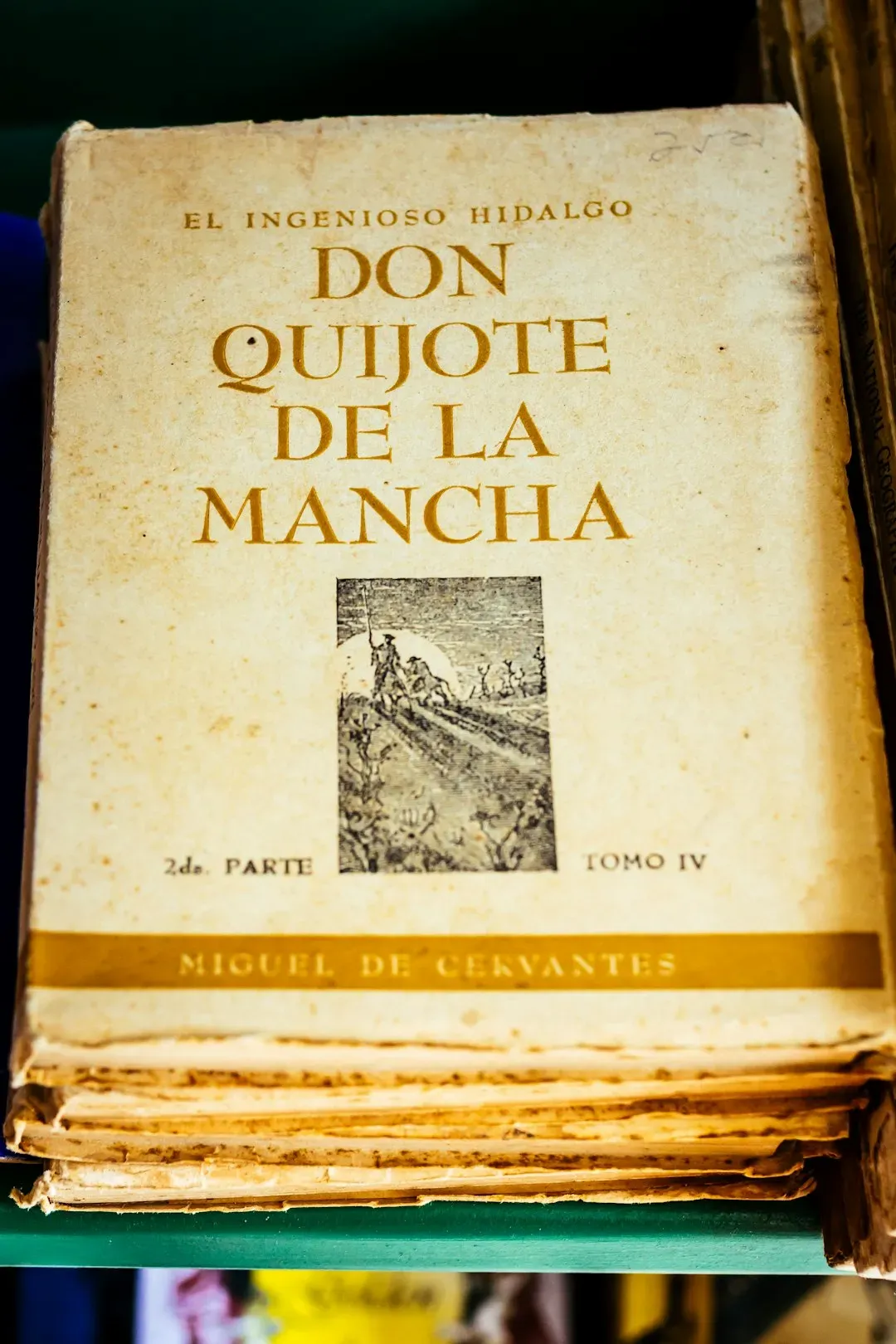
It sounds crazy, but the most bestselling novel in history might also be the first modern novel ever written. Don Quixote was published in 1605, making it very old with sales figures that are hard to track with precision. Although the exact number of copies sold is unknown, it is thought to be over 500 million, making it more than any other non-political or non-religious book.
This Spanish novel, originally published as two books, is one of the most influential and popular novels in the world. Cervantes didn’t just write a story about a deluded knight tilting at windmills. He essentially invented the concept of the unreliable narrator, complex interiority, and metafiction centuries before those terms even existed. Think of it as the blueprint that every novelist who came after him borrowed from without always realizing it.
Miguel de Cervantes is widely credited with inventing the modern novel. That is a staggering claim, but the literary world largely agrees. Every novel you have ever loved owes something, directly or indirectly, to this one. It is the great-great-grandfather of fiction as we know it, and it remains a surprisingly readable, funny, and heartbreaking experience to this day.
4. One Hundred Years of Solitude – Gabriel García Márquez (1967)

One Hundred Years of Solitude tells the story of the Buendía family over several generations and is considered to be one of the most significant novels in the Spanish literary canon. The style and themes in the novel are seen to be representative of a unique Latin American literary movement of the 1960s: Magical Realism. García Márquez didn’t just write a novel. He launched an entire literary genre that spread across continents.
The novel has sold an estimated 50 million copies worldwide. That is an astonishing figure for a work of literary fiction that blends the supernatural with everyday village life without so much as blinking. When it first appeared in Spanish, it reportedly sold out its entire first print run within days. Word spread like wildfire across Latin America, then the world, then into the syllabi of every serious literature course on the planet.
I think what makes this book so deeply affecting is how García Márquez treats time. It loops, folds, repeats. Generations of the same family make the same mistakes, carry the same loneliness, bear the same cursed name. It reads less like a story and more like a memory you somehow already have. The influence on writers like Toni Morrison, Isabel Allende, and Salman Rushdie has been widely documented. Its fingerprints are everywhere in modern fiction.
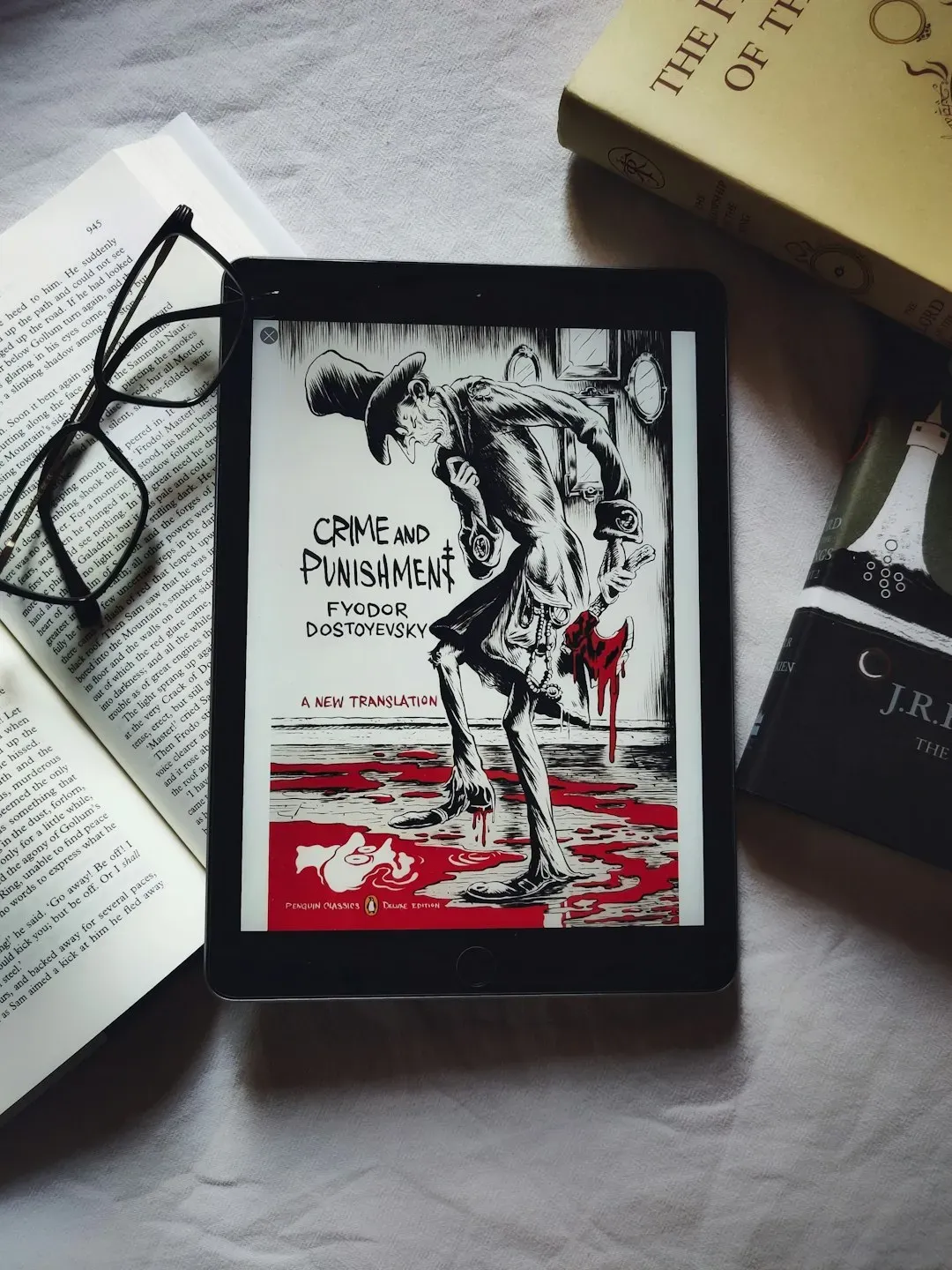
5. Crime and Punishment – Fyodor Dostoevsky (1866)
Fyodor Dostoevsky is often described as a pioneer of the psychological novel, examining the conflicts of conscience and faith that shape human behavior. Before Freud built an entire career out of mapping the human psyche, Dostoevsky was already doing it inside the pages of his fiction. He is renowned as one of the world’s greatest novelists and literary psychologists, and his works grapple with deep political, social, and religious issues while delving into the often tortured psychology of characters whose lives are shaped by these issues.
In Crime and Punishment, a destitute student wrestles with the consequences of murder. The novel is a relentless dive into guilt, self-justification, and moral collapse. It reads like a thriller written by a philosopher. Dostoevsky’s novels and other writings were major influences on 20th-century literature and philosophy. Some people saw the political themes of his novels as prescient depictions of life under the Soviet regime.
His characters often embody conflicting ideas: reason against emotion, faith against doubt, individual will against social pressure. These struggles made his work not only gripping stories but also explorations of ideas that continue to influence philosophy and psychology. Writers from Franz Kafka to Albert Camus to Toni Morrison have acknowledged his influence. That is a reach that spans continents and a full century of literature.
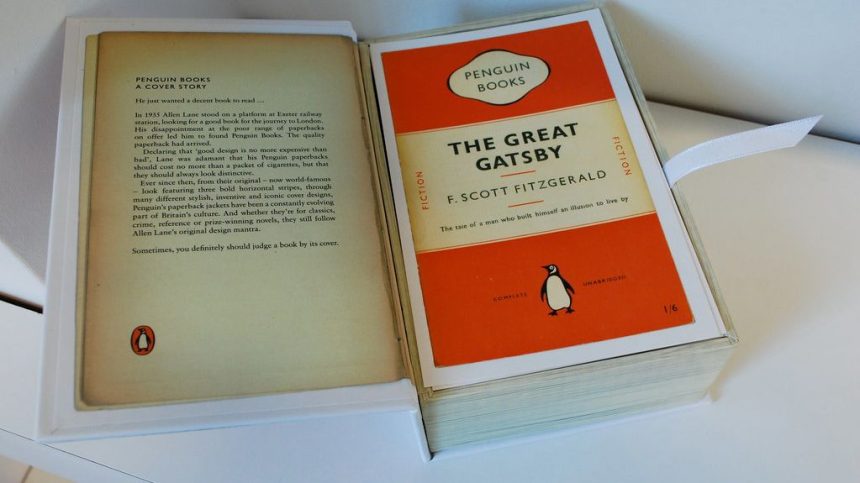
6. The Great Gatsby – F. Scott Fitzgerald (1925)
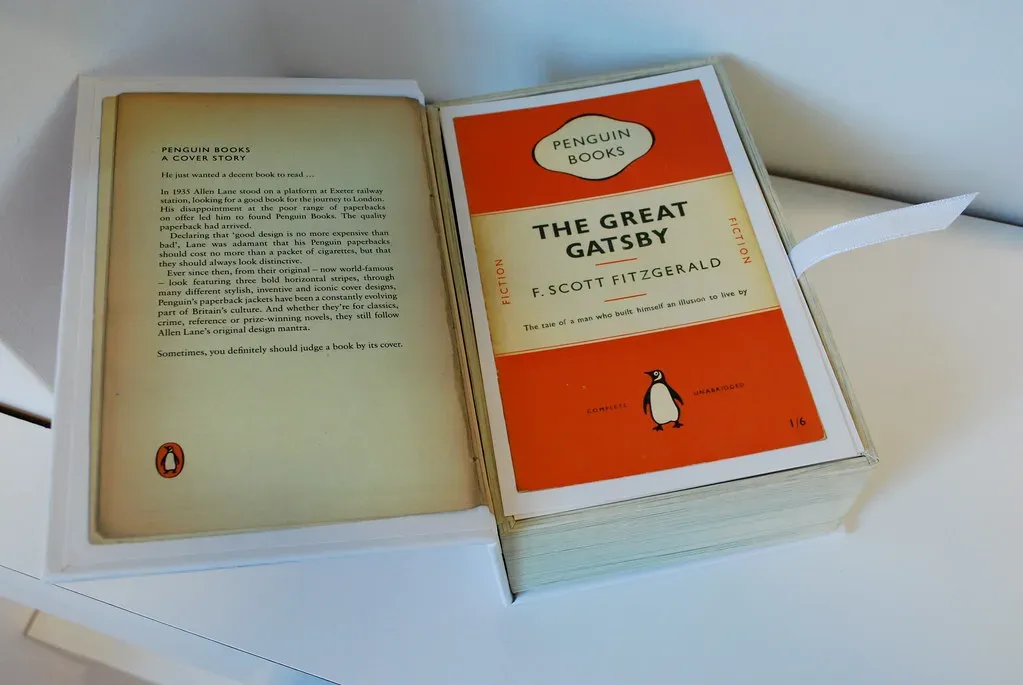
Here is an unexpected twist. When The Great Gatsby was first published, it was a commercial disappointment. Gatsby enjoys such an iconic status among American novels that it’s easy to forget what a disappointing seller it was for Fitzgerald. His previous novels each sold around 50,000 copies, and Fitzgerald privately considered The Great Gatsby “about the best American novel ever written,” hoping to sell 75,000 copies. He never came close, in his lifetime.
Set in the Jazz Age, The Great Gatsby tells the story of the mysterious millionaire Jay Gatsby, his decadent parties, and his love for the alluring Daisy Buchanan. Dismissed as “no more than a glorified anecdote, and not too probable at that” by the Chicago Tribune, it is now considered a contender for the “Great American Novel.” The reversal of fortune the book experienced after Fitzgerald’s death is one of literary history’s most remarkable stories.
The novel’s real power lies in what it says about the American Dream. Its themes of wealth, illusion, class, and longing feel uncomfortably relevant in 2026, perhaps even more than they did in 1925. The greatest books lists generated by aggregating hundreds of lists from critics, authors, experts, and readers consistently place Gatsby among the all-time greats. It also remains one of the most taught novels in American high schools and universities, guaranteeing a perpetual new readership every single year.
7. Harry Potter and the Philosopher’s Stone – J.K. Rowling (1997)
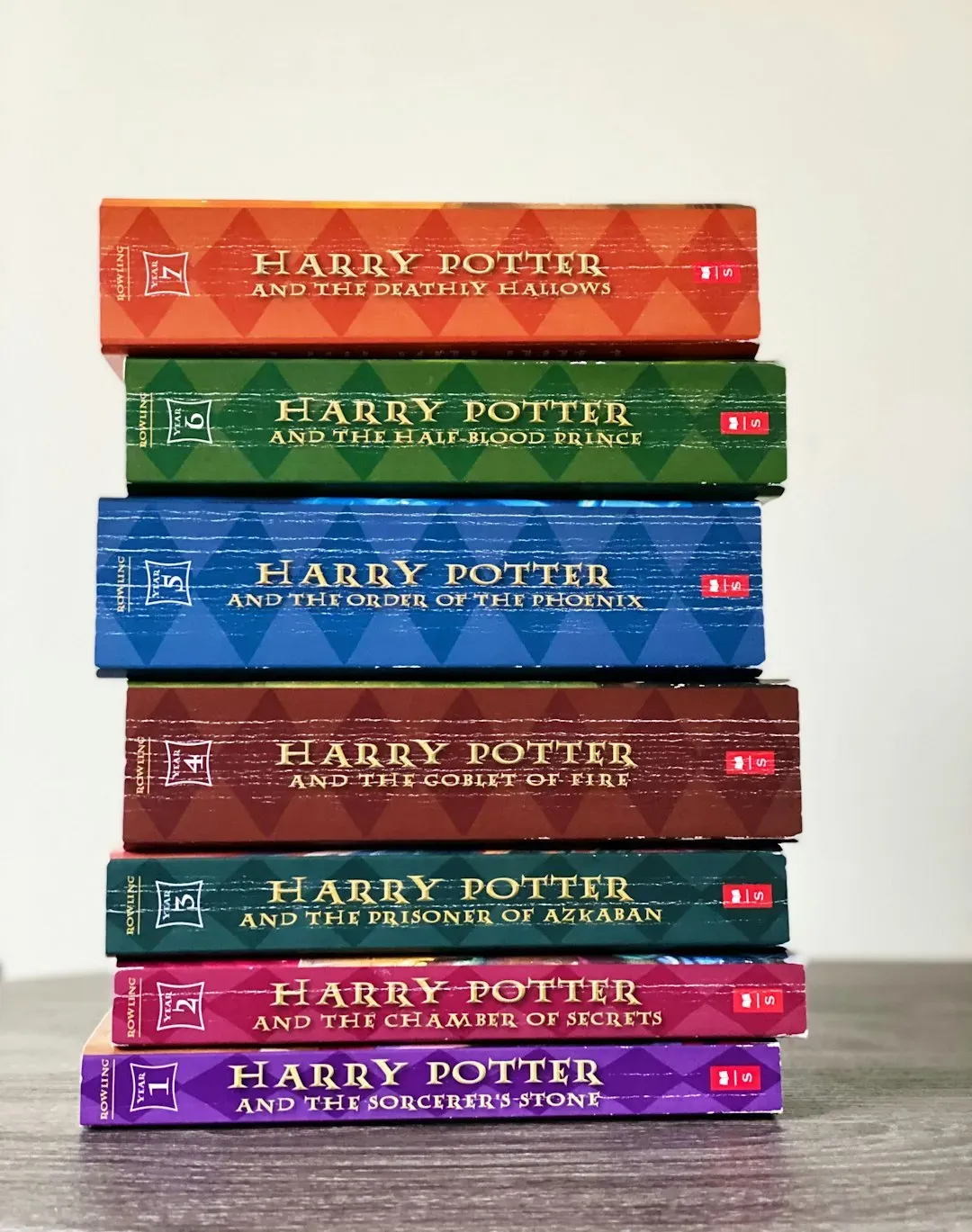
Some literary purists will scoff at including this one. Let them. Having sold more than 600 million copies worldwide, the Harry Potter series by J.K. Rowling is the best-selling book series in history. The first novel in the series has sold in excess of 120 million copies, making it one of the best-selling books of all time. Those are not numbers you dismiss.
The Christopher Little Literary Agency received 12 publishing rejections in a row for this new client, until the eight-year-old daughter of a Bloomsbury editor demanded to read the rest of the book. The editor agreed to publish but advised the writer to get a day job since she had little chance of making money in children’s books. Yet Harry Potter and the Philosopher’s Stone spawned a series where all seven novels set records as the fastest-selling books in history, on both sides of the Atlantic.
The series left its mark on popular culture, spawning movies, video games, theater plays, and a religiously dedicated fandom. As of 2017, the series has been translated into 85 languages, placing Harry Potter among history’s most translated literary works. That is a cultural footprint that rivals ancient mythology. The novel also revitalized children’s reading on a global scale during the late 1990s and early 2000s, a fact that educators and librarians have been pointing to ever since.
As the series matured, it incorporated influences from throughout the Western literary canon, including the novels of Austen, Dickens and Dostoevsky, the tragedies of Shakespeare and Aeschylus, and the fantasies of Lewis and Tolkien. So even the book that some critics refuse to take seriously is built on the shoulders of every great work that came before it. In a way, that makes it the perfect closing chapter of this list.
Why These Seven Books Belong on Every Shelf
The novels above share one quality that sets them apart from the thousands of other great books ever written: they changed something outside themselves. They altered laws, vocabularies, political conversations, entire genres, and the interior lives of readers across centuries. That is not a small thing. That is the definition of true influence.
Owning these books is not about status. It is not about being well-read at dinner parties. It is about having direct access to the ideas, emotions, and visions that shaped the world as it exists in 2026. Each one of these novels is a conversation you can have with a writer who had something urgent to say, and somehow found the perfect words to say it.
Which of these seven surprised you the most? Drop your thoughts below.