Every acclaimed album carries a public face. It’s the singles, the radio edits, the tracks that critics quote in their opening paragraphs. Those songs earn the praise, drive the streaming numbers, and end up on every best-of list from Pitchfork to Rolling Stone. What tends to get buried, though, is everything else. The album tracks that sit quietly between the monsters. The songs that never got a music video, never landed on a TV show, never became someone’s TikTok sound. These are the tracks that serious listeners find three months in, and then can’t believe they missed. There’s a reason deep cuts inspire a different kind of devotion.
1. “Any Colour You Like” – Pink Floyd, The Dark Side of the Moon (1973)
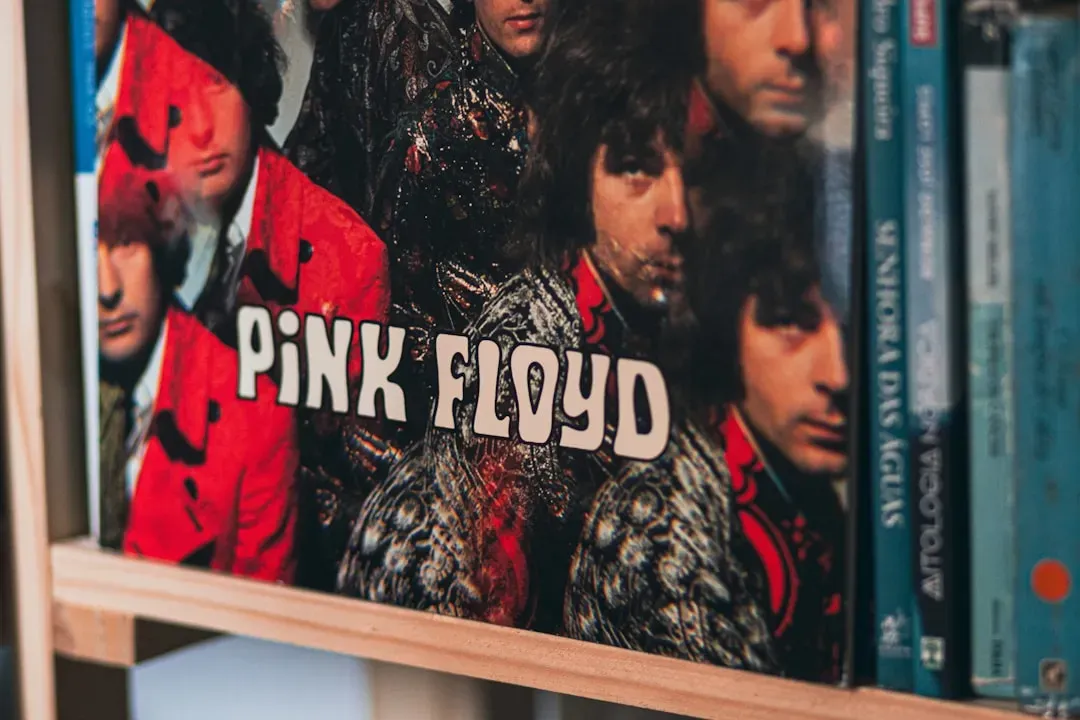
“Any Colour You Like” is an instrumental journey that showcases Pink Floyd’s mastery of atmosphere and texture. While tracks like “Money” or “Time” are staples of classic rock radio, this song floats above the fray, inviting listeners to get lost in its hypnotic grooves. The album as a whole is one of the most commercially enduring records in history, spending a staggering amount of time on the Billboard 200, yet this particular track rarely enters the conversation.
What makes it so easy to overlook is precisely what makes it valuable: it doesn’t announce itself. It bridges two of the album’s more dramatic pieces and does so through pure texture and feel rather than melody or lyric. Its use of synthesizers and echoing guitar lines was groundbreaking at the time, pushing the boundaries of what rock music could be, and fans and critics alike have praised it for its dreamlike quality, serving as a bridge between the album’s heavier moments.
2. “Momma” – Kendrick Lamar, To Pimp a Butterfly (2015)

Buried among the explosive hits on Kendrick’s magnum opus, “Momma” is a song of reflection and return. Kendrick raps about success, identity, and the journey back to his roots, all over a swirling, jazzy beat. It’s the kind of track you don’t notice at first, but it rewards careful listening. The album won a Grammy for Best Rap Album and dominated critical conversation for years, which made it easy for certain tracks to disappear beneath the weight of the more celebrated ones.
Critics often highlight its complex layers and the way Kendrick lays his soul bare, yet it’s rarely mentioned in the same breath as “Alright.” It’s a reminder that some of the best stories need time to reveal themselves. On an album full of statements, “Momma” is something quieter and harder to shake: a reckoning.
3. “Unravel” – Björk, Homogenic (1997)

“Unravel” is a delicate, ghostly song that often gets overlooked on Björk’s Homogenic. The arrangement is sparse, with swirling electronics and Björk’s voice sounding both fragile and powerful. The lyrics describe a relationship coming undone, using the metaphor of threads slowly loosening – a simple image that hits hard. Homogenic was widely praised as one of the defining art-pop albums of the late 1990s, with its orchestral strings and electronic beats creating a sonic world unlike anything else at the time.
“Unravel” has been cited by artists like Thom Yorke as one of their favorite Björk tracks. That’s not a small endorsement. Yet it still tends to get skipped over in favor of the album’s more theatrical moments. Its power lies in restraint, which is part of why it takes a few listens to fully land.
4. “Sister Luck” – The Black Crowes, Shake Your Money Maker (1990)

The Black Crowes’ smashing 1990 debut was an international success, but unless you dug deep into the project, “Sister Luck” was mistakenly overlooked. It was never a single or earned radio play, but might be the most honest blues track on the record. The album launched the band into the mainstream on the back of covers and swagger, and the more personal, raw material had a tendency to get eclipsed.
Partner offer
There’s something about a track that never gets pushed that eventually finds its own audience. Every artist has their big hits, the ones that get all the radio play and live forever on playlists. Real fans know the true treasures are often hidden on the B-sides, bonus tracks, and overlooked album tracks. These deep cuts are the songs that never became chart-toppers but still define an artist’s artistry. “Sister Luck” is a clean example of exactly that.
5. “This Flight Tonight” – Joni Mitchell, Blue (1971)

“This Flight Tonight” is energetic and restless, a stark contrast to the mournful ballads that define much of Blue. Joni’s guitar playing is sharp and driving, propelling the song forward as she sings about regret and longing from the window seat of an airplane. The sense of motion in the music matches the emotional turbulence in the lyrics. Blue is consistently cited as one of the greatest albums ever made, which paradoxically creates a kind of shadow effect over anything that isn’t “A Case of You” or “River.”
Despite being covered by artists like Nazareth, Joni’s original remains the definitive version. Critics have often called it an overlooked highlight, adding a sense of urgency and dynamism to the album’s quieter moments. Its kinetic energy feels almost out of place next to Blue’s more introspective tracks, which is likely why it keeps getting passed over. That contrast is actually its entire point.
6. “The Seer’s Tower” – Sufjan Stevens, Illinois (2005)
“The Seer’s Tower” is a chilling, spiritual track that stands apart from the grand theatrics of the rest of Illinois. The arrangement is minimal, with haunting piano and Sufjan’s gentle voice floating above. The lyrics are full of biblical imagery and existential longing, creating an atmosphere that is both peaceful and unsettling. Illinois was the kind of album that arrived fully formed and immediately overwhelming, clocking in at over an hour with more than twenty tracks. Something was inevitably going to get lost.
What gets lost here is one of the most genuinely moving pieces on the whole record. Its stripped-back quality feels almost accidental next to the album’s orchestral showpieces, but that’s what gives it gravity. In the vast landscape of music, some albums manage to slip through the cracks despite their exceptional quality, and these hidden gems often resonate deeply with those who discover them. “The Seer’s Tower” is a small room in a very large house. Most people walk past it. The ones who stop tend not to forget it.
7. “Pledging My Time” – Bob Dylan, Blonde on Blonde (1966)
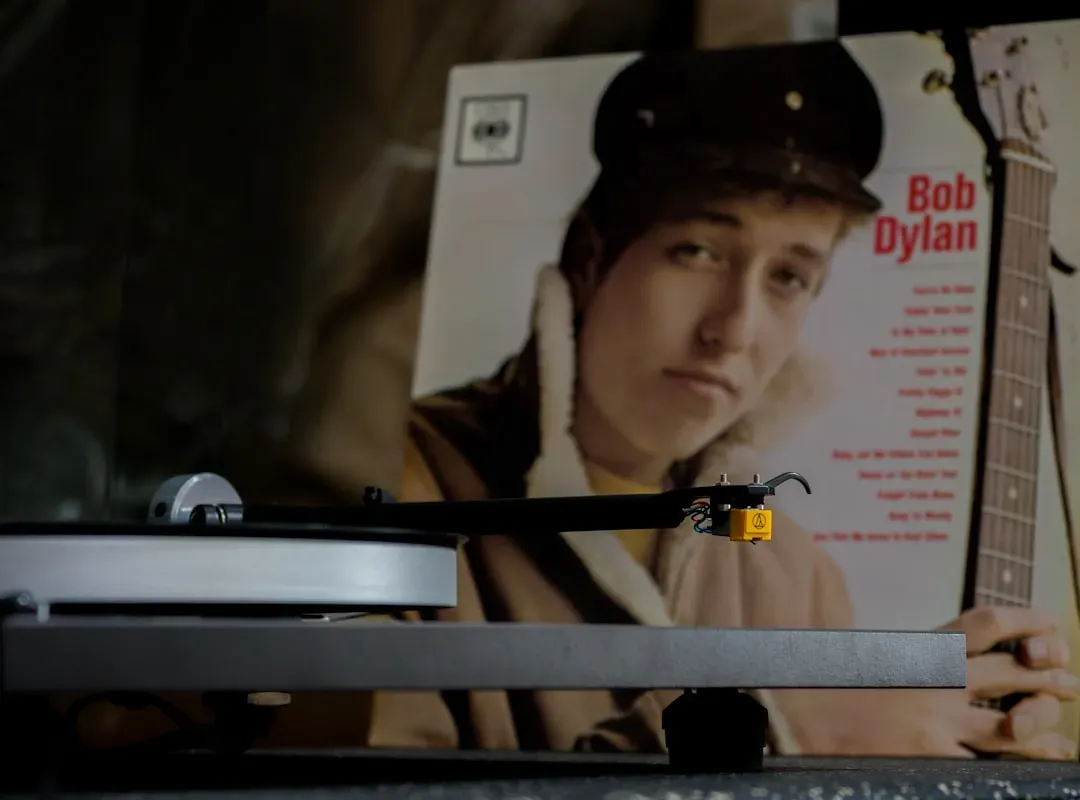
Tucked on Blonde on Blonde, this bluesy number often gets overlooked in favor of Dylan’s more famous tracks. “Pledging My Time” is Dylan at his grittiest and rawest, showing just how much he could bend the blues into his own poetic form. True fans cherish its hypnotic groove and confessional tone. Blonde on Blonde was the first double album in rock history to achieve widespread critical recognition, and it contains some of Dylan’s most celebrated work, including “Visions of Johanna” and “Sad Eyed Lady of the Lowlands.”
Given that kind of competition, an understated blues opener doesn’t stand much of a chance in the public memory. It tends to function as a warm-up track for casual listeners, which is a genuine shame. The rawness of its arrangement and the economy of its lyrics represent a side of Dylan that often gets overshadowed by his more literary ambitions. Sometimes the simplest thing on the most complicated record is the thing worth revisiting.
The pattern is consistent across decades and genres. Every artist has their big hits, the ones that get all the radio play and live forever on playlists. Real fans know the true treasures are often hidden on the B-sides, bonus tracks, and overlooked album tracks. A critically acclaimed album creates its own gravitational pull around certain tracks, and that gravity can work against everything else. The songs discussed here are not footnotes. They are, in many cases, closer to the real core of the artists who made them than the singles that defined their public image. Worth the detour.Partner offer
Planning a trip to Vegas?
Compare hotel rates and show tickets on VEGAS.com.