
There is something deeply human about the way a good story refuses to die. spread like wildfire for a reason. They tap into our fears, our moral anxieties, and that strange little voice in the back of our heads that whispers “but what if it’s real?” Most people assume these tales are pure fiction, spun up around campfires or in schoolyard whispers with no real basis whatsoever.
are a genre of folklore concerning stories about an unusual, usually scary or humorous event that many people believe to be true but largely are not. These legends can be entertaining but often concern mysterious and troubling events, such as disappearances and strange objects or entities. Here’s the thing though: some of those “purely fictional” stories have roots in actual, documented, sometimes deeply disturbing real events. Let’s dive in.
1. The Hook Man: A Real Murder Spree That Spawned a Campfire Classic

The Hook, or the Hookman, is an American urban legend about a killer with a pirate-like hook for a hand attacking a couple in a parked car. In many versions of the story, the killer is typically portrayed as a faceless, silhouetted old man wearing a raincoat and rain hat that conceals his features. It sounds almost cartoonishly terrifying, like something a drama teacher invented to keep teenagers in line. Honestly, it probably was used for exactly that purpose.
The origins of the Hook legend are not entirely known, though according to folklorist and historian Jan Harold Brunvand, the story began to circulate some time in the 1950s in the United States. The story had become widespread amongst American teenagers by 1959 and continued to expand into the 1960s. Snopes writer David Mikkelson has speculated that the legend might have roots in real-life lovers’ lane murders, such as the 1946 Texarkana Moonlight Murders.
The Hook is a cautionary tale about teenage sexuality. Unspoken in the story is the realization that if the girl hadn’t said no, hadn’t insisted upon leaving right away, the couple would have been killed. Two close calls are averted that night: the fatal encounter with the killer and “going all the way.” So the legend was essentially a moral instruction manual wrapped in horror. Clever, if you think about it.
The first known publication of the story occurred on November 8, 1960, when a reader letter telling the story was reprinted in Dear Abby, a popular advice column. From a teenager’s letter to a mass cultural phenomenon spanning decades. That is quite the origin story.
2. Alligators in the New York Sewers: The Legend With a Newspaper Receipt

The sewer alligator is an urban legend about alligators that are said to live in sewers outside alligators’ native range. Some cities in which sewer alligators have supposedly been found are New York City and Paris. Most people laugh this one off immediately. It sounds absurd. Giant reptiles in one of the world’s busiest cities, lurking in darkness below millions of feet? Come on.
Most start with a “friend of a friend,” but the alligator story actually has a very real, very documented origin. On February 10, 1935, a group of teenagers were shoveling snow into a sewer manhole in East Harlem when they spotted something moving in the slush. They thought it was a log until it hissed at them. It was an actual, eight-foot-long alligator.
In the 1930s, advertisements in popular magazines sold baby alligators for as little as $1.50. People bought them as novelty pets, they grew too big, and then, well, the sewers became the obvious disposal option. Escaped or abandoned alligators may survive for a short time in New York’s sewers. However, they cannot live there long-term because the sewers are too cold and contain harmful bacteria from human waste. So the monster colony beneath Manhattan? Still a myth. The initial gator? Completely, verifiably real.
3. Slender Man: A Forum Post That Crossed Into Reality

Slender Man is a fictional supernatural character that originated as a creepypasta Internet meme created by Something Awful forum user Eric Knudsen, using the pseudonym Victor Surge, in 2009. What started as a humble Photoshop contest entry became one of the most recognized monsters of the digital age. I think it says something profound and slightly worrying about how the internet reshapes collective belief.
Slender Man was created on June 10, 2009 on a thread in the Something Awful Internet forum. The thread was a Photoshop contest in which users were challenged to “create paranormal images.” Forum poster Eric Knudsen, under the pseudonym “Victor Surge,” contributed two black-and-white images of groups of children to which he added a tall, thin, spectral figure wearing a black suit.
Just days after Knudsen created Slenderman, other users started to layer their own attributes onto the character. Some suggested Slenderman has tentacles sprouting from his back, that he can cause amnesia, and that he can be seen hiding in woodlands or stalking children. A deliberate fiction, built collectively, snowballed at a speed no one anticipated.
On May 31, 2014, two girls, Morgan Geyser and Anissa Weier, both 12 at the time, allegedly brought an 11-year-old classmate to the woods behind Geyser’s home in Waukesha, Wisconsin. The two girls then allegedly stabbed their classmate 19 times in what investigators described as a sacrifice intended to please Slenderman. Both women were later granted supervised release, Weier in 2021 and Geyser in 2025. A made-up monster, a real stabbing. The line between fiction and reality is thinner than anyone imagined.
4. The Babysitter and the Man Upstairs: Traced to a 1950 Murder

The origin of the “babysitter and the upstairs man” can be traced back to an unresolved murder mystery from Columbia. In 1950, a 13-year-old girl named Janett Christman was physically assaulted and strangled to death while she was babysitting. This is the kind of detail that turns a campfire story from creepy to genuinely chilling. It did not come from nowhere.
The core legend, centered on threatening phone calls traced to inside the house, is one of the most enduring horror scenarios in American culture. It has inspired countless films and terrified generations of young babysitters. This popular legend is a reflection of America’s highway crime scene during the 60s and 70s. A similar incident was reported in 1964 in New York, and an officer shot an escaped convict hiding in the backseat of his police vehicle.
may confirm moral standards, reflect prejudices, or be a way to make sense of societal anxieties. In the past, were most often circulated orally, at gatherings and around the campfire for instance. Now, they can be spread by any media, including newspapers, mobile news apps, email, and most often, social media. The babysitter legend fits this pattern almost perfectly, reflecting the very real fears of isolated young women and the dangers of being home alone.
5. The Anastasia Survival Legend: A Mystery Driven By Missing Bones

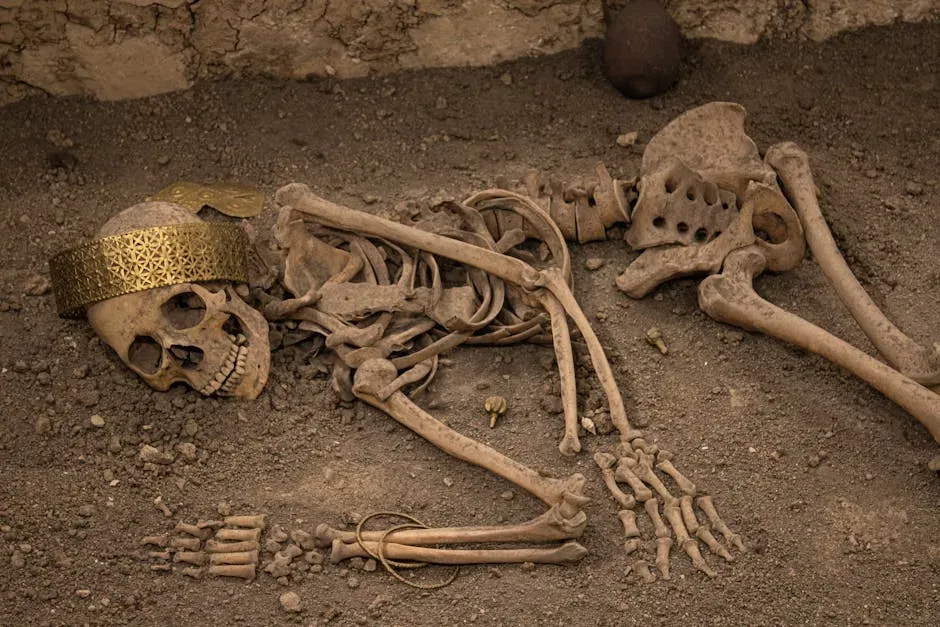
Anastasia Romanov’s survival is a popular urban legend claiming that the Grand Duchess Anastasia Nikolaevna of Russia survived after her family was killed in 1918. The legend originated from the fact that Anastasia’s remains were not buried with the corpses of her family. For nearly a century, this single factual detail was enough to keep the story alive and breathing.
The idea that a young royal had somehow escaped the Bolshevik execution captured imaginations worldwide. Multiple impostors claimed to be Anastasia over the decades. The story became films, plays, and an animated musical beloved by generations of children. It is, honestly, one of the most romantic ever constructed around a historical tragedy.
It remained a mystery for many years, until the truth was uncovered in 2007: Anastasia did not survive, but was in fact buried in a different place from her family. DNA analysis in 2007 confirmed this definitively. The legend was built entirely on the location of a missing grave. One displaced burial site, and the entire myth was born.
6. The Atari Burial Ground: A Desert Legend That Turned Out to Be True
In the mid-80s, when the popularity of video games began to wane briefly, rumors of a massive burial pit for unsold Atari games somewhere in the deserts of New Mexico made their way onto the scene. If some lucky kid found it, he’d have enough entertainment for him and his friends for a lifetime. However, this tale progressively became less cool when the story began to be that the trove of video games was actually just a pile of unsold copies of E.T. the Extraterrestrial, a game that, unlike the movie it was based on, is considered one of the worst of all time.
The burial site that was originally reported was finally excavated in 2014 just outside of the city of Alamogordo in southern New Mexico, revealing that there truly was a massive pile. The excavation, documented on film, confirmed what had been dismissed as silly legend for nearly three decades. Sometimes the treasure at the end of the map really is there. It just happened to be a mountain of terrible video games.
This story is a fascinating example of how corporate embarrassment can morph into folklore. Atari needed to quietly bury millions of unsold cartridges, and the sheer absurdity of doing so in a New Mexico desert created a story so strange that no one fully believed it for thirty years.
7. Charlie No-Face: The Green Man Who Was Just a Guy

The tale of Charlie No-Face is an example of one of those true stories that gets wildly twisted in each retelling. In the early 1900s, a Pennsylvania boy named Ray Robinson was electrocuted by a trolley wire, resulting in lifelong disfigurement, specifically most of his facial features melted away. After that, he was ostracized and stories about his disfigurement grew more and more preposterous as the rumor mill began to spin.
Today, the people of western Pennsylvania insist that Charlie No-Face, whose nickname remains a mystery, has become a radioactive, glowing Green Man-type figure who haunts an abandoned freight tunnel. The truth is that he was just a guy who experienced an unfortunate childhood accident. The gap between the reality and the legend here is almost heartbreaking when you sit with it.
The legend came about when residents, and specifically teens, of Raymond’s neighborhood would see him walking around at night in the 50s and 60s. He specifically went out at night to avoid unnecessary attention from others. Teens at the time reported that he was a nice guy, very into baseball, and in exchange for a beer and some cigarettes would share stories. After passing in the 80s, and with most of the teens that met him growing up or moving away, Raymond’s story took on a life of its own and became the legend it is today. A disfigured man who loved baseball turned into a glowing supernatural beast. That transformation, from flesh-and-blood human to monster, says everything about how cruelty and fear operate in small communities.
Conclusion: The Truth Is Rarely Simpler Than the Legend

It is evident that simply dismissing all is not always a wise choice. From real-life serial killers who were once mere children’s stories to cryptids that truly walked or swam this earth at one point, a lesson can be learned about how are formed: many of them have at least some basis.
The Internet has made it easier both to spread and to debunk . In 2026, stories mutate faster than ever, hopping across platforms and borders in minutes. The mechanisms are new, but the human need driving them, the desire to make sense of fear, to warn, to connect through shared dread, is as ancient as language itself.
What all seven of these stories share is a real seed, something that actually happened, someone who genuinely suffered, or a genuine social anxiety that needed a story to carry it. The fiction grows wild around that seed, but pull back the vines and you almost always find something true underneath. The next time someone tells you an urban legend, maybe don’t be so quick to laugh it off. Which one of these surprised you the most? Drop your thoughts in the comments.