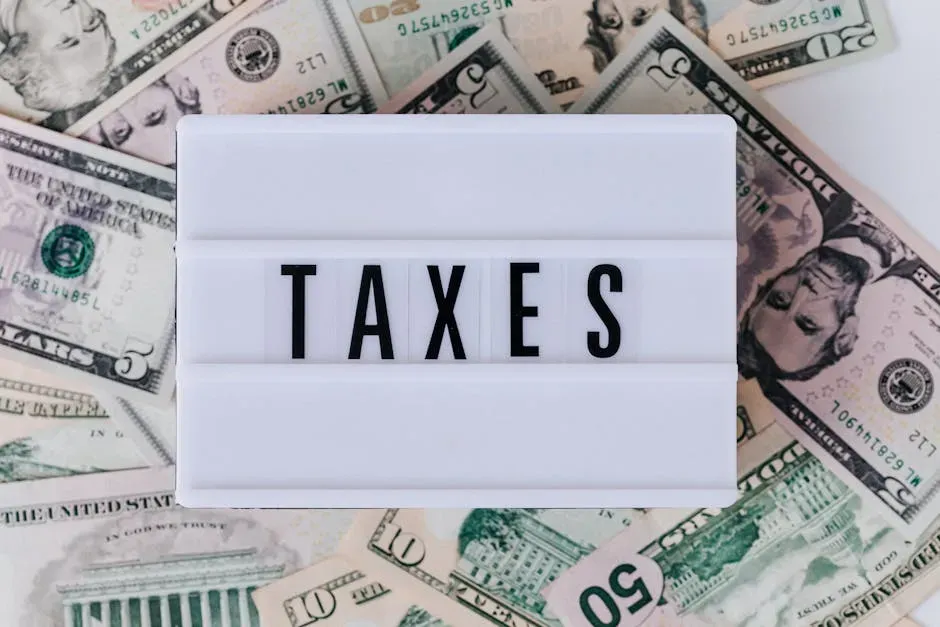
Nevada has long operated on an unusual social contract. Residents pay no state income tax, tourists pour in by the tens of millions each year, and the gambling floors of Las Vegas quietly shoulder much of the state’s financial load. It’s a system that works – until it doesn’t. As the state’s population swells and its roads, airports, and water systems strain under pressure, policymakers are taking a harder look at whether the current tax structure can carry Nevada into the future.
A Revenue Model Built on Vice (Image Credits: Pexels)
Nevada’s state constitution explicitly prohibits a state income tax without voter approval, which means the Silver State must get creative when it comes to revenue generation. Because Nevada cannot tax income, it relies heavily on sales tax, tourism levies, and selective business taxes to fund government operations. Gaming and alcohol taxes, often called “sin taxes,” have historically filled a large portion of that gap.
The vast majority of tax revenue from gaming is directed to Nevada’s General Fund, where it is redistributed on a biennial basis at the direction of the legislature for purposes including statewide education programs, transportation services, and general budgetary needs. Additional gaming tax funds flow to local school systems and county governments. The structure is functional, but it increasingly reveals its limits in the face of explosive growth.
The Scale of Gaming Revenue
The Scale of Gaming Revenue (Image Credits: Unsplash)
The raw numbers are striking. In fiscal year 2024, which ended on June 30, Nevada collected more than $1.23 billion from casino-related taxes and fees, a 4.75 percent increase over fiscal year 2023 and 4.8 percent higher than projected. The live entertainment tax alone generated nearly $127 million in fiscal year 2024, a 4.6 percent increase over the prior year.
Nevada relies heavily on gaming industry tax revenue to function, with the state bringing in around $1 billion from gaming to its general fund during the 2024 fiscal year, or about 17 percent of the fund’s revenue. That is a significant share of the operating budget for any state, let alone one that cannot collect a single dollar in personal income tax. Notably, Nevada has the lowest effective tax rate on gaming revenue in the United States, meaning there may be room to adjust it – though that conversation comes with significant political friction.
The Tax Structure Behind the Machines
The Tax Structure Behind the Machines (Image Credits: Rawpixel)
Not all gaming taxes are created equal. Taxes collected from gaming revenue are based on a graduated scale, with the state taxing 3.5 percent on the first $50,000 in monthly revenue, 4.5 percent on the next $84,000, and 6.75 percent on revenue exceeding $134,000. Counties and municipalities can occasionally impose additional taxes on revenue, which can raise the overall rate by as much as one percentage point.
The annual slot tax, set at $250 per machine, supports higher education funding and local school accounts, demonstrating the gaming industry’s direct impact on community resources. What this layered system reveals is that Nevada has, over decades, quietly built a tax architecture around vice. Every pull of a slot handle, every card dealt, every cocktail poured contributes to public services in ways most visitors never think about.
Alcohol Taxes: Low by National Standards
Alcohol Taxes: Low by National Standards (Image Credits: Pixabay)
Nevada’s alcohol excise taxes tell a similar story, though the numbers are considerably smaller. The Nevada excise tax on beer is $0.16 per gallon, lower than roughly seventy percent of all other states, ranking 35th nationally. The state’s excise tax on liquor sits at $3.60 per gallon, lower than about three quarters of other states, ranking 38th in the country.
For comparison, Washington state levies the highest excise tax on distilled spirits at $36.55 per gallon, with Oregon, Virginia, Alabama, and North Carolina rounding out the five stiffest rates. Nevada is nowhere near that range. Nevada’s Liquor Tax, also known as the Liquor Excise Tax, is applied to the sale of alcoholic beverages within the state and is intended to support state and local government initiatives while also serving regulatory functions. However, given the enormous volume of alcohol consumed by millions of visitors annually, even a modest per-gallon rate generates meaningful revenue.
Infrastructure Under Pressure
Infrastructure Under Pressure (Ciro Ip, Flickr, CC BY 2.0)
The physical cost of Nevada’s success is becoming impossible to ignore. In 2024, over 60 million passengers utilized Nevada’s two largest airports, placing heavy strain on existing facilities and requiring constant maintenance. There are over 48,000 miles of roadway in Nevada, with just 60 percent in good or fair condition and about 20 percent considered in poor condition – and driving on deteriorating roads costs Nevada motorists roughly $1.2 billion per year, or about $576 per driver.
The gap between what Nevada’s infrastructure needs and what it currently receives is staggering. Over a ten-year period, the Nevada Department of Transportation has identified approximately $22 billion in total transportation needs, averaging about $2.2 billion per year to keep pace. Yet the agency is currently doing about half the work it should, with an average annual budget of roughly $1 billion even including federal grants. That gap cannot be papered over indefinitely.
Tourism Volume and the Strain It Creates
Tourism Volume and the Strain It Creates (Image Credits: Pexels)
Tens of millions of visitors pass through Nevada every year, and that volume has a cost. Southern Nevada is currently home to more than 2.3 million residents, and forecasted rapid growth in both population and tourism continues to strain the region’s transportation system, making travel more difficult for residents and visitors alike. Every additional tourist on I-15, every extra flight into Harry Reid International Airport, every new hotel room built in the Las Vegas Valley adds incremental pressure on systems already running close to capacity.
According to the Environmental Protection Agency, Nevada will require $6.4 billion for water system improvements over the next twenty years, with nearly two thirds needed for distribution and transmission projects alone. Roads, airports, water systems – each represents a multi-billion-dollar conversation, and each one circles back to the same question: where will the money come from? Sin taxes, whatever their moral framing, are increasingly part of that answer.
Federal Aid and Its Limits
Federal Aid and Its Limits (Image Credits: Flickr)
Nevada has benefited from federal infrastructure investment, but federal dollars have a ceiling. The Infrastructure Investment and Jobs Act, signed into law in November 2021, provided $2.8 billion for highway and bridge investments in Nevada through 2026, representing a 39 percent funding increase. That is meaningful support, yet it covers only a fraction of the state’s identified needs. Federal grants now make up over 60 percent of NDOT’s budget, a dramatic shift from 29 percent in 1999, 45 percent in 2009, and 40 percent as recently as 2024.
Nevada is one of only three states where the state itself provides no mobility funding for public transit. Instead, the Regional Transportation Commission of Southern Nevada relies on a countywide sales tax, grants, passenger fares, and other miscellaneous revenue sources. The patchwork nature of this funding means that public transit remains perpetually underfunded, with routes and services constantly under threat.
The Risk of Overdependence and the Path Forward
The Risk of Overdependence and the Path Forward (Image Credits: Pexels)
Nevada’s leaders understand, at some level, that resting a state budget on the whims of tourism is a fragile strategy. One of the core challenges Nevada politicians grapple with is how to diversify the tax base, given that the state fundamentally runs on tourism and mining – both of which are irregular and variable forms of revenue. A recession, a global disruption, or a simple shift in consumer behavior can quickly reduce casino floors and empty hotel corridors.
Gaming taxes have effectively turned into a structural budget component for jurisdictions like Nevada rather than a supplementary windfall that legislators can treat as discretionary. That shift in thinking – from bonus revenue to core funding – is both a sign of maturity and a warning sign. State lawmakers last year found a ten-year solution to a funding problem that threatened to cancel hundreds of millions of dollars of roadway infrastructure projects in Southern Nevada, though transportation officials are still hoping lawmakers will prioritize finding sustainable revenue for the public transit systems that run along those improved roads. The conversation about sin taxes, infrastructure, and fiscal resilience is far from over.
Conclusion
Conclusion (Image Credits: Unsplash)
Nevada built its identity on the premise that visitors, not residents, would pick up the tab. That model delivered decades of growth, kept income taxes off the table, and made the Silver State one of the most business-friendly environments in the country. The strain showing up in its roads, airports, and transit systems is not a failure of the model – it’s a consequence of its success.
The harder question is whether taxes on gambling chips and cocktail rounds can realistically sustain a modern state with a fast-growing population and aging infrastructure. The honest answer is probably not on their own. What Nevada is navigating now is less a crisis than a reckoning – a gradual recognition that the cost of “sin” may finally need to be recalculated.
Partner offer
Partner offer
Planning a trip to Vegas?
Compare hotel rates and show tickets on VEGAS.com.