
There’s a particular kind of quiet that settles in around 2pm on a Tuesday when you haven’t spoken to another person all day. Not the peaceful kind. The kind that starts to feel like a slow leak in something you can’t easily patch. For tens of millions of Americans working from home, that silence is the unofficial soundtrack of a work arrangement they fought hard to keep. Las Vegas, of all places, offers a strange mirror on this story. A city built on spectacle, density, and human contact now houses a fast-growing population of remote professionals who spend most of their working hours completely alone. The neon lights still flash outside. Inside, it’s just the laptop glow.
The Numbers Don’t Lie: A Loneliness Epidemic at Work


The research is stacking up in ways that are hard to dismiss. Globally, one in five employees reports experiencing loneliness a lot during the previous day, according to Gallup’s State of the Global Workplace: 2024 Report. That’s not just a bad week. That’s a sustained, structural condition built into the modern way of work.
Of all the variables Gallup analyzed, work location shows the biggest differences in employees’ experiences with loneliness. Fully remote employees report significantly higher levels of loneliness, at roughly one in four, compared to those who work exclusively on-site, where the figure sits closer to one in six.
Using data from the 2024 Household Pulse Survey, researchers found a statistically significant association between the frequency of remote work and loneliness among employed U.S. adults. Specifically, individuals working remotely three to four days per week, and those working five or more days remotely, had higher odds of reporting greater loneliness compared to those who did not work remotely at all.
How Remote Work Took Root in Las Vegas


While some remote workers fled to mountain towns or beach communities, a surprising number are landing in Las Vegas. Beyond the neon and casino floors lies a city that is, in many ways, perfectly positioned to serve the work-from-home revolution.
Remote work is increasingly becoming the norm for Las Vegas’s tech industry, with over sixty percent of tech companies expected to adopt remote work as their standard operation by 2025, indicating a significant shift in how work is accomplished. The pandemic accelerated what was already simmering. Remote job listings in Vegas saw a solid thirty percent spike in the years following COVID-19.
Nevada has zero state income tax, and for high-earning remote professionals, this single factor can translate to tens of thousands of dollars in annual savings. That financial pull, combined with relatively affordable housing and year-round sunshine, made the city a genuine landing spot for displaced professionals from California and beyond.
The Full-Time Remote Worker: Freedom With a Hidden Cost


According to the Pew Research Center, around twenty-two million people, or roughly fourteen percent of the U.S. population, currently work from home on a permanent basis. Around half of those surveyed said that remote conditions make them feel less connected to their co-workers.
Ringover’s 2024 Loneliness at Work survey found that remote workers reported feeling lonely nearly twice as often as their fully on-site counterparts, and nearly three times more often than those in hybrid roles. Those are not marginal differences. They point to something fundamental about what physical proximity does for human beings at work.
Two-thirds of participants in a 2024 survey said they sometimes or often feel lonely at work. Men reported slightly higher rates of isolation than women, though both groups registered the feeling significantly. The experience cuts across gender lines in ways that are still not fully understood.
When the Office Is Your Apartment: The Vegas Version

Remote work supposedly enables lifestyle design, but many remote workers end up isolated in expensive cities where their non-work hours still feel constrained by costs or limited by geography. Las Vegas offers a different equation, but not without its own friction points.
Working from home sounds ideal until your first back-to-back video call day. Most Las Vegas apartments have thin walls, unreliable residential internet during peak hours, and family members who don’t understand why a 2pm Zoom call means you can’t also start the laundry.
The summer heat limits outdoor activities for four months, pushing workers into air-conditioned spaces. The city’s twenty-four-hour culture can be disruptive if you value absolute quiet, and choosing your neighborhood carefully matters enormously, with areas near the Strip experiencing constant activity while master-planned communities in Henderson or Summerlin offer suburban tranquility.
Burnout: The Loneliness Cousin Nobody Wants to Talk About

According to a 2025 Modern Health study published in Forbes, employee burnout has hit an all-time high, with roughly two-thirds of American workers now reporting burnout. That number is staggering. It suggests this is no longer an edge case.
Fully remote employees report burnout at sixty-one percent, compared to fifty-seven percent for hybrid workers. Fully remote employees are also more likely to experience anger, sadness, and loneliness than hybrid counterparts, and report higher stress levels overall.
Burnout rates among fully remote workers increased by approximately eighteen percent between 2023 and 2025, ironically not from overwork, but from under-stimulation and lack of social interaction. There’s something quietly devastating about that finding. The problem isn’t always doing too much. Sometimes it’s the absence of enough human signal in your day.
Younger Workers Are Feeling It Most


Loneliness is more prevalent among employees younger than age thirty-five than it is for those aged thirty-five and older. This runs counter to the intuitive assumption that younger, digitally fluent workers would adapt seamlessly to remote environments.
About a third of young adults report feeling lonely frequently, far higher than older groups. Gallup data likewise show that globally twenty percent of employees feel lonely, with younger and fully remote workers feeling it most.
Partner offer

While nearly two-thirds of all remote workers say they rarely or never feel lonely, Gen Z stands out as far less shielded from isolation. In fact, roughly one in five Gen Z remote workers experience high-frequency loneliness, double the rate reported by Millennials. This is the generation that grew up connected, and yet the screen-mediated work environment is hitting them hardest.
The Older Remote Worker: A Different Kind of Isolation


Studies are finding loneliness afflicts far more people over age fifty-five who are working remotely compared to their younger coworkers. One survey found older employees were nearly twice as likely as workers aged sixteen to twenty-four to say they felt the social loss of remote working.
More than five years after the COVID pandemic forced many workers to abandon their offices and work remotely, a hidden cost is still emerging: loneliness. For older workers, this matters differently. Their professional networks were often deeper and more embedded in physical places. Remote work didn’t just change where they sit; it changed who they are in relationship to their careers.
The move to work from home caused by the pandemic intensified the trend of isolation. But it carries extra weight for aging people who are already more vulnerable to health issues, financial challenges, and dwindling social networks. The compounding effect is real and worth taking seriously.
Vegas Coworking: The City’s Answer to the Silence


For remote workers who occasionally need office space, Las Vegas has developed a robust coworking ecosystem. International Workplace Group operates multiple locations throughout the valley, the Innevation Center downtown provides tech-focused coworking with networking opportunities and startup resources, and independent spaces like The Generator and Work in Progress offer community-oriented environments where remote workers can escape home isolation.
Coworking spaces provide a good solution to the solitude that working from home can bring, while still managing to respect the boundaries of personal autonomy. Walking into a community of professionals who may share interests and experiences can have an incredibly positive impact on motivation and discipline.
Coworking in Las Vegas is becoming an increasingly attractive hub for professionals seeking flexible office solutions. As more businesses embrace hybrid and remote work models, the demand for coworking has surged. Spaces like The Coop Cowork, Muze Office, and Pacific Workplaces are responding to a need that is, at its core, deeply human: the need to not be alone all day.
The Hybrid Middle Ground: Does It Actually Help?

A high frequency of remote work, meaning more than three days per week, appears to increase the likelihood of loneliness, potentially because of fewer in-person interactions. However, a lower remote work frequency of one to two days may offer flexibility without significantly increasing loneliness. That’s a meaningful finding.
Hybrid isn’t a trend anymore; it’s the new normal. Hybrid job postings jumped from fifteen percent in mid-2023 to nearly a quarter of all new job postings by mid-2025, while fully on-site roles continue to decline.
Research has found that thirty-seven percent of remote workers feel they are less visible to senior leadership and worry it will affect their career progression. Workers who split their time between home and office report the highest overall wellbeing scores, getting social connection, collaboration, and visibility from office days while retaining autonomy and focus from home days. The data consistently point toward balance rather than extremes.
What Vegas Culture Reveals About the Remote Work Experiment

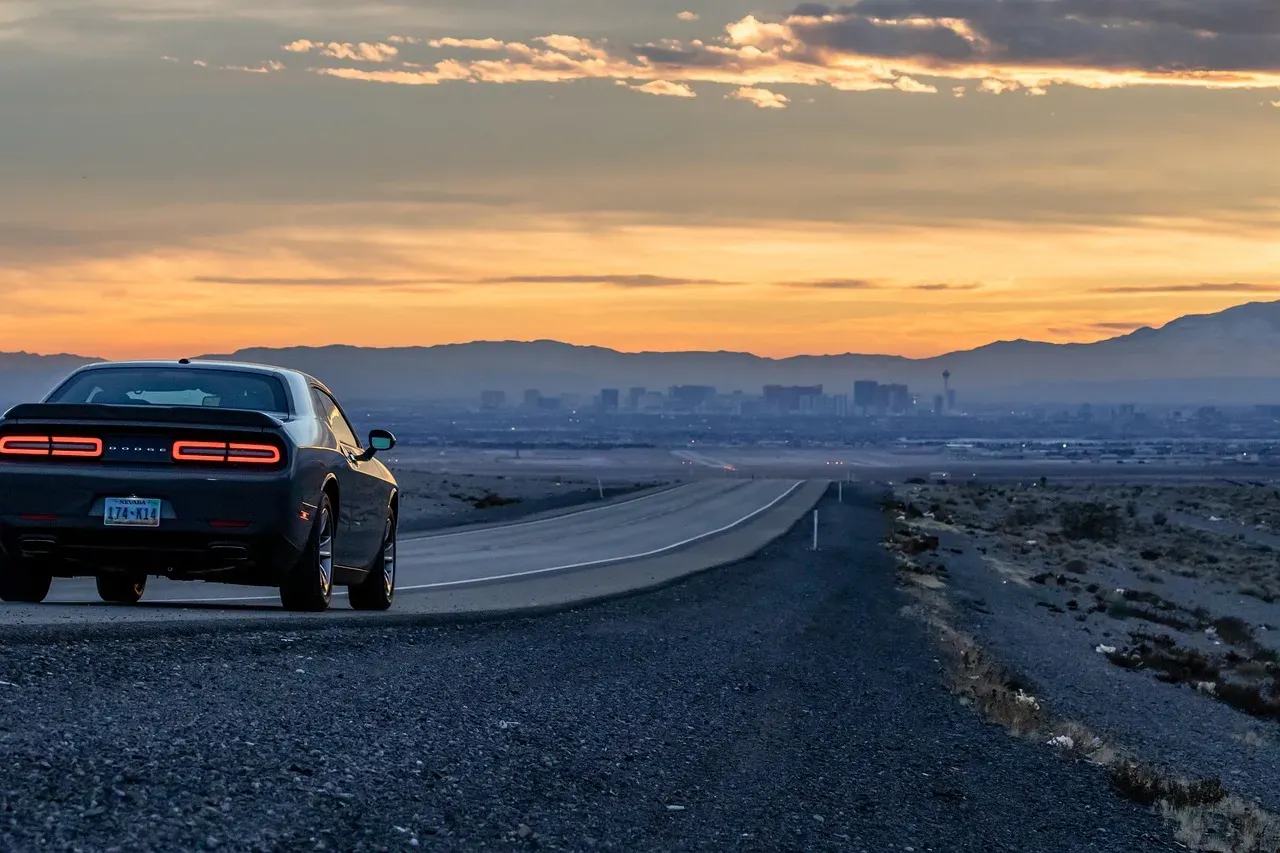
Las Vegas was built on the idea that you can manufacture excitement. That you can engineer human connection through design, spectacle, and proximity. The casino floor is, in its own way, a masterclass in removing loneliness through deliberate environmental construction. The remote work world could learn something from that.
The city’s three hundred days of annual sunshine translate to consistent outdoor opportunities that actively combat remote work isolation and sedentary tendencies. The entertainment infrastructure of shows, concerts, sporting events, and dining experiences provides easy decompression after the workday ends. For remote workers here, the city itself functions as a kind of antidote, if they choose to use it.
Burnout is widespread, boundaries are blurry, and loneliness stays underreported in the remote work landscape, regardless of zip code. Vegas is not a cure. It’s a context. What it offers, more than most cities, is the raw material for reconnection: density, activity, and a culture that never really stops moving.
Finding Your Way Back to Other People

If employees are engaged, if they find their work meaningful and feel connected to their team members and organization, their likelihood of loneliness is substantially lower. In a separate U.S. study, engaged employees were sixty-four percent less likely to be lonely than those who are not engaged. Engagement, it turns out, is one of the most protective factors available.
Roughly two-thirds of remote workers feel less connected to colleagues, and more than half struggle to disconnect after hours. Yet only about one in three employees reports having meaningful mental health support from their employer. The gap between what workers need and what organizations provide remains wide.
The long-distance remote worker, wherever they live, is navigating something genuinely new: a work life stripped of its most natural social scaffolding. In a city like Las Vegas, the irony is almost too sharp. You can be surrounded by millions of people, two minutes from some of the most engineered human connection on earth, and still spend eight hours a day completely, quietly alone. The question isn’t whether remote work is good or bad. It’s whether we’re honest enough with ourselves to build back what we’ve quietly given up.
Partner offer
Planning a trip to Vegas?
Compare hotel rates and show tickets on VEGAS.com.