
Walk into any local casino and it won’t take long before someone nearby says it: “The machines over here pay better.” Maybe it’s a regular at the end of the bar, maybe it’s a friend who swears by a specific corner of the floor. The “loose slot” legend is one of those gambling myths that just refuses to die – no matter how many years pass or how much data piles up against it.
So we went looking for actual answers. We dug into state gaming board reports, behavioral research, and regulatory records to separate the story from the statistics. Be prepared – some of what we found might genuinely surprise you.
What Is a ‘Loose Slot,’ Exactly?

The idea of a loose slot is simple on the surface: some machines, the story goes, are programmed to pay out more generously than others and are placed strategically to lure in more players. In the physical world, a “loose” slot machine once referred to a cabinet that had been mechanically adjusted to pay out coins more often. In the digital age, that definition shifted entirely to data – and today it is understood through a game’s Return to Player percentage, or RTP.
Industry standards help categorize slots based on RTP: most online slots hover between roughly 95% and 96%, anything below 94% is considered “tight” and offers poor value, while a game is only considered truly “loose” when its RTP hits 97% or higher. That’s the cold mathematical definition. The casino floor version? Honestly, it’s far messier.
The Nevada Numbers: What the Data Actually Says

Nevada’s slot machines were confirmed to be slightly “tighter” in 2024 than the prior year. The Nevada Gaming Control Board reported that slot machine house win percentages statewide averaged about 7.2% in 2024, up from 7.16% in 2023. That’s a tiny shift – but across billions of dollars in wagers, it adds up fast.
Nevada casinos experienced a landmark year overall, raking in record casino profits totaling $15.6 billion from gamblers. Of that, $10.5 billion came from slot machine play alone, while table games generated $5.1 billion. Let’s be real: these are not numbers that suggest the machines are giving money away freely.
Locals vs. the Strip: Is There a Real Difference?
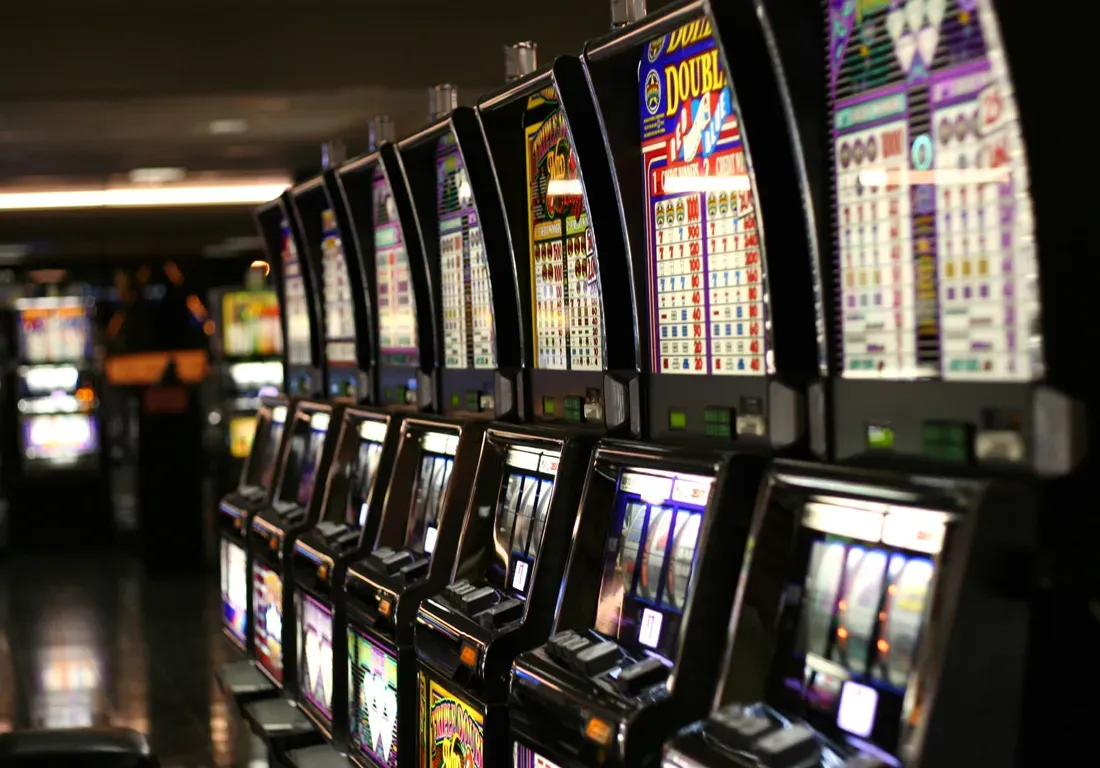
Nevada Gaming Control Board data breaks the Las Vegas market down into major tourist areas like the Strip and downtown. There is also a very large locals market in Las Vegas, with those casinos shown in the gaming revenue report as the Boulder Strip and North Las Vegas areas. That distinction matters, and it does show up in the payback numbers.
Publicly available data shows a notable spread across areas. For example, dollar slot machines on the Strip returned roughly 92.34%, while Boulder Strip dollar slots returned about 95.49%, and North Las Vegas returned about 95.62%. So yes, there are real differences between areas – though they are much smaller than casino mythology suggests, and they have little to do with any deliberate “loosening” of machines for locals.
The Downtown Myth: Busted by 2025 Data

For decades, gamblers swore downtown Las Vegas offered looser slots than the Strip. It was treated almost like fact among regular visitors. Most gamblers believe downtown slots have a higher RTP than Strip slots – and historically, they were right. That changed in 2020, when the Strip actually started delivering a higher RTP than downtown.
According to Anthony F. Lucas, a professor of casino management at UNLV and former gaming industry analyst, downtown casino operators may be “riding high on the past reality of higher RTPs, combined with the inability of reel slot players to detect such small differences in the RTP percentage.” In other words, the reputation outlived the reality. Lucas and his colleague Katherine Spilde from San Diego State University published a study in 2021 clearly demonstrating that players are unable to detect differences in how much – and how often – a slot machine pays, published in Cornell Hospitality Quarterly.
Can Casinos Actually ‘Loosen’ a Machine for Locals?

Here’s the thing people always want to know: can a casino flip a switch and make a machine pay out more on a busy Saturday night? The short answer is no. The slot machine manufacturer sets the RTP in accordance with local regulations. Casinos have finely balanced formulas that dictate how much their slots should yield over time. They order machines from the manufacturer with preset payouts, the Gaming Control Board must authorize the random number generators and game codes for each machine, and casinos cannot alter the machines.
A 2025 study published in the journal Addictive Behaviors analyzed online slot spins and found that modern slot systems use advanced random number generators to ensure results align with their programmed payout percentages across extensive datasets. The math is locked in. There is no secret lever for a floor manager to pull. I know it sounds crazy, but what most people think of as a “hot machine” is almost always just short-term variance doing its thing.
The Brain Is the Real Culprit: Cognitive Bias and the Slot Myth

So if the machines aren’t being manipulated, why do so many players genuinely believe they found a loose one? The answer lives in our psychology, not on the casino floor. Cognitive distortions are erroneous thought patterns that influence behavior. In the context of gambling, these distortions contribute significantly to problem gambling behaviors, shaping gamblers’ perception of luck, probability, and control. Common distortions include the illusion of control, gambler’s fallacy, near-miss effect, selective memory, and magical thinking.
Research published in Frontiers in Psychology identified 244 verbal units as automatic thoughts biased by cognitive distortions in a slot simulation study. The most common distortions found were the Gambler’s Fallacy, the Near Miss Effect, and the Illusion of Control. Think about it like this: your brain is wired to find patterns everywhere, like seeing faces in clouds. A run of good spins on one machine feels meaningful – even when the math says it is pure coincidence.
Denomination Matters More Than Location

If you genuinely want better odds on a slot machine, forget about which corner of the casino you’re in. The denomination of the machine you play is a far more reliable guide. Penny slots remained a major contributor to casino revenue in 2024, earning $2.4 billion with the highest hold rate of 9.36%, while players seeking better odds found the best RTP on $5 slots, with a casino win rate of just 4.46%.
Penny slots and other low-denomination machines generally carry very low RTPs. The loosest slots in Vegas with better long-term odds are often the $1 or $5 machines. Honestly, the single best “strategy” for finding a better-paying machine is simply moving up a denomination – not wandering from casino to casino chasing a local legend.
How Casinos Really Win Locals: Loyalty Programs, Not Loose Slots

In 2025, the real battleground for local player retention is not on the slot floor at all. It is in loyalty programs, personalized promotions, and data-driven incentives. The global casino market is projected to grow at a steady annual rate from 2025 and reach over $254 billion by 2029. As the industry expands, loyalty and incentive programs have become critical tools to retain high-value clients and drive revenue.
Traditional casino loyalty programs operated on a straightforward premise – spend more to earn more. That approach often created anxiety among players who felt pressured to maintain high spending levels. By 2025, forward-thinking operators have reimagined these programs to focus on player experience rather than extraction. The strategy has shifted from dangling a mythical loose machine to delivering real, trackable value through perks, cashback, and personalized rewards. Casino loyalty programs are no longer just a bonus offer – customers now see reward programs as a genuine buying factor when choosing where to play.
Conclusion: The Legend Lives On, But the Data Doesn’t Back It Up

After looking at all the evidence, the “loose slot” legend is best understood as a mix of outdated history, human psychology, and very effective word-of-mouth. Real differences in payout percentages do exist across casino areas – but they are modest, they are locked in by regulators, and they cannot be adjusted on the fly for any player or any night of the week.
The most honest takeaway is this: if you want to maximize your RTP at a real casino, play higher denomination machines at locals-oriented properties like those in the Boulder Strip or North Las Vegas area, and sign up for every loyalty program offered. That gives you more actual value than any tip about a “hot machine” in the back corner ever could.
The slot machine has no memory, no mood, and no loyalty to anyone standing in front of it. The brain playing it, though, is a different story entirely. What would you have guessed before seeing the data – did you believe the loose slot legend too? Drop your thoughts in the comments.