Music history is dotted with records that actually made it out, but the shadow history underneath it is just as compelling. Across rock, pop, soul, and beyond, there’s a shadow history of records that were written, recorded, sometimes even mastered, only to vanish before release. Some were pulled by nervous label executives. Others crumbled under the weight of personal tragedy, addiction, or perfectionism run wild. A select few were literally stolen. What unites them all is a lingering question that music fans and historians never stop asking: what if?
Brian Wilson’s SMiLE: The Most Famous Unheard Album in Pop History
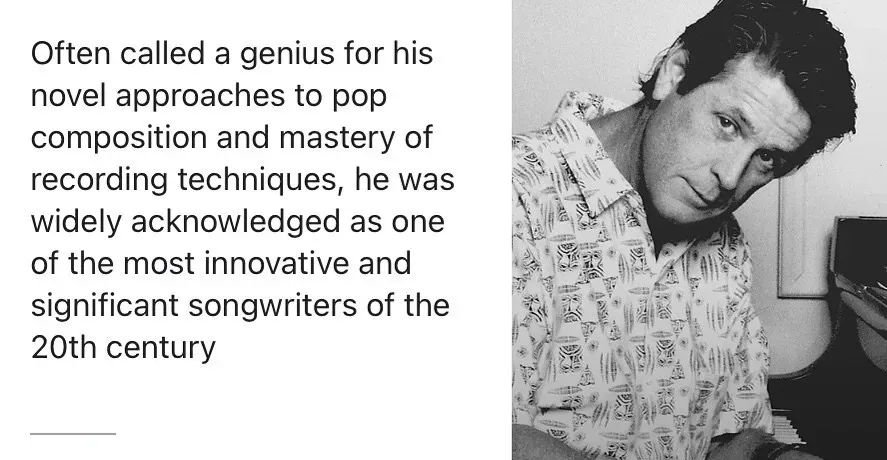
SMiLE is an unfinished album by the American rock band the Beach Boys, conceived as the follow-up to their 1966 album Pet Sounds. The project, a concept album involving themes of Americana, humor, youth, innocence, and the natural world, was planned as a twelve-track LP assembled from modular fragments, the same editing process used on their single “Good Vibrations.” Wilson described it as a “teenage symphony to God,” and his ambitions were staggering. In 1966, Brian Wilson led his band into the studio to begin work on what was meant to sit alongside The Beatles’ forthcoming Sgt. Pepper’s album on the very cutting edge of popular music.
During the SMiLE sessions, Brian Wilson’s experimentation with LSD and other drugs began to impact him in ways that were certainly noticeable to others, including his then-wife Marilyn, who told the BBC that she thought “the drugs he was taking had started to confuse him.” After a year of recording, the album was shelved and a downscaled version, Smiley Smile, was released in September 1967. The original project came to be regarded as the most legendary unreleased album in popular music history. When Wilson finally completed a re-recorded version in 2004, it was ranked number 399 on Rolling Stone’s list of “The 500 Greatest Albums of All Time,” with the editors writing, “Close your eyes and you can imagine how it might’ve changed the world in 1968, but with Wilson’s influence still all over scads of indie bands in 2004, it sounds and feels majestically modern.”
Jimi Hendrix’s “Black Gold”: A Lost Autobiographical Song Cycle
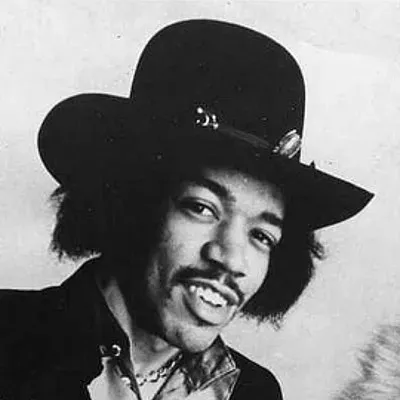
Black Gold is an unreleased song cycle by Jimi Hendrix, recorded shortly before his death in 1970. Some consider Black Gold to be the “holy grail” of Hendrix collectibles. The themed songs, plus the label markings and conventions used by Hendrix to identify the tapes, led fans to believe that this demo represents a proposed fifth studio album, and predicted that the material will reveal the broadest extensions of Hendrix’s intended musical direction. In early 1970, Hendrix recorded an autobiographical song cycle in his Greenwich Village apartment that he titled Black Gold. Months later, at the Isle of Wight Festival, Hendrix gave tapes to his drummer Mitch Mitchell to have him listen and comment on the necessary rhythm section requirements. After Hendrix’s death in September 1970, Mitchell simply forgot about the tapes, apparently unaware that they were one-of-a-kind masters.
In early 1970, Hendrix recorded a series of 16 songs without his fellow band members in his Greenwich Village apartment. He wrote the label of a cassette tape of these recordings: “Idea for L.P. Side 1 suite…Black Gold.” Hendrix sent a tape of his work to longtime drummer Mitch Mitchell for advice on fleshing it out. That music was set aside at Mitchell’s home and forgotten for two decades after Hendrix died. To date, Hendrix’s estate has made only one of these recordings public, a song called “Suddenly November Morning.” In October 2024, a fresh wave of attention hit when a new sliver of unheard music was uncovered from an unusual source, the PA to Hendrix’s former manager. Patricia “Trixie” Sullivan was the personal assistant to Hendrix’s manager Mike Jeffery between 1966 and 1973, and after Jeffery’s death she saved a treasure trove of archive material including more than 50 demo and master tapes for various bands, some of which are still labelled with Hendrix’s own handwriting.
Prince’s The Black Album: Recalled on the Eve of Release
Just days before its release, Prince ordered Warner Bros. to destroy every copy of this aggressive, funk-heavy record. Influenced by a “spiritual epiphany,” he decided the album was “evil.” The Black Album was his response to critics who said he had gone too “pop,” featuring instead some of his hardest, most unfiltered funk. The decision was as dramatic as it was sudden, and it instantly transformed a finished product into music industry legend. Encased in an all-black sleeve, the project was said to be Prince’s nod to Black fans who may have felt they had lost him to a pop audience, with its almost nonstop funk including a lascivious Cindy Crawford tribute and the workout “Superfunkycalifragisexy.”
The Black Album became the most bootlegged album in history before eventually seeing an official release in 1994. What makes the story particularly fascinating is how close the music came to reshaping public perception of Prince at a pivotal moment in his career. The maestro’s instincts were well-placed though, as coming after “Sign O’ the Times,” arguably his peak, this would have felt like a minor project. In the summer of 1986, Prince and The Revolution had also planned an ambitious double album called Dream Factory, which included songs that had been written as far back as 1982, but with the dissolution of The Revolution, Prince proposed a triple LP called Crystal Ball, which his label Warner Bros. rejected.
Green Day’s “Cigarettes and Valentines”: Stolen and Never Recreated

Written and recorded in 2003, Green Day’s “Cigarettes and Valentines” was actually lost; someone apparently stole the master tapes. Feeling on a creative roll, the rock trio decided against recreating what they’d done and pressed on with new material. It’s one of the few cases in music history where theft triggered a creative breakthrough rather than a catastrophe. Cigarettes and Valentines was slated to be the follow-up to Green Day’s 2000 album Warning; the whole album was recorded and ready for release until it was stolen from Green Day’s studio. The band tried to re-record the whole album but were never satisfied with the result. The entire project was eventually scrapped. Green Day moved on and recorded the wildly successful American Idiot as a follow-up.
Perhaps the robbery was “just a sign that we made a crappy record and we should make a better one,” songwriter Billie Joe Armstrong told MTV. The title cut later surfaced on a 2010 live album. The rest was lost to time. This story may be the only time losing an album has actually benefitted a band. Still, music historians often wonder what shape the original material had taken and whether it would have foreshadowed American Idiot’s political urgency or represented something different entirely.
David Bowie’s “Toy”: A Decade Trapped in a Label Dispute
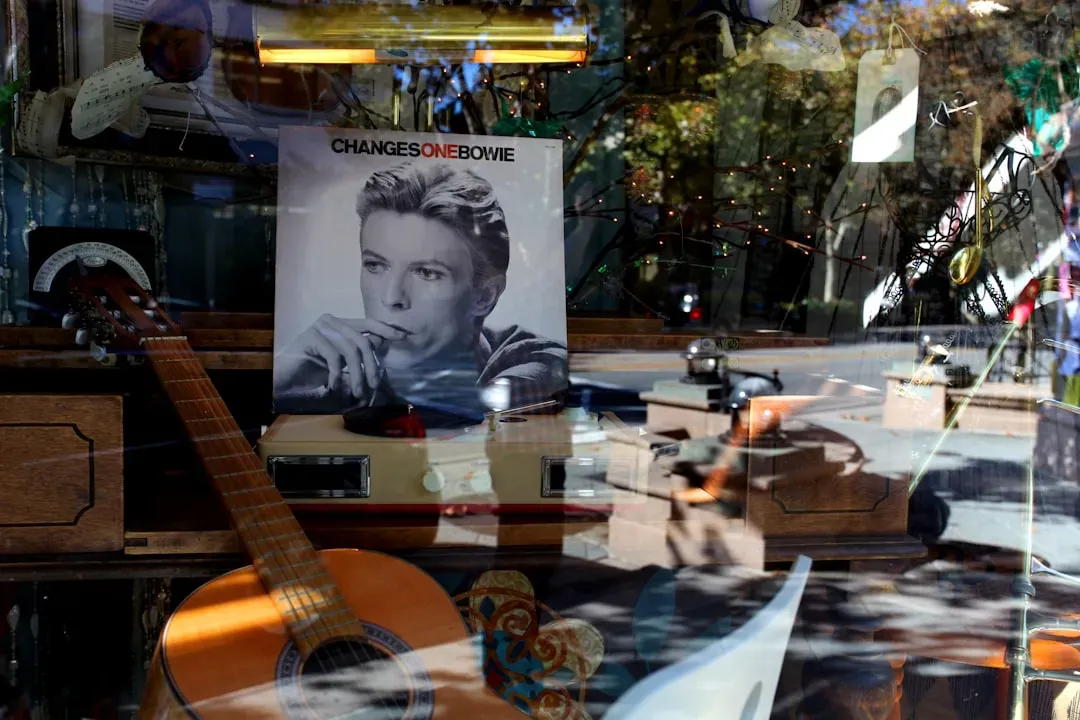
In 2001, David Bowie completed Toy, an album reimagining lesser-known 1960s songs with fresh arrangements. Intended for quick release, label disputes over its commercial viability shelved it. Had it emerged then, Toy might have bridged Bowie’s late 1990s experimentation with his later career renaissance, reaffirming his vitality and reframing his past for a new generation. The delay was not a creative decision; it was a commercial one made by people at the label table, not by the artist himself. Bootlegs kept its legend alive until its eventual 2021 official release.
Some of these lost projects fell victim to record-label politics, others to artistic self-doubt, sudden personal crises, or band implosions. Bowie’s case is a textbook example of the first category. The music existed in complete form, ready for listeners, but institutional caution held it back for twenty years. Lost albums are embedded in music industry lore. Some were literally lost. Some remained unfinished or unreleased because of tragedy, shortsighted executives, or creators who were perfectionist or had short attention spans. Toy arrived in 2021 to warm reviews, though many felt it was too little, too late for the context in which it was meant to land.
The Beatles’ “Carnival of Light”: Locked Away for Decades
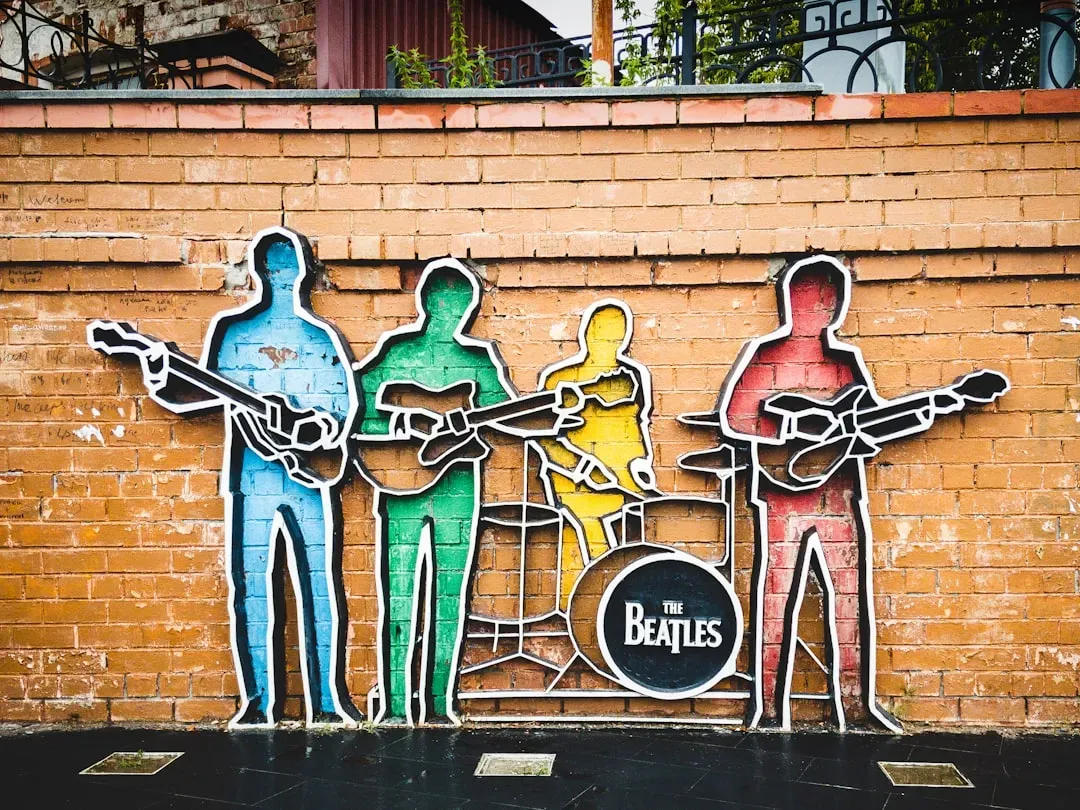
In January 1967, after recording vocals for their new song “Penny Lane,” John Lennon and Paul McCartney took time to lay down an avant-garde track for the benefit of an art and music festival that was due to take place in London in the following weeks. The Million Volt Light and Sound Rave was set for The Roundhouse on 28 January and 4 February and was an early “happening” in the city. Only a handful of people have heard the recording, known as Carnival of Light, which Beatles scholar Mark Lewisohn describes as featuring “distorted, hypnotic drum and organ sounds, a distorted lead guitar, the sound of a church organ.” The track runs for roughly 14 minutes and has never been officially released, making it arguably the most coveted locked-away recording in all of rock history.
The late 1960s and 1970s were particularly rich in these “lost” albums. The era’s combination of creative ambition and volatile personalities meant that visionary projects could dissolve overnight. Carnival of Light sits at the very centre of that moment, a document of The Beatles pushing into pure experimental sound during the same months they were recording Sgt. Pepper. Lost albums are embedded in music industry lore, and none more stubbornly so than this one. Paul McCartney has repeatedly expressed a desire to see it released, but it remains in the vault, its full contents heard only by a small circle of people who were present over half a century ago. A recently published oral history of SMiLE noted that some remained unfinished or unreleased because of tragedy, shortsighted executives, or creators who were perfectionist, and often the music is eventually made public, although out of context from the times in which it was originally made. Carnival of Light may yet follow that same path – or it may remain forever sealed.