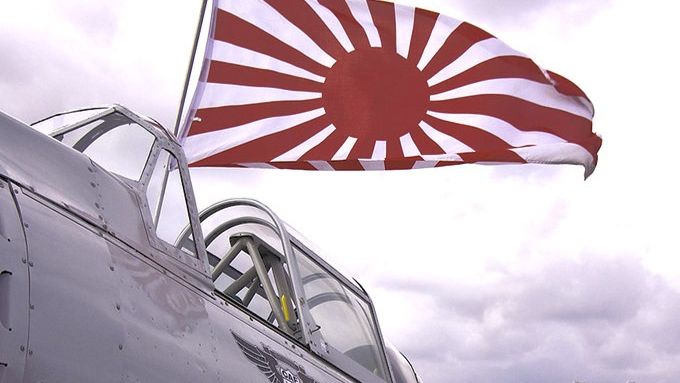
Symbols speak faster than words. A single image stitched onto a flag or spray-painted on a tank can mobilize armies, fuel hatred, or ignite diplomatic crises that take decades to untangle. What makes this even stranger is how often those symbols carry meanings their users never intended, or meanings that were simply invented, borrowed, or stolen from cultures they had nothing to do with.
History is full of these collisions between original meaning and imposed meaning. The gap between what a symbol once represented and what it came to represent has, in several cases, contributed directly to the shape of , the treatment of prisoners, and the long political shadow those conflicts cast long after the fighting stopped.
The Swastika: A Sacred Sign Hijacked by War
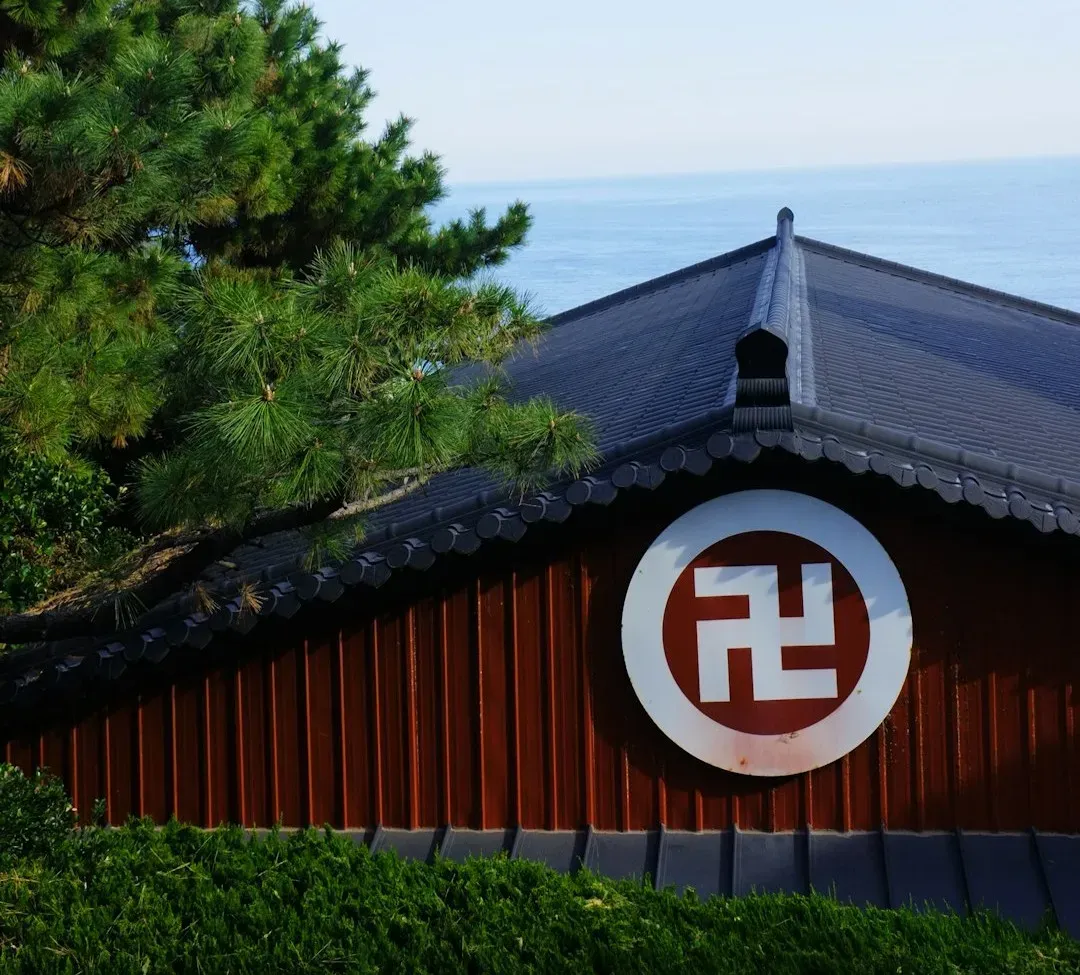
The swastika is an ancient symbol that was used in many different cultures for at least 5,000 years before Adolf Hitler made it the centerpiece of the Nazi flag. Its origins are anything but sinister. The word swastika comes from the Sanskrit svastika, which means “good fortune” or “well-being,” and the motif appears to have first been used in Eurasia perhaps representing the movement of the sun through the sky.
The swastika was long used as a symbol of well-being in ancient societies, including those in India, China, Africa, the Americas, and Europe. The work of European linguists and scholars was taken up by racist groups, for whom the swastika was a symbol of “Aryan identity” and German nationalist pride, and this is likely one of the main reasons why the Nazi Party formally adopted the swastika as its symbol in 1920. The theft of that ancient symbol altered the course of propaganda, politics, and ultimately, war.
The swastika was seen as a symbol of auspiciousness and good luck for most of the Western world until the 1930s. Prior to the rise of Nazi Germany in the 1930s, swastikas were fairly common symbols in the United States, used in building design and decorating, fabric patterns, and even in advertising. Today, the swastika remains a symbol of good luck and prosperity in Hindu, Buddhist, Jain, and other communities across Nepal, India, Thailand, Mongolia, Sri Lanka, China, and Japan.
The Finnish Air Force Blue Swastika: A Lucky Charm at War
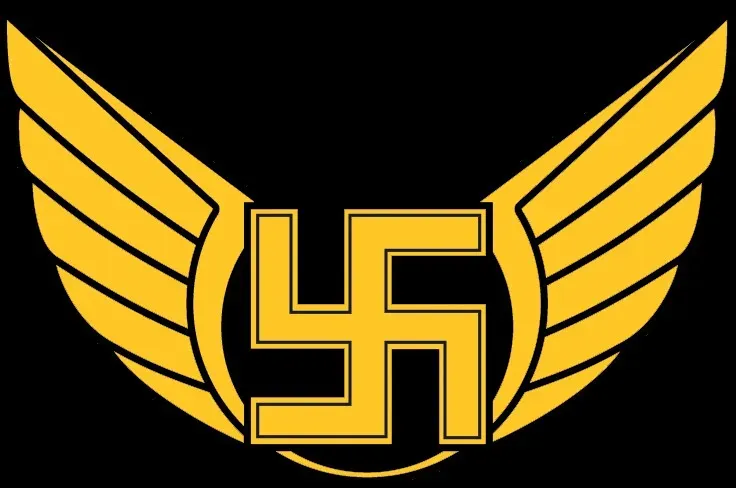
Swedish Count Eric von Rosen, who gifted the Finnish White Army its first aircraft in 1918, had painted his personal good luck charm, a blue swastika, on the wings of the plane. This had nothing to do with Nazi ideology. The Finns adopted the symbol, and it predated the Nazis’ use of the swastika by several years. For decades after the war, the Finnish Air Force continued to use the swastika, albeit in a more limited capacity, a curious anachronism that often baffled outsiders.
The decision to finally, and quietly, retire the symbol in 2020 was a tacit acknowledgment of the inescapable power of its Nazi association. The Finns had used it in complete good faith, as a cultural good luck symbol, yet the weight of what the Nazis had done with a visually similar image made the original context impossible to maintain. Latvia also adopted the swastika for its Air Force in 1918 and 1919 and continued its use until the Soviet occupation in 1940.
The Rising Sun Flag: Pride in Japan, Pain Across Asia
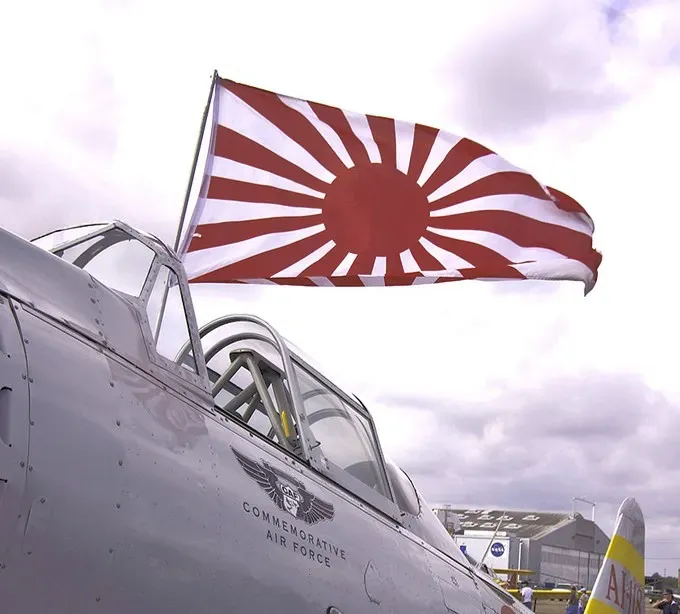
The symbolism of the rising sun has held meaning in Japan since the Asuka period from 538 to 710 CE. The Japanese archipelago is east of the Asian mainland, and is thus where the sun rises. In 607 CE, an official correspondence that began with “from the Emperor of the rising sun” was sent to Chinese Emperor Yang of Sui. The symbol carried ancient, even spiritual weight within Japan. To the broader region it would come to mean something else entirely.
The flag is controversial in some Asian countries, mainly in South Korea, North Korea and China, as well as among Allied World War II veterans, where it is associated with Japanese war crimes, the Axis powers, and Japanese militarism and imperialism. While Japan considers the Rising Sun Flag part of its history, Asian countries annexed or occupied by Japan, especially the Philippines, South Korea, China, Malaysia, and Singapore, say the flag is associated with Imperial Japan’s wartime atrocities and is comparable to the Nazi swastika. The same image carries completely opposite emotional weight depending on which side of the Pacific you stand on.
The flag is banned by FIFA, and Japan was sanctioned by the Asian Football Confederation after Japanese fans flew it at an AFC Champions League game in 2017. In 2012, South Koreans who disapproved of the flag began to refer to it as a “war crime flag.” According to political scientist Kan Kimura, following remarks by a prominent Korean footballer, Koreans living in New York formed a political group and started a campaign to equate the Rising Sun Flag with the Nazi swastika and ban it.
The Red Star: From Revolutionary Hope to Cold War Fear

The red star is a five-pointed symbol historically associated with communist ideology and prominently adopted as the insignia of the Soviet Red Army following its formation in 1918. Its design evoked earlier military traditions, such as the stars on Imperial Russian uniforms repurposed in red to signify revolutionary allegiance. The symbol was meant to project unity, not menace. Its color represents the blood of workers who died for the cause of communism and their revolutionary spirit. The red star was adopted by the Red Army in 1918 and quickly became a ubiquitous symbol of Soviet power.
The red star became a common element of the flags and heraldry of socialist states in the Eastern Bloc, appearing in heraldry for virtually all of the countries, and on the flags of Bulgaria, Hungary, Romania, and Albania. Yet in many countries that lived under Soviet-imposed rule, the same star carried very different associations. In countries once under Soviet influence, the red star came to represent memories of fear, censorship, and violence. Freedom House reports that even today, the red star is viewed with suspicion in many countries, its original promise of unity overshadowed by its association with totalitarian regimes.
The Crescent Moon and Star: Faith Turned Into a Political Target
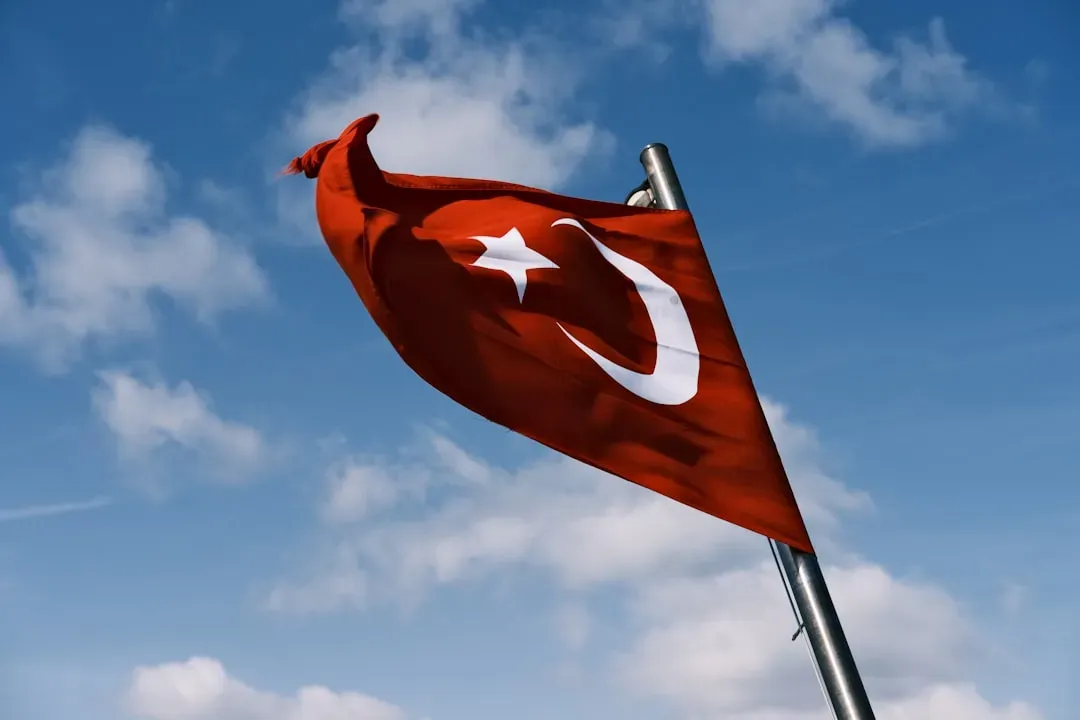
The crescent moon and star, now widely recognized as a symbol of Islam, originally signified the power and reach of the Ottoman Empire. Its elegant curves adorned flags and monuments, standing for community and faith. In modern times, however, the symbol has been misinterpreted, especially in Western media, as a marker of militancy or political Islam. That shift in perception has had real geopolitical consequences, colouring how Western audiences perceive Muslim-majority nations during conflicts.
The Ottoman Empire used the crescent as a dynastic emblem for centuries before it became conflated with religion in European imagination. The symbol carried administrative and imperial meaning, not a theological battle cry. Its adoption onto the flags of modern states like Turkey, Pakistan, and Algeria came later, and the meanings layered onto it in Western political discourse during conflicts from the Balkans to the Middle East have added further distortions to an already complex symbol.
The Russian “Z”: An Overnight War Symbol

The Z symbol, spray-painted or stuck onto Russian military vehicles, was initially a simple tactical marking during the 2022 invasion of Ukraine. It quickly took on a new life, adopted as a symbol of support for Russia’s military actions and used in propaganda to rally nationalist sentiment. No one planned it as an ideological emblem. It started as a logistical identifier to prevent friendly fire, possibly indicating vehicle zones of operation.
The letter, which has no particular meaning in the Russian alphabet, became a shorthand for pro-war attitudes and was emblazoned on T-shirts, billboards, and social media. The International Crisis Group reports that the Z has polarized public opinion, serving both as a badge of loyalty and a mark of aggression. Its rapid transformation shows how quickly new symbols can shape the narrative of modern conflicts. What began as paint on an armored vehicle became one of the most charged political symbols in Europe within weeks.
The Peace Symbol: An Anti-War Icon Branded as Occult
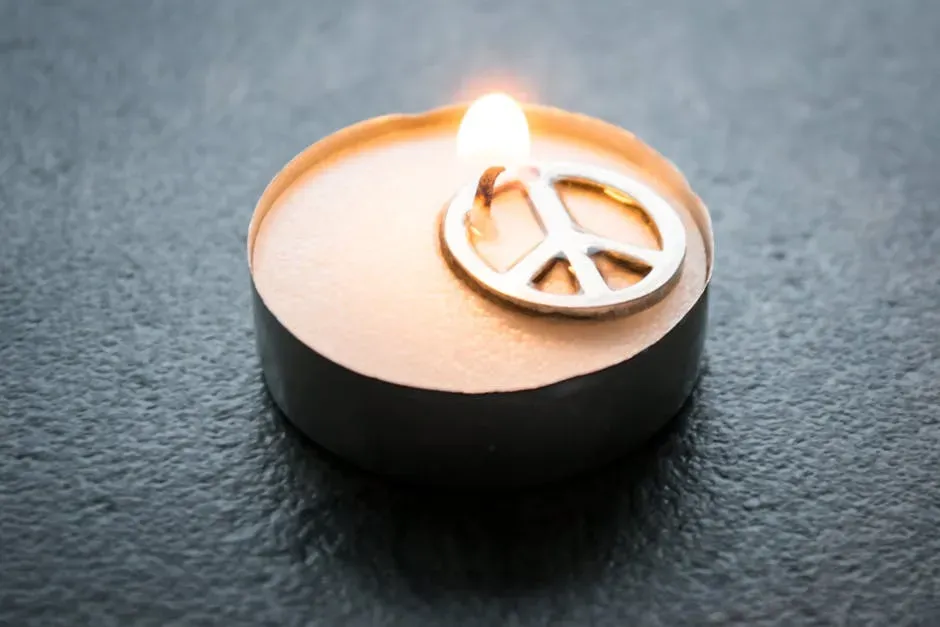
Designed in 1958 for the British Campaign for Nuclear Disarmament, the peace symbol quickly became an international icon for anti-war and civil rights movements. Its simple lines form a combination of semaphore signals for “N” and “D,” standing for nuclear disarmament. Its creator, designer Gerald Holtom, intended it as a direct, rational statement about the dangers of nuclear weapons.
Oddly, conspiracy theorists and some religious groups have misinterpreted the symbol as occult, anti-Christian, or even satanic. This has sparked confusion and resistance to the symbol’s use in some circles. The Public Religion Research Institute found that many Americans still misunderstand the peace symbol’s origins, proving how even the simplest designs can be clouded by rumor and fear. A symbol explicitly designed to reduce conflict became a source of conflict in its own right.
The Red Cross: Neutral Care or Military Cover?
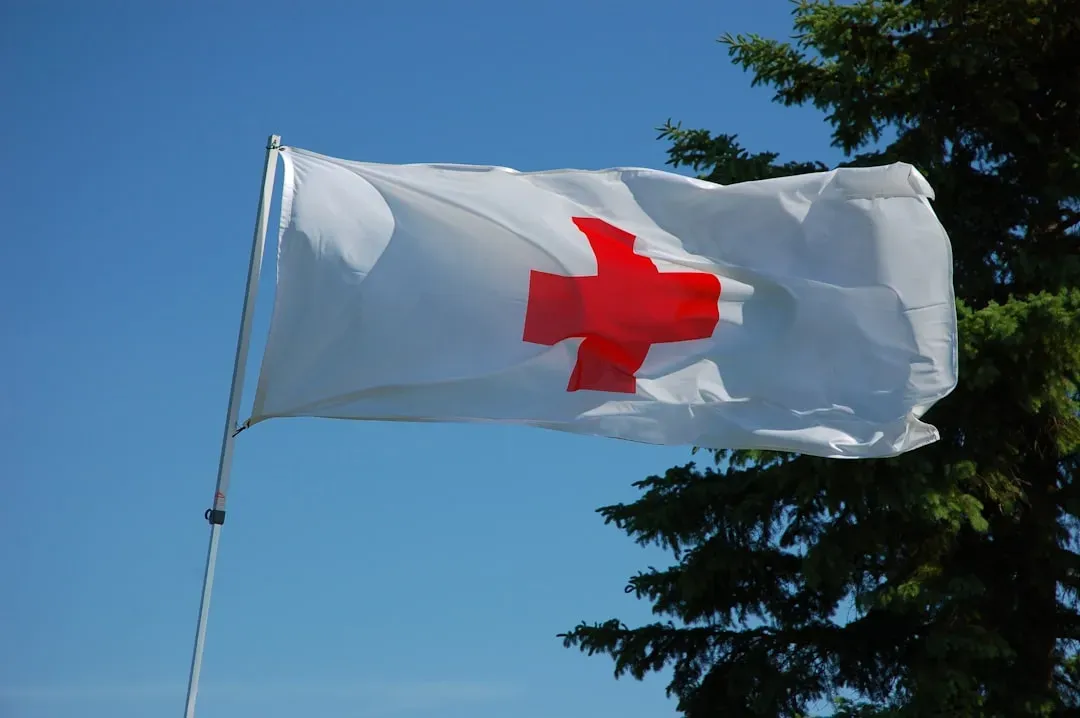
The Red Cross emblem was established in 1864 under the First Geneva Convention as a universal, neutral marker for medical personnel and facilities during armed conflict. The intent was absolute protection, a guarantee of safety for the wounded of any side. In practice, that neutrality was tested repeatedly throughout the twentieth century’s major , with combatants on various sides accused of firing on clearly marked Red Cross positions or using the emblem as cover for military operations.
Even faith in the symbol as one of inherent goodness, irrespective of how it was used or misused, remained strong after the war, erasing negative evidence in favour of tales of “hope, charity and goodness.” The symbol retained its moral authority not always because of what actually happened under its protection, but because people needed to believe it worked. In wartime, the meaning a symbol holds in people’s minds can be more powerful than the facts on the ground.
The Valknut: Ancient Norse Symbol in Modern Extremism

The Valknut, a mysterious arrangement of interlocking triangles, is rooted in Norse mythology and linked to Odin, god of warriors and the afterlife. For centuries, scholars and historians debated its exact ritual meaning within pre-Christian Norse culture. It appeared in burial sites and on memorial stones, serving as a marker connected to death, valor, and the passage of warriors into the afterlife.
In recent decades, white supremacist and neo-Nazi groups adopted the Valknut as part of a broader pattern of appropriating Norse and Germanic imagery to suggest a connection to an imagined ancestral heritage. This has placed modern Scandinavian historians, tattoo artists, and practitioners of Norse-inspired spirituality in an uncomfortable position. The symbol itself predates any extremist ideology by more than a millennium, yet its misappropriation has made its public display increasingly fraught in contemporary contexts.
The Confederate Battle Flag: Remembrance or Rebellion?

The Confederate battle flag, most commonly the square or rectangular version featuring a blue saltire cross with white stars on a red field, was never the official national flag of the Confederacy. It was a battlefield identifier used by Confederate armies during the American Civil War from 1861 to 1865. Its meaning in the immediate postwar decades was primarily one of regional military memory, displayed at veterans’ reunions and memorials.
Its symbolic meaning shifted dramatically in the twentieth century. During the 1948 States’ Rights Democratic Party campaign and again during the civil rights battles of the 1950s and 1960s, the flag was deliberately elevated as a symbol of resistance to racial integration, most prominently by Southern state governments that incorporated versions of it into their official state flags. This specific political use transformed what some still claim as a marker of regional heritage into one of the most contested symbols in American public life, one whose display has sparked legislative battles, corporate decisions, and ongoing national debate about who gets to define the meaning of a historical symbol.
Symbols do not hold their meanings in amber. They shift with the hands that wave them and the that mark them. What a culture offers as sacred can become, through force or misunderstanding, the emblem of its opposite. That gap, between what was intended and what was understood, has shaped some of history’s darkest turns.