
There’s something about a haunting ballad that stops you in your tracks. Maybe it’s the raw vulnerability in a singer’s voice, or the way certain melodies seem to reach into places you didn’t know existed. These aren’t just sad songs. They’re the ones that linger long after the final note fades, the ones that make you sit in your car after you’ve parked, unable to move until it’s over.
Music has this incredible power to transport us to moments we’d rather forget, or memories we desperately want to hold onto. The ballads we’re about to explore aren’t necessarily the most commercially successful, though some certainly are. What makes them special is that intangible quality, that ability to make your chest tighten and your breath catch. Let’s dive in.
Mad World by Gary Jules

When Gary Jules stripped down Tears for Fears’ synth-heavy original and rebuilt it with just a piano and his weathered voice, something extraordinary happened. The 2001 cover transforms a commentary on conformity into something far more personal and devastating. Jules’ version feels like watching the world through a window on a rainy day, disconnected and achingly alone.
What makes this particularly haunting is how the minimalist arrangement forces you to confront every single word. There’s nowhere to hide in the sparse production. The way Jules delivers “the dreams in which I’m dying are the best I’ve ever had” sounds less like a lyric and more like a confession whispered in the dark. It gained massive attention after appearing in Donnie Darko, but the song’s eerie resonance extends far beyond its cinematic moment.
I think what gets me most is how it captures that specific feeling of existential dread mixed with numbness. It’s not dramatic sadness. It’s quiet despair, which somehow feels so much worse.
Hurt by Johnny Cash
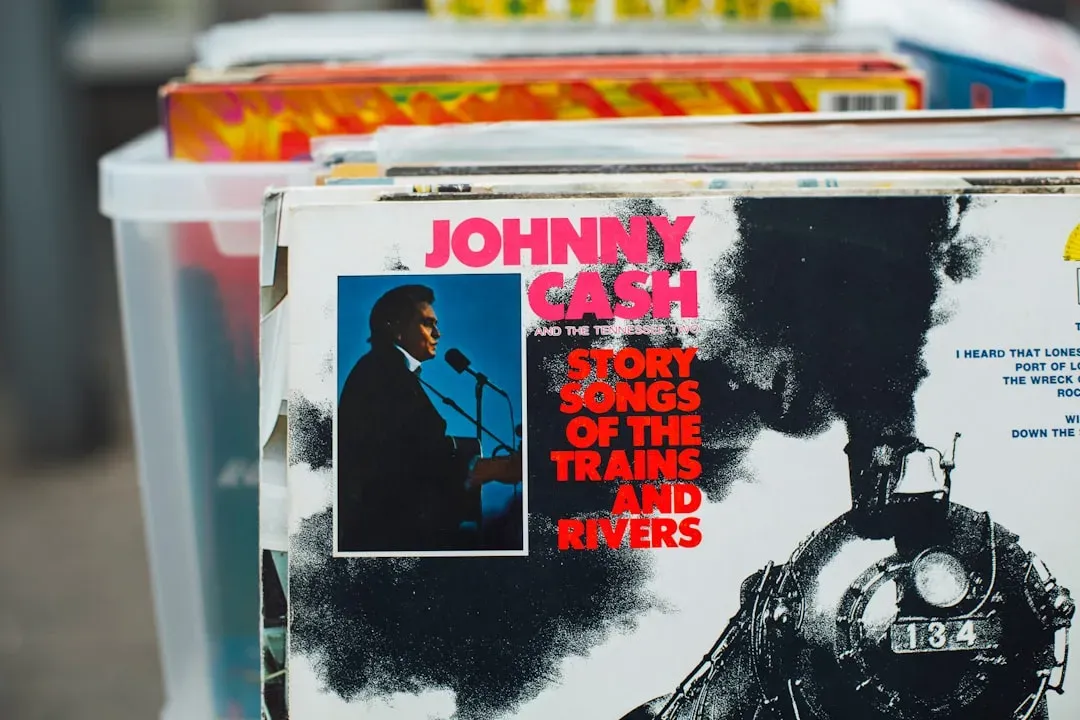
Johnny Cash’s cover of Nine Inch Nails’ Hurt is less a performance and more a reckoning. near the end of his life, Cash transforms Trent Reznor’s industrial angst into something that feels like a final testimony. His voice cracks and wavers, and you can hear decades of living, losing, and surviving in every syllable.
The accompanying music video, featuring footage of Cash’s deteriorating museum and his frail body, adds layers of devastating context. When he sings “everyone I know goes away in the end,” you’re not hearing metaphor. You’re hearing truth from someone who’d watched loved ones disappear, including his wife June Carter Cash, who died shortly before this recording. Reznor himself said the song wasn’t his anymore after hearing Cash’s version.
It’s rare for a cover to completely eclipse the original, but Cash managed it by turning the song into his own eulogy. There’s something deeply unsettling about hearing someone so legendary sound so vulnerable and broken.
The Night We Met by Lord Huron
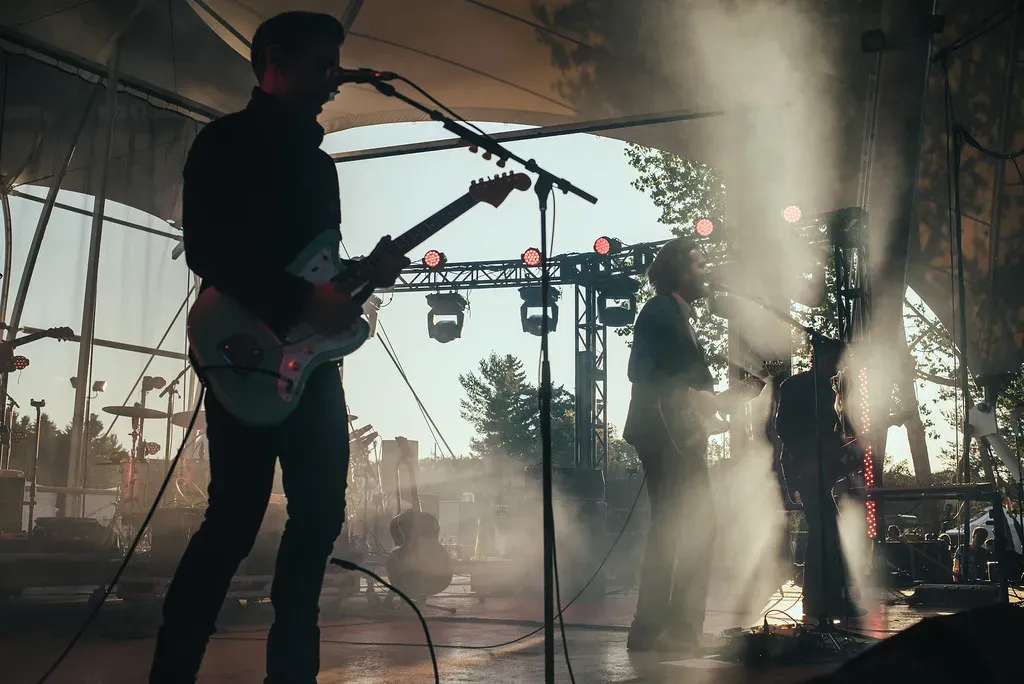
Lord Huron crafted something special with this one. It’s that specific kind of heartbreak where you’d give anything to go back to a single moment, knowing full well you can’t. The desperation in Ben Schneider’s voice when he pleads “take me back to the night we met” feels genuine in a way that’s almost uncomfortable to witness.
The song gained widespread recognition through the Netflix series 13 Reasons Why, but its haunting quality stands entirely on its own. There’s this building intensity throughout the track, starting gentle and swelling into something almost frantic. The imagery of not knowing how things went wrong, of being lost in darkness, creates this suffocating atmosphere of regret.
What makes it particularly affecting is how universal that feeling is. We’ve all had that moment we wish we could return to, that fork in the road where everything changed. The song doesn’t offer resolution or healing, just raw longing, which somehow makes it more honest.
Black by Pearl Jam

Eddie Vedder wrote Black about lost love, but it’s the way he delivers it that transforms it into something transcendent. His voice oscillates between tender reminiscence and barely contained anguish. The song captures that bittersweet space where beautiful memories become painful precisely because they’re over. When he sings about sheets of empty canvas and untouched snowfalls, you feel the weight of potential that will never be realized.
Pearl Jam famously refused to release it as a single despite immense pressure, wanting to keep it special. There’s no dramatic production, no studio tricks. Just Vedder’s voice and the band creating this melancholic soundscape that feels like autumn turning to winter. The guitar work Mike McCready provides weaves through the vocals like a conversation.
Honestly, what gets me every time is the acceptance in it. He’s not angry or fighting. He’s just acknowledging that this beautiful thing is gone, and he has to let it go. That quiet resignation hurts more than any screaming ever could.
Skinny Love by Bon Iver

Justin Vernon For Emma, Forever Ago in a cabin in Wisconsin during one of the coldest winters on record, and you can hear that isolation seeping into every note of Skinny Love. His falsetto cracks and strains, sounding almost painful at times. The song feels like it’s falling apart even as it’s being performed, fragile and barely held together.
The lyrics are deliberately obscure, but that ambiguity makes them more haunting. “Come on skinny love, just last the year” could mean so many things, and that openness lets listeners pour their own heartbreak into it. The sparse acoustic guitar and Vernon’s layered vocals create this sense of being simultaneously alone and surrounded by ghosts of what was.
There’s something about hearing someone’s voice break that makes a song feel more real. It’s imperfect and human in a way that polished studio recordings rarely achieve. You’re not listening to a performance. You’re overhearing someone’s private grief.
Tears in Heaven by Eric Clapton

Some songs are born from tragedy, and this one emerged from the worst nightmare any parent could imagine. Clapton wrote it after his four year old son Conor fell from a Manhattan apartment window. The gentleness of the melody makes the subject matter even more devastating. When he asks “would you know my name if I saw you in heaven,” he’s not being poetic. He’s genuinely wondering if his child would recognize him.
What makes this ballad particularly haunting is its restraint. Clapton doesn’t wail or rage. His voice remains controlled, almost conversational, which somehow makes it more heartbreaking. The song acknowledges both grief and hope, the desire to be reunited someday balanced against the unbearable present reality. It won multiple Grammy Awards, but no accolade could match the raw emotional truth at its core.
I find it hard to listen to this one without tearing up. It’s too honest, too real, too close to fears most of us don’t even want to acknowledge exist.
Hallelujah by Jeff Buckley

Leonard Cohen wrote Hallelujah, but Jeff Buckley made it sacred. His version takes Cohen’s meditation on broken love and spiritual longing and transforms it into something that feels like a prayer offered in a dark cathedral. Buckley’s voice soars and whispers, finding emotions in syllables that shouldn’t contain them. The way he stretches “hallelujah” into something both jubilant and mournful is nothing short of remarkable.
for his 1994 album Grace, Buckley’s interpretation emphasizes the sensual and spiritual simultaneously. The guitar work is delicate, giving his voice room to explore every corner of the song’s emotional landscape. Tragically, Buckley drowned in 1997 at just thirty years old, which adds another layer of poignancy to this recording. It feels like a voice that understood beauty and pain in equal measure.
There’s something unsettling about how he makes the song feel both intimate and vast. Like you’re hearing something you shouldn’t, some private moment between a soul and whatever it believes in.
Nothing Compares 2 U by Sinéad O’Connor

Prince wrote it, but Sinéad O’Connor owned it completely. Her 1990 version, with that iconic music video featuring her face in extreme close-up, turned a breakup song into a cultural phenomenon. What makes it so haunting isn’t just the lyrics about missing someone, it’s the way O’Connor delivers them with this mixture of strength and fragility. Her voice doesn’t crack until near the end, but you can hear it threatening to throughout.
The production is deliberately sparse, letting O’Connor’s voice carry the full weight. When she sings “all the flowers that you planted in the backyard all died when you went away,” the specificity makes it devastatingly real. These aren’t abstract emotions. They’re concrete details of a life that fell apart. The famous tear that rolls down her cheek in the video wasn’t planned, adding to the song’s raw authenticity.
Years later, O’Connor revealed the song connected to her own childhood traumas, which explains the depth of pain in her performance. You’re not just hearing about a breakup. You’re hearing accumulated grief finding an outlet.
The Sound of Silence by Simon and Garfunkel
There’s something timelessly eerie about this 1964 classic. Paul Simon wrote it at just twenty-one, but it carries the weight of someone much older and wearier. The paradox of the title itself, how can silence have a sound, sets up the song’s exploration of isolation and disconnection. When Simon sings about ten thousand people talking without speaking, it feels prophetic, especially in our current age of shallow digital communication.
The original acoustic version had a ghostly quality, but the later electric arrangement with Art Garfunkel’s harmonies added depth without losing the haunting essence. The imagery of neon lights and narrow streets creates this noir atmosphere, urban loneliness crystallized into melody. It’s been covered countless times, but something about the original captures a specific kind of alienation that resonates across decades.
What I find most unsettling is how it makes solitude feel almost apocalyptic. Not just being alone, but being surrounded by people and still utterly disconnected. That’s a horror more relatable than any monster.
Conclusion

These ballads share something beyond beautiful melodies and skilled performances. They capture specific emotional truths with unflinching honesty. Whether confronting death, loss, loneliness, or failed love, each song refuses to look away from pain. That willingness to sit with discomfort, to articulate what many feel but can’t express, is what makes them haunting rather than simply sad.
Music has this incredible ability to make us feel less alone in our darkest moments. These songs don’t fix anything or offer easy comfort. They just acknowledge that suffering exists and sometimes, recognition is enough. They remind us that being human means feeling deeply, even when that feeling hurts. What’s your most haunting song? The one that stops you cold every time you hear it? Tell us in the comments.