You ever catch yourself humming along to a song, thinking you’ve got it all figured out, only to discover the real meaning is completely different? Happens more than you’d think. Music has this strange power to hide dark truths behind catchy melodies, or to bury protest anthems under triumphant choruses. Over the decades, listeners have twisted, misread, and completely flipped the intended messages of some of the biggest hits ever recorded. Sometimes the artists themselves are baffled by how people interpret their work.
Let’s be real, most of us don’t scrutinize every lyric while we’re blasting a song in the car. We latch onto the vibe, the hook, maybe a few words that stick. That’s where the confusion starts. Some songs sound like celebrations but are actually warnings. Others seem romantic when they’re downright creepy. The gap between what we hear and what artists meant to say has led to some truly wild misunderstandings throughout . So let’s dive in.
Bruce Springsteen’s “Born in the U.S.A.” – Patriotic Pride or Bitter Protest?

This 1984 hit describes a Vietnam War veteran who returns home to desperate circumstances and few options, yet it became one of the most historically misunderstood songs, often mistaken as a patriotic singalong. Springsteen himself called it “a protest song”, written after reading Ron Kovic’s memoir Born on the Fourth of July and meeting Vietnam veterans in Los Angeles. Though he understood that some people used the song’s soaring sound to soften its rage, he refused to concede to their ignorance. The explosive chorus and pounding drums fooled nearly everyone, including President Reagan, who tried to claim Springsteen as a symbol of American optimism during his 1984 campaign.
The Police’s “Every Breath You Take” – Love Song or Stalker’s Anthem?
Sting explained in a 1983 interview with the New Musical Express that he thought it was “a nasty little song, really rather evil” about “jealousy and surveillance and ownership”. He later told BBC Radio 2 that the song is “very, very sinister and ugly” and that people have “actually misinterpreted it as being a gentle little love song, when it’s quite the opposite”. Written during the aftermath of his separation from his first wife, the track became a wedding staple despite its deeply possessive lyrics. Sting once said that when couples told him they played it at their wedding, he thought “Well, good luck”.
Nirvana’s “Smells Like Teen Spirit” – Rebellious Anthem or Mockery of Apathy?
Cobain later said the lyrics were “making fun at the thought of having a revolution” and that the words meant very little. He wrote the song because he was feeling “disgusted with my generation’s apathy, and with my own apathy and spinelessness”. The title itself came from a drunken graffiti incident when Kathleen Hanna of Bikini Kill spray painted “Kurt Smells Like Teen Spirit” on his wall, a reference to his girlfriend’s deodorant brand. Cobain thought it was a revolutionary statement. Turns out it was just about hygiene products. The irony is almost too perfect.
The Eagles’ “Hotel California” – Satanic Ritual or Music Industry Excess?
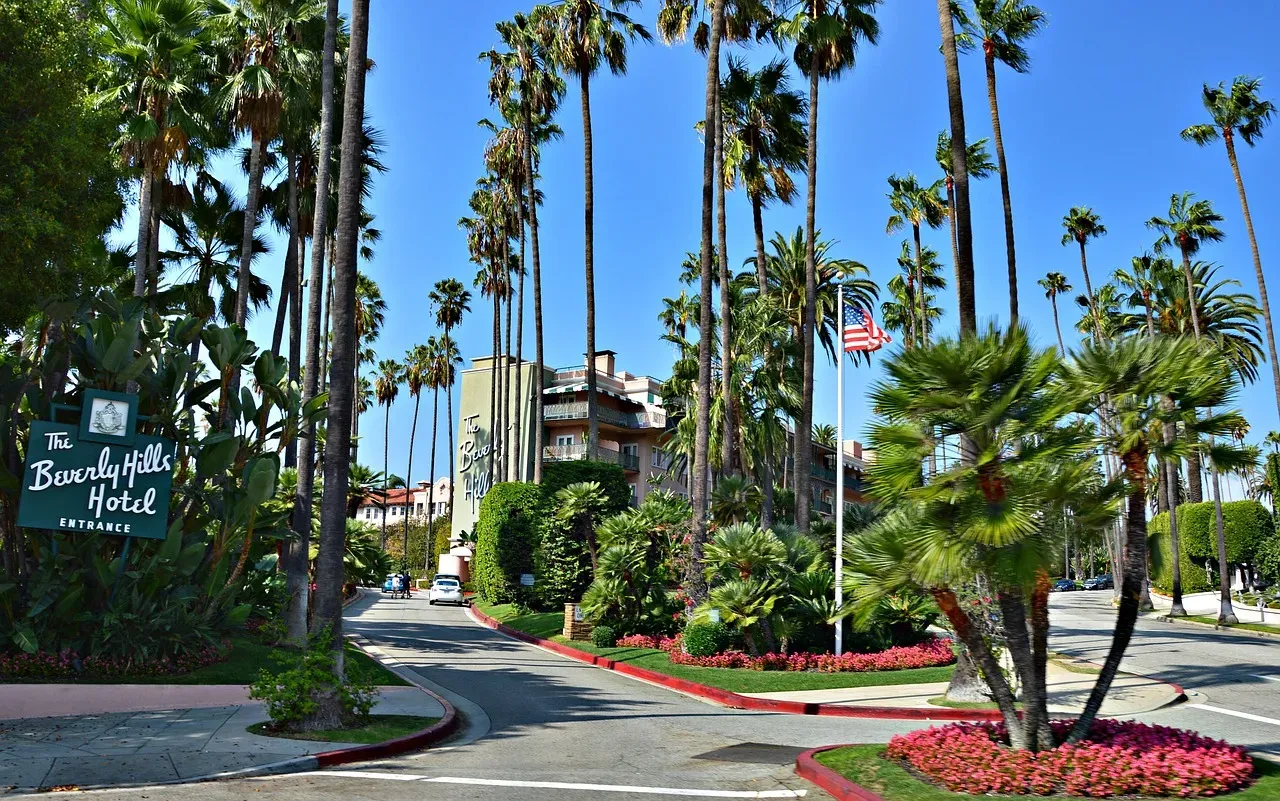
Don Henley described it as “a journey from innocence to experience” that’s “not really about California; it’s about America” and “the dark underbelly of the American dream”. On 60 Minutes in 2007, Henley said “It’s a song about the dark underbelly of the American Dream, and about excess in America which was something we knew about”. Yet conspiracy theories persisted for decades about the song being linked to devil worship or a literal haunted hotel. The song has been interpreted as an allegory about hedonism, self-destruction, and greed in the music industry of the late 1970s, with Henley calling it “our interpretation of the high life in Los Angeles”.
Foster the People’s “Pumped Up Kicks” – Summer Anthem or Gun Violence Warning?

Foster told CNN Entertainment that he wrote “Pumped Up Kicks” when he began to read about the growing trend in teenage mental illness, stating “It was terrifying how mental illness among youth had skyrocketed in the last decade”. In writing the song, Foster wanted to “get inside the head of an isolated, psychotic kid” and “bring awareness” to the issue of gun violence among youth. The upbeat, whistling melody completely masked the disturbing narrative about a troubled teen planning violence. Many listeners danced to it without ever processing the chilling chorus warning kids to “outrun my gun.”
Madonna’s “Like a Prayer” – Blasphemy or Personal Struggle?
Madonna explained the song blends religious imagery with personal struggle, rather than mocking faith as critics claimed. The 1989 single caused massive controversy when its music video featured burning crosses and religious symbolism, leading to condemnation from the Vatican and protests. Yet Madonna insisted the song was deeply personal, exploring her complicated relationship with Catholicism and spirituality. The blend of gospel choir and pop production confused listeners who couldn’t tell if she was celebrating or criticizing organized religion. Honestly, the controversy probably helped make it even bigger.
Third Eye Blind’s “Semi-Charmed Life” – Feel-Good Hit or Drug Addiction Confession?

Third Eye Blind’s frontman said the song addresses addiction, even though its upbeat tone caused widespread misunderstanding, according to Spin Magazine and band interviews. The rapid-fire lyrics detail crystal meth use and a relationship falling apart, but the bouncing rhythm and infectious “doo doo doo” hook made it a staple at parties and on pop radio throughout the late nineties. Most people never caught the line about doing “crystal meth” because Stephan Jenkins delivered it so fast. The song became a mainstream smash while explicitly describing a drug spiral.
John Lennon’s “Imagine” – Utopian Dream or Political Critique?
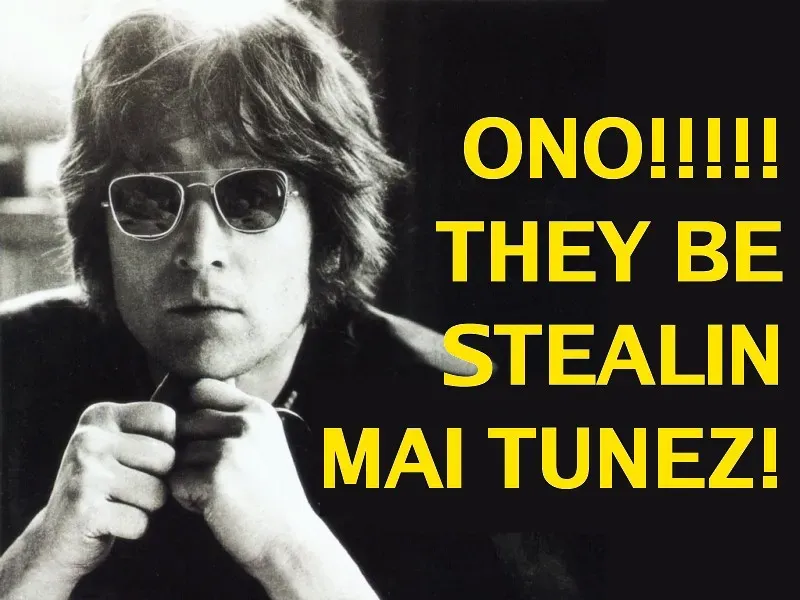
John Lennon explained that the song was a critique of materialism and nationalism, not a utopian fantasy detached from politics, according to Lennon interviews and Yoko Ono commentary. Written in 1971, the song invites listeners to imagine a world without borders, possessions, or religion, yet many dismissed it as naive idealism. Lennon was actually making a pointed political statement influenced by Yoko Ono’s conceptual art and his own evolving worldview. The gentle piano and simple melody softened what was essentially a call for radical societal change. People sang along without realizing they were endorsing a pretty extreme vision.
Outkast’s “Hey Ya!” – Party Starter or Relationship Breakdown?
André 3000 literally sings “y’all don’t want to hear me, you just want to dance” in the middle of the track, almost telling the audience they’re missing the point. The song sounds like pure joy with its handclaps and energetic beat, but the lyrics describe a failing relationship and the fear of commitment. Lines like “if what they say is nothing is forever, then what makes love the exception?” reveal deep anxiety beneath the surface. The 2003 hit became a wedding and party favorite despite being about romantic disillusionment. Goes to show how much melody can overpower meaning.
R.E.M.’s “The One I Love” – Romantic Ballad or Brutal Dismissal?
Michael Stipe has said repeatedly that “The One I Love” is not a love song at all. The key lyric “a simple prop to occupy my time” reveals the song is actually about using people and discarding them. The 1987 single climbed the charts as couples slow-danced to what they thought was a declaration of devotion. Stipe’s mumbled delivery made it easy to miss the cynicism embedded in every verse. R.E.M. was known for cryptic lyrics, so maybe listeners just assumed it was romantic because it sounded pretty. The title alone probably did most of the heavy lifting in creating the confusion.
What do you think about these misunderstood classics? Did any of them surprise you, or have you been singing them wrong this whole time? Let us know in the comments.