There’s something almost magical about a song that knows how to leave you breathless. You’re driving down the Strip, windows down, and that final chord hits just right – suddenly everything feels bigger, more cinematic. The best don’t just fade out or loop back to the chorus. They transform the entire listening experience, leaving us replaying those last thirty seconds over and over again, trying to capture that feeling one more time.
We’ve all been there. That moment when a song builds to something so powerful, so unexpected, that you’re left staring at your speakers in disbelief. Maybe it’s a wall of sound that crashes over you, or maybe it’s the opposite – a sudden silence that cuts deeper than any noise could. These endings don’t just conclude a track. They become the reason we keep coming back. So let’s dive into some of the most unforgettable musical finales that modern artists have given us.
Radiohead’s “Street Spirit (Fade Out)” – A Descent Into Beautiful Darkness

Thom Yorke himself called this one “the most terrifying song I’ve ever written,” and that ending proves it. The way those guitars spiral downward, each arpeggio pulling you deeper into some kind of emotional void – it’s haunting. You feel yourself falling with it.
What makes this ending so powerful is its refusal to offer any comfort. Most songs try to resolve something, but “Street Spirit” just keeps descending. The final moments repeat that hypnotic guitar pattern until everything blurs together, and you’re left in this strange liminal space between sadness and acceptance. It doesn’t try to make you feel better. It just is.
The production here is deceptively simple. No big crescendo, no dramatic final note. Just layers of guitar fading into darkness while Yorke’s voice disappears into the mix. It’s like watching someone walk into fog until they vanish completely. You want to call them back, but you know they’re already gone.
The National’s “Terrible Love (Alternate Version)” – When Raw Emotion Explodes

If you’ve only heard the album version, you’re missing out. The alternate take of “Terrible Love” builds to something genuinely cathartic. Matt Berninger’s baritone voice cracks and strains as the band behind him erupts into controlled chaos.
Those final ninety seconds feel like everything is coming apart at the seams. The drums pound harder, the guitars get messier, and Berninger sounds like he’s singing through clenched teeth. It’s raw in a way that most polished modern production won’t allow. You can almost feel the sweat in that recording studio.
What gets me every time is how the song doesn’t really end – it just collapses. The instruments don’t resolve to some neat conclusion. They just stop, like the band physically couldn’t keep going. That exhaustion becomes part of the emotional payload. It’s honest. It’s hard to say for sure, but I think that’s why it hits so differently than the cleaner album cut.
Arcade Fire’s “Wake Up” – An Anthem That Never Quite Leaves

We all know this one from countless movie trailers and emotional montages, but that ending still delivers every single time. The way those “ooh ooh” vocals build and build until half the world seems to be singing along – it’s pure communal energy trapped in sound.
Here’s the thing about “Wake Up”: the ending doesn’t feel like an ending at all. It feels like a beginning, like you should immediately stand up and do something important. Win Butler and Régine Chassagne trade vocals while the whole band chants behind them, and suddenly you’re part of something bigger than yourself. That’s the trick of a truly great finale – it changes your relationship to the song entirely.
The production choice to let those vocals ring out without much instrumental backing in the final moments is brilliant. It strips away everything except human voices, and that makes it feel urgent and alive. You’re not just listening anymore. You’re participating, even if you’re alone in your car on Flamingo Road at two in the morning.
Bon Iver’s “re: stacks” – The Sound of Complete Solitude

Justin Vernon recorded this album alone in a Wisconsin cabin during winter, and you can hear that isolation in every note of “re: stacks.” The ending is just him, an acoustic guitar, and enough reverb to make the room feel impossibly large and empty.
As the song fades, Vernon’s voice becomes more and more fragile, each falsetto note threatening to break apart. The guitar keeps repeating the same gentle pattern, but somehow it gets quieter and quieter until you realize you’re holding your breath trying to hear it. Then it’s gone. Just silence.
That silence is the real ending. Most of us immediately want to fill silence with something – another song, conversation, scrolling through our phones. But “re: stacks” forces you to sit with nothing. It’s uncomfortable and beautiful in equal measure, like staring out at snow falling with no one around for miles.
LCD Soundsystem’s “New York, I Love You but You’re Bringing Me Down” – A Love Letter With Resignation
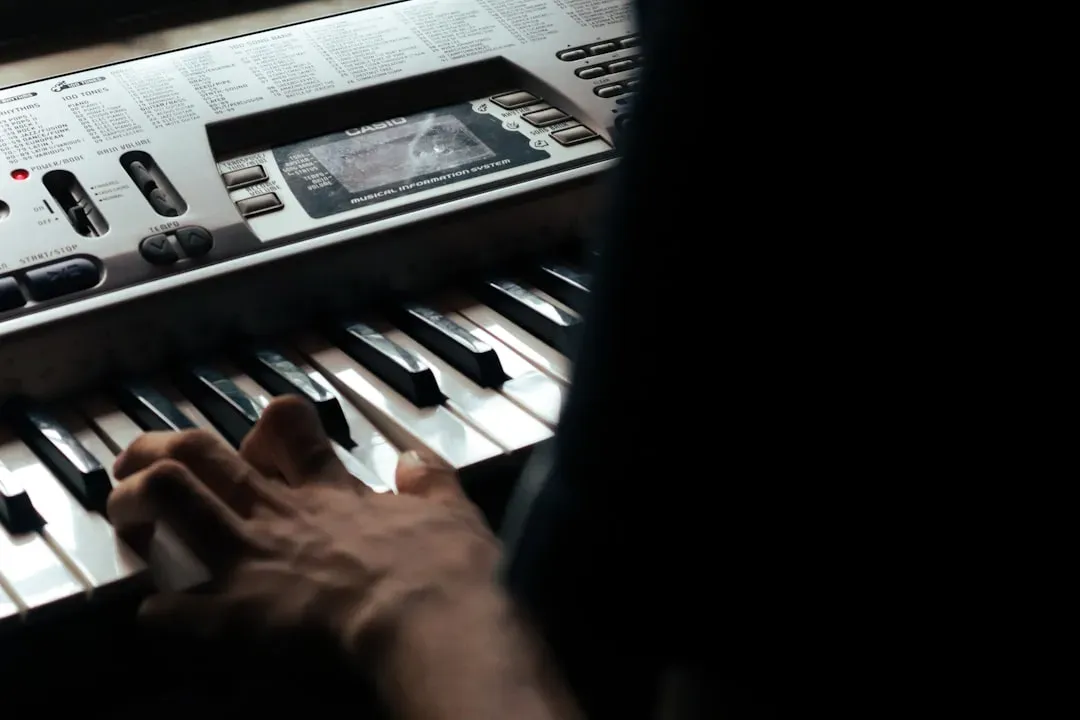
James Murphy knows how to close an album, and this farewell to New York City might be his finest moment. The song builds from quiet piano to full band crescendo, but what makes the ending special is how it deflates. All that energy just… runs out.
The final minute features Murphy’s voice getting more distant in the mix while the piano becomes increasingly sparse. It’s the musical equivalent of walking away from someone you love, looking back one more time, and then finally turning the corner. The last piano notes feel like footsteps echoing down an empty street.
What strikes me most is the honesty in how it ends – not with a bang, not with total silence, but with the quiet recognition that sometimes love isn’t enough. The city keeps going, indifferent to your feelings about it. That final piano chord hangs in the air like a question nobody’s going to answer.
Sigur Rós’s “Untitled #8 (Popplagið)” – Eleven Minutes of Pure Transcendence

Let’s be real, committing to an eleven-minute song takes patience. But those final three minutes, when the entire band explodes after building tension forever – it’s worth every second of waiting. The way Jónsi’s voice climbs higher and higher while the orchestra behind him swells to almost painful volume, it borders on religious experience.
The genius here is in the timing. They make you wait so long for that release that when it finally comes, it feels earned. You’ve been on a journey, and the destination is this massive wall of sound that washes over everything. Then, just as suddenly, it strips away to almost nothing – bowed guitar, distant percussion, like watching a wave recede.
That final minute of sparse, echoing guitar notes feels like waking up from a dream. You’re not quite sure what happened, but something definitely shifted. The way it fades on a single note that hangs in the air, refusing to resolve – it’s frustrating and perfect at the same time.
Conclusion

A truly powerful ending doesn’t just close a song – it reframes everything that came before it. These tracks understand that the last minute, the final chord, the way silence returns – these elements matter just as much as the hook or the first verse. Maybe more.
What makes these endings stick with us is their willingness to take risks. Some refuse to resolve. Others explode when you expect them to fade. A few just stop talking and let the void speak instead. But they all understand that an ending is its own statement, separate from the rest of the song. They commit fully to that final moment, and we feel it.
Next time you’re driving down Las Vegas Boulevard with the windows down, queue up a few of these tracks and pay attention to how they say goodbye. Did any of these surprise you? What other endings have left you speechless? Tell us in the comments.