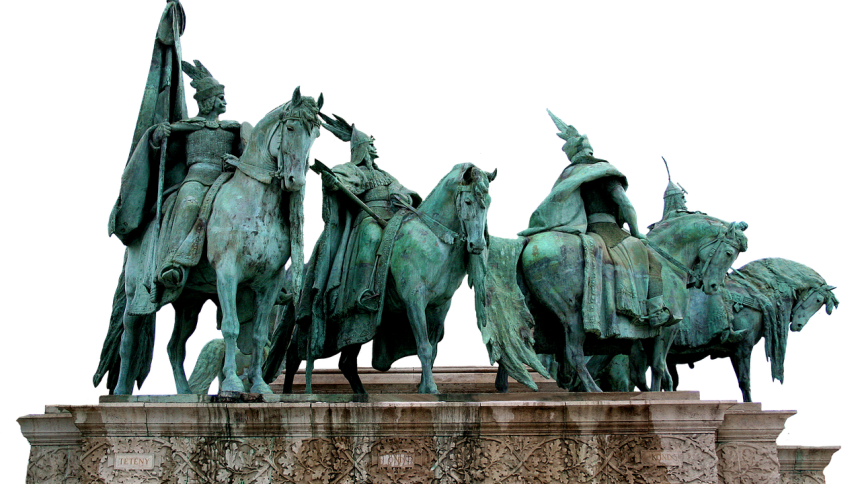
History loves a good underdog story. We’re drawn to tales of people who had every reason to fail but somehow didn’t. These aren’t the kings, queens, or wealthy elites you’d expect to find in textbooks. These are the misfits, the overlooked, the ones society wrote off before they even started. Yet they managed to reshape our world in ways no one saw coming.
What makes these stories so captivating is their sheer improbability. When you learn about their backgrounds, the obstacles they faced, you’ll wonder how they ever succeeded at all. Some were illiterate. Others were dismissed because of their gender, race, or social class. A few were considered too strange, too radical, or too unconventional to be taken seriously. But they persisted anyway, and the ripples of their actions are still felt today.
Ready to meet some of history’s most surprising changemakers? Let’s dive in.
Claudette Colvin – The Teenager Who Sparked a Movement Before Rosa Parks
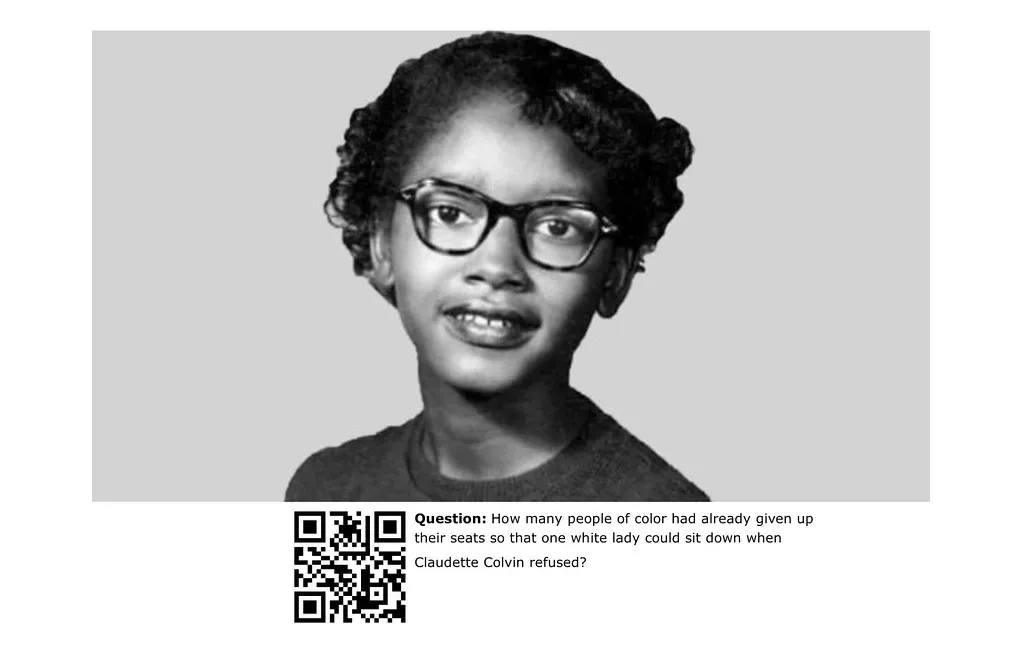
Nine months before Rosa Parks refused to give up her bus seat, a 15-year-old girl in Montgomery, Alabama did the exact same thing. Claudette Colvin was arrested on March 2, 1955, for violating segregation laws. She was just a high school student, but her courage was undeniable.
Civil rights leaders initially planned to build a court case around Claudette’s arrest. Then they discovered she was pregnant and unmarried. In the conservative climate of 1950s Alabama, they worried her image wouldn’t garner enough support. So they waited for someone else, someone more “acceptable” to white audiences.
That someone became Rosa Parks. But here’s what most people don’t know: Claudette didn’t disappear. She became one of four plaintiffs in Browder v. Gayle, the federal case that actually ended bus segregation in Montgomery. Not the Montgomery Bus Boycott itself, but this lesser-known lawsuit.
She lived most of her life in relative obscurity in New York, working as a nurse’s aide. It wasn’t until 2009 that she received any significant recognition. By then, she was in her seventies. “I knew what I did was right,” she later said, without a trace of bitterness about being overlooked.
Dashrath Manjhi – The Man Who Carved a Mountain With a Hammer

In 1960, Dashrath Manjhi’s wife fell while crossing a mountain in Bihar, India. She was carrying him lunch. The nearest medical facility was on the other side of that mountain, 55 kilometers away by the only available road. By the time they could get her there, she had died.
Manjhi was a laborer, one of the poorest people in his village. He had no education, no resources, no support from the government. What he did have was a hammer, a chisel, and an obsession. He decided to carve a path through the mountain himself.
People called him mad. His family begged him to stop. He worked alone for 22 years, chipping away at solid rock. Imagine that commitment, that singular focus. Most of us give up on New Year’s resolutions by February.
In 1982, he finished. He had carved a path 360 feet long, 30 feet wide, and 25 feet high through the mountain. The distance between his village and the nearest town dropped from 55 kilometers to 15. He became known as the “Mountain Man” and received recognition from the Bihar government shortly before his death in 2007.
Irena Sendler – The Social Worker Who Smuggled 2,500 Children Out of the Warsaw Ghetto
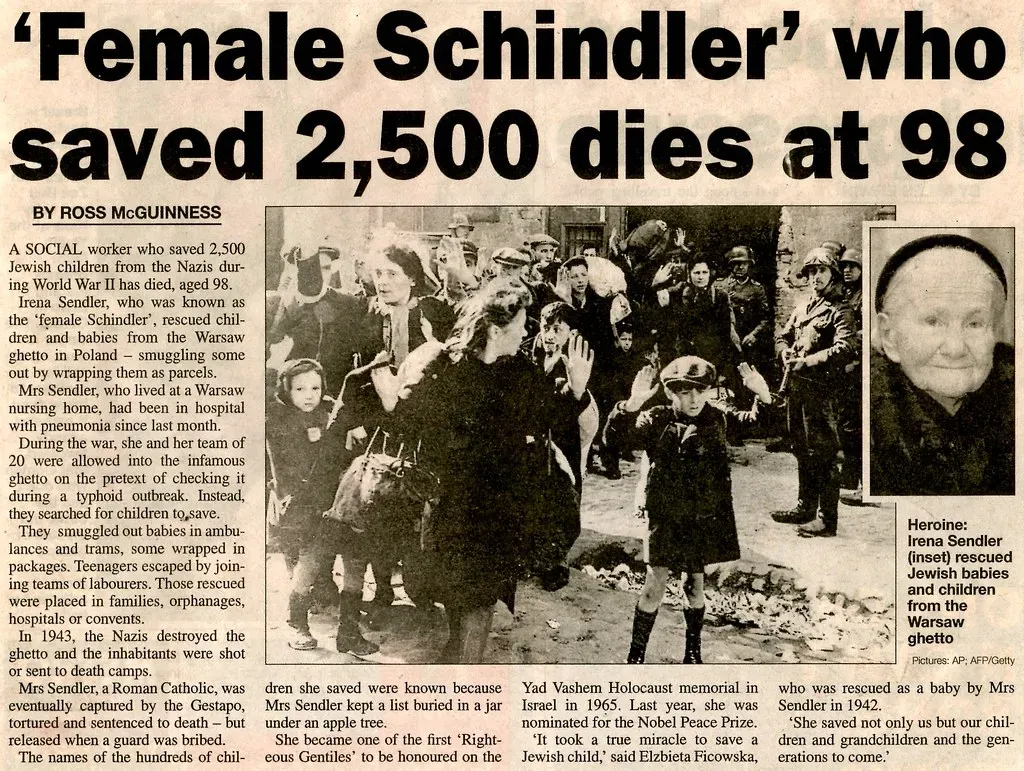
While Oskar Schindler gets movies and universal recognition, Irena Sendler remained largely unknown until late in her life. During World War II, she was a Polish social worker who managed to save approximately 2,500 Jewish children from the Warsaw Ghetto. She smuggled them out in toolboxes, suitcases, and even coffins.
She kept detailed records of each child’s real identity, written in code and buried in jars under an apple tree. She hoped to reunite them with their families after the war. Tragically, most of their parents had been killed in Treblinka.
The Gestapo arrested her in 1943. They tortured her, breaking her legs and feet. She never revealed a single name or location. She was sentenced to death but escaped when resistance fighters bribed German guards on the way to her execution.
She lived quietly in Warsaw after the war, her story barely known. It wasn’t until 1999, when a group of Kansas students researched her for a school project, that her story gained widespread attention. She was 88 years old. She died in 2008 at age 98, nominated for the Nobel Peace Prize but never receiving it.
Stanislav Petrov – The Soviet Officer Who Prevented Nuclear War
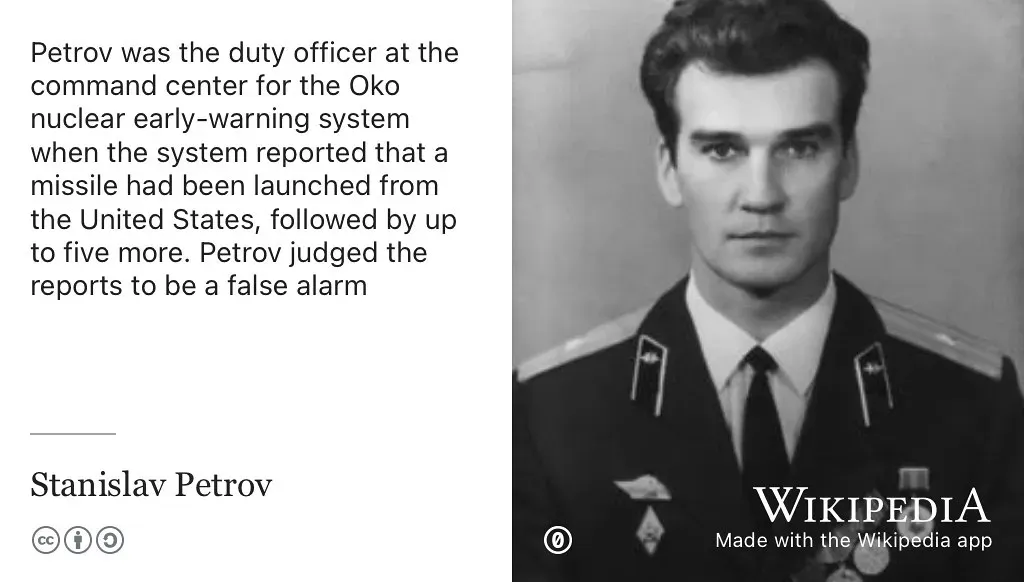
On September 26, 1983, Soviet satellites detected five incoming American nuclear missiles. Stanislav Petrov was the duty officer that night at a nuclear early-warning facility. His job was simple: if an attack was detected, report it immediately so the Soviet Union could launch a counterstrike before being destroyed.
Protocol was clear. The alarms were screaming. His superiors were waiting for confirmation. The entire Soviet nuclear arsenal was ready to launch. One word from Petrov and World War III would begin.
He didn’t give that word. Something felt wrong to him. Why would the Americans launch only five missiles? If they were really attacking, wouldn’t they send hundreds? He reported it as a false alarm, directly contradicting what the computers were telling him.
He was right. It was a system malfunction caused by sunlight reflecting off clouds. But he couldn’t have known that at the time. He made a judgment call based on intuition, and it saved potentially hundreds of millions of lives.
The Soviet military didn’t thank him. They reassigned him to a less sensitive post and gave him no recognition. He lived modestly on his pension. The world didn’t learn about him until 1998, and he died in 2017 at age 77.
Chiune Sugihara – The Diplomat Who Defied His Government to Save Thousands
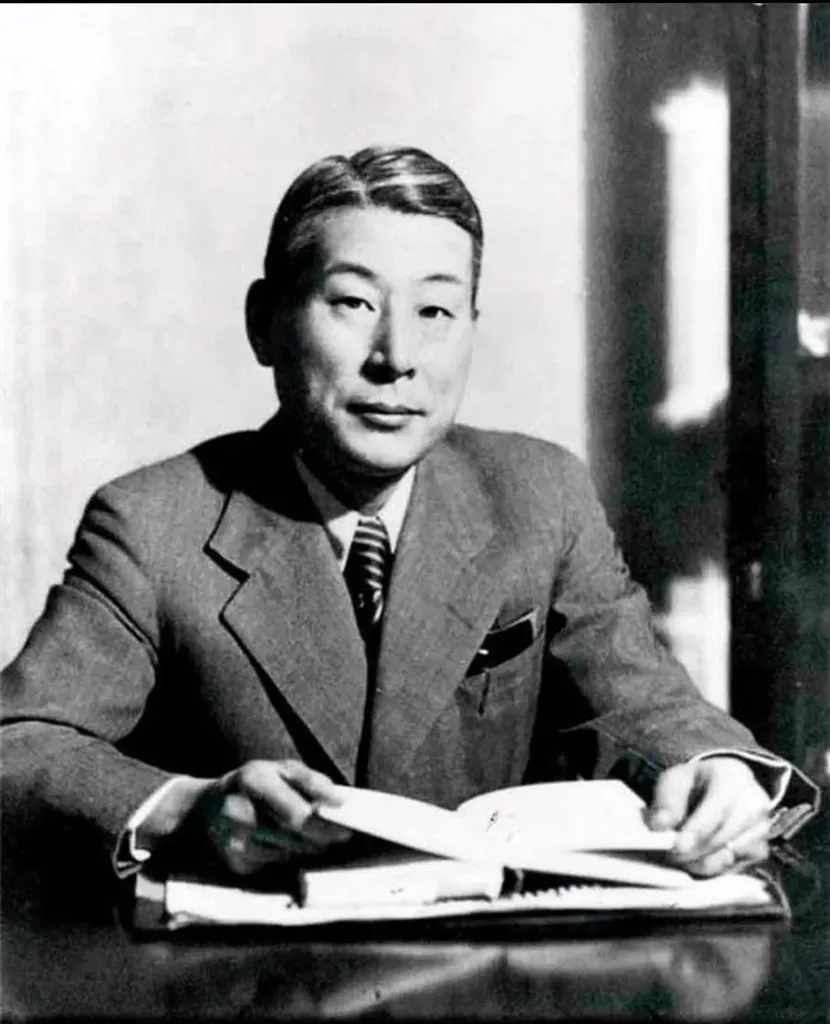
In 1940, Chiune Sugihara was a Japanese vice-consul in Lithuania. As the Nazis advanced, thousands of Jewish refugees crowded outside the Japanese consulate, desperate for transit visas to escape through Japan. Sugihara sent multiple requests to Tokyo asking for permission to issue visas. Tokyo refused every time.
He issued them anyway. For 29 days, he wrote visas by hand, sometimes 18 hours a day. His wife massaged his hands when they cramped. He issued visas to anyone who asked, abandoning the usual requirements. He was still writing visas as his train pulled away from the station when he was finally recalled to Japan.
He saved an estimated 6,000 lives. Japan’s government punished him by forcing him to resign from the diplomatic service. He worked odd jobs for the rest of his life, selling light bulbs door to door for a while.
Israel recognized him as Righteous Among the Nations in 1984, but Japan didn’t officially acknowledge his heroism until 2000, fourteen years after his death. His widow accepted the honor on his behalf.
Mary Anning – The Fossil Hunter Who Revolutionized Paleontology While Being Excluded From It
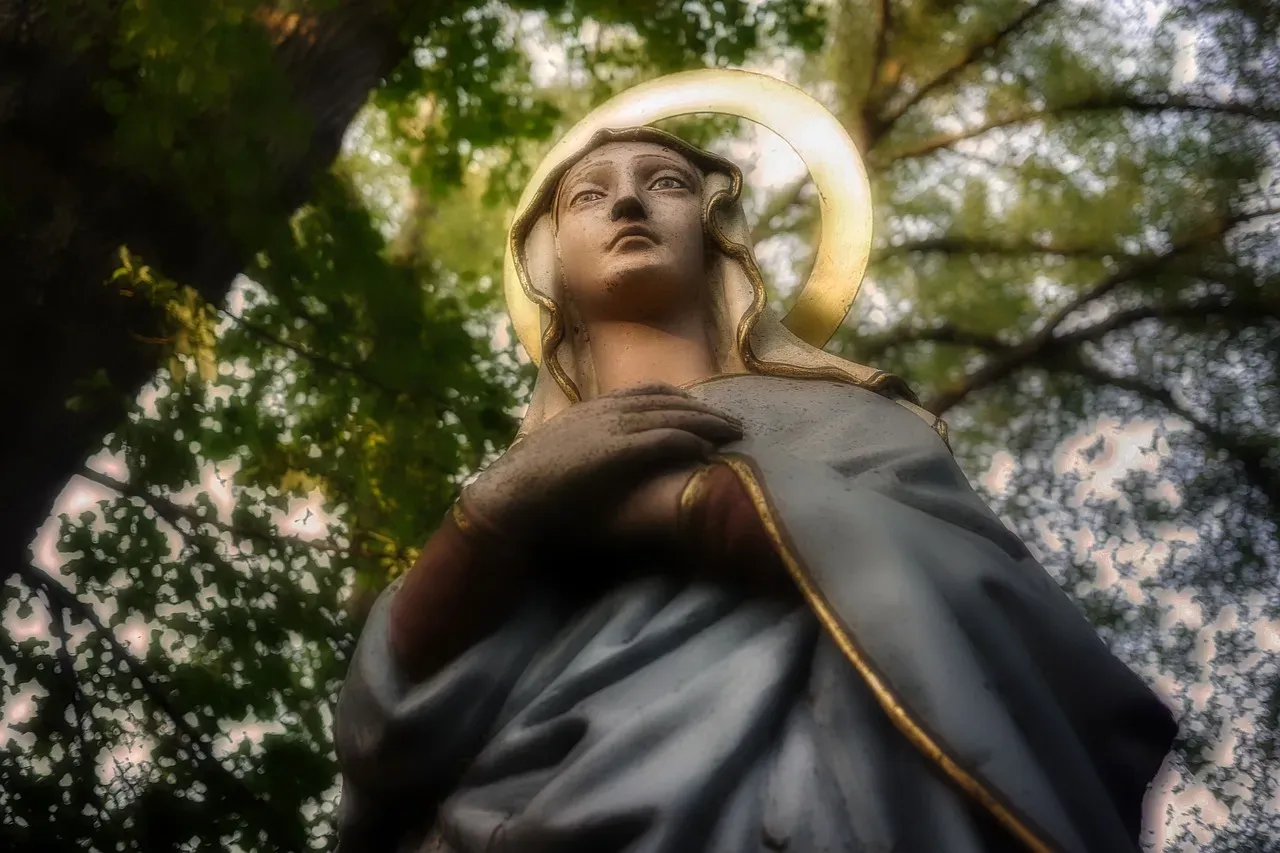
Mary Anning couldn’t attend university because she was a woman. She couldn’t join the Geological Society of London for the same reason. She was working-class, had little formal education, and lived in a small coastal town in England. Yet she discovered some of the most important fossils of the 19th century.
At age 12, she discovered the first complete ichthyosaur skeleton. Later, she found the first plesiosaur and the first pterosaur fossils in Britain. Her discoveries fundamentally changed scientific understanding of prehistoric life and extinction.
Male scientists bought her fossils and published papers about them, rarely crediting her. She died of breast cancer at 47 in 1847. The Geological Society of London didn’t admit women as members until 1904, decades after her death.
Charles Dickens wrote about her, noting the cruel irony: “The carpenter’s daughter has won a name for herself, and deserved to win it.” But that name remained largely unknown outside scientific circles until recently. There’s even a theory that the tongue twister “she sells seashells by the seashore” was inspired by her.
Vasily Arkhipov – The Submarine Officer Who Said No to Nuclear Torpedoes

During the Cuban Missile Crisis in October 1962, a Soviet submarine designated B-59 was cornered by American destroyers. The submarine was out of radio contact with Moscow, didn’t know whether war had already started, and was being depth-charged by the Americans. The conditions inside were brutal. The temperature reached 140 degrees Fahrenheit, and carbon dioxide levels were dangerously high.
The captain and political officer wanted to launch a nuclear torpedo. Soviet protocol required agreement from all three senior officers on board. The third was Vasily Arkhipov, the flotilla commander who happened to be aboard. He refused.
Think about that pressure. Your captain is ordering you to launch. The Americans are dropping explosives around you. You have no way of knowing what’s happening above the surface. For all you know, World War III has already begun and you’re fighting for your country’s survival.
Arkhipov stood firm. The submarine surfaced and sailed back to Russia. The officers faced criticism for not engaging the Americans. Arkhipov returned to regular naval service and died in 1998 from radiation exposure he’d received during an earlier submarine accident in 1961.
His story wasn’t declassified until after his death. Thomas Blanton, director of the National Security Archive, called Arkhipov “the guy who saved the world.” And yet, most people have never heard of him.
James Harrison – The Man With the Golden Arm Who Saved 2.4 Million Babies
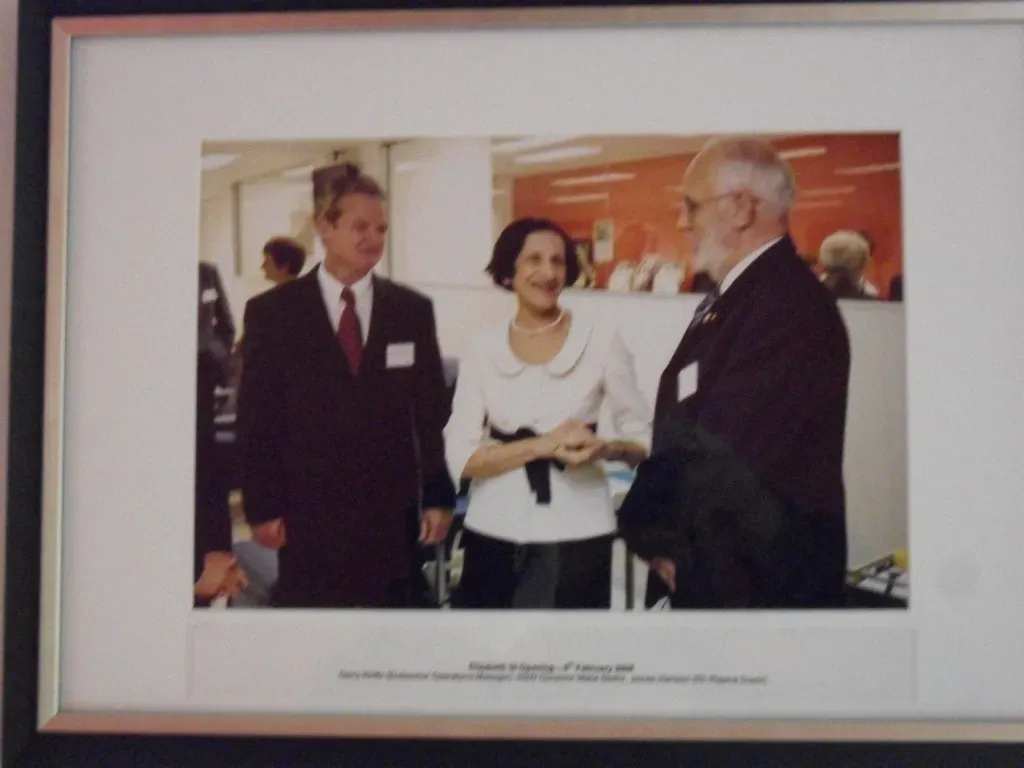
James Harrison discovered something unusual about his blood after a major chest surgery when he was 14. His blood contained rare antibodies that could prevent Rhesus disease, a condition where a pregnant woman’s antibodies attack her baby’s blood cells. This disease killed thousands of babies every year in Australia alone.
Harrison started donating blood regularly. Scientists used his plasma to develop Anti-D immunoglobulin injections that protect Rh-negative mothers from developing antibodies during pregnancy. He donated almost every week for 60 years, more than 1,100 times total, until he reached the age limit for donors.
His donations are estimated to have saved the lives of 2.4 million babies, including his own grandchild. He never accepted payment and never missed an appointment if he could help it. “I’ve never thought about stopping,” he said in an interview years ago. “Never.”
Australia honored him with the Medal of the Order of Australia in 1999. He made his final donation in 2018 at age 81, not because he wanted to stop but because Australian policy doesn’t allow donors over 81. The staff at the blood center applauded him. Some were crying.
Viktor Frankl – The Psychiatrist Who Found Meaning in a Death Camp
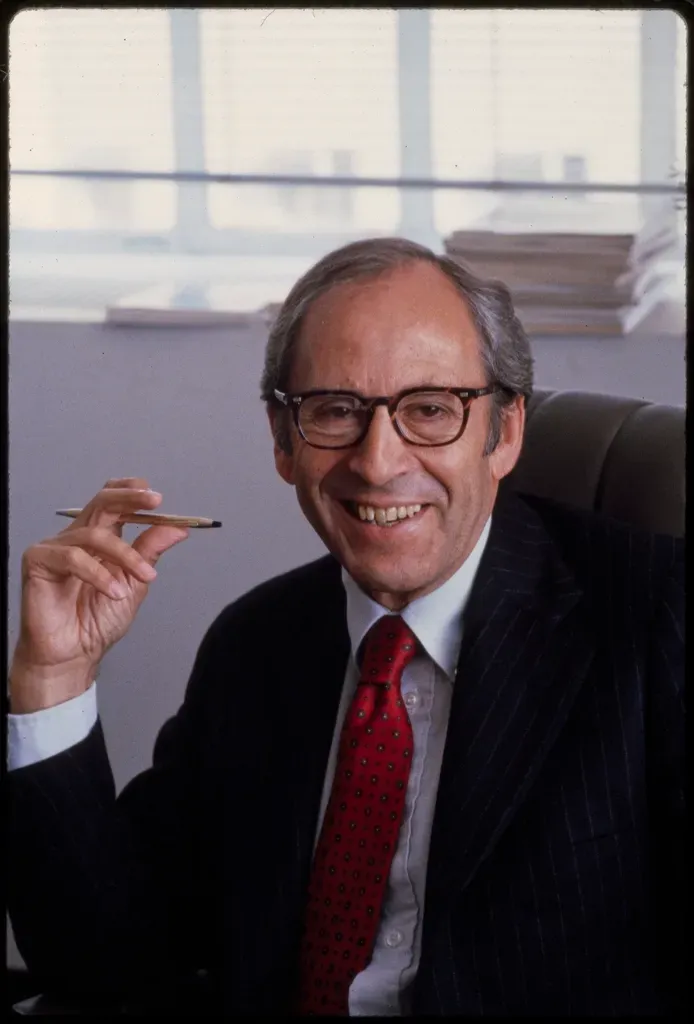
Viktor Frankl was a Viennese psychiatrist sent to Auschwitz in 1944. He spent three years in concentration camps, including Dachau and Theresienstadt. He lost his wife, brother, and parents to the Holocaust. He had every reason to despair, to give up, to lose faith in humanity.
Instead, he observed something fascinating about survival. It wasn’t the strongest or healthiest prisoners who survived. It was those who maintained a sense of purpose, who found meaning even in unbearable suffering. Those who had something to live for, whether it was a person waiting for them or work left undone, had better survival rates.
After his liberation, he wrote “Man’s Search for Meaning” in nine days. The book describes his experiences and introduces logotherapy, his theory that finding meaning in life is the primary motivational force in human beings. It’s sold over 10 million copies and been translated into dozens of languages.
He could have emerged from the camps broken, bitter, consumed by hatred. Instead, he used his suffering to develop a therapeutic approach that has helped millions of people find purpose in their own struggles. He continued practicing psychiatry until shortly before his death in 1997 at age 92.
Conclusion
These weren’t people born into power or privilege. They didn’t have elite educations or influential connections. Some were teenagers. Others were poor laborers. Several were actively punished for their heroism. Yet each of them changed the world in profound ways, often without recognition or reward.
What strikes me most about these stories is how easily they could have never happened. If Petrov had followed protocol, if Arkhipov had agreed with his captain, if Claudette Colvin had given up her seat, if Dashrath Manjhi had accepted his wife’s death as tragic inevitability. History balanced on their individual choices, made in moments of crisis or sustained over decades of obscurity.
They remind us that heroism doesn’t require fame, wealth, or power. Sometimes it just requires saying no when everyone expects you to say yes. Or saying yes when it would be easier to walk away. Or continuing to show up, week after week, year after year, even when no one’s watching or thanking you.
What do you think makes someone an unlikely hero? Tell us in the comments.