
The Billboard Hot 100 was never a perfect measure of greatness. It reflects what sold, what got radio play, and what the gatekeepers of any given era decided to push. Sometimes those forces aligned with genuine artistry. Often, they didn’t. The result is a peculiar graveyard of songs that shaped culture, won awards, became protest anthems, and soundtracked people’s most important moments – yet somehow never registered on the charts at all, or barely scraped past number eighty.
This list isn’t about obscure album cuts that only die-hard fans know. These are songs that got heard, that moved people, that critics praised and audiences loved – just not in the way that the commercial machinery needed in order to count them. Musicians and music fans know well that the charts aren’t always an honest depiction of artistic greatness, especially as the same handful of tracks dominate the top spot for weeks on end, with ranking in sales not always correlating with the works we’ll look back on and consider the best in decades to come. The six songs here are proof of exactly that.
1. “Comfortably Numb” – Pink Floyd (1979)

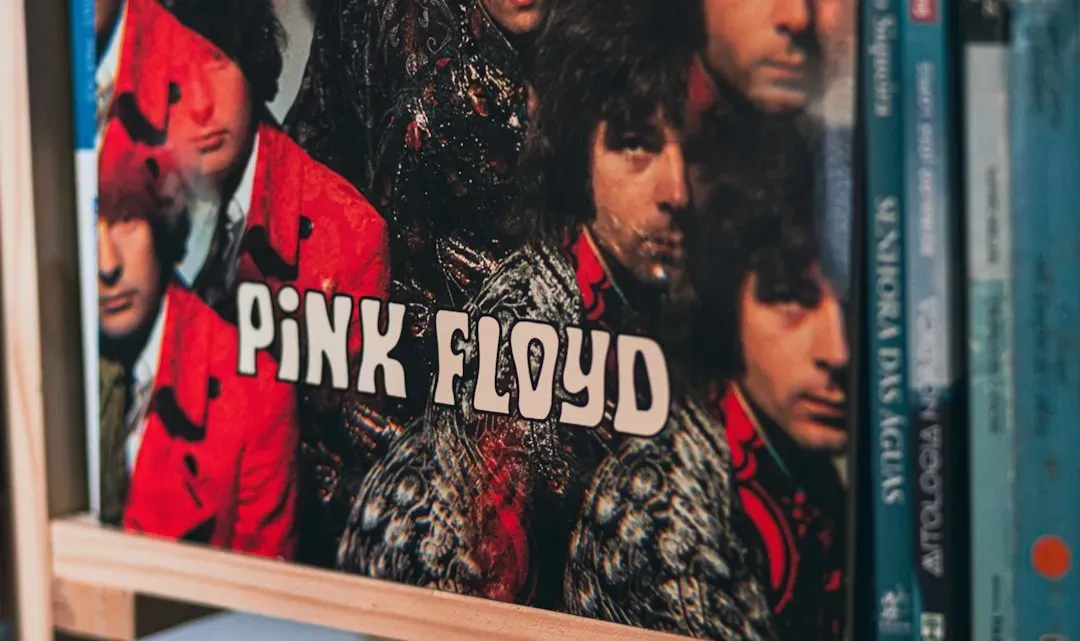
David Gilmour’s legendary guitar solo didn’t just fail to crack the Hot 100 top 40 – “Comfortably Numb” never even made it onto the chart at all. That’s a genuinely staggering fact when you consider how deeply embedded the song is in rock history. It appears on nearly every “greatest rock songs” list ever compiled, and its two-part guitar outro is one of the most studied and imitated solos in music.
Gilmour’s solo at the end of the 1979 track is regularly ranked as one of the greatest guitar moments in history, and the song has become one of Pink Floyd’s most defining and well-regarded tracks, always included in Greatest Hits compilations and introductory playlists for the group. The Wall was a commercial juggernaut as an album, yet its most iconic single was invisible on the charts. Radio formats, album-era sales tracking, and the sheer strangeness of Pink Floyd’s commercial identity all contributed to that disconnect. The music endured anyway.
2. “Alright” – Kendrick Lamar (2015)


“Alright” earned Kendrick two Grammys and a modest number 81 peak on the Hot 100. For any other song, that might seem like reasonable recognition. For a track that became the defining protest anthem of a generation, it represents an almost comical underperformance by the chart system. “Alright” received four nominations at the 58th Grammy Awards: Song of the Year, Best Music Video, Best Rap Performance, and Best Rap Song, winning the latter two.
The song was associated with the Black Lives Matter movement after several youth-led protests were heard chanting the chorus, with publications such as Rolling Stone, People, and Complex noting the song’s importance and calling “Alright” the “unifying soundtrack” of the movement. Pitchfork later named it the best track of the entire 2010s decade. A song that Beyoncé incorporated into her Renaissance World Tour, that was performed at the Super Bowl, and that Rolling Stone placed at number 45 on its all-time 500 Greatest Songs list – all with a peak chart position of 81. The numbers don’t add up, and they never will.
3. “American Girl” – Tom Petty and the Heartbreakers (1977)


Tom Petty’s 1977 single “American Girl” is one of the most prolific rock songs of the 1970s, yet it seems neither the masses nor the charts agreed with that opinion when it was first released. Bafflingly, Petty’s iconic single didn’t chart at all – “American Girl” failed to reach even the number 100 spot on the Billboard Hot 100. For a song that has since been used in films, television shows, and stadium singalongs for nearly five decades, that original silence is almost inexplicable.
The song was released at a moment when Petty was still largely unknown outside of Florida. Radio programmers weren’t ready, and the rock landscape was crowded. Today, “American Girl” is one of Tom Petty’s most iconic singles and one of the most iconic singles in all of classic rock, making it incredibly hard to understand how this single got no love from the most popular chart in the world. It’s the kind of chart failure that feels more like a historical anomaly than a legitimate verdict on the song’s quality.
4. “Should I Stay or Should I Go” – The Clash (1982)


Influential punk rockers the Clash earned their biggest chart breakthrough in the U.S. with their 1982 album Combat Rock, and while “Rock the Casbah” shot into the top 10, the follow-up single “Should I Stay or Should I Go” peaked at just number 45. The track appears on many lists of the best rock songs of all time. For a band that was reshaping the possibilities of rock music and reaching genuinely mainstream audiences, a number 45 peak felt like a missed handshake.
The song was re-released in Britain in 1991 after appearing in a Levi’s commercial, and got to number 1 in the U.K. as a result. That commercial resurrection is both satisfying and a little sad. It took a jeans advertisement to give the song the chart run it deserved nine years after release. The Clash had broken up by then. The lesson, as usual, is that timing and context matter far more to chart success than quality ever does.
5. “Highway to Hell” – AC/DC (1979)


Perhaps the most shocking chart failure belongs to AC/DC, a band that has only ever managed three top-40 hits in America. Despite being a huge hit elsewhere, not even “Thunderstruck” made the cut in America, and “Highway to Hell” – considered one of the ultimate rock songs ever written – peaked at just 47. Even the UK slept on the hit, where it fell to 56th place in the charts.
The song has since become shorthand for hard rock itself, used in films, sports arenas, and every conceivable commercial context worldwide. Bon Scott’s vocal performance on “Highway to Hell” is frequently cited as one of the great rock vocal deliveries on tape, and the riff is immediately recognizable to billions of people. Sometimes status is only gained in retrospect – and “Highway to Hell” is perhaps the most extreme example of that truth in rock history. The charts said average. The world said otherwise.
6. “Under Pressure” – Queen and David Bowie (1981)


When Queen and David Bowie collaborated for one song in 1981, it seemed like a no-brainer for massive chart success. With an unbelievably catchy bassline, finger snaps, and powerful vocals from both Bowie and Freddie Mercury, the only question seemed to be how many weeks it would log at number 1. Though it did top the U.K. singles chart, the song only reached number 29 in the U.S.
Two of the defining artists of the era, combining their talents on a track with one of the most recognizable basslines ever recorded, and the American chart reaction was a lukewarm 29. Adding a further footnote to the song’s complicated legacy, the songwriting credits for “Ice, Ice Baby” originally failed to acknowledge Queen and David Bowie as its co-authors, meaning the bassline became more famous through a sample dispute than through its own chart run. The song is now widely regarded as one of the best collaborations in pop history, but the Hot 100 in 1981 had other ideas entirely.
What all six of these songs share is something the charts can’t quantify: staying power. They outlasted their contemporaries, earned retrospective recognition, and became genuinely indispensable to the culture. Chart positions are a snapshot of one week’s worth of commerce. These songs are still being discovered, argued about, and played at full volume decades later. That’s a different kind of chart entirely – one nobody officially keeps, but everyone seems to agree on.