
Science moves fast, but it doesn’t always start from scratch. Some of the most durable ideas in modern science trace back thousands of years, to thinkers who had no laboratories, no telescopes, and no peer-reviewed journals. They had sharp minds and a willingness to reason carefully from what they could observe. Remarkably, a handful of their conclusions have proven difficult to improve upon.
What follows is a look at some of the oldest scientific theories still standing, or at least still standing partially upright, despite the relentless march of better instruments and better data. Each one tells you something not just about ancient ingenuity, but about the kind of thinking that tends to survive.
Atomism: Everything Is Made of Tiny, Indivisible Parts

Democritus introduced the notion of atomism, believing that “atoms” were indivisible and eternal, forming the foundation of all matter. He proposed this in the 5th century BCE, armed with nothing but logic and a restless philosophical mind. No experiment, no equipment, no evidence in the modern sense.
The discovery of subatomic particles in the early 20th century did not spell the end of atomism in Western thinking. Atoms were not as uncuttable as their names suggested, and with enough energy, they could be separated into protons, neutrons, and electrons. Even some of those were eventually found to not be fundamental, but the idea that everything is ultimately made of tiny indivisible chunks held sway. The core intuition was right, even if the details needed updating by about 2,400 years.
Heliocentrism: The Sun at the Center
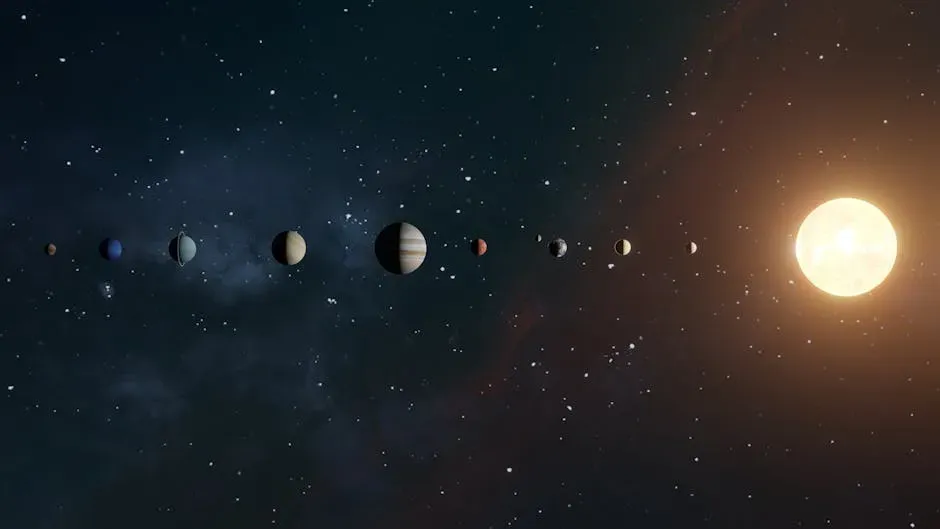
Aristarchus of Samos, around 310 to 230 BC, was an ancient Greek astronomer and mathematician who presented the first known heliocentric model that placed the Sun at the center of the universe, with the Earth revolving around the Sun once a year and rotating about its axis once a day. His ideas were rejected almost immediately and largely forgotten for well over a millennium.
Although his theory was noted by other thinkers of his time, it was rejected as implausible, and the geocentric model was retained for 1,700 years afterward. The work of Tycho Brahe and Johannes Kepler provided the foundation for Sir Isaac Newton’s mathematical proofs of the heliocentric universe first proposed almost 2,000 years earlier by Aristarchus. That is one of the longer gaps between idea and vindication in the history of science.
The Spherical Earth: A Round Planet Long Before Columbus
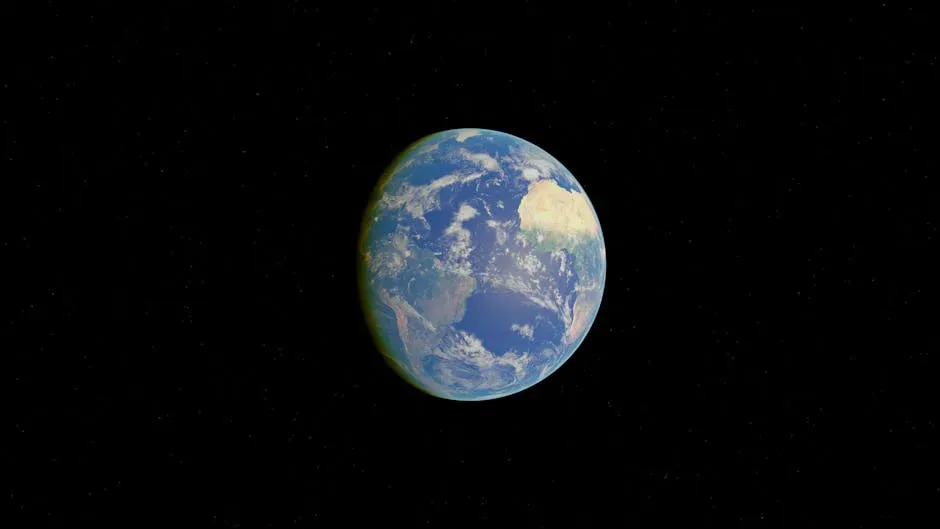
Possibly the first to propose a spherical Earth based on actual physical evidence was Aristotle, who listed several arguments: ships disappear hull first when they sail over the horizon, Earth casts a round shadow on the moon during a lunar eclipse, and different constellations are visible at different latitudes. These are not guesses. They are careful observations tied to a testable claim.
Contrary to the myth that people universally believed in a flat Earth before Columbus, educated circles in ancient times already recognized the planet’s spherical shape. The idea was never truly lost among scholars. It persisted, held firm by physical reasoning, and was eventually confirmed with the kind of precision no ancient Greek could have imagined.
Eratosthenes and the Circumference of the Earth
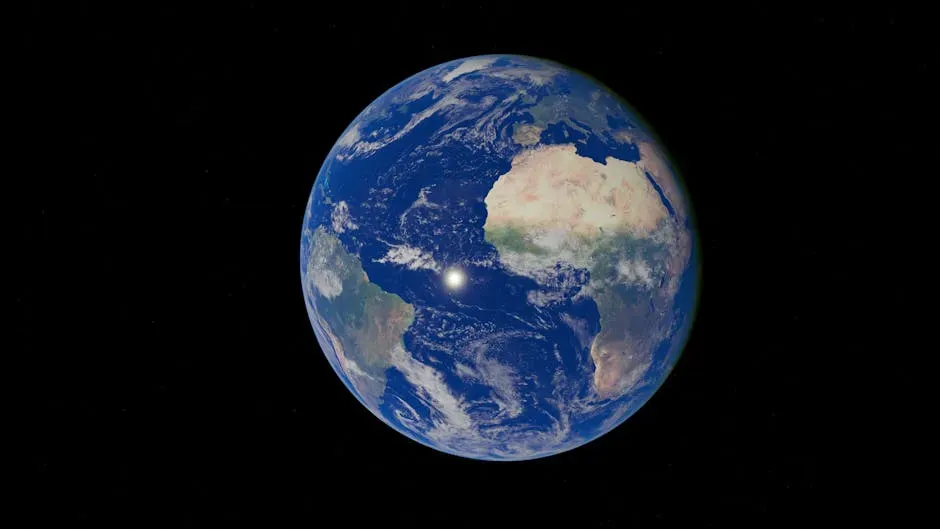
Eratosthenes is best remembered as the first known person to calculate the Earth’s circumference. He was also the first to calculate Earth’s axial tilt, which similarly proved to have remarkable accuracy. He did this around 240 BCE, working from two cities, a shadow, and a brilliant piece of geometric reasoning.
Eratosthenes’ calculation is only about two percent off from what has been determined as the Earth’s true circumference: 24,901 miles. A two percent margin of error, achieved with a stick and a hired walker. Eratosthenes helped to lay the foundation for science based on mathematics and empirical observation rather than on mere philosophical speculation. Most importantly, he demonstrated the awesome power of mathematics as a tool to model our world.
Newtonian Mechanics: Incomplete but Still Indispensable

Some theories known to be incomplete or in some ways incorrect are still used. For example, Newtonian classical mechanics is accurate enough for practical engineering, navigation, and construction. Even now, in 2026, every bridge built, every rocket launched to low Earth orbit, and every car designed relies on equations Newton formalized in the late 17th century.
Isaac Newton provided the missing dynamical explanation for planetary motion: universal gravitation and the laws of motion. With his equations and three laws, Newton explained Kepler’s ellipses and variable speeds as natural consequences of inverse-square gravitational attraction. Einstein later showed that Newton’s framework was an approximation, but an approximation so good that it remains the workhorse of applied physics worldwide.
Partner offer
The Water Cycle: Ancient Description, Modern Confirmation

Wang Chong, much like the earlier Aristotle in Greece, accurately described the water cycle of Earth but was dismissed by his contemporaries. The idea that water evaporates, rises, forms clouds, and returns as rain was articulated in various forms across multiple ancient civilizations. It was observed, tracked, and recorded centuries before anyone could measure humidity or map atmospheric pressure.
The water cycle as understood today is far more detailed, encompassing ocean currents, transpiration from plants, and complex feedback loops tied to climate. Still, the essential model, water moving through a continuous loop between surface and sky, is exactly what ancient thinkers described. Their version wasn’t wrong. It was simply incomplete at the edges.
The Germ Theory Precursors: Disease from Invisible Sources

William Farr, a pioneer of epidemiology and health statistics, provided vital cluster data during London’s 1854 cholera outbreak. John Snow famously used this data to trace the waterborne disease to a Broad Street water pump. His work, and that of pioneers like Ignaz Semmelweis and Joseph Lister, would later help Louis Pasteur and Robert Koch prove germ theory. However, the intuition that invisible agents caused disease goes back much further.
Ancient Indian texts from around 600 BCE referenced tiny living creatures as potential causes of illness. Roman scholar Marcus Terentius Varro, writing in the first century BCE, warned against building near swamps because of invisible creatures that might be inhaled. The details were wrong, but the direction of reasoning, that disease had a physical, transmissible cause rather than a supernatural one, was exactly right. Germ theory simply gave that ancient intuition a rigorous mechanism.
Conservation of Matter: Nothing Comes from Nothing

The atomists Leucippus and Democritus claimed that the physical world consisted of atoms in constant motion in a void, rebounding or cohering as they collide with each other. Change of all sorts was thus accounted for on a basic level by the atoms separating and recombining to form different materials. The atoms themselves do not change. Embedded in that idea is something very close to what later became the law of conservation of mass.
The formal version, stated by Antoine Lavoisier in the 18th century, holds that matter is neither created nor destroyed in a chemical reaction. Modern physics refined this further into conservation of mass-energy. Yet the ancient intuition, that the stuff of the universe persists and only rearranges, has proven astonishingly robust. It survived chemistry, survived thermodynamics, and survived relativity, each time emerging in a slightly more precise form.
The Pythagorean Theorem: An Ancient Formula with Perpetual Relevance
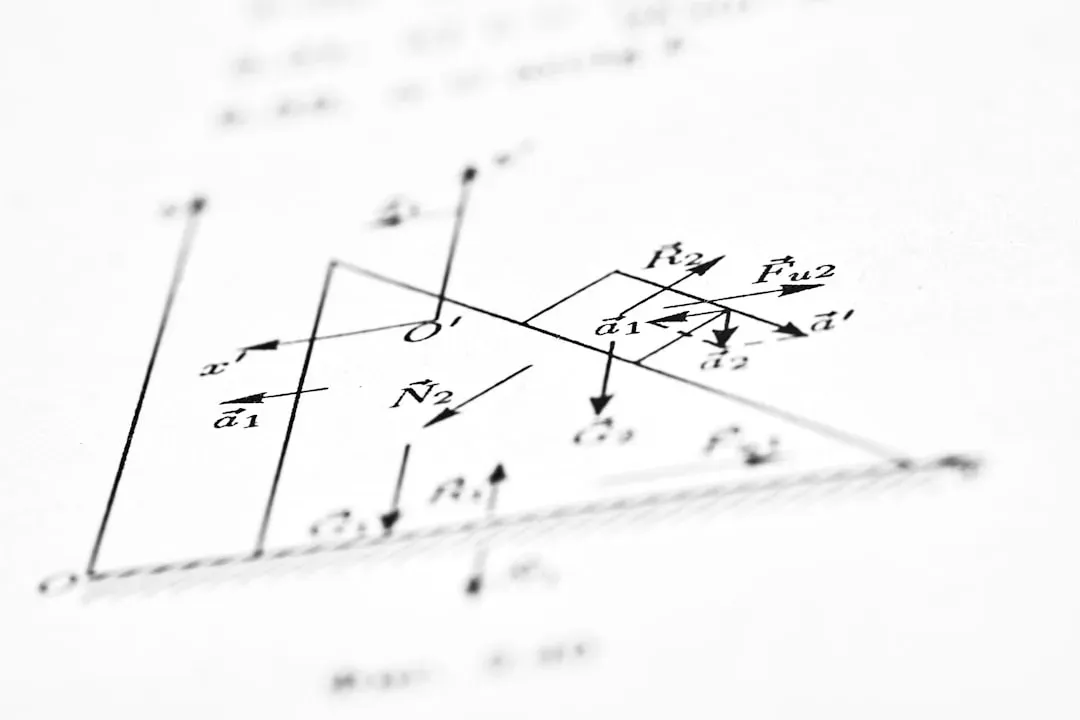
The Mesopotamian cuneiform tablet Plimpton 322, dating to the 18th century BCE, records a number of Pythagorean triplets, hinting that the ancient Mesopotamians might have been aware of the Pythagorean theorem over a millennium before Pythagoras. The relationship between the sides of a right triangle was known, applied, and trusted long before anyone gave it a formal proof.
Today the theorem underpins everything from architectural design to GPS calculations to computer graphics. It’s hard to name a mathematical relationship with a longer unbroken record of practical use. Mathematicians have found hundreds of distinct proofs of it over the centuries. None of them changed the result. The ancient formula holds, and it likely always will, because it describes something fundamental about flat space itself.
The Infinite Universe and the Vastness of Space
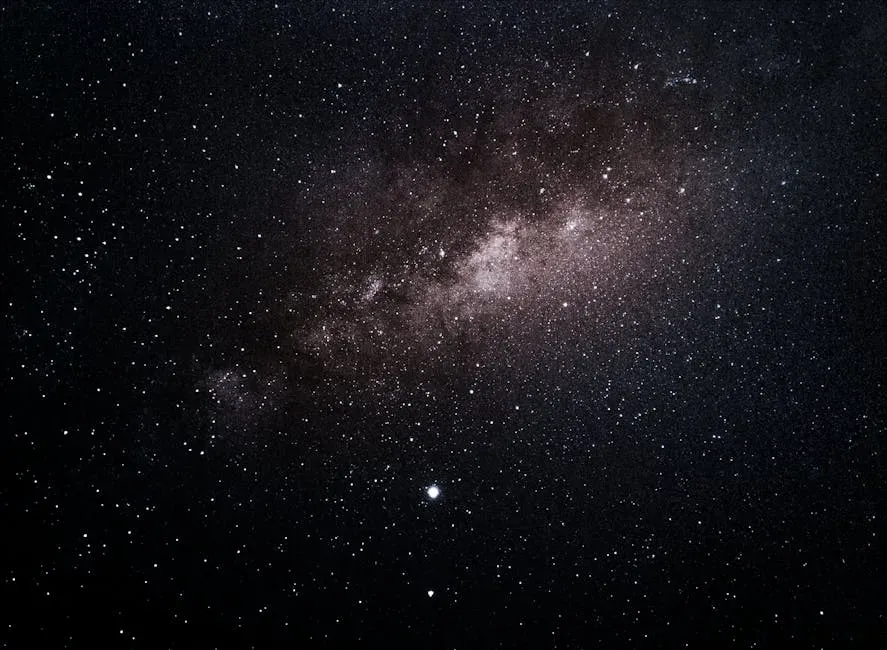
Aristarchus proposed that the fixed stars were extremely distant, far enough that their apparent positions relative to each other would remain constant throughout Earth’s motion. He postulated that the stars were other suns that are very far away, far enough that parallax was not observable. This implied a universe much larger than had been believed.
That reasoning was ridiculed for centuries. The idea of a vast, possibly infinite cosmos felt philosophically uncomfortable to most ancient and medieval thinkers, who preferred a tidy, bounded universe with Earth at its center. Modern astronomy has confirmed that the universe is not merely large but almost incomprehensibly so, with hundreds of billions of galaxies, each containing hundreds of billions of stars. Aristarchus pointed in exactly the right direction, even if he had no way of knowing how far that direction led.
The lesson running through all of these theories is quieter than it might seem. These thinkers weren’t simply lucky. They were asking the right questions, stripping problems down to their essentials, and following the logic wherever it led, even when cultural consensus pushed back. Rigorous reasoning, it turns out, has a long shelf life.
Partner offer
Planning a trip to Vegas?
Compare hotel rates and show tickets on VEGAS.com.