Some writers spend a lifetime chasing the book that defines them, publishing dozens of titles in search of the one that sticks. Then there are the ones who wrote a single novel, watched it become part of the literary canon, and simply stopped. Whether by choice, circumstance, or an early death, these authors left behind exactly one major work of fiction, and nothing else followed.
What makes these cases so fascinating isn’t just the rarity of a one-book career. It’s the fact that each of these novels became so influential, so widely read, that readers often assume the author must have written more. They didn’t, and the reasons why are as varied as the books themselves.
Emily Brontë and Wuthering Heights


Emily Brontë published Wuthering Heights in 1847 under the pen name Ellis Bell, a common practice for women writers of the era who wanted their work judged without gender bias. The novel’s dark, unconventional structure and its wild Yorkshire moor setting unsettled critics at the time, though it later became recognized as one of the most important works in English literature. Brontë never had the chance to build on that reception or respond to critics.
She died in December 1848, just over a year after the book’s publication, likely of tuberculosis that she may have contracted at her brother Branwell’s funeral. She was 30 years old. Any second novel she might have been working on, if one existed, was never found among her papers, leaving Wuthering Heights as her sole complete work of fiction.
Anna Sewell and Black Beauty


Anna Sewell wrote Black Beauty in the final years of her life, largely while confined to her home due to illness that made walking difficult for decades. The novel, narrated from the perspective of a horse, was intended as commentary on the treatment of animals, particularly working horses in Victorian England, rather than as a children’s book. It was published in 1877 and went on to sell tens of millions of copies worldwide, becoming one of the best-selling books of all time.
Sewell did not live to see much of that success. She died just five months after the novel’s publication, reportedly having lived long enough to hear that the book was influencing how people treated horses. Black Beauty remains her only novel, written under physical constraints that would have made a second book nearly impossible to complete.
Margaret Mitchell and Gone with the Wind


Margaret Mitchell spent nearly a decade writing Gone with the Wind, a sprawling Civil War epic that she initially wrote almost in secret, reportedly telling few people about the manuscript. Published in 1936, the book won the Pulitzer Prize the following year and became a cultural phenomenon, later adapted into one of the highest-grossing films in history. Mitchell became something of a reluctant celebrity almost overnight.
Despite pressure from publishers and readers for a follow-up, she never released another novel. She reportedly found the attention overwhelming and preferred a quieter life in Atlanta, where she was involved in civic work until her death in 1949 after being struck by a car. Whether she was working on other material privately remains unclear, but nothing else was ever published.
Harper Lee and To Kill a Mockingbird


Harper Lee published To Kill a Mockingbird in 1960, and it quickly became a fixture of American literature, winning the Pulitzer Prize and remaining a staple of school curricula for more than six decades. For over fifty years, Lee gave few interviews and consistently declined to publish another novel, despite immense public curiosity about why. She reportedly said the pressure of following up such a beloved book felt impossible to meet.
In 2015, a manuscript called Go Set a Watchman was released, revealed to be an earlier draft written before Mockingbird rather than a true sequel. Its publication, which came shortly before Lee’s death in 2016, remains controversial among scholars and readers who questioned whether the elderly and partially blind author fully consented to its release. For most of her life and career, To Kill a Mockingbird stood as her only published novel.
Sylvia Plath and The Bell Jar


Sylvia Plath is remembered primarily as a poet, but she wrote one novel, The Bell Jar, a semi-autobiographical account of a young woman’s mental health crisis. It was first published in 1963 under the pseudonym Victoria Lucas, just weeks before Plath’s death by suicide at age 30. The novel wasn’t published under her own name in the United States until 1971, nearly a decade later.
Plath’s literary output includes celebrated poetry collections, but The Bell Jar remains her only novel. Her death cut short what many believe could have been a much larger body of prose work, given the raw psychological insight the book displayed. The novel has since become required reading in many schools and a touchstone for discussions of mental illness in literature.
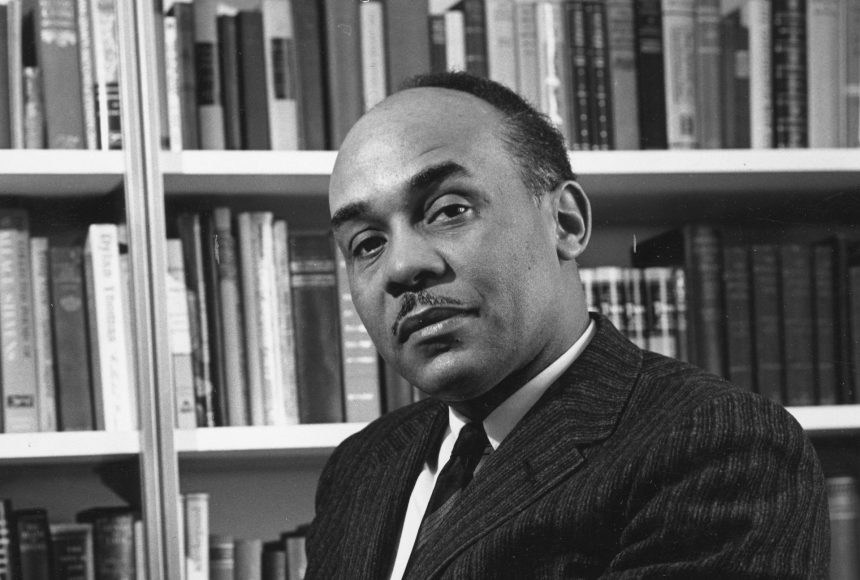
Ralph Ellison and Invisible Man


Ralph Ellison published Invisible Man in 1952, a novel exploring race and identity in America that won the National Book Award and is regularly cited among the greatest American novels of the twentieth century. Ellison spent the following four decades working on a second novel, but he never completed it to his satisfaction. He reportedly lost a significant portion of an early draft in a house fire in 1967, a setback from which the project seemingly never fully recovered.
He continued writing and revising until his death in 1994, leaving behind thousands of pages of manuscript material. His literary executor eventually assembled and published a version titled Juneteenth in 1999, five years after Ellison’s death, though it represented an editor’s reconstruction rather than a novel Ellison himself finished and released. Invisible Man remains the only novel Ellison published in his lifetime.
John Kennedy Toole and A Confederacy of Dunces


John Kennedy Toole wrote A Confederacy of Dunces in the mid-1960s, a comic novel set in New Orleans that publishers repeatedly rejected during his lifetime. The repeated rejections weighed heavily on him, and he died by suicide in 1969 at age 31, believing his novel would never see print. His mother, Thelma Toole, refused to give up on the manuscript.
She spent years pushing the book toward publication, eventually persuading novelist Walker Percy to read it. Percy helped secure its release in 1980, more than a decade after Toole’s death, and the novel went on to win the Pulitzer Prize for Fiction in 1981. It remains Toole’s only published novel, a posthumous success he never lived to witness.
Giuseppe Tomasi di Lampedusa and The Leopard


Giuseppe Tomasi di Lampedusa was a Sicilian nobleman who wrote The Leopard, a novel chronicling the decline of the Sicilian aristocracy during Italian unification, late in his life with no prior publishing career. He submitted the manuscript to publishers but was rejected, including by a major Italian publishing house, before his death from lung cancer in 1957. He never saw the novel in print.
The manuscript eventually reached publisher Giangiacomo Feltrinelli, who released it in 1958, a year after Lampedusa’s death. The Leopard became an immediate sensation in Italy, won the country’s top literary prize, and was later adapted into an acclaimed 1963 film by Luchino Visconti. It stands as Lampedusa’s sole novel, written entirely outside the literary establishment he depicted so precisely.
What Their Stories Have in Common


Looking across these eight cases, a pattern emerges that has less to do with talent and more to do with timing, health, and circumstance. Several of these authors, including Brontë, Sewell, Plath, and Toole, died young, before they had the chance to write a second book at all. Others, like Mitchell and Lee, lived long lives but made a deliberate choice to step back from publishing after experiencing the intense scrutiny that came with early success.
Ellison represents a different kind of one-and-done story, spending decades attempting a follow-up that never quite came together during his lifetime. What unites all eight is that their single published novel proved substantial enough to stand entirely on its own, without a body of supporting work to reinforce its reputation. That rarity is part of why these books continue to be read, studied, and debated so long after their original publication.