Publishing is full of near-misses, books that almost never existed because someone in an office said no. Yet buried in some of those rejection letters is a strange kind of encouragement, a line or a suggestion that changed everything. This is a look at the moments when an editor’s handwritten note, marginal comment, or brief letter reshaped a manuscript’s fate and, in several cases, turned it into a book people are still reading decades later.
Bill Thompson and the letter that kept Stephen King writing

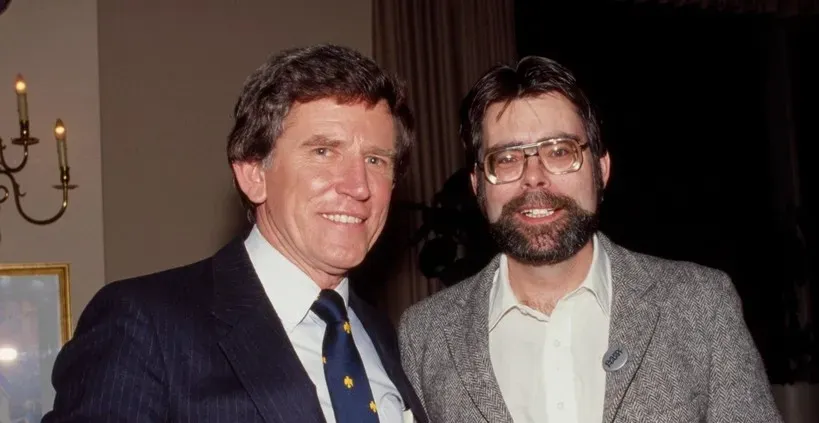
Before Stephen King was a household name, his early submissions to Doubleday were turned down more than once. When Stephen King first submitted a novel to Doubleday, it was rejected, but with the rejection came a personal letter from Bill Thompson encouraging King to continue writing and to send him his next novel. That single gesture, a rejection softened by genuine interest, kept a young, broke writer in the game instead of walking away entirely.
When the first manuscript King submitted was not right for Doubleday, Thompson rejected it softly and with words of encouragement, asking King to send him whatever he was working on next. Years later, that same relationship paid off in a way few editors ever get to experience. Eventually, Thompson would receive Carrie and instantly recognized it as the book that would be King’s big break.
The trash can rescue that almost never reached an editor’s desk


Carrie’s path to publication involved a detail that has become part of publishing folklore. Though King initially gave up on Carrie due to discomfort and apathy, and felt it would never be successful, his wife Tabitha persuaded him to continue writing, and rescued the first three pages of the story from the trash. Without that intervention, there would have been no manuscript for Thompson to champion in the first place.
The novel’s road inside Doubleday was not smooth even after it arrived on Thompson’s desk. He remembers the book as “a masterful study in character and suspense, but it was quiet, deliberately claustrophobic and it proved a tough sell within the house.” Thompson pushed the manuscript through revisions rather than letting it die on a slush pile, and that persistence became the difference between an obscure short story and a debut novel that launched a career.
Three rounds of revision before anyone said yes


It is easy to imagine editorial notes as single flashes of insight, but Carrie’s transformation took repeated rounds of feedback. Thompson requested three rounds of revision, but ultimately Doubleday passed on it. Even after the formal rejection, the editor did not simply close the file and move on.
In his formal rejection letter, Thompson offered to send it around to other publishers. That offer, tucked into what should have been a closing door, kept the manuscript alive long enough to eventually land a contract, proving that an editor’s note does not always need to say yes to matter.
Robert Gottlieb and the letter that praised without accepting


Not every influential editorial note leads directly to publication, but some shape how a writer understands their own work. When John Kennedy Toole submitted A Confederacy of Dunces to Simon and Schuster, it landed with Robert Gottlieb, the editor behind Catch-22. In his letters to Toole, Gottlieb praised the work as “a wonderful exercise in invention,” and hailed Toole as “wildly funny, funnier than anyone around, and our kind of funny.” Yet the same letters carried a persistent doubt that would ultimately sink the deal.
Gottlieb’s core objection centered on structure rather than voice. He could recognise the originality of Toole’s voice and the extraordinary comic invention within it, but, after a long, agonising period of indecision, he eventually declined to publish it in 1966. The praise inside that rejection stayed with Toole, and in a strange way it stayed with the manuscript too, since it hinted at a book that was almost there rather than fundamentally flawed.
A posthumous second reader who finally said yes


Toole never lived to see his novel published, but the note-and-revision cycle with Gottlieb did not simply vanish once he died. His mother searched for anyone willing to look at the manuscript again, eventually reaching novelist Walker Percy. Toole’s mother convinced Walker Percy to read the manuscript, and the novelist eventually convinced Louisiana State University Press to publish a small run. Percy’s advocacy functioned much like an editor’s endorsement, giving a small university press the confidence to take on a book major publishers had already turned away.
The result surprised nearly everyone involved in its long, difficult history. The book was obviously appreciated by readers and critics and, a year later, Toole was posthumously awarded the Pulitzer Prize for fiction. Gottlieb, who had turned it down years earlier, later reflected on that decision with unusual candor for a veteran of the industry.
When an editor’s regret becomes part of the record


Robert Gottlieb went on to lead major publishing houses and edit some of the most celebrated authors of his generation. Throughout his long career, Gottlieb served as editor-in-chief of Simon & Schuster and Alfred A. Knopf, where he worked with some of the world’s most talented writers, including Heller, Toni Morrison, Salman Rushdie, and John le Carré. Despite that record, one decision stayed with him more than any success.
In his own memoir, published decades after the fact, Gottlieb did not shy away from naming his biggest miss. In his 2016 memoir, Avid Reader: A Life, he described rejecting A Confederacy of Dunces as his “most conspicuous failure.” That admission is rare in an industry where editors rarely revisit their old verdicts in public, and it underscores how much a single editorial judgment, right or wrong, can outlive the person who made it.
The quiet power of a rejection that still points forward


What connects Thompson’s letters to King and Gottlieb’s letters to Toole is not that both stories ended the same way. One editor’s encouragement helped build a career from the ground up, while the other editor’s doubts, however well argued, meant he never got to publish the book that would eventually earn a Pulitzer. Still, both cases show that a rejection letter is rarely just a closed door; it often contains the seeds of what a manuscript could become, whether the original editor recognizes it or not.
Thompson’s approach, gentle rejection paired with a genuine invitation to keep sending work, created enough trust that King stayed loyal to him for years afterward. Doubleday’s willingness to let that relationship develop, rather than treating each submission as a one-time transaction, turned out to be just as important as any single line of editorial feedback.
Why editorial notes carry more weight than writers expect

Writers often treat a rejection as a verdict on their talent, but the Carrie and Dunces stories suggest something more nuanced. An editor’s note can function as a diagnosis of a specific problem, pacing, structure, or marketability, rather than a judgment on whether the writer belongs in publishing at all. Thompson’s insistence on three rounds of revision for Carrie was not encouragement in the softest sense; it was a demand that the manuscript get sharper before it could be sold.
Gottlieb’s letters to Toole carried the same mixture of genuine respect and hard-nosed critique, which is likely why Toole kept revising for years rather than giving up after the first pass. The lesson embedded in both cases is that detailed, specific feedback, even when it results in a no, tends to matter more to a manuscript’s long-term fate than a vague pass ever could.
What these stories reveal about the editing process today

Modern publishing still runs on the same basic mechanics that shaped Carrie and A Confederacy of Dunces half a century ago. Editors read hundreds of submissions, most get a form rejection, and only a small number receive the kind of personal, detailed note that signals real interest. The difference between a manuscript that dies in a drawer and one that eventually reaches readers often comes down to whether a single reader inside a publishing house decided the story was worth the extra effort.
Both Thompson and Gottlieb are remembered today less for the volume of books they handled and more for these two specific, well-documented cases. That says something about how publishing history gets written. It tends to remember the notes that either saved a book or, in Gottlieb’s case, the ones that nearly buried a future classic and left an editor reflecting on the decision for the rest of his career.
Final thoughts


There is no single formula for the note that turns a rejected manuscript into a bestseller. Sometimes it is an invitation to send more work, as Bill Thompson offered a struggling young writer named Stephen King. Sometimes it is a rejection that still manages to convince a grieving family, and eventually a small university press, that a strange, overlooked comic novel deserved one more chance. Either way, these stories are a reminder that behind every book on a shelf sits a paper trail of doubt, persistence, and at least one editor willing to put something in writing that mattered more than they probably realized at the time.