
Las Vegas has always been a city built on short-term thrills. People pass through, reinvent themselves, cash out, and leave. Whether you’re a tourist staying three nights or a hospitality worker who showed up two years ago with a packed car and no real plan, the city asks very little of you in terms of permanence. That quality, which makes it electric to visit, may also make it quietly brutal to date in.
Ghosting, the act of ending a relationship by simply going silent, has been rising for years. The research is catching up to what many people already know from personal experience. In a city like Las Vegas, where so much is designed to be temporary, the psychology of ghosting takes on a dimension worth examining more carefully.
What Ghosting Actually Is, According to the Research


Ghosting is described as a dissolution strategy in which one partner abruptly ceases all communication to terminate the relationship. It’s not just ignored texts or a slow fade. Ghosting describes the behaviour of one party abruptly terminating contact with another party, without providing explanatory information or indications, leaving ghosted parties uncertain about the situation.
The online dating context is widely acknowledged as a prevalent setting for ghosting, with ignoring other users on dating apps often stemming from the affordances of the platforms, which encourage simultaneous initiation of multiple interactions and the abandonment of many as a potential social norm. Las Vegas, with its dense population of app users and a nightlife culture that makes casual connection easy, fits this pattern almost perfectly.
How Common Is Ghosting in 2025?


According to a survey conducted in the United States in August 2023, roughly three in five respondents reported that they had been ghosted while dating, and nearly half stated that they had ghosted another person. Those numbers have not trended downward. A study by researcher Christina Leckfor found nearly two-thirds of participants have ghosted and have been ghosted.
Despite experiencing negative emotions after being ghosted, three in four people think ghosting is appropriate in certain situations, and nearly two in three have ghosted someone else. That internal contradiction, where people recognize the pain of being ghosted while still doing it themselves, is one of the more uncomfortable findings in the field. In fact, two in three people think ghosting is a byproduct of online dating.
Las Vegas as a Transitional City: The Population Reality


The metro area population of Las Vegas reached 3 million in 2025, a roughly 1.6 percent increase from the prior year, when it stood at about 2.95 million. Growth alone doesn’t tell the full story. What matters for understanding relationship culture is the pattern of who is arriving, why, and for how long they intend to stay.
Compounding the city’s social instability is the phenomenon of workforce turnover, especially in low-margin, high-stress roles. In hospitality, staff turnover for frontline roles is nearly double the national average in Las Vegas. A city where people constantly cycle through jobs, apartments, and social circles is one where deep relational investment becomes harder to justify, at least psychologically. Clark County has grown faster than the national average for the past 50 years, with population growth expected to continue well into the future.
The Hospitality Economy and the Mindset It Creates

Restaurants and hotels in Las Vegas now report annual turnover between roughly 70 and 80 percent, while some quick-service roles often cross the 100 percent mark. That kind of workforce churn bleeds into personal life. When your colleagues change every few months and your social circle reshuffles itself constantly, emotional detachment can start to feel like a practical strategy rather than a character flaw.
Hourly retail and hospitality workers in Las Vegas navigate a fragile financial and career ecosystem, grappling with stagnant pay, limited flexibility, and tenuous career prospects. People under this kind of ongoing uncertainty tend to prioritize short-term emotional relief over long-term relational investment. Frontline roles in retail and hospitality are often treated as a disposable resource, and workers in turn treat these roles the same way, seeing the jobs as temporary placeholders. It is not a large leap to suggest that this mindset extends beyond work.
The Psychology Behind Why People Ghost

Researchers have explored the possibility that ghosters actually care more than we think and ghost because they don’t want to hurt the soon-to-be former partner. Across eight studies, they found that ghosters cared about the ghostees’ well-being, something the ghostees didn’t realize. This reframes ghosting slightly. It’s not always cruelty. Sometimes it’s avoidance dressed up as kindness.
Factors such as the fear of confrontation, desire for control, or emotional immaturity may be involved. In a city where entertainment, escapism, and a clean exit are baked into the local culture, those psychological tendencies find easy expression. Among surveyed millennials, people aged 18 to 35 quite simply want to use ghosting as an avoidance mechanism rather than facing their fears or being honest. Women indexed higher in two areas: avoiding confrontation, and citing no real chemistry as a reason for ghosting.
Partner offer

Dark Triad Traits and the Las Vegas Social Pool

Researchers find that ghosting relates to Dark Triad personality traits. Daters high in traits of narcissism, Machiavellianism, and psychopathy were more likely to ghost, and it was even worse in short-term relationships. A city environment that rewards short-term excitement, risk-taking, and personal gain may attract a higher concentration of these personality types.
Individuals characterized by dark triad traits including psychopathy, Machiavellianism, and narcissism are more likely than others to be ghosters. These individuals have a history of using ghosting as their preferred method of ending relationships without concern for its negative impact on others. It would be an overstatement to say Las Vegas is uniquely populated by such personalities, but the city’s structural characteristics may amplify the behavior regardless of personality type.
The Emotional Cost for Those Being Ghosted

Regardless of context, ghostees report significant emotional distress, including heightened pain, uncertainty, depression, and even an increased risk of non-suicidal self-injury. These are not minor inconveniences. For someone already navigating an unfamiliar city without a deep support network, being ghosted can hit harder than it might in a more stable social environment.
Researchers asked participants to reflect on a past relationship, either a time they were ghosted or directly rejected, and then answer questions about psychological needs satisfaction, including feelings of belonging, self-esteem, control, and meaningful existence. Ghosted participants had some of the lowest needs satisfaction, meaning they were hit hardest by the rejection. For newcomers to Las Vegas who haven’t yet built strong local roots, the impact of ghosting can become a more isolating experience than in cities where social scaffolding is more established.
The Reciprocal Ghosting Cycle


Research shows that roughly two in three people who have been ghosted have also flipped the switch and ghosted others. This is what researchers call “reciprocal ghosting,” and it’s worth taking seriously as a social pattern. The high rate of reciprocal ghosting may be due to a cyclical emotional pattern. Once people experience the discomfort of being ghosted, they might unconsciously adopt the same behavior as a self-defense mechanism, thinking it’s better to disengage first than risk emotional harm. More Gen Zers have ghosted than Millennials.
Ghosted and rejected participants felt equally bad, expressing low self-esteem, low positive emotion, and high negative emotion. Being rejected outright made for a cleaner break, while being ghosted was worse in terms of continuing to feel emotionally attached to the former partner. So the cycle repeats: people get ghosted, carry unresolved attachment, and are more likely to ghost someone else. In a transitional city, this loop can become self-reinforcing.
Ghosting Beyond Dating: It’s Now Everywhere


While ghosting is often associated with romantic relationships, it also occurs in friendships, family interactions, and even professional settings. Las Vegas is a place where professional relationships and social relationships overlap heavily, especially in the entertainment and service industries. Research has found that ghosting friends increased depressive tendencies, unlike ghosting romantic partners.
More than half of study participants wrote about a time when they were ghosted by a friend, rather than a romantic partner, and those ghosted by a friend reported feeling just as bad about the relationship as those who were ghosted by a romantic partner. In a city where coworkers frequently become the primary social circle, the crossover between professional and personal ghosting makes the issue harder to compartmentalize and easier to normalize.
Can Attachment Style and Cultural Context Explain the Pattern?


Individuals who have engaged in ghosting tend to view both the behavior and the ghoster more favorably, whereas those who have been ghosted do not, highlighting psychological mechanisms such as self-justification, moral disengagement, and social learning. This asymmetry is important. The person who ghosts has already reframed the act as reasonable, while the person ghosted has no such frame to hold onto.
Studying potential variations in the impact of ghosting based on factors such as attachment style, gender, and cultural background will contribute to improved psychotherapeutic techniques. Las Vegas draws people from an unusually wide range of cultural backgrounds. As of 2024, more than one in five Las Vegas residents were born outside of the United States, which is noticeably above the national average. That cultural diversity shapes how ghosting is perceived, practiced, and processed, yet it remains one of the least studied angles in the existing research.
Conclusion: Structure, Not Just Character
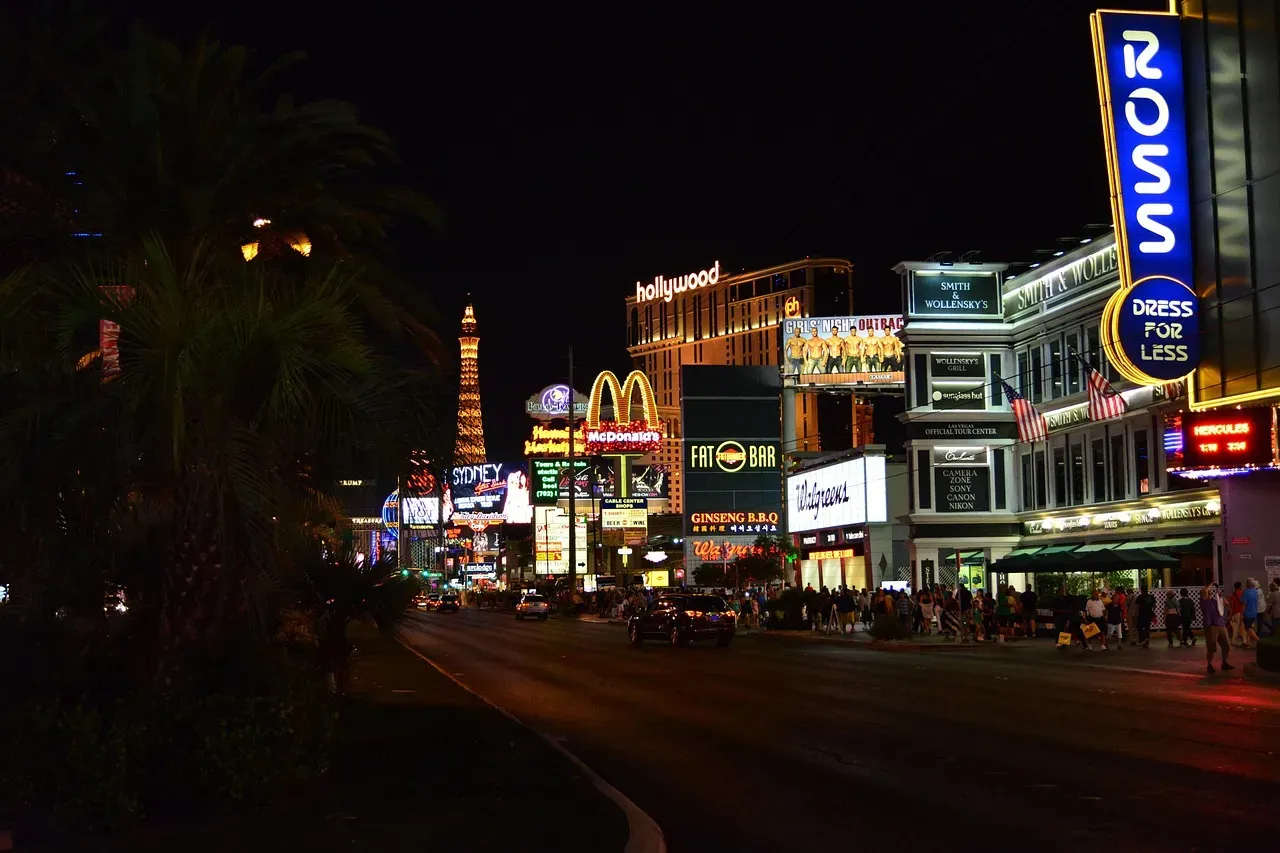
Blaming Las Vegas culture for ghosting would be too simple. Ghosting is a national pattern shaped by technology, psychology, and modern dating norms. The research on that is consistent and growing. What makes Las Vegas an interesting case is not that its people are uniquely avoidant, but that the city’s structural conditions, including constant population churn, dominant short-term employment, a tourist economy built on impermanence, and an unusually high proportion of newcomers, may quietly accelerate the conditions under which ghosting becomes the default.
The manner in which people choose to end relationships has evolved, with a growing number opting for ghosting as that chosen method. In any city where putting down roots feels uncertain, the temptation to disappear rather than explain becomes harder to resist. Las Vegas didn’t invent ghosting. It just built a world where it feels a little more natural than it should.
Partner offer
Planning a trip to Vegas?
Compare hotel rates and show tickets on VEGAS.com.