
Every day, millions of people make decisions that quietly reveal one of the most fundamental divides in human psychology. One person quits a stable job to start a company. Another person keeps the same job for twenty years because the pension feels certain. Neither is irrational. Both are operating from something deep, partly wired into their brains, partly shaped by experience, and sometimes hard to explain even to themselves. Risk preference is not simply a matter of courage or fear. It’s a complex interplay of neuroscience, personality, culture, and life history. Understanding why some of us chase uncertainty while others guard against it reveals a great deal about how the human mind actually works.
The Brain’s Reward Engine: Dopamine and the Pull of the Unknown

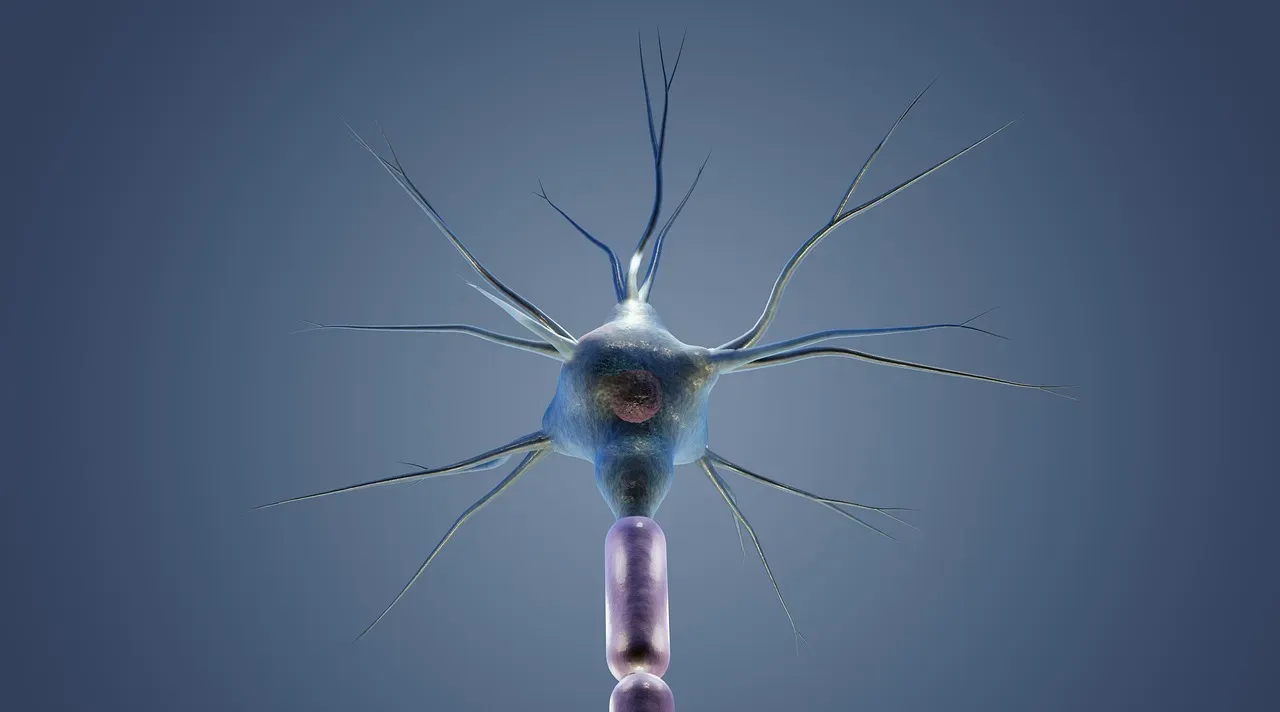
At the center of risk-taking behavior is dopamine, a neurotransmitter most people associate with pleasure but which is far more nuanced than that label suggests. The brain responds to experiences that matter through dopamine, which is involved in how the brain processes rewards, but it’s not just a “feel good” chemical. It also plays a critical role in learning and motivation. This distinction matters enormously.
A surprising or unexpected reward causes an extra dopamine release. So every time we do something with an uncertain outcome, increased dopamine is released while we are determining what happens. This release alerts other parts of the brain that the activity is new and deserves attention.
In the risk taker’s brain, researchers report in the Journal of Neuroscience, there appear to be fewer dopamine-inhibiting receptors, meaning that daredevils’ brains are more saturated with the chemical, predisposing them to keep taking risks and chasing the next high. This structural difference isn’t a character flaw. It’s a biological reality that shapes behavior long before conscious choice enters the picture.
Sensation-Seeking: The Trait That Drives Thrill Chasers


Trait sensation-seeking, defined as a need for varied, complex, and intense sensations, represents a relatively underexplored hedonic drive in human behavioral neuroscience research. It is related to increased risk for a range of behaviors including substance use, gambling, and risky sexual practice. This isn’t impulsiveness in the casual sense. It’s a measurable, stable psychological trait.
Individual differences in self-reported sensation-seeking have been linked to brain dopamine function, particularly at D2-like receptors. Research has shown that the dopamine system does not operate the same way in everyone, and those differences help explain why two people facing the exact same situation can walk away with completely different decisions.
Impulsivity has been linked to risk-seeking and can be described as the desire to indulge in situations with a potential reward, with little to no planning of the potential punishments of loss or reward. Impulsivity has also been linked to sensation seeking, and in recent theories, they have been combined to form a higher-order trait called “impulsive sensation seeking.” These two forces, when combined in the same person, can be especially powerful drivers of high-stakes behavior.
Prospect Theory and Loss Aversion: Why Losing Hurts More Than Winning Feels Good


Developed by Nobel Prize winner Daniel Kahneman and Amos Tversky, prospect theory has been called the most influential theoretical framework in all of the social sciences and popularized the concept of loss aversion, which says that people prefer small guaranteed outcomes over larger risky outcomes. It changed the way economists and psychologists think about human decision-making entirely.
Loss aversion is an important concept associated with prospect theory and is encapsulated in the expression “losses loom larger than gains.” It is thought that the pain of losing is psychologically about twice as powerful as the pleasure of gaining. That asymmetry is not trivial. It quietly governs financial decisions, health choices, and even political behavior.
Researchers found that Kahneman and Tversky’s 1979 empirical foundation for proposing prospect theory broadly replicates in all the countries they studied, reporting a ninety percent replication in areas directly testing the theoretical contrasts at the heart of prospect theory. Loss aversion replicates across cultures, income levels, and domains ranging from money to food to time to social status. The finding is remarkably universal.
Personality Traits: The Big Five and Risk Tolerance


Among the Big Five personality dimensions, extraversion and openness to experience were associated with risk seeking, whereas conscientiousness and agreeableness had more established links with risk aversion. This isn’t a rigid formula, but the pattern holds across a substantial body of research.
Extraversion primarily relates to approach motivation and sensation-seeking, while Negative Emotionality involves threat sensitivity and loss aversion. This conceptual separation allows for examining differential pathways through which personality traits may influence risky decisions via cognitive mechanisms. In plain terms, your basic personality shapes which parts of a risky situation you notice first: the potential reward or the potential harm.
Neuroticism facets, like anxiety and worry, had negative relationships with risk seeking. Other facets, like anger and depression, actually promoted risk seeking. This complexity means that caution and risk-taking cannot simply be mapped onto a single spectrum from fearful to fearless. The picture is considerably more layered.
The Role of Impulsivity: When Control Slips

Impulsivity was associated with ethical, health safety, gambling, and financial risk taking, due to disregard of future consequences and to lack of self-control. It’s distinct from sensation-seeking in an important way. The sensation seeker may carefully plan a skydive. The impulsive person may gamble rent money on an unplanned whim.
Studies suggest that low levels of childhood conscientiousness and higher impulsivity are associated with greater risk-taking tendencies in adolescence and adulthood. Individuals who exhibit poor impulse control are more likely to engage in behaviors with higher potential for harm, including substance use and reckless driving.
Research published in The Journal of Neuroscience found that boosting levels of the neurotransmitter dopamine can lead to increased risk-taking. Dopamine is involved in reward learning, and previous research has linked dopamine drugs such as L-DOPA with compulsive gambling problems in people with Parkinson’s disease. A study led by Robb Rutledge at University College London found that increasing dopamine levels in healthy adults led participants to choose more risky options in a gambling task. The chemical connection between brain state and decision-making is very real.
Gender Differences in Risk Perception


Women are less willing to take risks than men because they are more sensitive to the pain of any losses they might incur than any gains they might make, research from the University of Bath School of Management shows. Published in the British Journal of Psychology, the study also finds that men are significantly more optimistic than women, making them more willing to take risks.
Overall, the study finds that women report a lower willingness to take risks than men, with roughly half of this gap accounted for by the higher levels of loss aversion among women and a further portion attributable to the lower levels of financial optimism among women. This is a nuanced finding. It suggests the gap is less about courage and more about how outcomes are emotionally weighted.
Partner offer

Across studies, the social domain is unique in that either no gender differences are found or when they are found, it is women who report greater propensity to engage in risky behaviors. Researchers also found great variability in an individual’s willingness to engage in risk across domains, suggesting that risk-taking is not simply the product of some general personality trait. Instead, individual and group differences are substantially due to differing perceptions of risk in different domains. The story is more complicated than stereotypes suggest.
How Framing Changes Everything


People underweight outcomes that are merely probable in comparison with outcomes that are obtained with certainty. This tendency, called the certainty effect, contributes to risk aversion in choices involving sure gains and to risk seeking in choices involving sure losses. The same underlying math produces radically different decisions depending on how a choice is presented.
Low probabilities are overweighted, which reverses expected patterns: low probabilities enhance the value of long-shots and amplify aversion to a small chance of a severe loss. Consequently, people are often risk seeking in dealing with improbable gains and risk averse in dealing with unlikely losses. This explains why people buy lottery tickets while also buying insurance, sometimes in the same week.
Prospect theory has helped explain why people under-use preventive care in health, how people misunderstand risk in health, and how to frame behavioral interventions for smoking cessation in terms of losses instead of gains, among many other health-related insights. The real-world applications of understanding framing effects are substantial and sometimes life-saving.
Adolescents and Risk: A Developmental Window

Because adolescent brains release more dopamine compared to children or adults, adolescents are more sensitive to the rewards and good feelings that come from surprises and new experiences. This isn’t recklessness for its own sake. It’s a developmental feature with an evolutionary logic.
Risk taking doesn’t take place in a vacuum. Research has shown that when peers are in the room, or if adolescents even think peers may be observing them from another room or online, they are more likely to take risks, and the reward response from risk-taking behavior becomes amplified. It’s not so much that friends pressure each other to engage in a risky behavior, but that the rewarding feelings are more intense when their friends are present.
The increase in dopamine expression during adolescence is also connected to executive functions such as attention and cognitive control that help support decision making. Risk-taking doesn’t mean out-of-control behavior: in fact, by the mid-to-late teens, adolescents often perform cognitive control tasks as well or better than the average adult. Context and social environment, it turns out, shape adolescent risk as much as biology does.
Two Kinds of Risk Takers: Instrumental vs. Stimulating

Research introduces two distinct kinds of risk taking: instrumental risk taking and stimulating risk taking. Instrumental risk taking is related to risk preference in the investment domain and is determined by personality traits connected with orientation toward the future, the tendency to think rationally, impulsivity, and sensation seeking. The distinction is meaningful because the motivations behind the same behavior can be entirely different.
Sensation seeking aspects like thrill and experience seeking were more strongly associated with recreational and social risks that trigger emotional arousal. A hedge fund manager and a base jumper are both taking risks. The psychological machinery driving each is likely quite different, even if the adrenaline looks similar from the outside.
Individuals with neurochemical activity characterized by lower levels of the enzyme monoamine oxidase and with a higher degree of sensation-seeking are more willing to accept economic risk. Even biochemistry at this level plays a role, suggesting the boundaries between psychology, biology, and behavior are not as clean as we often assume.
Safety Seekers: The Psychology of Risk Aversion

Anxiety correlates with risk aversion, as do depressive symptoms, but the latter correlation is mediated by the correlation of depressive symptoms with anxiety. Risk aversion was correlated with the tendency to believe that bad outcomes were both likely and particularly bad, and these beliefs were correlated with depressive symptoms and with pessimistic attributional style.
After repeated trials, researchers began to observe risk-averse behavior by participants, a behavior echoed in intensified activity within the medial orbitofrontal cortex and the amygdala. Risk-averse behaviors are the culmination of several neural correlates. While avoiding negative stimuli, perceived or real, is a simple enough action, it requires anticipation, motivation and reasoning. Being cautious, in other words, is its own complex cognitive process.
Positive emotionality traits promoted risky behaviors that confer an emotionally rewarding experience to the person. Negative emotionality traits lead to heightened perceptions of danger, primarily motivating the avoidance of risk. Neither orientation is inherently superior. Both serve important functions depending on the situation and the stakes involved.
What This Means for How We Make Decisions


Understanding mechanisms through which personality traits influence risk decision-making remains crucial in behavioral research. Overconfidence has emerged as a mediator in personality-risk relationships, focusing on extraversion and negative emotionality. Knowing your own tendencies is the first step toward making better decisions in high-stakes situations.
While traditional financial theories emphasize rational decision-making, behavioral finance highlights the significant role of heuristics, prospect theory factors, and personality traits in influencing investor behavior. These factors not only impact individual investment choices but also affect overall market dynamics. Heuristic factors such as representativeness, herd behavior, overconfidence, anchoring, and availability heuristics simplify decision-making processes but often lead to systematic biases.
The broader takeaway is this: risk preference is not a single dial set to cautious or bold. It’s a dynamic system influenced by brain chemistry, lived experience, framing, social context, and deeply embedded personality traits. Recognizing that both the chaos-craver and the safety-seeker are responding to real internal signals, not simply being brave or fearful, opens the door to far more honest conversations about how humans actually think under uncertainty.
Partner offer
Planning a trip to Vegas?
Compare hotel rates and show tickets on VEGAS.com.